
CPP Contribution Rates and Maximum 2026
In 2026 employees pay 5.95% on earnings between $3,500 and $74,600, then 4% CPP2 on earnings up to $85,000. Employers match every dollar, and the self-employed pay both halves.
Get started free➜ Download the app➜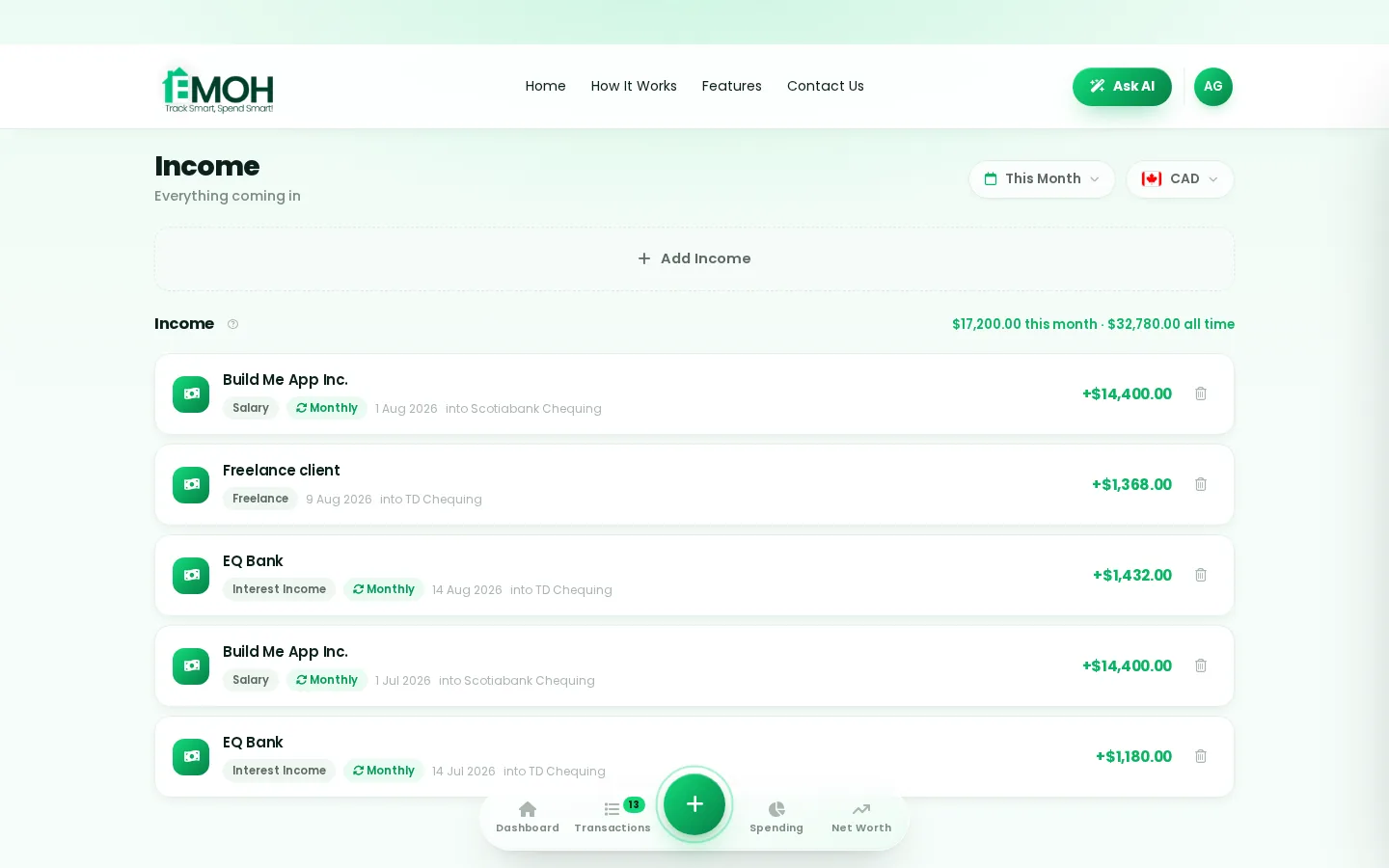
How much do I pay into CPP in 2026?
In 2026 you pay 5.95% of your earnings between $3,500 and $74,600, up to $4,230.45, plus 4% CPP2 on earnings between $74,600 and $85,000, up to $416. The most an employee can pay is $4,646.45. Your employer pays the same amount, and self-employed workers pay both shares.
What are the CPP contribution rates for 2026?
The 2026 CPP contribution rates are 5.95% each for employees and employers on pensionable earnings between the $3,500 basic exemption and the $74,600 year's maximum pensionable earnings (YMPE). A second tier, CPP2, adds 4% each on earnings between $74,600 and $85,000. Self-employed people pay double: 11.9% and 8%.
CPP contribution rates have two layers because of the CPP enhancement, which is phasing in a larger pension for people who work after 2019. The first layer is the familiar base and first additional contribution. CPP2, the second additional contribution, started on January 1, 2024 and only applies to earnings above the YMPE.
| Item | Employee | Employer | Self-employed |
|---|---|---|---|
| CPP rate (on $3,500 to $74,600) | 5.95% | 5.95% | 11.9% |
| CPP maximum | $4,230.45 | $4,230.45 | $8,460.90 |
| CPP2 rate (on $74,600 to $85,000) | 4% | 4% | 8% |
| CPP2 maximum | $416 | $416 | $832 |
| Total maximum | $4,646.45 | $4,646.45 | $9,292.90 |
Figures checked October 2026; confirm current amounts with the CRA's CPP contribution rates, maximums and exemptions page.
What is the YMPE for 2026?
The YMPE for 2026 is $74,600, up from $71,300 in 2025. It is the ceiling for the main CPP contribution. The year's additional maximum pensionable earnings (YAMPE), the ceiling for CPP2, is $85,000 in 2026. Earnings above $85,000 attract no CPP at all.
The basic exemption of $3,500 has stayed the same for years. Because it is not indexed, the contributory band between $3,500 and the YMPE grows a little each year. For 2026 that band is $71,100.
| Year | YMPE | Rate | Maximum employee CPP | YAMPE | Maximum CPP2 |
|---|---|---|---|---|---|
| 2022 | $64,900 | 5.70% | $3,499.80 | n/a | n/a |
| 2023 | $66,600 | 5.95% | $3,754.45 | n/a | n/a |
| 2024 | $68,500 | 5.95% | $3,867.50 | $73,200 | $188 |
| 2025 | $71,300 | 5.95% | $4,034.10 | $81,200 | $396 |
| 2026 | $74,600 | 5.95% | $4,230.45 | $85,000 | $416 |
| 2027 | $76,700 | 5.75% | $4,209.00 | Not yet published | Not yet published |
The CRA has already published the 2027 base figures, including a lower 5.75% rate. The 2027 CPP2 ceiling and maximum were not on the CRA's CPP2 page when we checked in October 2026.
What is the CPP2 contribution?
The CPP2 contribution is a second additional CPP contribution of 4% each for employees and employers on earnings between the YMPE and the YAMPE. In 2026 that band runs from $74,600 to $85,000, so the most anyone pays in CPP2 is $416, matched by the employer. People earning under $74,600 pay no CPP2.
CPP2 often shows up as a new deduction on pay stubs late in the year. Once you pass the YMPE, regular CPP stops but CPP2 begins, then both stop once you pass $85,000 for the year with that employer.

Track every paycheque
- Add each income source in seconds
- See income against spending every month
- Plan from your real take-home pay


How much CPP will I pay? Worked examples
To work out your CPP, subtract $3,500 from your annual earnings, cap the result at $71,100, and multiply by 5.95%. If you earn more than $74,600, add 4% of the amount between $74,600 and your earnings, capped at $85,000. Your employer pays the same on top.
- Example at $60,000: $60,000 minus $3,500 is $56,500.
- $56,500 times 5.95% is $3,361.75. That is below the $4,230.45 maximum, so it is the full CPP amount.
- Earnings are below $74,600, so CPP2 is $0. Total employee contribution: $3,361.75.
- Example at $80,000: CPP is capped at $4,230.45. CPP2 is $80,000 minus $74,600, or $5,400, times 4%, which is $216. Total: $4,446.45.
| Salary | CPP (5.95%) | CPP2 (4%) | Total employee |
|---|---|---|---|
| $30,000 | $1,576.75 | $0 | $1,576.75 |
| $60,000 | $3,361.75 | $0 | $3,361.75 |
| $80,000 | $4,230.45 | $216.00 | $4,446.45 |
| $100,000 | $4,230.45 | $416.00 | $4,646.45 |
To see CPP alongside income tax and EI on each pay, use the paycheque calculator. If you change jobs during the year, each employer deducts CPP from scratch, so you may overpay. The CRA refunds any overpayment when you file your return.
What is the CPP rate for self-employed workers?
The CPP rate for self-employed workers in 2026 is 11.9% on net self-employment earnings between $3,500 and $74,600, plus 8% CPP2 on earnings between $74,600 and $85,000. You pay both the employee and employer shares, up to $9,292.90 in total, when you file your income tax and benefit return.
Self-employed CPP is not withheld at source, so it lands on your tax bill in April. You can deduct the employer half of your contributions from income. Building the amount into your monthly budget avoids a surprise. The guide to self-employed taxes in Canada covers instalments and the rest of the bill, and EMOH Pay lets you track business income, expenses and GST/HST in one place so the number is easier to estimate.
How does the QPP differ in Quebec?
Workers in Quebec contribute to the Québec Pension Plan instead of the CPP. For 2026 the QPP uses the same $74,600 maximum pensionable earnings, $3,500 exemption and $85,000 additional maximum, but a higher rate: 5.3% base plus 1% first additional for employees, so 6.3% in total, and 4% on earnings between $74,600 and $85,000.
That puts the 2026 QPP employee maximum at about $4,479 on the first tier plus $416 on the second. Employers match it and self-employed workers pay both shares. Retraite Québec and Revenu Québec publish the official figures. For take-home pay in the province, see the Quebec salary calculator.
What do my contributions buy?
Your contributions fund your future CPP retirement pension, plus disability and survivor benefits. The enhancement means people who contribute over a full career after 2019 will get a larger pension than earlier generations. To estimate your own pension, try the CPP retirement calculator, and for when the money arrives, see the CPP payment dates.
Your income in EMOH Pay
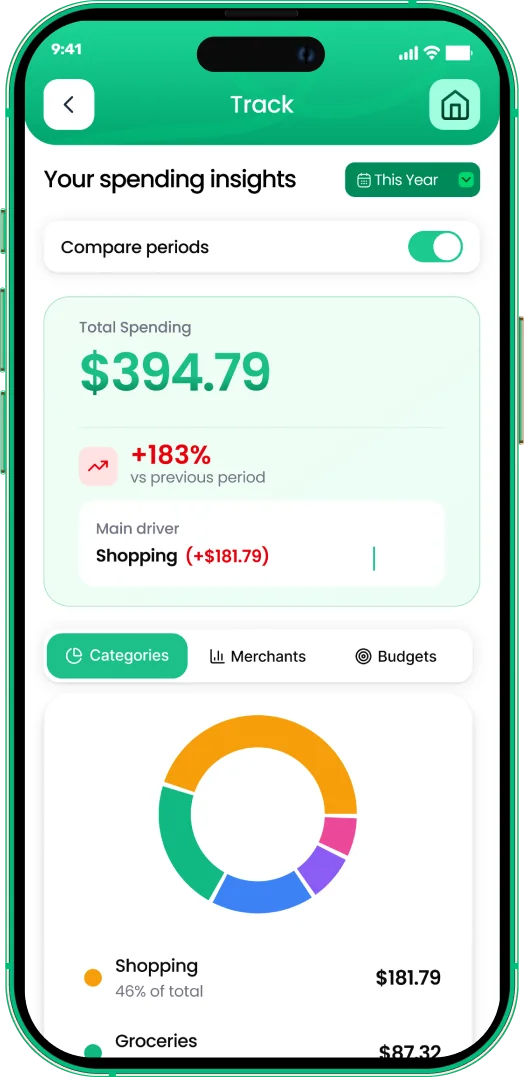
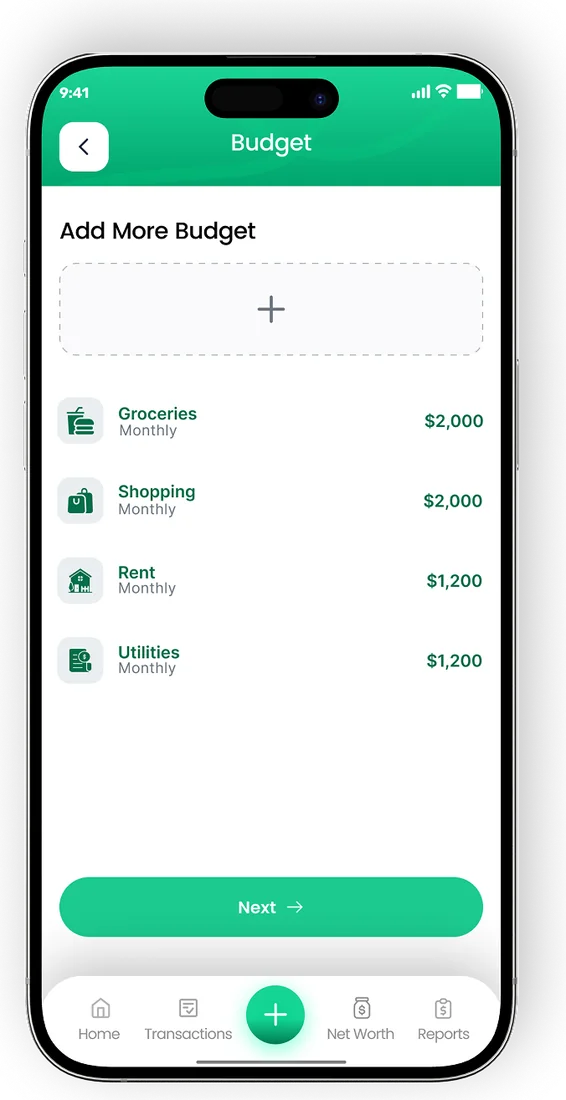
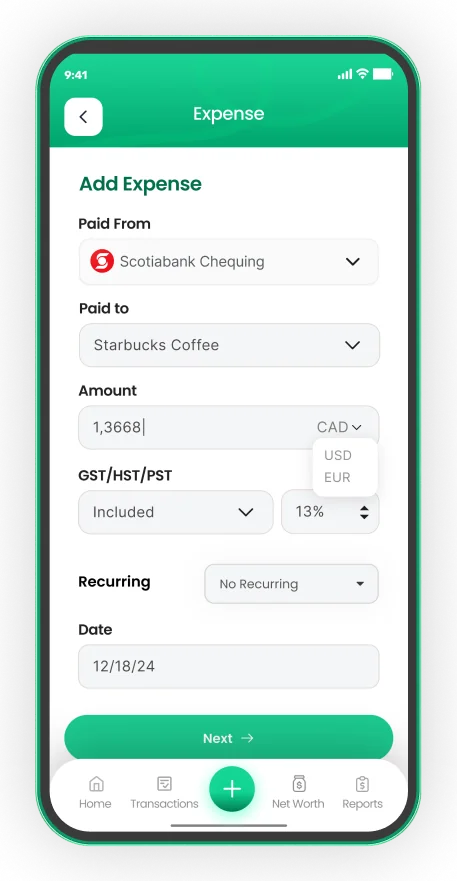

Put the numbers on autopilot
EMOH Pay tracks your spending, budgets and net worth on your phone and in the browser, always in sync. Free to start, made in Canada.
Get started free➜CPP Contribution Rates and Maximum 2026: frequently asked questions
What is the maximum CPP contribution for 2026?
The maximum employee contribution for 2026 is $4,230.45 for base CPP plus $416 for CPP2, a total of $4,646.45. Employers match it. The self-employed maximum is $9,292.90.
Do I pay CPP on all my income?
No. You pay nothing on the first $3,500, the main rate stops at $74,600, and CPP2 stops at $85,000. Investment income such as interest and dividends is not pensionable.
Why did CPP come off my pay again after I changed jobs?
Each employer deducts CPP up to the maximum independently. If your combined deductions go over the annual maximum, the excess is refunded when you file your tax return.
Is the CPP rate going down in 2027?
The CRA has published a 2027 employee and employer rate of 5.75%, down from 5.95%, with a YMPE of $76,700 and a maximum employee contribution of $4,209.00.
Are CPP contributions tax deductible?
Part of them are. Employees get a non-refundable credit on base contributions and a deduction for enhanced contributions, including CPP2. Self-employed workers also deduct the employer half.
Related guides and tools
Paycheque calculator for Canada: enter gross pay per cheque, pay frequency and province to see income tax, CPP, EI and your…
CPP Retirement CalculatorFree CPP calculator. See how your Canada Pension Plan retirement pension changes if you start at any age from 60 to 70…
CPP Payment Dates 2026CPP payment dates 2026 for every month: paid in the last week of the month, earlier in December. See what to do if a deposit…
EI Premium Rates and Maximum 2026The 2026 EI premium rate is 1.63% for employees on earnings up to $68,900, a $1,123.07 maximum. See employer and Quebec…
Self-Employed Taxes in CanadaSelf employed taxes in Canada explained: income tax, both halves of CPP, GST/HST and instalments, with a worked 2026 example…
Income Tax Calculator Canada 2026Estimate your 2026 Canadian income tax, CPP, EI and take-home pay in every province and territory, with federal and…
Start free today
Free on iPhone, Android and the web. Upgrade to EMOH Pro anytime for advanced AI and unlimited family sharing.
Download for iOS➜ Get it on Android➜