
Income Tax Calculator Canada 2026
Enter your salary and province to see federal tax, provincial tax, CPP and EI, and what actually lands in your account. No sign-up, no email.
Use the calculator➜ Try EMOH Pay free➜
How much income tax will I pay in Canada in 2026?
A Canadian earning $75,000 in 2026 pays roughly $16,500 to $22,000 in combined federal and provincial income tax, CPP and EI, depending on the province, and keeps about $53,000 to $58,500. Federal tax starts at 14% on the first $58,523 and rises to 33% above $258,482; each province adds its own brackets.
2026 federal and provincial rates, basic personal amount, CPP/QPP and EI included. Verify with the CRA each January.
How Canadian income tax works in 2026
Canada taxes income in layers. Every dollar you earn is split into federal brackets and, separately, into your province's brackets. Only the income inside a bracket is taxed at that bracket's rate, so moving into a higher bracket never reduces your pay; it only changes the rate on the extra dollars.
Two more deductions come off every paycheque before you see it: Canada Pension Plan contributions (5.95% of earnings between $3,500 and $74,600, plus 4% on the next band up to $85,000) and Employment Insurance premiums (1.63% up to $68,900 of insurable earnings). Quebec runs its own pension plan and parental insurance instead.
Everyone gets the basic personal amount, $16,452 federally in 2026, as a non-refundable credit. RRSP contributions, union dues, child-care costs and moving expenses reduce taxable income further, which is why the calculator lets you enter RRSP contributions.
2026 federal tax brackets
| Taxable income | Federal rate |
|---|---|
| Up to $58,523 | 14% |
| $58,523 to $117,045 | 20.5% |
| $117,045 to $181,440 | 26% |
| $181,440 to $258,482 | 29% |
| Over $258,482 | 33% |
Provincial rates range from 4% in Nunavut's lowest bracket to 25.75% at the top in Quebec. Ontario also charges a surtax once provincial tax passes $5,824, which is why Ontario's effective top rate reaches 53.5% combined.
Take-home pay on a $75,000 salary by province
The same salary lands differently across the country. On $75,000, Nunavut, British Columbia and the other territories leave the most in your pocket because of low starting rates or large basic personal amounts. Nova Scotia, Quebec and Prince Edward Island leave the least, though Quebec residents get a 16.5% federal abatement and pay lower EI in exchange for QPIP premiums. Ontario's figure includes the Ontario Health Premium.

Track every paycheque
- Add each income source in seconds
- See income against spending every month
- Plan from your real take-home pay


Ways to lower your 2026 tax bill
- RRSP contributions are deducted from taxable income. At a 30% marginal rate, $10,000 in an RRSP returns about $3,000 at filing time. The 2026 limit is 18% of earned income up to $33,810.
- FHSA contributions ($8,000 a year, $40,000 lifetime) are deductible like an RRSP and tax-free on the way out for a first home.
- Child-care expenses, union dues, moving expenses for a job and employment expenses reduce taxable income directly.
- Non-refundable credits such as the Canada employment amount, medical expenses over 3% of net income, tuition and charitable donations reduce the tax itself.
- Refundable benefits like the Canada Workers Benefit, the GST/HST credit and the Canada Child Benefit are paid out even if you owe nothing, but only if you file.
Marginal versus average tax rate
Your marginal rate is what the next dollar is taxed at; your average rate is total tax divided by total income. A $75,000 earner in Ontario has a marginal rate of about 29.7% but an average rate closer to 24%. Use the marginal rate to judge a raise, overtime or an RRSP contribution, and the average rate to understand what you keep overall.
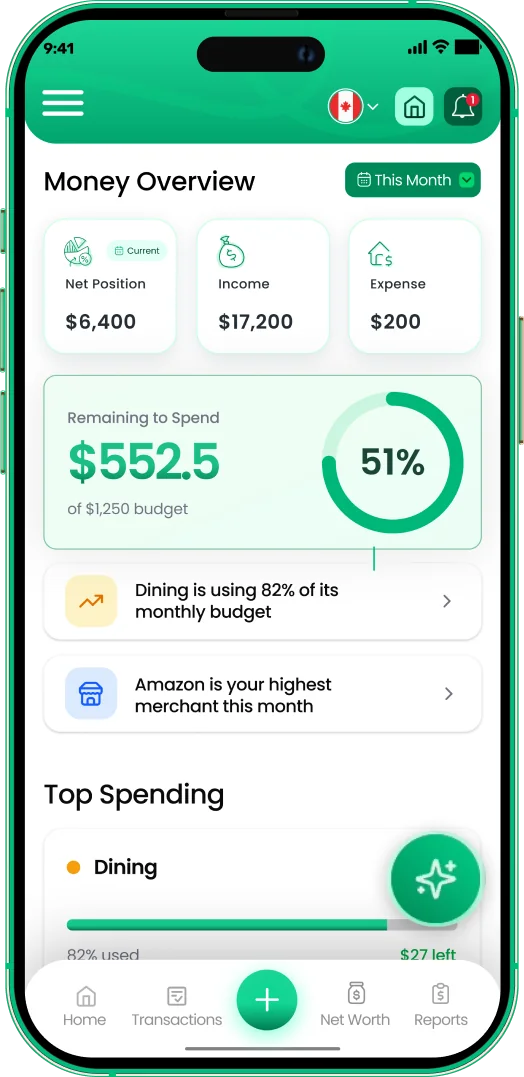
EMOH Pay's income tracker records your net pay as it arrives and compares it with your budget, so the number from this calculator becomes the anchor for a monthly plan rather than a one-off estimate.
Your income in EMOH Pay
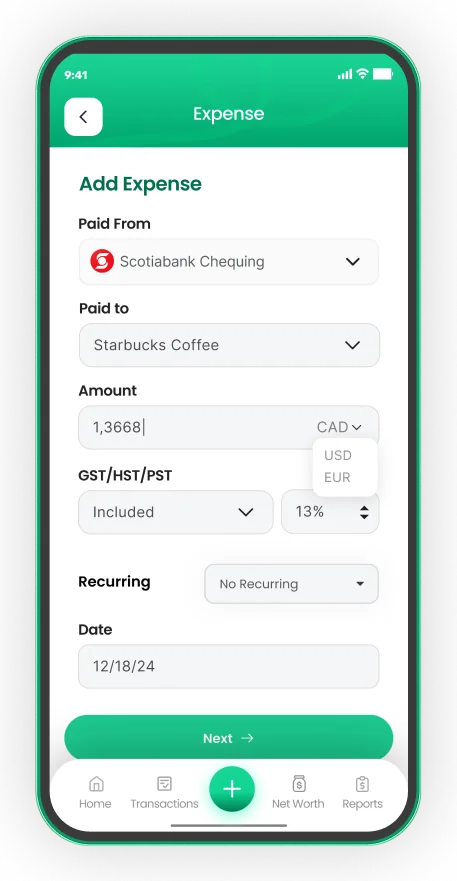

Put the numbers on autopilot
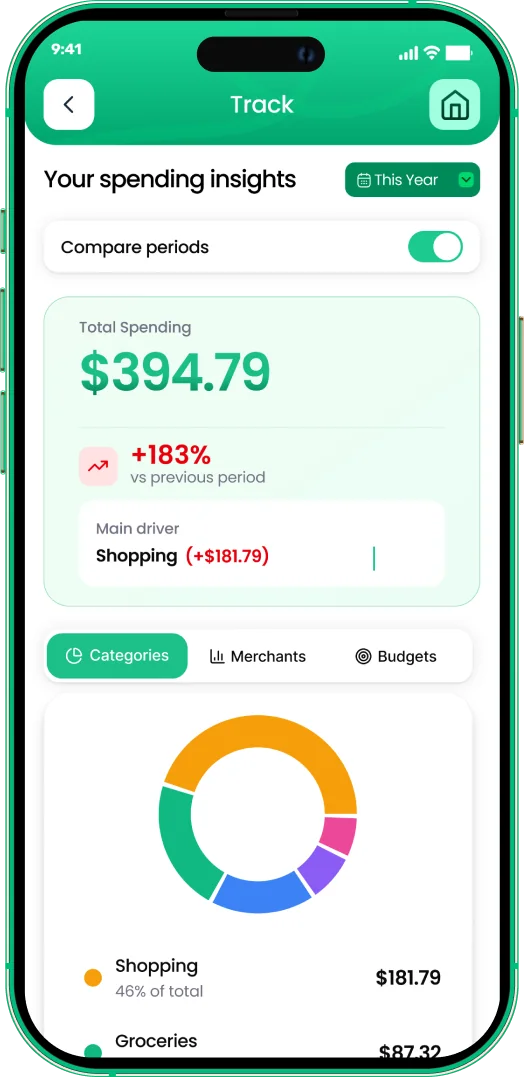
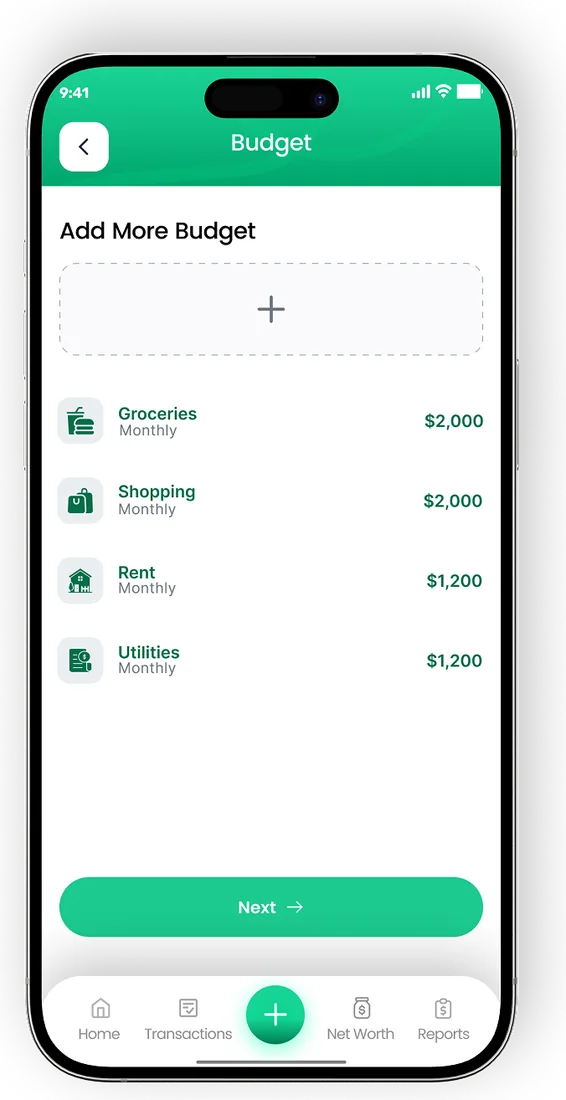
EMOH Pay tracks your spending, budgets and net worth on your phone and in the browser, always in sync. Free to start, made in Canada.
Get started free➜Income Tax Calculator Canada 2026: frequently asked questions
Is this calculator accurate for 2026?
It uses the 2026 federal brackets, the indexed provincial brackets, the basic personal amount, and 2026 CPP and EI parameters for a resident employee. It does not include every credit, so treat it as an estimate within a few hundred dollars and confirm with the CRA when you file.
Does it include CPP and EI?
Yes. CPP (or QPP in Quebec) and EI premiums are deducted, and their non-refundable credits are applied to your income tax.
What if I am self-employed?
Self-employed Canadians pay both halves of CPP (11.9% on pensionable earnings) and do not pay EI unless they opt in. Add roughly 6% of your net business income to the result, and see our guide to self-employed taxes.
Why is Quebec different?
Quebec collects its own income tax on a separate return, runs the Quebec Pension Plan and the Quebec Parental Insurance Plan, and its residents receive a 16.5% abatement of federal tax.
When are 2026 taxes due?
Returns and balances for the 2026 tax year are due 30 April 2027. Self-employed filers have until 15 June 2027 to file, but any balance is still due 30 April.
Related guides and tools
Free Ontario salary calculator for 2026. See federal and Ontario tax, CPP, EI and your monthly or bi-weekly take-home pay…
Alberta Salary CalculatorAlberta salary calculator for 2026: see federal and Alberta tax, CPP and EI on your pay, including the new 8% bracket and a…
BC Salary CalculatorFree BC salary calculator for 2026: see federal and BC income tax, CPP and EI on your salary, then your take-home pay per…
RRSP CalculatorFree RRSP calculator for 2026: see the tax refund on your contribution, what it really costs after tax, your new room and…
Tax Brackets Canada 2026Tax brackets Canada 2026: federal rates from 14% to 33%, every provincial bracket, how marginal tax works and worked…
GST/HST Calculator (All Provinces)Calculate Canadian sales tax for any province instantly: enter an amount, pick your province, and see GST, PST/QST and total…
Start free today
Free on iPhone, Android and the web. Upgrade to EMOH Pro anytime for bank sync and advanced AI.
Download for iOS➜ Get it on Android➜