
Self-Employed Taxes in Canada
When you work for yourself, nobody withholds tax from your pay. Here is what self-employed Canadians owe, how much to set aside and the dates that catch people out.
Get started free➜ Download the app➜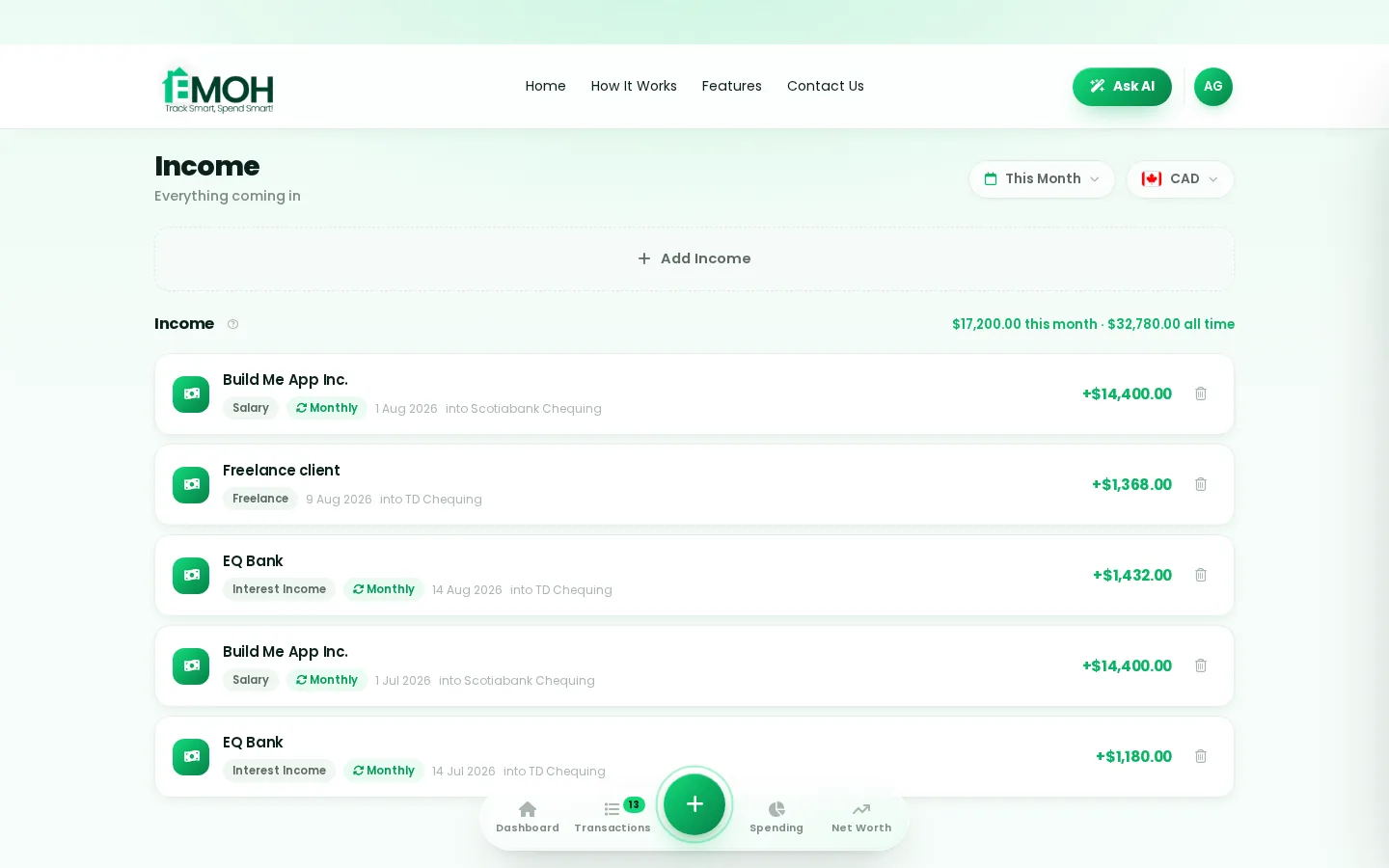
How much tax do self-employed Canadians pay?
Self-employed Canadians pay federal and provincial income tax on their net business income, plus both the employee and employer shares of CPP: 11.9% of net earnings between $3,500 and $74,600 in 2026, and 8% on the next band up to $85,000. On $60,000 of net income in Ontario, that adds up to roughly $14,600, or about 24%.
What self employed taxes in Canada include
Self employed taxes in Canada come in three parts. You pay income tax on your profit, you pay both halves of Canada Pension Plan contributions, and, once your sales pass $30,000, you collect and remit GST/HST. None of it is withheld, so you are responsible for setting the money aside.
- Income tax. Federal and provincial tax on net business income, meaning revenue minus eligible expenses, reported on form T2125 with your personal return.
- CPP contributions. An employee pays 5.95% and the employer matches it. When you are self-employed, you pay both: 11.9% on net earnings between $3,500 and $74,600 in 2026, plus 8% on earnings between $74,600 and $85,000 (the second tier, called CPP2). Quebec residents pay into the QPP instead.
- GST/HST. Not a cost to you, but money you hold for the CRA. See our guide to the small supplier threshold to check whether you have to register.
- EI. Optional. You can opt in to EI special benefits such as maternity, parental and sickness benefits, but self-employed people do not pay regular EI premiums.
How much tax do self-employed people pay in Canada?
A self-employed person with $60,000 of net business income in Ontario pays roughly $14,600 in CPP and income tax in 2026, keeping about $45,400. The CPP bill is the part most people underestimate, because it is almost double what an employee sees deducted from a paycheque at the same income.
| Item | Estimated amount |
|---|---|
| CPP, both halves (11.9% of $56,500) | about $6,720 |
| Federal income tax, after basic credits | about $5,150 |
| Ontario income tax and Ontario Health Premium | about $2,720 |
| Total | about $14,600 |
| Left after tax and CPP | about $45,400 |
Two things soften the CPP cost. You deduct the employer half of your contributions, and the enhanced part of your own half, from income, and you claim a non-refundable credit on the rest. Our income tax calculator shows how the income tax part changes by province and bracket.
Rounded estimate using 2026 federal and Ontario brackets, the basic personal amounts and the CPP deduction and credit. It ignores other credits and deductions, so your figure will differ.
Which expenses can you deduct?
You can deduct reasonable expenses you incur to earn business income. Every dollar of legitimate expense lowers both your income tax and your CPP, so good records pay off twice.
- Home office. A share of rent or mortgage interest, utilities, insurance and internet, based on the space used for work. See home office expenses in Canada for the rules.
- Vehicle. The business share of fuel, insurance, repairs and lease costs, supported by a mileage log.
- Equipment and software. Smaller items are expensed; computers and larger equipment are usually claimed over time through capital cost allowance.
- Professional fees, advertising, phone and supplies. Accounting fees, marketing, a business phone line and office supplies.
- Meals and entertainment. Generally only 50% deductible.
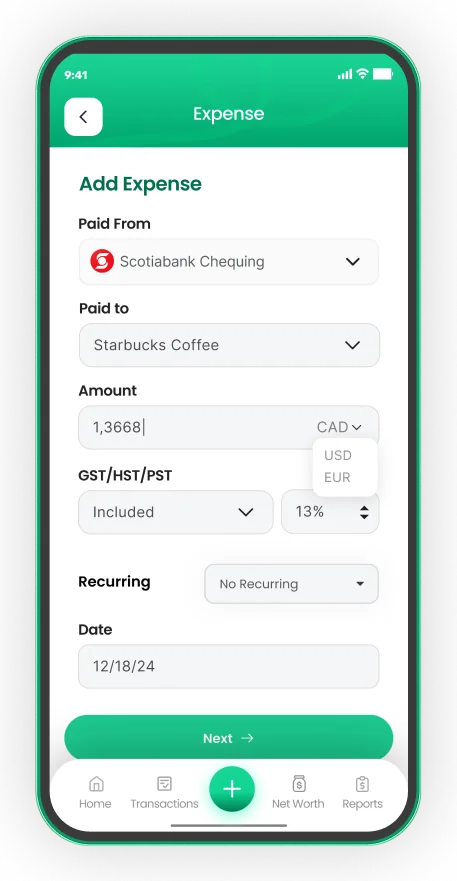
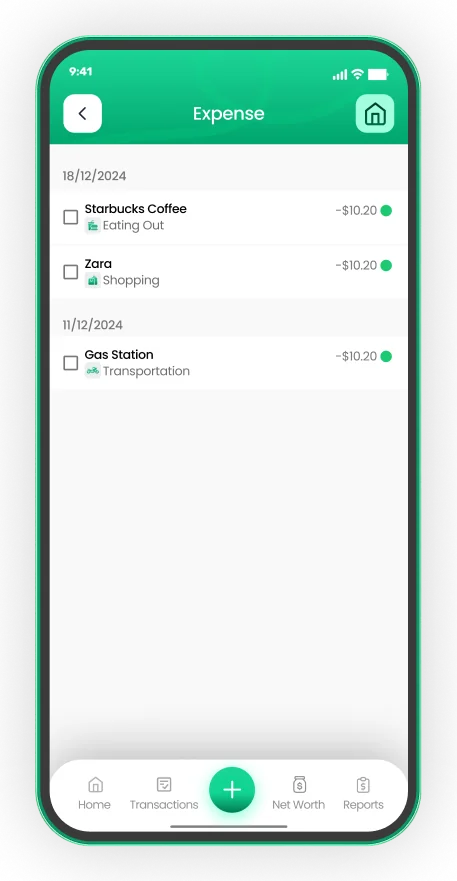
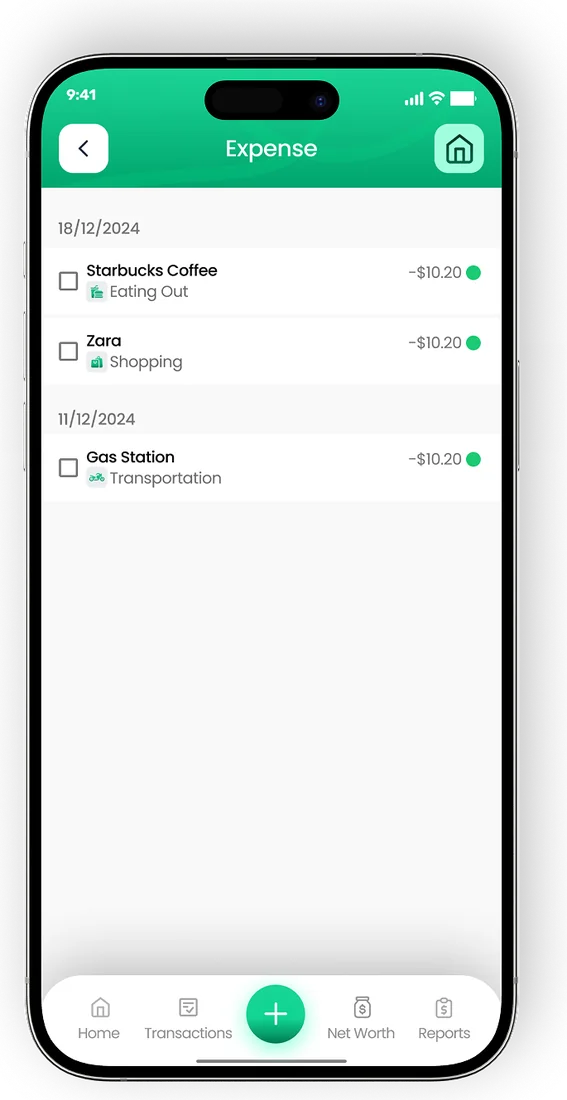
The CRA expects you to keep receipts and records for six years. EMOH Pay lets you photograph receipts, tag business expenses and track GST/HST paid, then export a PDF or Excel report for your accountant.
GST/HST on every expense
- Record GST/HST as you log each purchase
- Mark recurring bills once
- Export tax-ready PDF or Excel reports


When do self-employed Canadians pay tax?
Self-employed Canadians file by 15 June but must pay any balance by 30 April, and many must also pay quarterly instalments. Missing the April payment means interest from 1 May, even if you file on time in June. Our tax filing deadline page lists every date.
- 15 March, 15 June, 15 September and 15 December: quarterly instalments are due if your net tax owing is more than $3,000 this year and in either of the previous two years ($1,800 in Quebec).
- 30 April: pay any remaining balance for the previous year.
- 15 June: file your return, including form T2125.
- Your GST/HST due date: depends on your reporting period. Annual filers with a calendar year usually file by 15 June and pay by 30 April.
How much should you set aside for taxes?
The safest approach is to move a fixed share of every payment you receive into a separate tax account on the day it arrives. A useful starting point is your expected average rate of tax plus CPP. In the example above that is about 24% of profit. Because it applies to profit rather than revenue, the share of each invoice you need to set aside is lower when you have real business expenses.
If you are registered for GST/HST, move the tax you collect aside as well, since it was never yours. Review the percentage every quarter, because income that grows through the year pushes you into higher brackets.
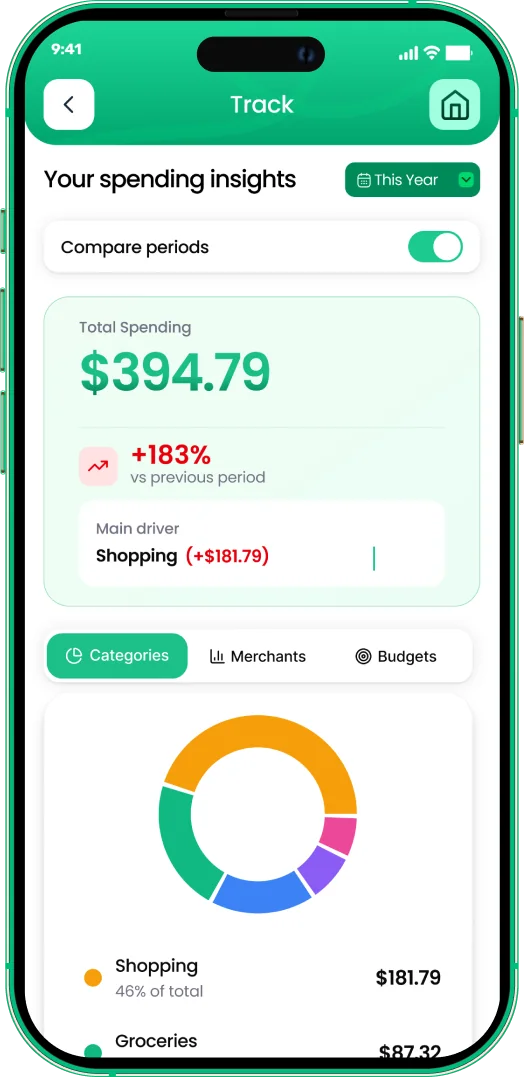
EMOH Pay can turn this into a routine: set a tax savings goal, log each invoice as it is paid, and watch the balance against your estimate. Our freelancer budgeting app page and the guide to budgeting on an irregular income cover the wider plan.
Self-employed versus incorporated
A sole proprietor pays personal tax on all profit each year. A corporation pays corporate tax on its profit, and the owner pays personal tax only on the salary or dividends taken out. Incorporating can defer tax when you leave profit in the business, but it adds legal costs, a separate corporate return and more bookkeeping.
Many freelancers stay as sole proprietors until profit is well above what they need to live on. It is worth speaking to an accountant before deciding, because the right answer depends on your province, income and plans.
Tax-ready tracking

Put the numbers on autopilot
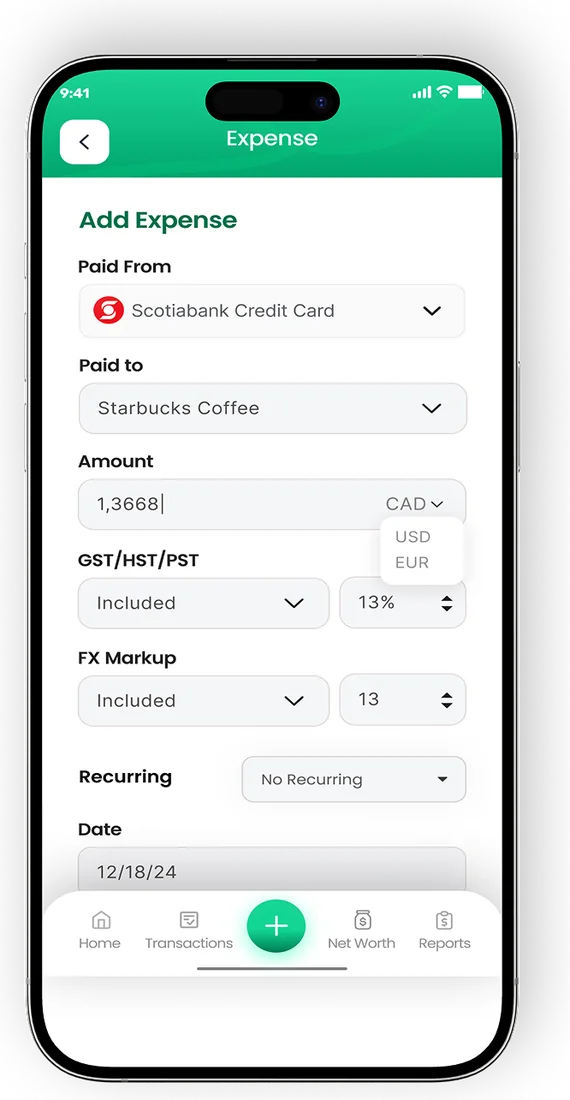
EMOH Pay tracks your spending, budgets and net worth on your phone and in the browser, always in sync. Free to start, made in Canada.
Get started free➜Self-Employed Taxes in Canada: frequently asked questions
Do self-employed people pay more tax in Canada?
Income tax rates are the same as for employees, but self-employed people pay both halves of CPP. In exchange they can deduct business expenses that employees usually cannot.
What is the maximum CPP for self-employed people in 2026?
About $9,293: $8,460.90 on earnings between $3,500 and $74,600, plus $832 of CPP2 on earnings between $74,600 and $85,000.
Do I need to pay tax on a side hustle?
Yes. Profit from freelance work, gig apps or selling goods as a business is taxable, even if it is small. Report it on form T2125 with your regular return.
Do self-employed people pay EI?
Not automatically. You can register for EI special benefits through Service Canada, which then requires premiums on your self-employed earnings.
When is tax due if I am self-employed?
Your return is due 15 June, but any balance owing is due 30 April. Quarterly instalments may also apply if you owe more than $3,000 a year.
Related guides and tools
EMOH Pay tracks freelance income, separates GST/HST for tax time, and smooths irregular months into a budget you can…
GST/HST Expense TrackerEMOH Pay tracks the GST/HST portion of your expenses automatically — a lifesaver for Canadian freelancers, contractors and…
Small Supplier GST Threshold ($30,000 Rule)The small supplier threshold is $30,000 in taxable sales. Learn when you must register for GST/HST, how the four-quarter…
CRA Tax Instalments in CanadaCRA tax instalments explained: the $3,000 rule, the four 2026 due dates, the three ways to calculate payments and how to…
Home Office Expenses in Canada: What You Can ClaimHome office expenses in Canada explained: who qualifies, what employees and self-employed people can claim, how to calculate…
How to Register for a GST/HST NumberHow to register for a GST number in Canada: when registration is required, what you need, the three ways to apply to the CRA…
Start free today
Free on iPhone, Android and the web. Upgrade to EMOH Pro anytime for bank sync and advanced AI.
Download for iOS➜ Get it on Android➜