
What Is a TFSA?
A TFSA is a registered account where investment growth and withdrawals are tax-free. Here is what it means, who can open one, what you can hold inside it and the mistakes to avoid.
Get started free➜ Download the app➜
What Is a TFSA?
A TFSA, or Tax-Free Savings Account, is a registered account for Canadian residents aged 18 or older in which interest, dividends and capital gains grow tax-free and withdrawals are never taxed. Contributions are not tax-deductible. Despite the name, a TFSA can hold investments such as GICs, stocks and ETFs, not just cash.
What is a TFSA? The definition in plain language
A TFSA is a Tax-Free Savings Account: a type of account registered with the Canada Revenue Agency where your money grows without being taxed. You put in dollars you have already paid income tax on. Whatever those dollars earn inside the account, whether interest, dividends or capital gains, is never taxed, and you can take the money out at any time without tax.
The federal government introduced the TFSA in 2009. It is one of three main registered accounts Canadians use, alongside the RRSP for retirement and the FHSA for a first home. The TFSA is the most flexible of the three because withdrawals can be used for anything.
The word savings is misleading. A TFSA is a wrapper, not a product. You can open one at a bank, credit union or brokerage and hold cash, GICs, bonds, mutual funds, ETFs or individual stocks inside it.
How does a TFSA work?
A TFSA works on contribution room. Every eligible adult gets a fresh amount of room each January, unused room carries forward forever, and any amount you withdraw is added back to your room on 1 January of the following year. The dollar amount for 2026 is $7,000; the full year-by-year history lives on our TFSA limit 2026 page.
- Contributions come from after-tax money and do not reduce your taxable income.
- Growth inside the account is not taxed while it stays there or when it comes out.
- Withdrawals can happen any time, for any reason, and are not reported as income.
- Room is shared across all your TFSAs at every institution, so two accounts do not double your limit.
- Over-contributing triggers a tax of 1% per month on the excess until it is removed.
Your personal room depends on when you turned 18 and what you have contributed and withdrawn. The TFSA contribution room calculator works it out, and CRA My Account shows the official figure.
A TFSA example: how tax-free growth adds up
Say you contribute $7,000 and it earns an average of 5% a year. After 20 years it would be worth about $18,600. The roughly $11,600 of growth is yours in full. In a regular taxable account, interest would be taxed every year at your marginal rate, and gains would be taxed when you sell.
| Years invested | Value in a TFSA | Tax-free growth |
|---|---|---|
| 5 | about $8,900 | about $1,900 |
| 10 | about $11,400 | about $4,400 |
| 20 | about $18,600 | about $11,600 |
| 30 | about $30,300 | about $23,300 |
The longer money stays invested, the more the tax-free status is worth. See the effect of regular monthly contributions with the compound interest calculator.
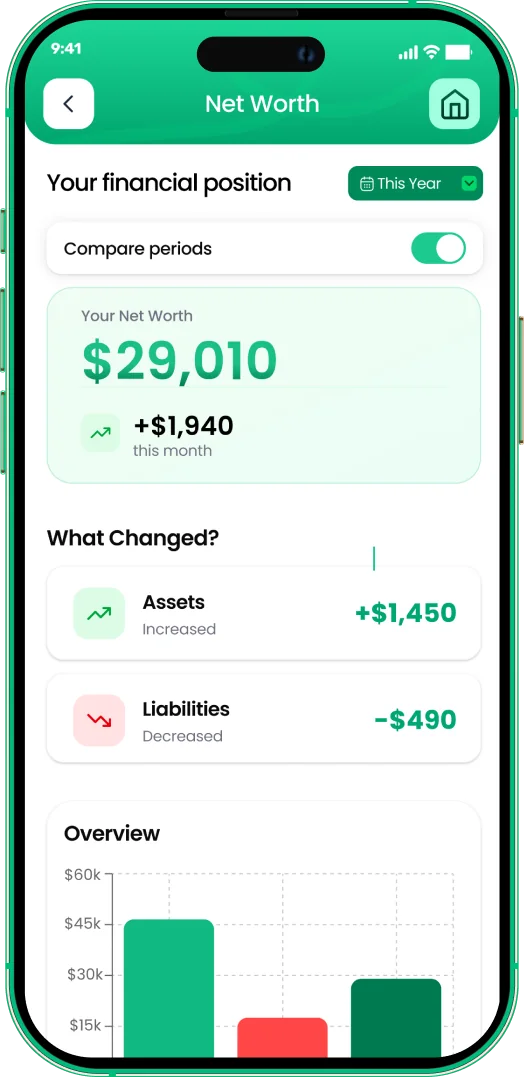
Watch your net worth grow
- Add assets and debts in any of 148 currencies
- See what changed month by month
- Set savings goals and track progress


What can you use a TFSA for?
Because withdrawals are tax-free and flexible, a TFSA suits almost any goal. Many Canadians use it for several at once, sometimes with separate accounts for each. In EMOH Pay you can set a savings goal for each purpose and see how close you are in one place.
- An emergency fund held in cash or a high-interest savings option, so interest is not taxed. Our emergency fund guide explains how much to keep.
- Medium-term goals such as a car, a wedding or a home renovation, often in GICs.
- A home down payment, alongside an FHSA. See how to save for a house in Canada.
- Long-term investing and retirement, especially for people with lower incomes, since TFSA withdrawals do not reduce income-tested benefits such as the Guaranteed Income Supplement.
TFSA vs RRSP vs a regular savings account
| Feature | TFSA | RRSP | Regular savings account |
|---|---|---|---|
| Tax deduction on deposits | No | Yes | No |
| Tax on growth | None | Deferred until withdrawal | Taxed yearly |
| Tax on withdrawals | None | Taxed as income | None on principal |
| Room back after withdrawal | Yes, next January | No, in most cases | No limit |
| Best for | Flexible goals, any income | Retirement, higher incomes | Day-to-day cash |
The TFSA and RRSP give similar results when your tax rate is the same now and in retirement. If you are unsure which suits you, the TFSA vs RRSP calculator compares them using your own tax rates.
Common TFSA mistakes to avoid
- Re-contributing a withdrawal in the same year when you have no other room. The room only comes back the following January.
- Assuming each bank gives you separate room. All your TFSAs share one limit.
- Leaving the whole balance in a low-interest cash account for decades, which wastes the tax-free status on very little growth.
- Frequent day trading, which the CRA can treat as carrying on a business and tax.
- Contributing while a non-resident of Canada, which triggers the 1% monthly tax on those contributions.
Your net worth in EMOH Pay
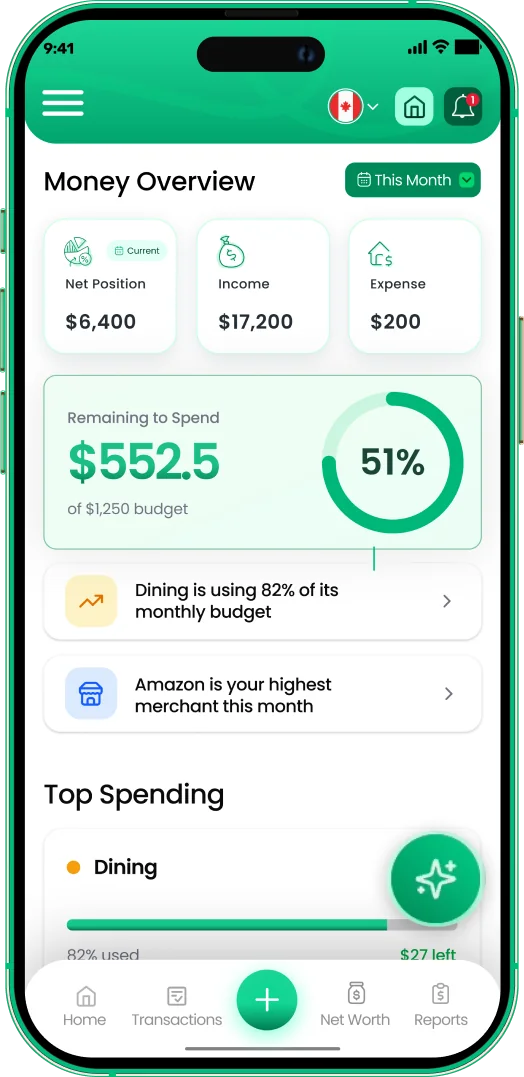
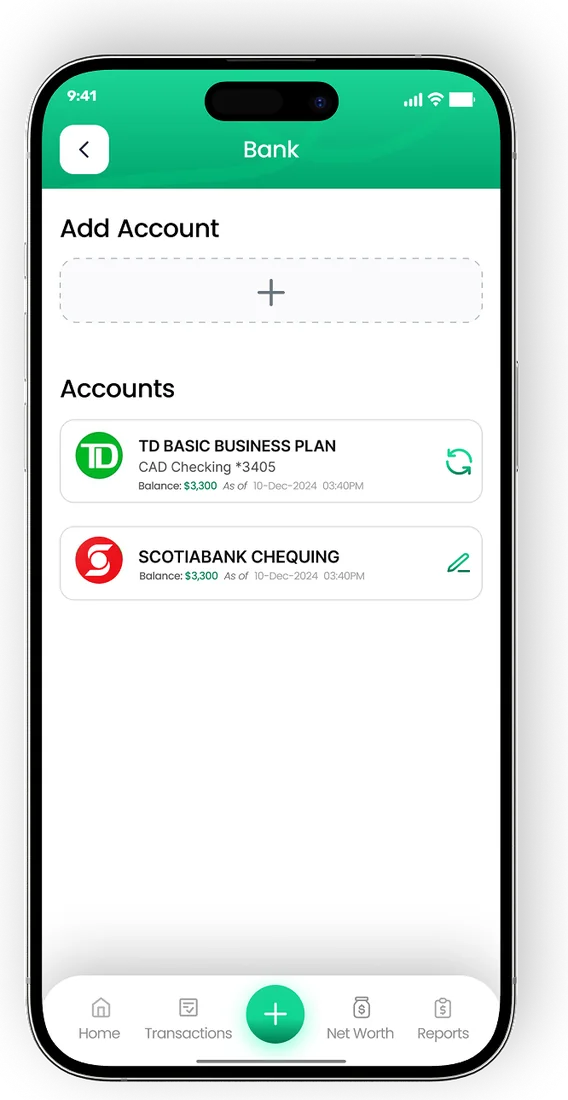
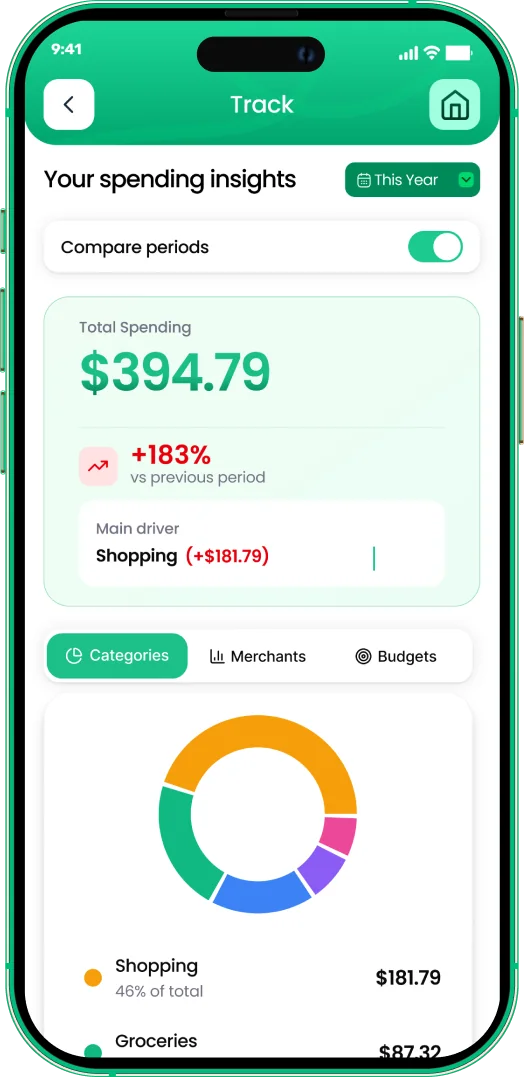

Put the numbers on autopilot
EMOH Pay tracks your spending, budgets and net worth on your phone and in the browser, always in sync. Free to start, made in Canada.
Get started free➜What Is a TFSA?: frequently asked questions
Who can open a TFSA?
Any Canadian resident aged 18 or older with a valid social insurance number. In provinces where the age of majority is 19, some institutions wait until then to open the account, but room still starts building from the year you turn 18.
Is a TFSA just a savings account?
No. It is a tax-sheltered account that can hold cash, GICs, bonds, mutual funds, ETFs and stocks. Only the investments you choose inside it decide how much it can grow.
Do I pay tax when I withdraw from a TFSA?
No. TFSA withdrawals are tax-free and are not counted as income, so they do not affect benefits such as the Canada Child Benefit or Old Age Security.
What happens to a TFSA when you die?
If you name your spouse or common-law partner as successor holder, the account passes to them and stays tax-free. Otherwise the value on the date of death passes to beneficiaries or your estate tax-free, and only growth after death is taxable.
How much can I put in a TFSA?
The annual limit for 2026 is $7,000, plus any unused room from earlier years and any withdrawals from previous years. See the TFSA limit 2026 page for the full history. EMOH Pay's savings goals can track a TFSA target month by month.
Sources and further reading
Related guides and tools
The TFSA limit for 2026 is $7,000, bringing total room to $109,000 for anyone eligible since 2009. See every year's limit…
TFSA Contribution Room CalculatorTFSA contribution room calculator: enter the year you turned 18, what you have contributed and withdrawn, and see how much…
TFSA vs RRSP CalculatorTFSA vs RRSP: compare your tax rate today with your expected rate in retirement and see which account leaves you with more…
What Is an RRSP?What is an RRSP? A plain-language guide to Canada's Registered Retirement Savings Plan: how the deduction works…
What Is an FHSA?What is an FHSA? A plain-language guide to Canada's First Home Savings Account: who qualifies, the $8,000 yearly limit…
Money Guides: Budgeting, Saving and DebtPractical, Canadian-first money guides — budgeting, saving, debt, taxes and family finances, all in plain language. Free to…
Start free today
Free on iPhone, Android and the web. Upgrade to EMOH Pro anytime for bank sync and advanced AI.
Download for iOS➜ Get it on Android➜