
TFSA vs RRSP Calculator
The TFSA vs RRSP decision comes down to one comparison: your tax rate now versus your tax rate when you withdraw. Enter both and see which account leaves you with more.
Use the calculator➜ Try EMOH Pay free➜
Is a TFSA or RRSP better for me?
In the TFSA vs RRSP choice, an RRSP is usually better if your marginal tax rate today is higher than it will be when you withdraw, and a TFSA is better if it will be the same or higher later. With equal rates they give the same after-tax result, so flexibility, benefits and employer matching decide.
How the TFSA vs RRSP calculator works
The TFSA vs RRSP calculator compares the same amount of pre-tax income going into each account. Enter the amount to invest this year (pre-tax), your marginal tax rate today, your expected marginal rate in retirement, the years invested and an annual return.
Pre-tax matters. If you earn an extra $10,000 and your marginal rate is 30%, you can put the full $10,000 in an RRSP, because the contribution is deductible, or $7,000 in a TFSA after paying $3,000 of tax. The calculator grows both amounts at the same return, then taxes the RRSP at your retirement rate when it comes out.
It tells you which account wins, the after-tax value of each and the difference. The RRSP figure assumes the refund effectively stays invested, which is what makes the comparison fair. If you spend the refund, the TFSA looks better than the result suggests. Not sure of your marginal rate? The Canadian income tax calculator shows it.
Should I invest in a TFSA or RRSP? The tax-rate rule
Invest in an RRSP when your tax rate today is higher than your expected rate in retirement, and in a TFSA when it is lower or similar. The RRSP gives a deduction at today's rate and taxes withdrawals at tomorrow's rate. The TFSA taxes the money now and never again.
| Tax rate now | Tax rate in retirement | RRSP after tax | TFSA | Better choice |
|---|---|---|---|---|
| 30% | 20% | about $34,335 | about $30,043 | RRSP |
| 43% | 30% | about $30,043 | about $24,464 | RRSP |
| 30% | 30% | about $30,043 | about $30,043 | Either |
| 20% | 20% | about $34,335 | about $34,335 | Either |
| 20% | 30% | about $30,043 | about $34,335 | TFSA |
The pattern holds at any return or time frame: the account that wins is the one that taxes you at the lower rate. The size of the win grows with the gap between the two rates.
TFSA vs RRSP: key differences
| Feature | TFSA | RRSP |
|---|---|---|
| Contribution limit (2026) | $7,000 a year plus unused room since 2009 | 18% of last year's earned income, up to $33,810 |
| Tax deduction | No | Yes, at your marginal rate |
| Growth | Tax-free | Tax-deferred |
| Withdrawals | Tax-free, any time | Taxed as income |
| Room after withdrawal | Restored the next January | Lost, except under the Home Buyers' Plan or Lifelong Learning Plan |
| Effect on income-tested benefits | None | Withdrawals count as income |
| Age limit | No upper age limit | Convert to a RRIF or annuity by the end of the year you turn 71 |
For the rules on each account, see what a TFSA is and what an RRSP is.
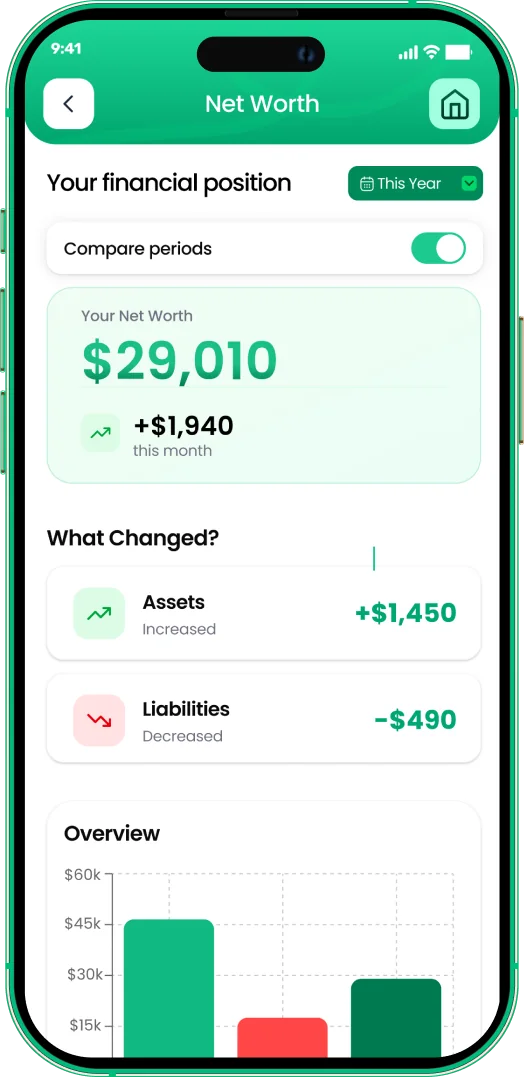
Watch your net worth grow
- Add assets and debts in any of 148 currencies
- See what changed month by month
- Set savings goals and track progress


When the tax-rate rule is not the whole story
Several real-world factors can tip the decision even when the rates look similar.
- Employer matching. If your employer matches group RRSP contributions, the match is an instant return that usually beats any TFSA advantage.
- Government benefits in retirement. RRSP and RRIF withdrawals count as income for the Guaranteed Income Supplement and can trigger the Old Age Security recovery tax at higher incomes. TFSA withdrawals do not, which favours the TFSA for people expecting modest or very high retirement income.
- Flexibility. TFSA money can be withdrawn for any reason without tax, which makes it a better home for an emergency fund or medium-term goals.
- Buying a first home. An FHSA combines an RRSP-style deduction with TFSA-style tax-free withdrawals for a first home. Use the FHSA calculator to see how it compares.
- Low income today. At lower incomes the RRSP refund is small, and you can contribute now but save the deduction for a higher-income year.
A simple order many Canadians follow
There is no single right answer, but a common approach puts each dollar where it earns the most.
- Build a starter emergency fund, ideally in a TFSA or high-interest savings account.
- Take any employer RRSP match in full.
- If you are saving for a first home, contribute to an FHSA.
- If your income is high relative to your expected retirement income, favour the RRSP. Otherwise favour the TFSA.
- Use each year's RRSP refund to top up the TFSA.
Check your available room with the TFSA contribution room calculator and model the refund with the RRSP calculator. Then use the budget calculator to set a monthly amount you can keep up.
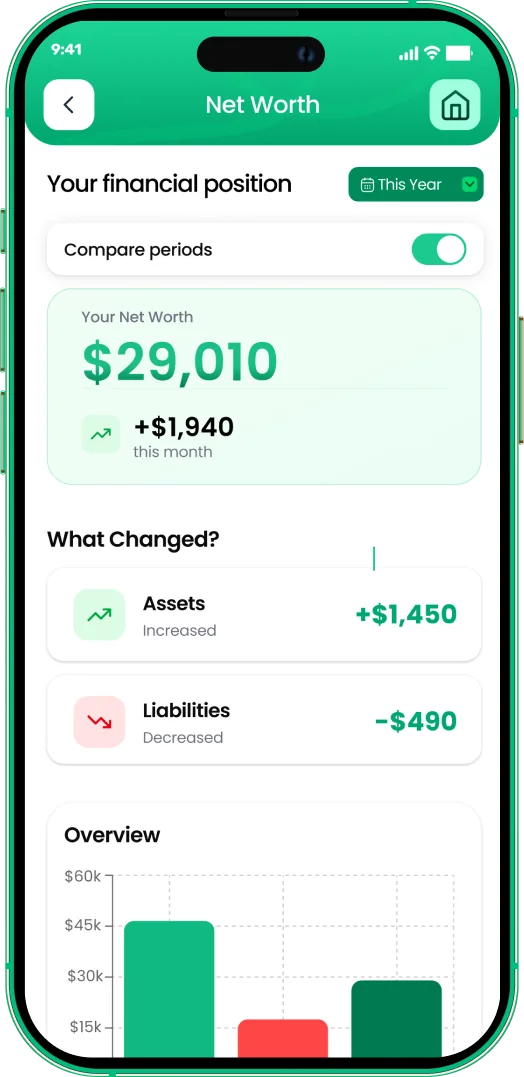
EMOH Pay can track a TFSA goal and an RRSP goal side by side, so you see progress in each and your overall net worth. It is free to start on iPhone, Android and the web.
Your net worth in EMOH Pay
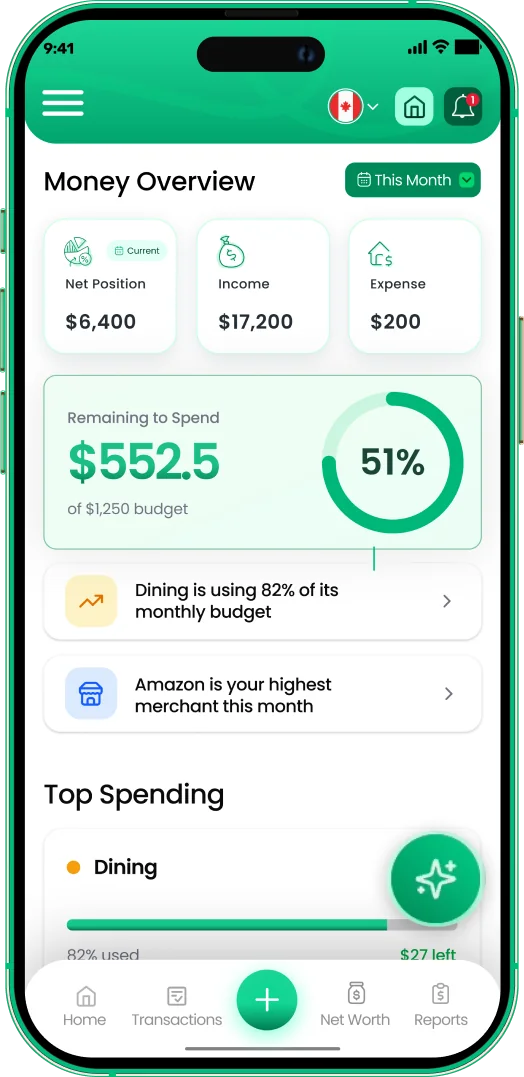

Put the numbers on autopilot
EMOH Pay tracks your spending, budgets and net worth on your phone and in the browser, always in sync. Free to start, made in Canada.
Get started free➜TFSA vs RRSP Calculator: frequently asked questions
Can I have both a TFSA and an RRSP?
Yes. Most Canadians can hold both, and many use each for different goals: the RRSP for retirement at a lower future tax rate and the TFSA for flexibility and tax-free growth.
Is a TFSA better for low-income earners?
Usually. At a low marginal rate the RRSP refund is small, and RRSP withdrawals later can reduce income-tested benefits such as the Guaranteed Income Supplement. TFSA withdrawals do not affect those benefits.
What if I do not know my retirement tax rate?
Estimate your retirement income from pensions, CPP, OAS and savings, then look up the marginal rate on that income. If you are unsure, splitting contributions between both accounts hedges the guess.
Does the calculator assume I invest my RRSP refund?
Yes. Comparing equal pre-tax amounts assumes the refund stays invested. If you spend the refund, the RRSP result would be lower than shown.
Is this financial advice?
No. The calculator shows the arithmetic of the tax-rate comparison. For advice on your situation, speak with a qualified, licensed financial adviser.
Sources and further reading
Related guides and tools
Free RRSP calculator for 2026: see the tax refund on your contribution, what it really costs after tax, your new room and…
TFSA Contribution Room CalculatorTFSA contribution room calculator: enter the year you turned 18, what you have contributed and withdrawn, and see how much…
What Is a TFSA?What is a TFSA? A plain-language definition of Canada's Tax-Free Savings Account: how it works, what you can hold…
What Is an RRSP?What is an RRSP? A plain-language guide to Canada's Registered Retirement Savings Plan: how the deduction works…
FHSA CalculatorFHSA calculator: see how your First Home Savings Account grows year by year, when you hit the $40,000 lifetime limit and how…
50/30/20 Budget CalculatorThe 50/30/20 rule splits after-tax income: 50% to needs, 30% to wants, 20% to savings. Enter your monthly take-home pay to…
Start free today
Free on iPhone, Android and the web. Upgrade to EMOH Pro anytime for bank sync and advanced AI.
Download for iOS➜ Get it on Android➜