
How to Save for a House in Canada
Saving for a home comes down to three numbers: the down payment, closing costs and your monthly savings rate. Here is how to set each one and which accounts to use.
Get started free➜ Download the app➜
How do I save for a down payment?
To save for a down payment in Canada, work out your target from the home price you can afford, then automate a fixed monthly transfer into tax-sheltered accounts. First-time buyers should use the FHSA first, then the RRSP Home Buyers' Plan and a TFSA. Budget another 1.5% to 4% of the price for closing costs.
How to save for a house: the plan in five steps
Knowing how to save for a house starts with a target, not a savings account. Once you know the down payment and closing costs for a realistic price, you can divide by the months until you want to buy and automate the result. Tax-sheltered accounts then do some of the work for you.
- Pick a realistic price range using our mortgage affordability calculator.
- Work out the minimum down payment and decide whether to aim for 20% to avoid mortgage insurance.
- Add closing costs of about 1.5% to 4% of the price.
- Open an FHSA if you are a first-time buyer, and use the RRSP and TFSA for any gap.
- Divide the total by the months until you buy, and automate that transfer on payday.
How much down payment do you need in Canada?
You need at least 5% on the first $500,000 of the price, 10% on the portion from $500,000 to $1.5 million, and 20% on a home of $1.5 million or more. A down payment under 20% requires mortgage default insurance, and the premium is added to your mortgage.
| Home price | Minimum down payment | 20% down payment |
|---|---|---|
| $400,000 | $20,000 | $80,000 |
| $500,000 | $25,000 | $100,000 |
| $600,000 | $35,000 | $120,000 |
| $800,000 | $55,000 | $160,000 |
| $1,000,000 | $75,000 | $200,000 |
Mortgage insurance premiums through CMHC are 4.00% of the loan with 5% to 9.99% down, 3.10% with 10% to 14.99% down and 2.80% with 15% to 19.99% down. Putting 20% down avoids the premium, but waiting years to get there can cost more if prices or rents rise meanwhile.
Best accounts for down payment savings in Canada
For most first-time buyers, the best order is FHSA first, then the RRSP Home Buyers' Plan, then a TFSA. You can use the FHSA and the Home Buyers' Plan together for the same home.
| Account | Limit | Tax benefit | Watch out for |
|---|---|---|---|
| FHSA | $8,000 a year, $40,000 lifetime | Contributions are deductible and qualifying withdrawals are tax-free | Must be a first-time buyer; the account can stay open for up to 15 years |
| RRSP Home Buyers' Plan | Withdraw up to $60,000 | Contributions are deductible; withdrawal is tax-free if repaid | You must repay over 15 years, starting in the second year after withdrawal |
| TFSA | Your available contribution room | Growth and withdrawals are tax-free | No deduction for contributions |
A couple who are both first-time buyers can each open an FHSA, for up to $80,000 in combined contributions plus growth. Our FHSA calculator shows how the balance and tax refunds add up, and what is an FHSA explains the rules in plain language. If you are deciding where extra money should go, compare TFSA vs RRSP.
Tips that help you save
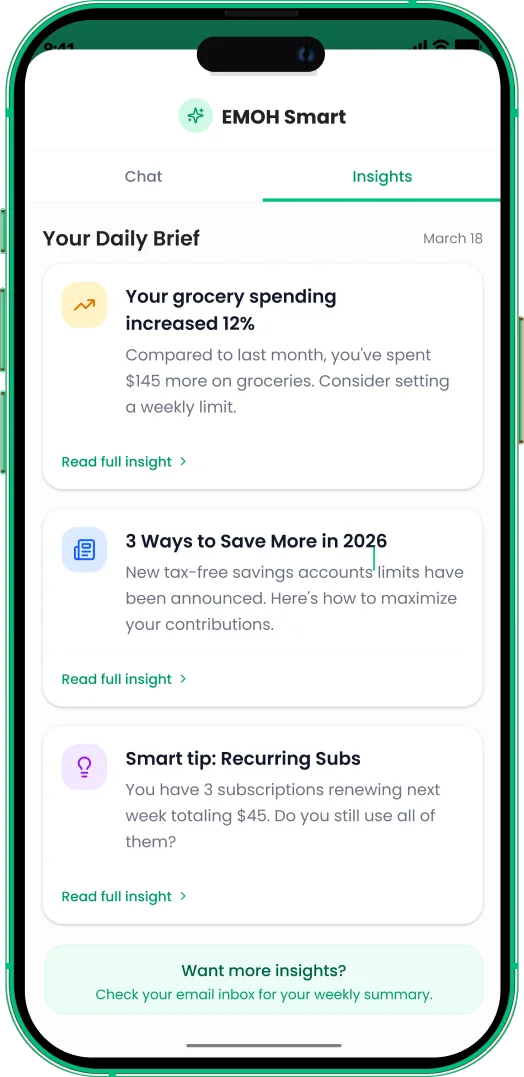
- A daily brief with practical ways to save
- Spot recurring subscriptions worth cutting
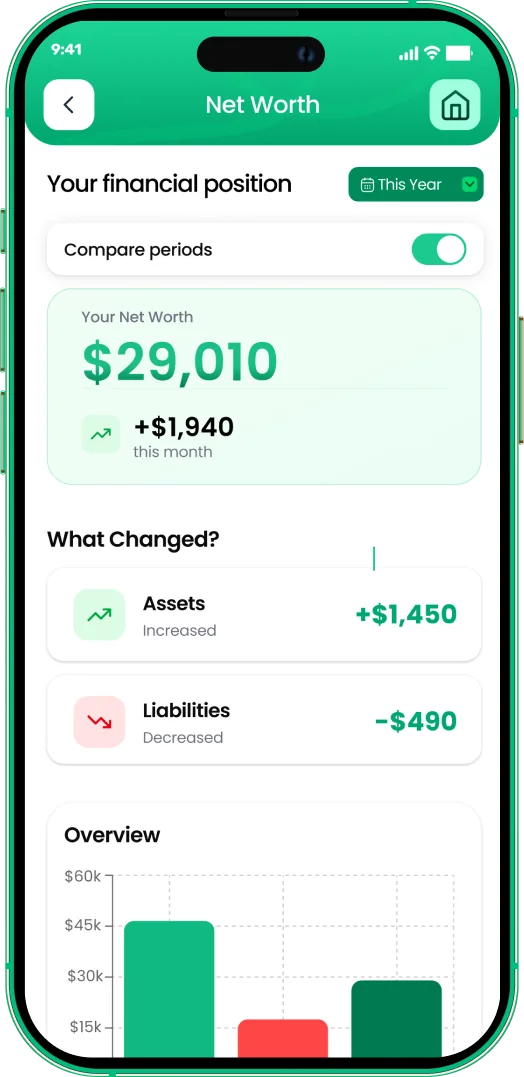
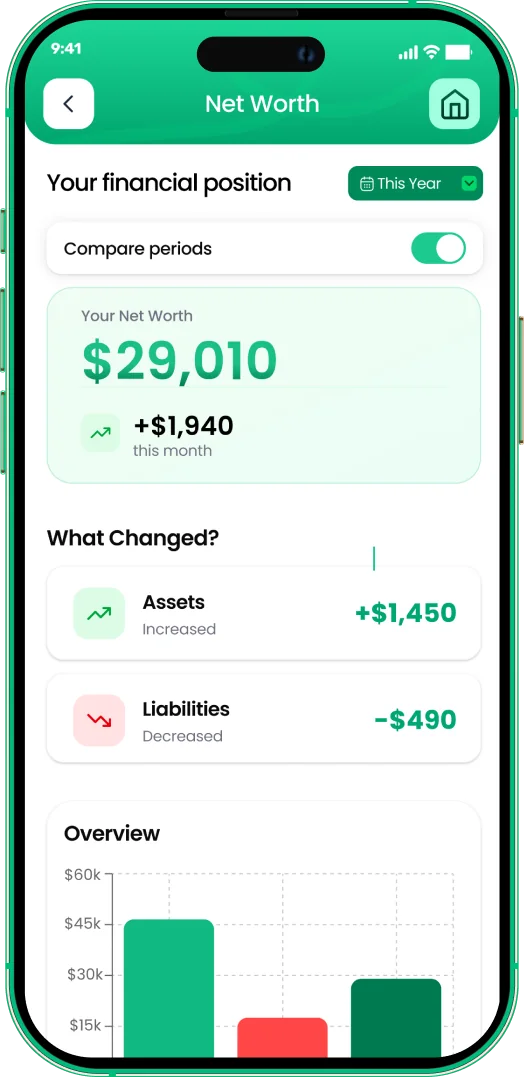
- Watch your savings show up in your net worth


Closing costs: the part many buyers forget
Closing costs are the fees you pay on top of the down payment. CMHC suggests budgeting between 1.5% and 4% of the purchase price. On a $600,000 home, that is about $9,000 to $24,000.
- Land transfer tax. Charged by most provinces and some cities, with rebates for first-time buyers in several provinces. Estimate Ontario's with our land transfer tax calculator.
- Legal fees and title insurance. Usually a lawyer or notary handles the transfer.
- Home inspection and appraisal. Worth paying for, even in a competitive market.
- Adjustments. Your share of property tax or condo fees the seller has prepaid.
- Moving and set-up. Movers, utility hook-ups, window coverings and basic furniture.
First-time buyers can also claim the federal home buyers' amount of $10,000 on their tax return, worth up to $1,500.
How much should you save each month for a house?
Divide your total goal by the months until you want to buy. The table below uses a $600,000 home, with the minimum down payment plus 2.5% for closing costs, a total of $50,000, and ignores investment growth and tax refunds.
| Time to buy | Monthly savings | Per partner (couple) |
|---|---|---|
| 2 years | $2,083 | $1,042 |
| 3 years | $1,389 | $694 |
| 5 years | $833 | $417 |
| 7 years | $595 | $298 |
FHSA and RRSP tax refunds can shorten the timeline if you put them straight back into the fund. Use our savings goal calculator to test your own numbers.
Ways to find more money for your down payment
- Automate on payday. Money moved before you see it is rarely missed.
- Cut one big cost. A cheaper phone plan or one car instead of two can matter more than skipping coffee.
- Save windfalls. Raises, tax refunds and bonuses can go straight to the house fund.
- Track spending for three months. Most people find a few hundred dollars a month leaking into small purchases.
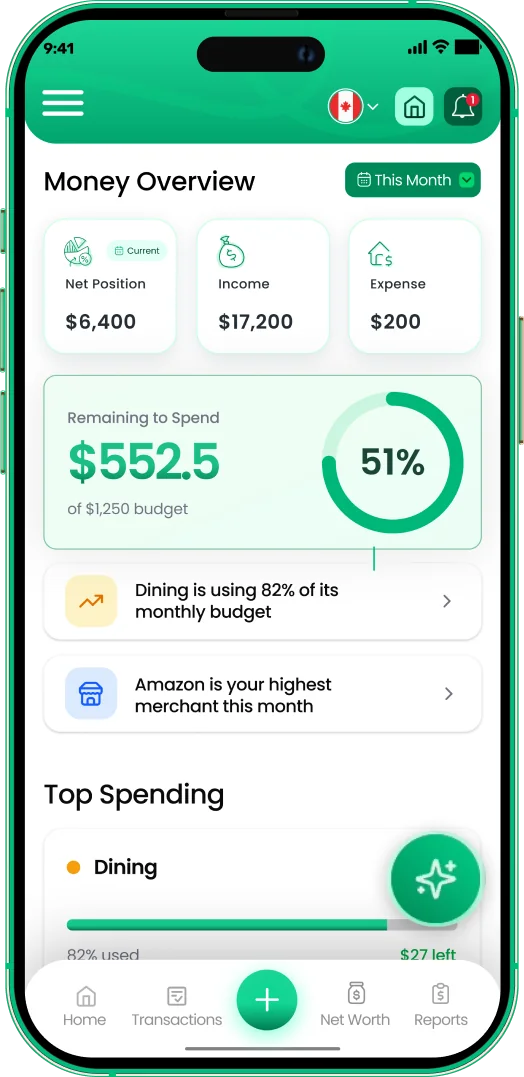
- Use a savings goal. EMOH Pay's savings goals show progress toward your down payment, and its features include net worth tracking so you can see the whole picture as it grows.
If you are renting while you save, keeping rent reasonable helps most. See average rent in Canada to compare your city.
Save more with EMOH Pay

Put the numbers on autopilot
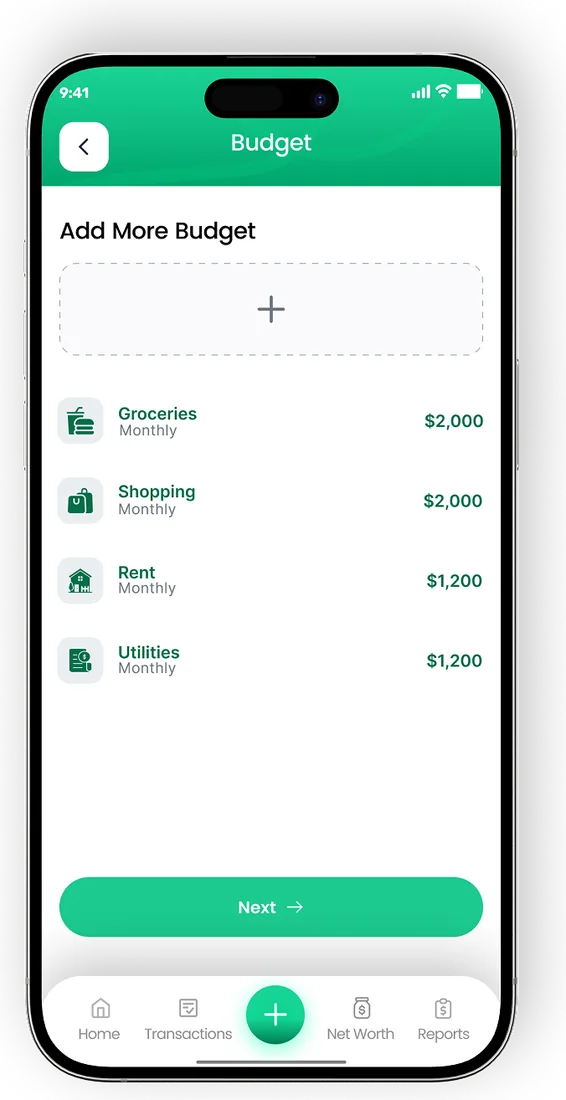
EMOH Pay tracks your spending, budgets and net worth on your phone and in the browser, always in sync. Free to start, made in Canada.
Get started free➜How to Save for a House in Canada: frequently asked questions
How long does it take to save for a house in Canada?
It depends on the price and your savings rate. Saving $1,000 a month toward a $50,000 goal takes a little over four years before growth; a couple saving together can often halve that.
Can I use my FHSA and RRSP for the same home?
Yes. Since the FHSA launched in 2023, first-time buyers can make a qualifying FHSA withdrawal and a Home Buyers' Plan withdrawal for the same purchase.
Who counts as a first-time home buyer?
For the FHSA and Home Buyers' Plan, you generally qualify if you did not live in a home that you or your spouse or common-law partner owned in the current year or the previous four calendar years.
Is it better to put 20% down or buy sooner with 5%?
Putting 20% down avoids CMHC insurance premiums and lowers your payment, but waiting can cost more if prices rise. Compare the premium with the extra rent you would pay while saving.
Can a down payment be a gift?
Yes. Many lenders accept a gift from a close family member with a signed gift letter confirming it does not need to be repaid. Check your lender's rules early.
Sources and further reading
Related guides and tools
FHSA calculator: see how your First Home Savings Account grows year by year, when you hit the $40,000 lifetime limit and how…
What Is an FHSA?What is an FHSA? A plain-language guide to Canada's First Home Savings Account: who qualifies, the $8,000 yearly limit…
Mortgage Affordability Calculator CanadaMortgage affordability calculator for Canada: see the home price you could qualify for under the stress test, then check…
Savings Goal Calculator — Free CalculatorHow much to save per month? Enter your target amount and months until deadline — get your required monthly contribution…
Ontario Land Transfer Tax CalculatorFree land transfer tax calculator for Ontario. See provincial and Toronto land transfer tax on any price, plus the…
Average Rent in Canada by City (2026)Average rent in Canada for 2026: typical one-bedroom ranges in 20 cities, why survey and asking rents differ, and how to…
Start free today
Free on iPhone, Android and the web. Upgrade to EMOH Pro anytime for bank sync and advanced AI.
Download for iOS➜ Get it on Android➜