
How to Stop Impulse Spending
Impulse buys are rarely about the item. They are about timing, mood and friction. Change the friction and the habit follows. Here are 10 tactics that work.
Get started free➜ Download the app➜
How can I stop impulse spending?
You can stop impulse spending by adding friction between wanting something and buying it: wait 48 hours before any unplanned purchase over a set amount, delete saved cards from shopping sites and apps, unsubscribe from marketing emails, give yourself a weekly fun-money limit and review what you bought each week so you spot your triggers.
Why do we impulse buy?
Impulse buying happens when the gap between wanting something and owning it shrinks to a few seconds. Learning how to stop impulse buying starts with understanding that gap. One-tap checkout, saved cards, buy now pay later offers and limited-time countdowns are all designed to remove the pause in which you might change your mind.
Mood matters too. Many people shop when they are bored, stressed, tired or celebrating. The purchase gives a quick lift, then the feeling fades while the charge stays. That is why willpower alone rarely works. The reliable fix is to rebuild the pause so your considered self gets a vote.
- Friction removed: saved payment details, instant checkout, free-shipping thresholds.
- Urgency added: flash sales, countdown timers, low-stock warnings.
- Emotional triggers: stress, boredom, late nights, social media scrolling.
- Payment disconnect: cards and phones feel less real than cash, and instalment plans make a price look smaller.
10 ways to stop impulse buying
Pick two or three of these to start. Stacking a waiting rule with removing saved cards covers most online impulse purchases on its own.
- Use a 48-hour rule. For any unplanned purchase over an amount you choose, such as $50, wait two days. For anything over $200, wait 30 days. Most urges pass.
- Delete saved cards. Remove payment details from shopping sites and apps so every purchase means finding your card.
- Unsubscribe and unfollow. Marketing emails and shopping accounts on social media are designed to create wants. Cut them off at the source.
- Keep a wish list. Write the item down instead of buying it. Review the list monthly and buy only what you still want.
- Set a weekly fun-money limit. A fixed guilt-free amount for spontaneous purchases lets you say yes without guilt and no without drama.
- Translate price into hours. Divide the price by your after-tax hourly pay. A $120 jacket at $24 an hour is five hours of work.
- Avoid shopping in trigger states. Late at night, when stressed or right after payday are common danger zones.
- Shop with a list and a time limit. In stores, buy what is on the list and leave. Online, close the tab once the list is done.
- Be wary of instalment offers. Splitting a price into four payments does not make it cheaper; it makes it easier to overcommit.
- Review every week. Scan last week's purchases and flag anything you regret. Patterns show up quickly.
How to stop impulse buying: an example
Here is how to stop impulse buying in a real month. Imagine someone who makes several small unplanned purchases a week: a takeaway lunch, an online gadget, a few app purchases. They add up their impulse buys for one month and find $420. They then apply three tactics and track the next month.
| Spending type | Month before | Month after | Tactic used |
|---|---|---|---|
| Online shopping | $190 | $60 | Deleted saved cards, 48-hour rule |
| Takeaway and coffee | $150 | $90 | Weekly fun-money limit |
| Apps and in-game purchases | $45 | $10 | Removed payment method from phone |
| Checkout extras in stores | $35 | $15 | Shopping list and time limit |
| Total | $420 | $175 |
The $245 difference is roughly $2,900 over a year if the habit holds. Moved into savings on payday, that alone could build a starter emergency fund. The example is illustrative; your own numbers will depend on how often you buy on impulse today.
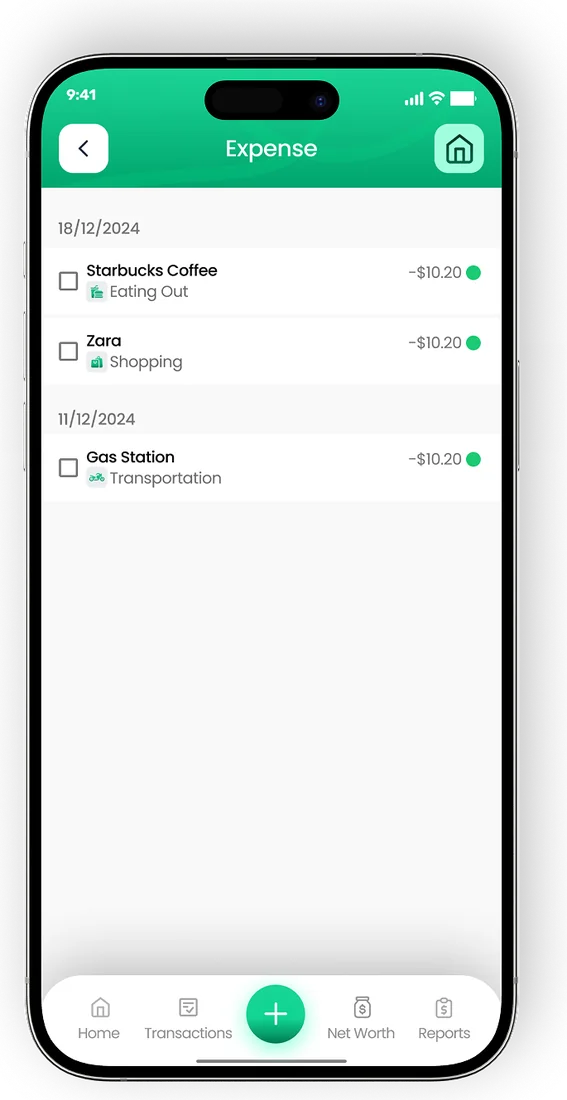
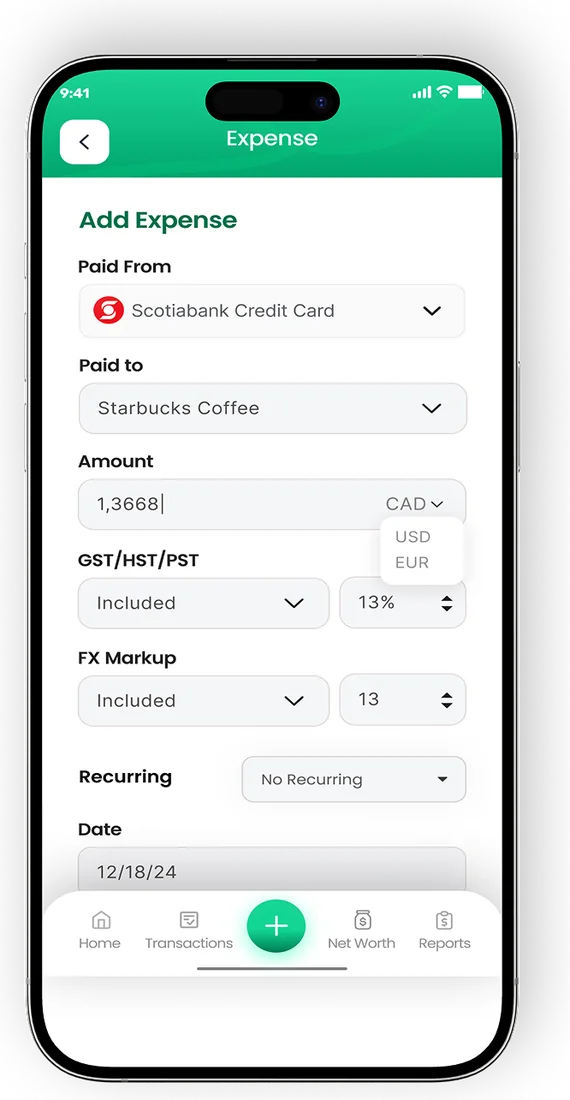
Log a purchase in two taps
- Smart categories sort every transaction
- Tag who spent what in a shared household
- Export PDF or Excel reports any month


How to find your impulse spending triggers
The fastest way to find your triggers is to review a month of transactions and mark every purchase you would not make again. Then look for patterns in the time of day, the day of the week, the store or app, and how you were feeling. Most people find two or three repeat triggers that explain most of the leakage.
- Export or scroll through last month's card and bank transactions.
- Mark each purchase as planned, fine or regret.
- For every regret, note the time, the place and your mood if you remember it.
- Look for the two or three patterns that repeat.
- Choose one tactic from the list above for each pattern.
Methods built around reflection help here. Kakeibo budgeting asks you to review every purchase weekly, and envelope budgeting puts a hard cap on flexible categories.
Tools that make impulse control easier
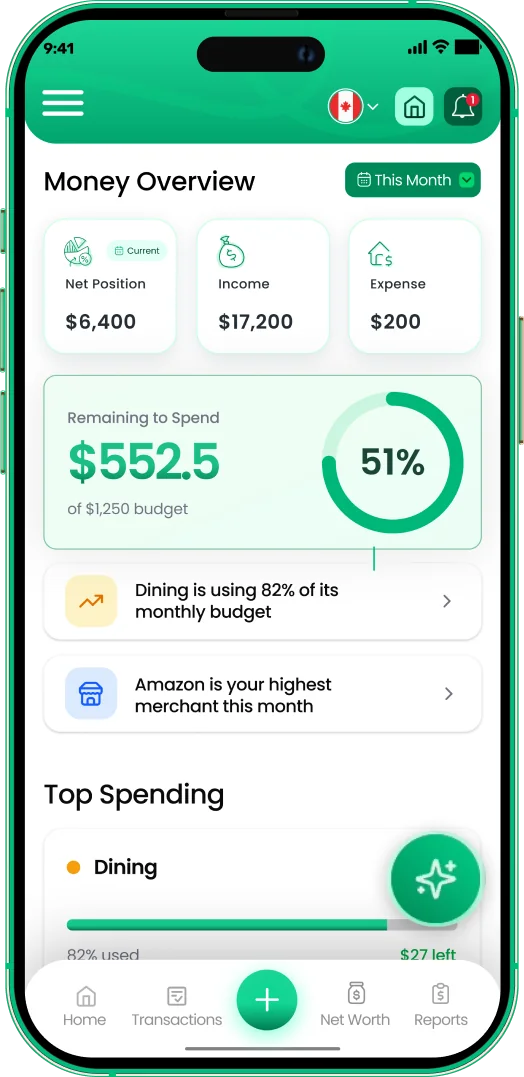
- A budget with alerts. An alert when a category is nearly spent is a natural pause point. EMOH Pay sends overspend alerts on the budgets you set and a daily money digest that summarizes yesterday's spending.
- A spending report. A monthly breakdown by category shows where impulse buys cluster. See how to track your expenses if you are starting from scratch.
- A cost-per-use check. For bigger items, the cost per use calculator shows whether something you will use twice is worth the price.
- A subscription audit. Small recurring charges are often past impulses. The subscription cost calculator totals them for a year.
Try a no-buy challenge to reset the habit
If impulse buying feels automatic, a short break can reset it. A no-buy challenge means buying only essentials such as groceries, bills and transport for a set period, often a month. It breaks the routine, shows you how much you can live without and gives you a clean baseline for your budget afterwards.
Whatever you choose, pair it with a plan for the money you save. Send it to a goal on payday using the pay yourself first method, so the savings do not simply turn into a different kind of spending. More approaches sit in our budgeting methods guide.
Track every dollar
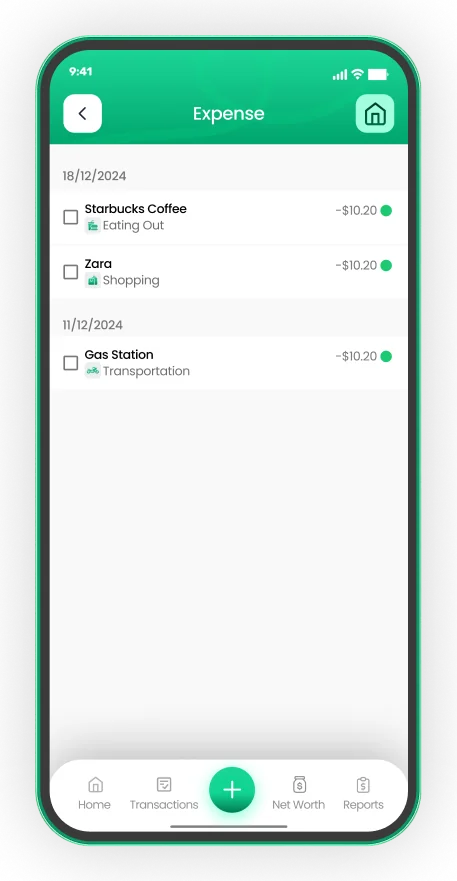

Put the numbers on autopilot
EMOH Pay tracks your spending, budgets and net worth on your phone and in the browser, always in sync. Free to start, made in Canada.
Get started free➜How to Stop Impulse Spending: frequently asked questions
What is the 30-day rule for impulse buying?
When you want something you had not planned to buy, write it down and wait 30 days. If you still want it and can afford it without touching savings, buy it. Many people use a shorter 24 or 48-hour wait for smaller items.
Is impulse buying a sign of a bigger problem?
Occasional impulse purchases are normal. If spending feels out of control, causes debt you cannot manage or is tied to distress, consider speaking with a non-profit credit counsellor or a health professional.
Does paying with cash reduce impulse spending?
For many people it does, because handing over cash feels more real than tapping a card. A weekly cash amount for flexible spending is a simple version of the envelope method.
How do I stop impulse buying online?
Delete saved cards, log out of shopping accounts, turn off shopping app notifications and unsubscribe from promotional emails. Then use a waiting rule for anything left in your cart.
Should I cut out all spontaneous spending?
No. A small weekly fun-money budget makes the plan sustainable. The goal is to choose your spontaneous purchases, not to eliminate them.
Sources and further reading
Related guides and tools
50/30/20, zero-based, envelopes or pay-yourself-first — the best budgeting method is the one you'll still be using in March.…
No-Buy Challenge: How to Do ItA no-buy challenge means buying only essentials for a set time. Learn how to set rules, build a need list, try a low buy…
Kakeibo: The Japanese Budgeting MethodKakeibo is a Japanese budgeting method built on four spending categories and four questions. See how it works, a kakeibo…
Envelope Budgeting MethodEnvelope budgeting gives every spending category a fixed pot of money. See how the cash envelope system works, a worked…
How to Track ExpensesTracking expenses means recording where money actually goes — the foundation under every budget. Manual, automatic, or…
Money-Saving Tips That Actually Work in 2026Building wealth and achieving financial freedom often feels like a distant dream, but it starts with simple, actionable…
Start free today
Free on iPhone, Android and the web. Upgrade to EMOH Pro anytime for bank sync and advanced AI.
Download for iOS➜ Get it on Android➜