
Envelope Budgeting Method
Put a fixed amount in each spending category, spend only what is in that envelope, and stop when it is empty. Here is how to set it up with cash or digital envelopes, with a full worked example.
Get started free➜ Download the app➜
How does envelope budgeting work?
Envelope budgeting works by splitting your take-home pay into separate envelopes, one per spending category, before the month starts. You spend from an envelope only until it is empty. If groceries run out early, you either stop or move money from another envelope. The fixed limit turns every purchase into a visible trade-off.
What is envelope budgeting?
Envelope budgeting is a spending-control method where each variable category gets a fixed amount of money for the period, held in its own envelope. When the envelope is empty, spending in that category stops until the next refill. It is one of the oldest budgeting methods and still one of the most effective for people who overspend.
The idea predates banking apps. Households once cashed a pay cheque and divided the notes into labelled envelopes for rent, food and fuel. The modern version works the same way, whether the envelope is paper or a category in an app. For a side-by-side look at all the main systems, see our budgeting methods comparison.
How does the cash envelope system work step by step?
The cash envelope system works by withdrawing your variable spending money in cash on payday and splitting it into labelled envelopes. Fixed bills such as rent, loan payments and insurance stay in your bank account and are paid automatically. Only the flexible categories where overspending happens go into envelopes.
- Work out your monthly take-home pay. If your income varies, use a cautious baseline month.
- List fixed bills that are paid electronically and leave that money in your chequing account.
- Pick the variable categories where you tend to overspend: groceries, dining out, fuel, personal care, entertainment, clothing.
- Set a limit for each one based on the last two or three months of real spending, trimmed slightly.
- On payday, withdraw the total in cash or fund each digital envelope, and label each envelope clearly.
- Pay for each purchase from the matching envelope only. Keep receipts inside it.
- When an envelope runs dry, stop spending in that category or deliberately move money from another envelope.
- At the end of the month, roll leftovers forward or sweep them into savings.
A worked envelope budgeting example
Take a household with $3,600 of monthly take-home pay. Fixed bills of $2,050 stay in the bank. The remaining $1,550 is split into six envelopes, refilled on each of two paydays.
| Envelope | Monthly amount | Per biweekly payday | Where it lives |
|---|---|---|---|
| Rent, utilities, phone, insurance | $2,050 | $1,025 | Bank account (fixed) |
| Groceries | $520 | $260 | Envelope |
| Fuel and transit | $220 | $110 | Envelope |
| Dining out and coffee | $160 | $80 | Envelope |
| Personal care and household | $110 | $55 | Envelope |
| Fun money | $140 | $70 | Envelope |
| Savings | $400 | $200 | Transferred to savings on payday |
| Total | $3,600 | $1,800 |
Say the dining envelope is empty by the 20th and a friend suggests dinner. The choice is explicit: skip it, or take $40 from fun money. Either way the month still balances. That is the whole point of the method. Overspending in one area has to be paid for by another, not by a credit card.
Budgets that update themselves
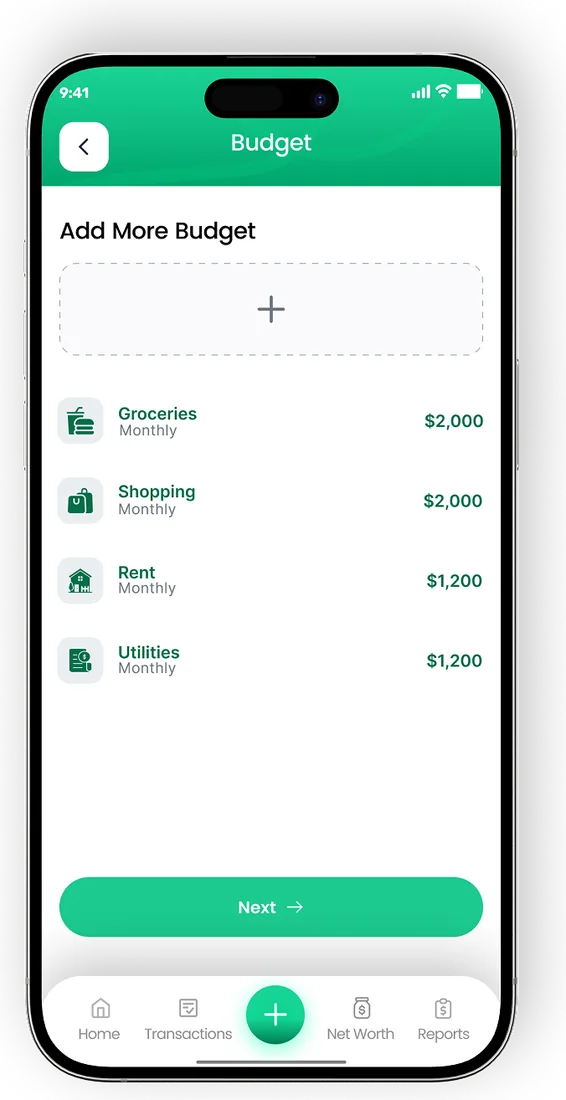
- Set monthly limits for every category
- See what is left to spend in real time
- Get a nudge before a category runs out


Cash envelopes versus digital envelopes
Cash envelopes create friction, which is why they work for impulse spenders. Handing over physical notes feels more like spending than tapping a card. The downsides are real, though. Cash does not work for online shopping, can be lost or stolen, and leaves no automatic record.
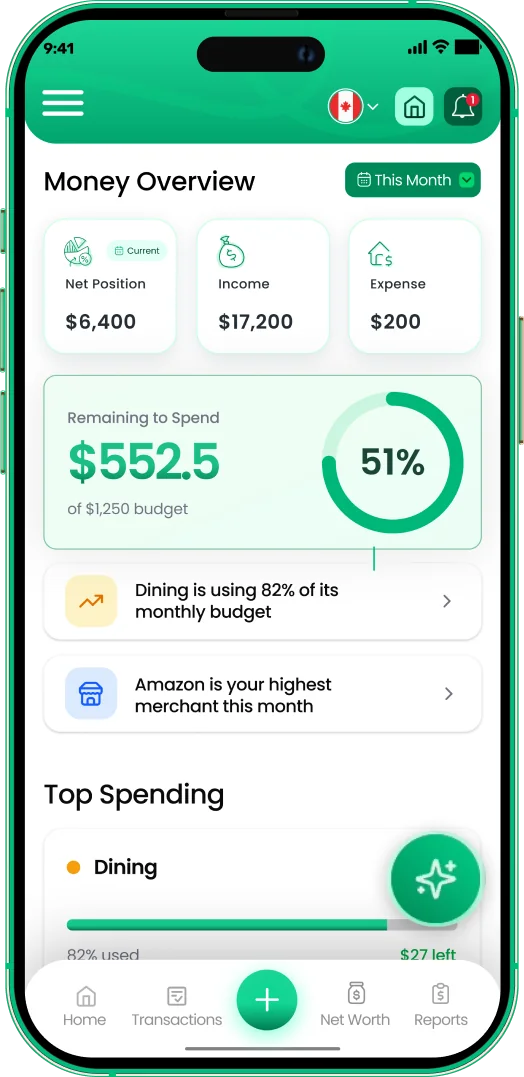
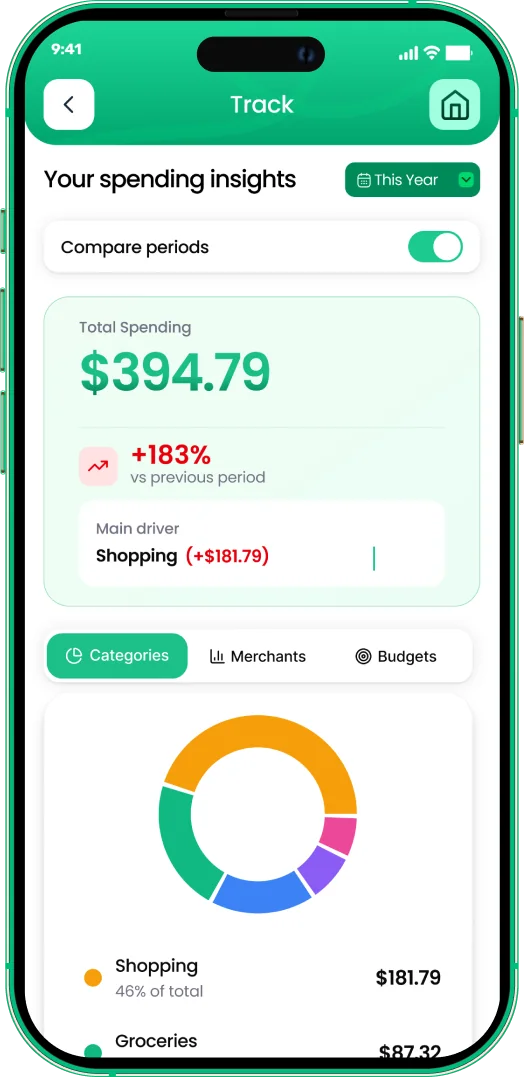
Digital envelopes keep the fixed limit but live in an app. In EMOH Pay, each budget category acts as a digital envelope: you set the amount, every expense you log or sync draws it down, and the app shows what is left in each envelope in real time on your phone and on the web. Many people use a hybrid, with cash for groceries and dining and digital envelopes for everything else.
| Cash envelopes | Digital envelopes | |
|---|---|---|
| Spending friction | High, which curbs impulse buys | Lower, relies on checking the app |
| Online purchases | Not possible | Works normally |
| Record keeping | Manual, via receipts | Automatic history and reports |
| Sharing with a partner | One physical set | Both partners see the same balances |
| Security | Risk of loss or theft | Card protections apply |
Envelope budgeting versus other budgeting methods
Envelope budgeting is a control tool, so it pairs well with a planning method. Many people use the 50/30/20 rule to size the big buckets, then run envelopes inside the wants bucket. Others give every dollar a job with zero-based budgeting, which is effectively envelope budgeting applied to your entire income.
| Method | How money is split | Tracking effort | Best for |
|---|---|---|---|
| Envelope budgeting | Fixed amounts per category | Medium | Overspending in specific categories |
| 50/30/20 rule | Three percentage buckets | Low | Beginners wanting a simple guide |
| Zero-based budgeting | Every dollar assigned | High | Detail-oriented planners |
| Pay yourself first | Savings out first, rest free | Very low | People who hate tracking |
| Kakeibo | Four categories plus reflection | Medium | Mindful, pen-and-paper budgeters |
Common envelope budgeting mistakes
- Too many envelopes. Twenty categories become a chore. Start with five or six variable ones.
- Forgetting irregular costs. Car repairs and annual fees break envelope budgets. Add sinking funds so these have their own envelopes.
- Borrowing without noticing. Moving money between envelopes is allowed, but record it. Regular transfers mean the limit needs resetting.
- Keeping large amounts of cash at home. Refill each payday rather than withdrawing a whole month at once.
- Treating leftovers as spending money. Decide in advance whether surplus rolls over or goes to savings.
Plan your month in EMOH Pay

Put the numbers on autopilot
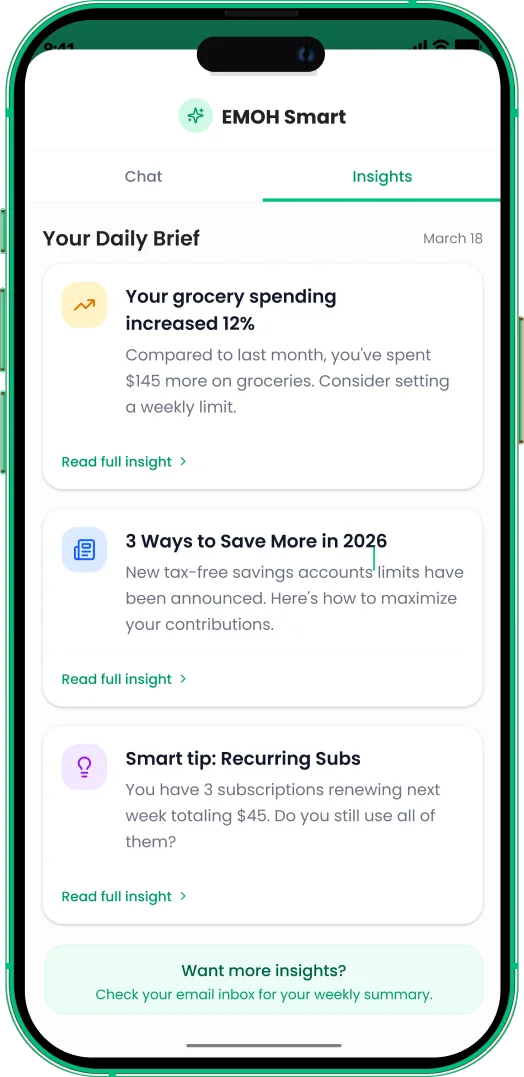
EMOH Pay tracks your spending, budgets and net worth on your phone and in the browser, always in sync. Free to start, made in Canada.
Get started free➜Envelope Budgeting Method: frequently asked questions
Does envelope budgeting really work?
It works well for people whose main problem is overspending in a few categories, because the hard limit makes every purchase a choice. It works less well if your issue is low income or large fixed costs, which envelopes do not change.
What categories should I use for envelopes?
Use envelopes for variable spending you can control: groceries, dining out, fuel, personal care, entertainment, clothing and gifts. Leave fixed bills such as rent and loan payments in the bank on automatic payment.
What happens to money left in an envelope at the end of the month?
You choose. Rolling it forward builds a buffer for that category. Sweeping it into savings rewards you for underspending. Pick one rule and apply it consistently.
Can I do envelope budgeting without cash?
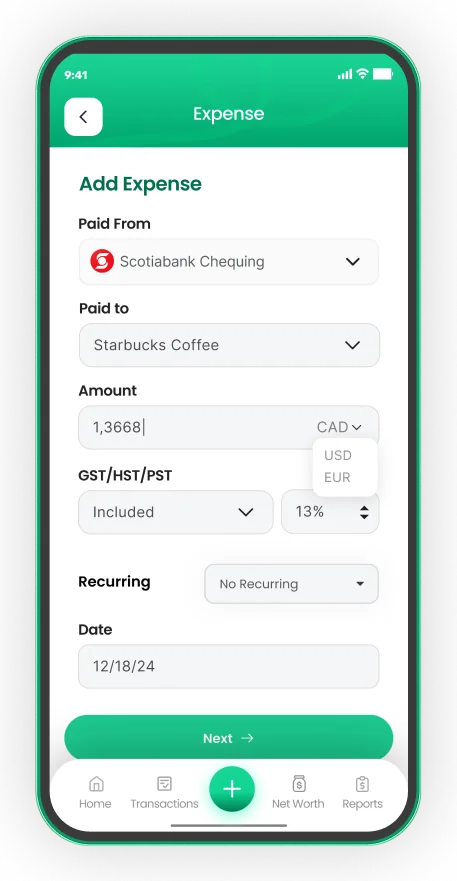
Yes. Digital envelopes in a budgeting app give each category a fixed limit and track spending against it automatically. EMOH Pay budgets work this way, and they also handle purchases in other currencies.
Is envelope budgeting the same as zero-based budgeting?
They overlap. Zero-based budgeting assigns every dollar of income a job. Envelope budgeting puts hard spending limits on categories. You can run envelopes without assigning every dollar, but full envelope systems usually end up zero-based.
Sources and further reading
Related guides and tools
50/30/20, zero-based, envelopes or pay-yourself-first — the best budgeting method is the one you'll still be using in March.…
Zero-Based Budgeting: The Complete Beginner Guide 2026What if every dollar you earned had a specific destination — before you spent a single penny of it? That’s the premise…
The 50/30/20 Rule ExplainedThe 50/30/20 rule splits take-home pay into 50% needs, 30% wants and 20% savings. See what counts in each bucket, worked…
Sinking Funds: What They Are and How to Use ThemSinking funds turn big irregular costs into small monthly savings. Learn how they work, common sinking fund categories, a…
Goodbudget Alternative for Canada (2026)Goodbudget brings envelopes to your phone, but everything is manual and the free plan caps envelopes. EMOH Pay does…
100 Envelope ChallengeThe 100 envelope challenge saves $5,050 in 100 days. Use the free tracker and chart, pick a smaller or faster version, and…
Start free today
Free on iPhone, Android and the web. Upgrade to EMOH Pro anytime for bank sync and advanced AI.
Download for iOS➜ Get it on Android➜