
Pay Yourself First
Move savings out the day your pay lands, then live on what is left. No category tracking required. Here is how it works, how much to save and how to set it up.
Get started free➜ Download the app➜
What does 'pay yourself first' mean?
Pay yourself first means setting aside a fixed amount for savings, investing or debt payoff as soon as your paycheque arrives, before you pay bills or spend on anything else. Savings become a non-negotiable bill you owe yourself, and you budget the rest of the month around whatever money remains in your chequing account.
What does pay yourself first mean in practice?
In practice, pay yourself first means an automatic transfer leaves your chequing account on payday and goes into savings before rent, groceries or anything else. You decide the amount once, the bank moves it every time, and you never see that money as spendable. The habit replaces willpower with a default.
Most budgets save whatever is left at the end of the month. For many people, nothing is left. Pay yourself first flips the order. Saving comes off the top, and spending adjusts to fit the remainder, the same way it adjusts around rent.
The idea is old. George S. Clason's 1926 book The Richest Man in Babylon built a story around keeping a part of all you earn. Today it is one of the simplest methods on our budgeting methods list, and it pairs well with almost every other approach.
A pay yourself first example on a Canadian paycheque
Say you take home $2,200 every two weeks after tax, CPP and EI. You choose to pay yourself 15%, which is $330 per paycheque. On payday, three automatic transfers go out before you spend a dollar.
| Transfer | Per paycheque | Per year (26 pays) |
|---|---|---|
| Emergency fund (high-interest savings) | $130 | $3,380 |
| TFSA | $150 | $3,900 |
| Extra credit card payment | $50 | $1,300 |
| Left in chequing for bills and spending | $1,870 | $48,620 |
The $1,870 left in chequing is your whole budget for rent, groceries, transit and fun. If it feels too tight after a month, lower the rate to 10% rather than stopping. If it feels easy, nudge it up by 1% every few months.
The TFSA line in this example stays well under the 2026 annual TFSA limit of $7,000. Check your own room on the TFSA limit 2026 page before you set a large transfer.
How much should you pay yourself first?
A common target is 10% to 20% of take-home pay, but the right number is the one you can keep every payday. Start with a rate that does not force you to dip back into savings, even if it is 3% or 5%, then raise it each time your income rises or a debt is paid off.
The 20% savings bucket in the 50/30/20 rule is a useful benchmark. If you want a figure tied to your goals rather than a percentage, work backwards: add up what you need for an emergency fund, a down payment or retirement, divide by the months you have, and use our guide on how much to save each month.
- Tight budget or high-interest debt: 3% to 5% into an emergency fund while you pay the debt down.
- Stable income, some savings: 10% to 15% split between an emergency fund and a TFSA or RRSP.
- Aggressive goals: 20% or more, often through the 80/20 budget or a higher split.
Tips that help you save
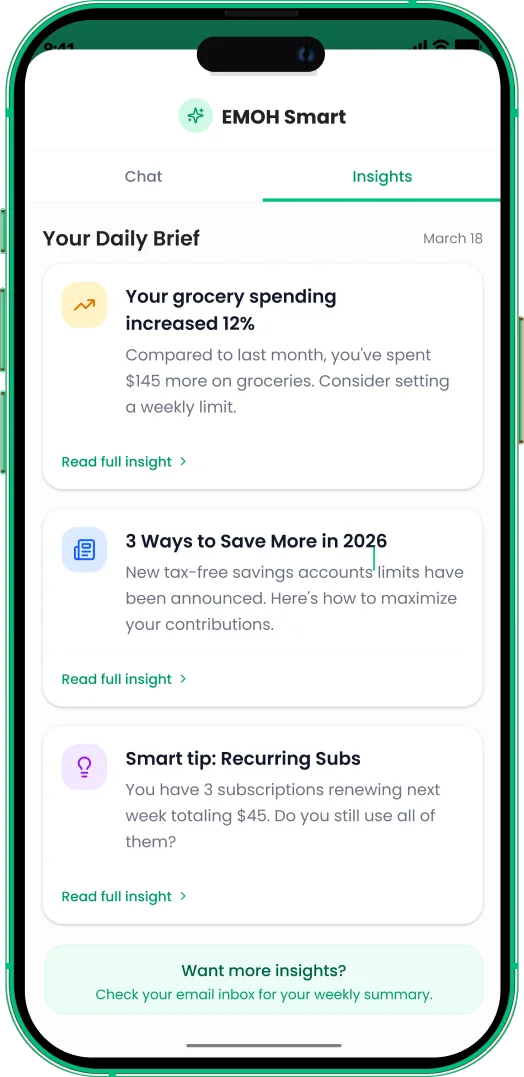
- A daily brief with practical ways to save
- Spot recurring subscriptions worth cutting
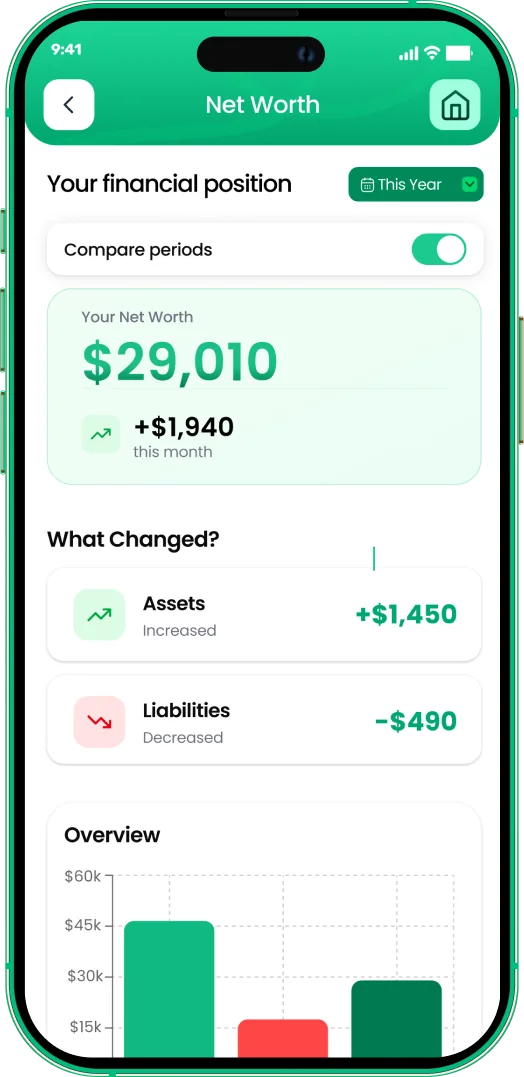
- Watch your savings show up in your net worth

How to set up pay yourself first in 15 minutes
- Find your real take-home pay per paycheque from your last pay stub or bank deposit.
- Pick a rate and turn it into a dollar amount per pay period.
- Decide where it goes: an emergency fund first, then registered accounts such as a TFSA or RRSP, then extra debt payments.
- Schedule recurring transfers in your online banking for payday or the day after, so the money moves before you can spend it.
- Budget the remainder. List fixed bills first, then give the rest a weekly spending limit.
- Review every three months and raise the rate by 1% if the last quarter felt comfortable.
Pay yourself first versus other budgeting methods
Pay yourself first is less a full budget and more a rule about order. That is why it combines easily with other methods. The table shows how it compares with the approaches people most often weigh it against.
| Method | How savings happen | Tracking effort | Best for |
|---|---|---|---|
| Pay yourself first | Automatic transfer on payday | Low | People who dislike tracking categories |
| Reverse budgeting | Goals set first, rest spent freely | Low | Goal-driven savers |
| 50/30/20 rule | 20% bucket, often at month end | Medium | Beginners who want structure |
| Zero-based budgeting | Every dollar assigned a job | High | People who want full control |
Reverse budgeting takes the same principle and builds the whole budget around your goals. Zero-based budgeting goes the other way and plans every dollar. If your pay changes month to month, read our guide to budgeting on an irregular income before you pick a fixed transfer.
Common pay yourself first mistakes
It also helps to see the remainder clearly. EMOH Pay shows what is left for bills and spending after your savings transfers, and savings goals track each account's progress so the habit feels rewarding rather than invisible.
- Saving so much you borrow it back. If you raid savings or lean on a credit card every month, the rate is too high. Lower it and keep the habit.
- Forgetting irregular bills. Car insurance, gifts and annual renewals still need money. Set aside a small monthly amount for them so they do not eat your savings.
- Leaving the money in chequing. A separate account, ideally at a different bank, adds friction that protects it.
- Never raising the rate. A raise is the easiest time to increase your transfer, because you never get used to spending the extra.
Save more with EMOH Pay
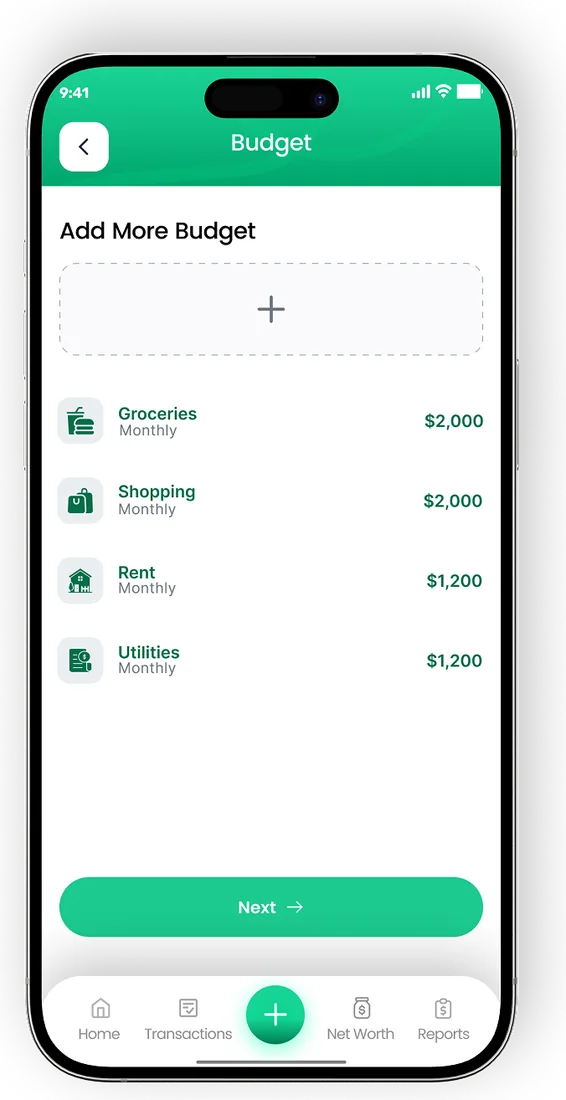
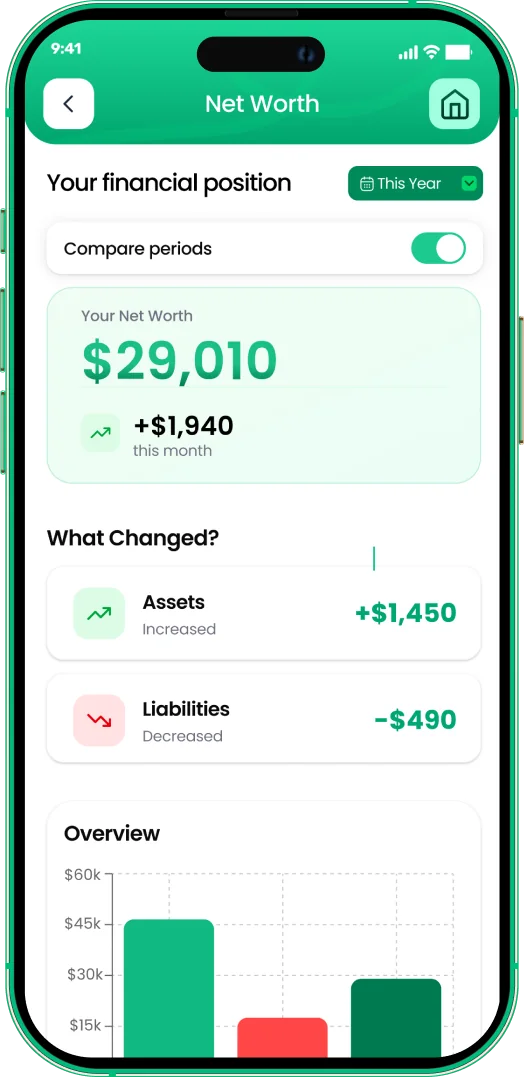
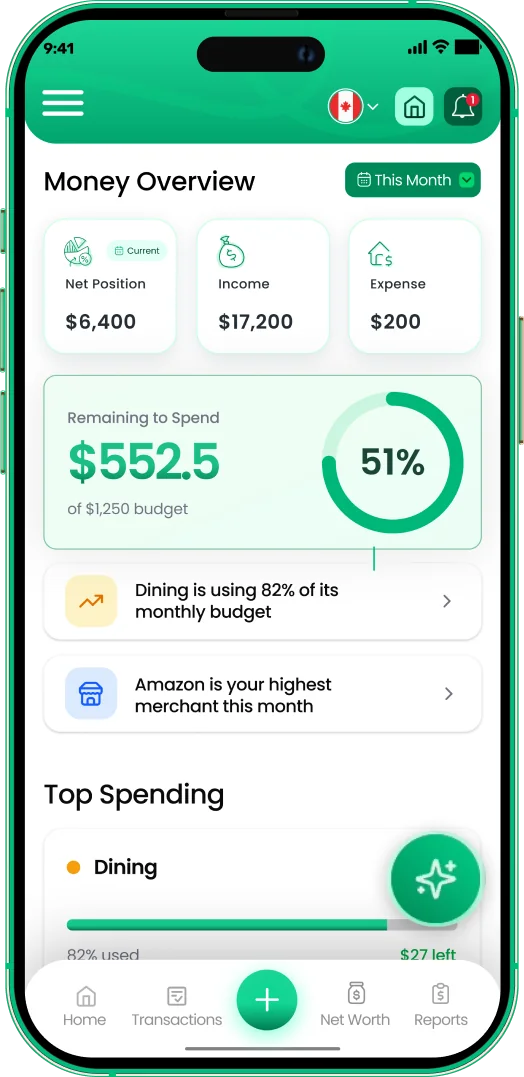

Put the numbers on autopilot
EMOH Pay tracks your spending, budgets and net worth on your phone and in the browser, always in sync. Free to start, made in Canada.
Get started free➜Pay Yourself First: frequently asked questions
Is pay yourself first the same as reverse budgeting?
They are closely related. Pay yourself first is the habit of saving before spending. Reverse budgeting is a full budget built on that habit, starting from savings goals and letting the rest be spent without detailed category limits.
Should I pay myself first if I have credit card debt?
Yes, but keep it small. Build a starter emergency fund of a few hundred to a thousand dollars so surprises do not go on the card, and direct most extra money to the high-interest balance.
Does paying off debt count as paying yourself first?
Payments above the minimum can count, because they raise your net worth just as savings do. Minimum payments are a bill, not savings.
What if my income is irregular?
Use a percentage rather than a fixed amount. Move the percentage out each time money arrives, and keep a buffer so low months do not force you to pull savings back.
Where should the money go first?
Most people start with an emergency fund in a high-interest savings account, then move to a TFSA or RRSP. The right order depends on your debts, goals and tax situation.
Sources and further reading
Related guides and tools
50/30/20, zero-based, envelopes or pay-yourself-first — the best budgeting method is the one you'll still be using in March.…
Reverse BudgetingReverse budgeting starts with your savings goals and lets you spend the rest freely. See how it works, a reverse budgeting…
The 80/20 BudgetThe 80/20 budget saves 20% of take-home pay first and lets you spend the other 80% freely. See how it works, an 80/20 budget…
The 50/30/20 Rule ExplainedThe 50/30/20 rule splits take-home pay into 50% needs, 30% wants and 20% savings. See what counts in each bucket, worked…
How Much Should I Save Each Month?How much should I save each month? A common target is 20% of take-home pay. See how to adjust it for your income, goals and…
Emergency Fund GuideAn emergency fund is 3–6 months of essential expenses in cash — the buffer that turns a crisis into an inconvenience. Free…
Start free today
Free on iPhone, Android and the web. Upgrade to EMOH Pro anytime for bank sync and advanced AI.
Download for iOS➜ Get it on Android➜