
Kakeibo: The Japanese Budgeting Method
A household ledger from 1904 that asks you to write down every purchase and reflect on it. Slow on purpose, and that is why it works.
Get started free➜ Download the app➜
How does kakeibo budgeting work?
Kakeibo budgeting works by recording every purchase by hand in one of four categories, needs, wants, culture and unexpected, then reviewing your spending weekly and monthly with four questions: how much money you have, how much you want to save, how much you are spending and how you can improve. The mindful reflection is the method.
What is kakeibo?
Kakeibo (pronounced kah-keh-boh) is a Japanese word meaning household finance ledger. It describes a budgeting method in which you write down money coming in, set a savings goal, record each purchase and reflect on your choices at the end of each week and month. It is credited to Hani Motoko, a journalist who published the first kakeibo in 1904.
The method became popular with households in Japan and has spread worldwide through books and printable journals. It sits on our list of budgeting methods as the most reflective one. Instead of automating money away, kakeibo slows you down so you notice every spending decision.
The four kakeibo categories
Every purchase goes into one of four categories. The small number is deliberate: sorting takes seconds, and the labels push you to ask why you bought something rather than simply what it was.
| Category | What belongs there | Examples |
|---|---|---|
| Needs (survival) | Things you cannot do without | Groceries, rent, utilities, transit, medicine |
| Wants (optional) | Nice to have, could skip this month | Takeaway, clothes beyond basics, streaming |
| Culture | Spending that enriches your mind | Books, museum passes, courses, concerts |
| Unexpected (extra) | One-off or unplanned costs | Car repair, a gift, a dental bill |
Some people split rent and other fixed bills out at the start of the month and use the four categories only for day-to-day spending. Either version works as long as you stay consistent. For more on separating fixed and flexible costs, see fixed vs variable expenses.
The four questions at the heart of kakeibo
Kakeibo asks four questions. You answer the first two at the start of the month and the last two at the end, which turns budgeting into a monthly conversation with yourself.
- How much money do you have? Write your monthly income, then subtract fixed costs such as rent, phone and insurance.
- How much would you like to save? Set a savings target before you spend anything, and note what the money is for.
- How much are you spending? Total each category at the end of every week and again at month end.
- How can you improve? Look at what you spent and write down one or two specific changes for next month.
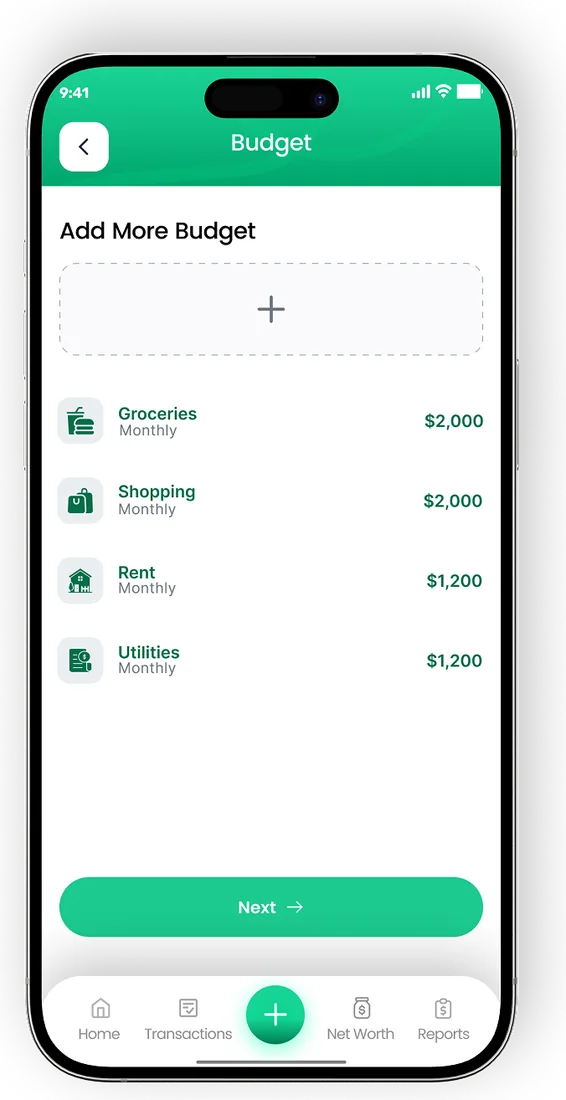
Budgets that update themselves
- Set monthly limits for every category
- See what is left to spend in real time
- Get a nudge before a category runs out


A kakeibo example month
Here is a kakeibo example for a single person in Canada with $3,800 of monthly take-home pay. Fixed costs come off first, a savings goal is set, and the rest is split across the four categories with a weekly check-in.
| Line | Planned | Actual |
|---|---|---|
| Income | $3,800 | $3,800 |
| Fixed costs (rent, phone, insurance) | $1,900 | $1,900 |
| Savings goal | $500 | $500 |
| Needs (groceries, transit) | $650 | $690 |
| Wants | $400 | $470 |
| Culture | $150 | $90 |
| Unexpected | $200 | $60 |
| Left over | $0 | $90 |
The month-end reflection might read: wants went over by $70, mostly on weekday lunches. Next month, bring lunch three days a week and move the $90 surplus to savings. That short written note is what separates kakeibo from simple expense tracking.
How to start kakeibo budgeting
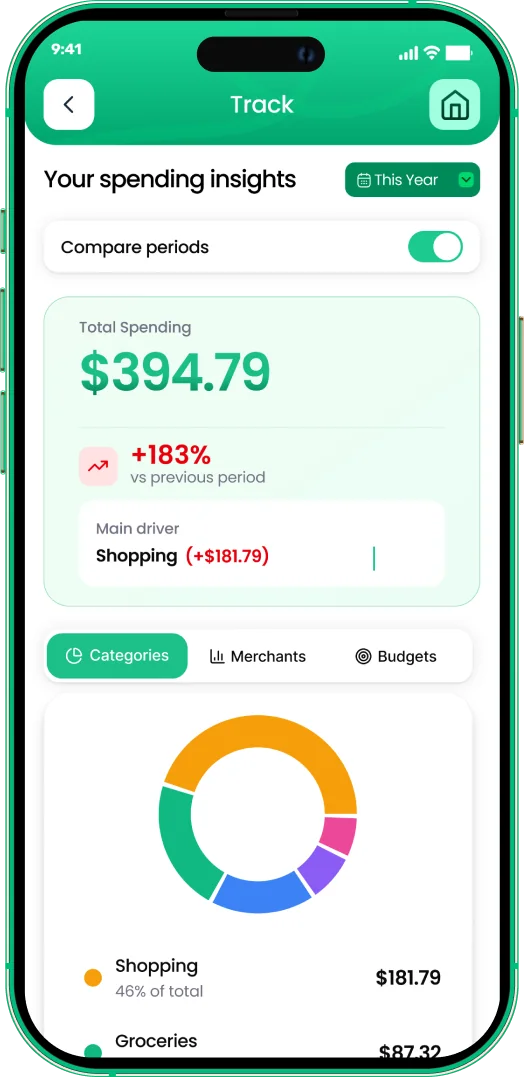
If a paper notebook does not suit you, you can keep the same structure digitally. In EMOH Pay you can create four budgets named needs, wants, culture and unexpected, log each purchase on your phone and read the monthly report during your reflection. The categories and questions matter more than the pen.
- Choose a notebook, a printable template or a simple app. Handwriting is traditional because it slows you down.
- On the first of the month, write your income, fixed costs and savings goal.
- Record every purchase the same day, with the amount and one of the four categories.
- Every Sunday, total each category and write a sentence about the week.
- At month end, answer the last two questions and set one improvement for next month.
Kakeibo versus other budgeting methods
Kakeibo is closest to the envelope method, because both cap spending by category. The difference is that envelope budgeting relies on hard limits, while kakeibo relies on awareness and reflection. Compared with the 50/30/20 rule, kakeibo has no fixed percentages; you choose your own savings goal each month.
It suits people who spend without noticing, who like journaling or who want to understand the emotions behind purchases. It suits people who want a hands-off system less well. They may prefer pay yourself first, which saves automatically. Many people combine the two: automate savings on payday, then use kakeibo to watch the rest. If impulse purchases are your main leak, our guide on how to stop impulse spending pairs well with it.
Plan your month in EMOH Pay
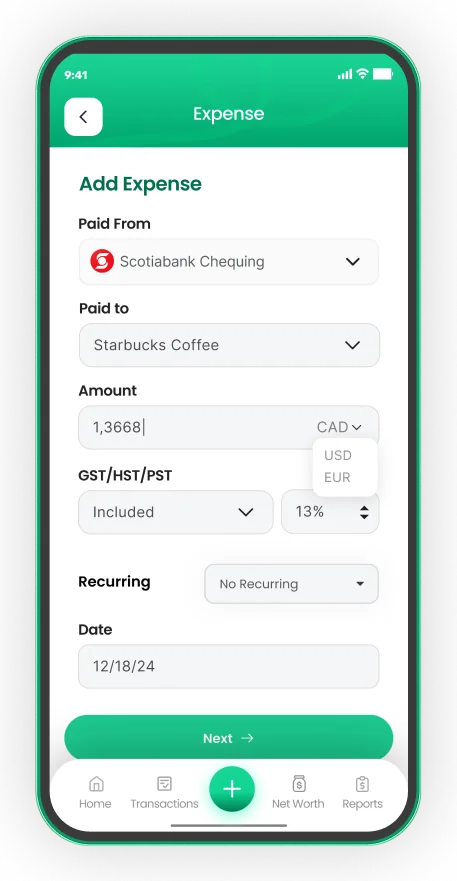

Put the numbers on autopilot
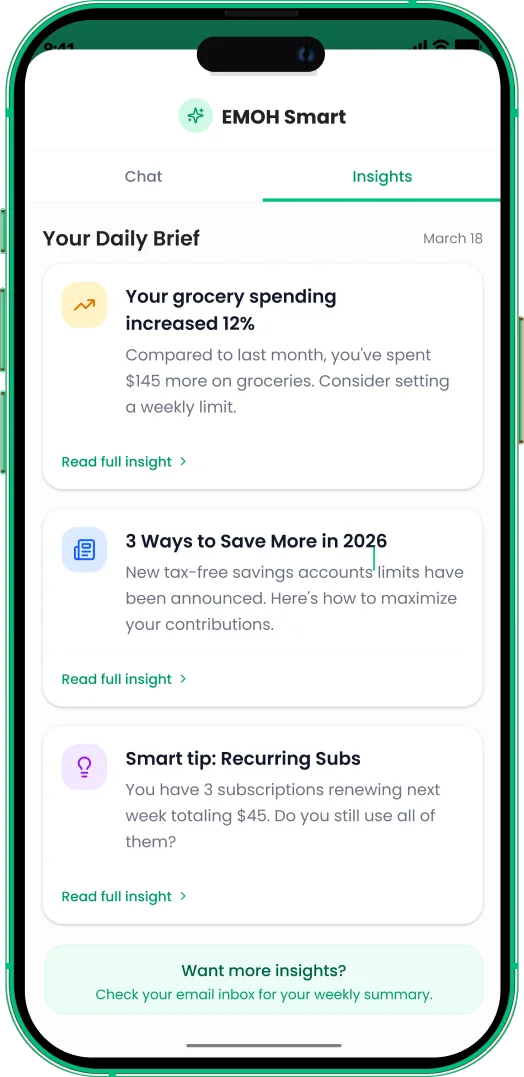
EMOH Pay tracks your spending, budgets and net worth on your phone and in the browser, always in sync. Free to start, made in Canada.
Get started free➜Kakeibo: The Japanese Budgeting Method: frequently asked questions
Do I have to write kakeibo by hand?
No. Handwriting is traditional because it makes each purchase feel real, but the categories and reflection questions work just as well in a spreadsheet or budgeting app.
How long does kakeibo take each week?
Recording purchases takes a minute or two a day. The weekly review usually takes 10 to 15 minutes, and the monthly reflection a little longer.
Where do rent and bills go in kakeibo?
Most people subtract fixed bills at the start of the month when answering the first question, then use the four categories for day-to-day spending.
Is kakeibo good for couples?
Yes. Each partner can log their own purchases in shared categories, and the monthly questions become a short money conversation. A shared app makes this easier than passing a notebook around.
What if I go over in a category?
Nothing is locked. Note it, find the cause during your weekly review and write one change for next month. Kakeibo is about awareness, not penalties.
Sources and further reading
Related guides and tools
50/30/20, zero-based, envelopes or pay-yourself-first — the best budgeting method is the one you'll still be using in March.…
Envelope Budgeting MethodEnvelope budgeting gives every spending category a fixed pot of money. See how the cash envelope system works, a worked…
The 50/30/20 Rule ExplainedThe 50/30/20 rule splits take-home pay into 50% needs, 30% wants and 20% savings. See what counts in each bucket, worked…
Pay Yourself FirstPay yourself first means saving before you spend. See what it means, a pay yourself first example on a Canadian paycheque…
How to Stop Impulse SpendingHow to stop impulse buying: 10 practical tactics, from a 48-hour rule to deleting saved cards, plus why impulse purchases…
How to Track ExpensesTracking expenses means recording where money actually goes — the foundation under every budget. Manual, automatic, or…
Start free today
Free on iPhone, Android and the web. Upgrade to EMOH Pro anytime for bank sync and advanced AI.
Download for iOS➜ Get it on Android➜