
Reverse Budgeting
Build your budget backwards: goals first, bills second, and no category limits on whatever is left. A low-effort method for people who hate tracking every coffee.
Get started free➜ Download the app➜
What is reverse budgeting?
Reverse budgeting is a method where you decide your savings and debt goals first, turn them into a fixed monthly amount that leaves your account on payday, cover your essential bills, and then spend whatever remains however you like without tracking categories. It works backwards from goals instead of forwards from expenses.
What is reverse budgeting and how is it different?
Reverse budgeting is a way of planning money that starts at the end: what you want to have saved, invested or paid off. You work out the monthly amount that gets you there, automate it, pay the fixed bills and treat everything left as guilt-free spending money. A traditional budget does the opposite and saves only what is left after planned spending.
It builds on the pay yourself first habit, but goes further. Pay yourself first is a rule about the order of transfers. Reverse budgeting is a complete system: it defines your goals, sets the amount from those goals rather than from a percentage, and deliberately drops category tracking for everyday spending. It is one of several approaches in our budgeting methods guide.
How reverse budgeting works, step by step
- List your goals. For example an emergency fund, a down payment, retirement and paying off a car loan.
- Put a price and a date on each. A $6,000 emergency fund in 12 months, a $30,000 down payment in five years.
- Convert each to a monthly amount. Divide the gap by the number of months left. Our savings goal calculator does this for you, including interest.
- Automate the total. Schedule transfers for payday so the money moves before you can spend it.
- Cover fixed bills. Rent, utilities, insurance, phone and minimum debt payments.
- Spend the rest freely. No category limits, as long as your chequing account does not go negative or onto a credit card balance you cannot clear.
A reverse budgeting example
Here is a reverse budgeting example for someone in Canada with $5,000 of monthly take-home pay and three goals. The goals are priced first, which fixes the monthly savings figure before any spending is planned.
| Step | Item | Monthly amount |
|---|---|---|
| 1. Goals | Emergency fund: $6,000 in 12 months | $500 |
| 1. Goals | Down payment: $30,000 in 60 months | $500 |
| 1. Goals | Retirement (RRSP) | $300 |
| 2. Bills | Rent, utilities, insurance, phone | $2,300 |
| 2. Bills | Car payment and transit | $450 |
| 3. Free spending | Groceries, dining, fun, clothes, everything else | $950 |
Goals take $1,300, or 26% of take-home pay. Bills take $2,750. The remaining $950 covers groceries and everything else, with no categories. If money runs out before month end, the fix is to adjust a goal date or cut a bill, not to start tracking coffee.
The down-payment line ignores interest to keep the example simple. A high-interest savings account or an FHSA would shorten the timeline a little.
Budgets that update themselves
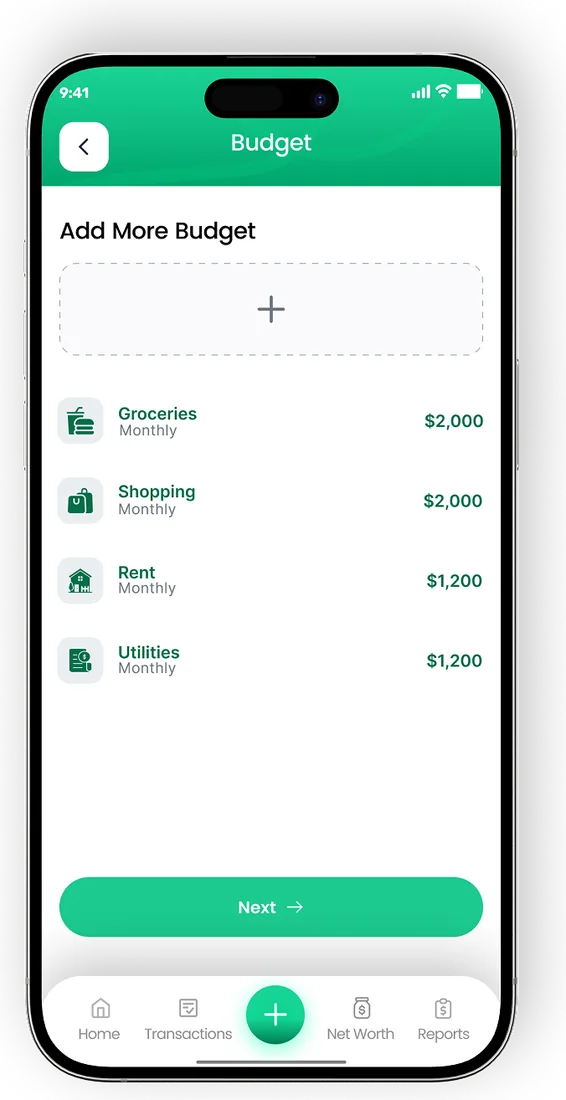
- Set monthly limits for every category
- See what is left to spend in real time
- Get a nudge before a category runs out


Who is reverse budgeting best for?
Reverse budgeting works best for people with steady income, clear goals and spending that is roughly under control. If you already save but find detailed budgets tedious, it removes most of the effort. It is less suited to anyone carrying high-interest debt with no buffer, because free spending can drift onto a credit card.
- Good fit: salaried workers, couples with shared goals, people who tried category budgets and quit.
- Needs a tweak: freelancers and shift workers. Use a percentage of each deposit instead of a fixed amount, as explained in our guide to budgeting on an irregular income.
- Poor fit for now: anyone overspending every month. Try zero-based budgeting or the envelope method until spending is stable.
Reverse budgeting versus the 80/20 budget and 50/30/20
The 80/20 budget is a simple form of reverse budgeting with a fixed 20% savings rate. The 50/30/20 rule adds a needs and wants split on top. Reverse budgeting differs by setting the savings amount from your goals rather than a set percentage, so it can be 12% one year and 30% the next.
| Method | Savings amount set by | Spending categories |
|---|---|---|
| Reverse budgeting | Your goals and deadlines | None beyond fixed bills |
| 80/20 budget | Fixed 20% of take-home | None |
| 50/30/20 rule | Fixed 20% of take-home | Needs and wants |
| Zero-based budgeting | Your plan for every dollar | Many |
Making reverse budgeting stick
The method depends on two things: transfers that happen automatically, and a quick way to see how much free spending money is left. Check your chequing balance once or twice a week instead of tracking categories.
EMOH Pay helps on both fronts. Savings goals show progress towards each target, and the dashboard shows what remains to spend this month without asking you to tag every purchase. Review your goals every quarter and raise the amounts when your income goes up, so a raise does not quietly turn into lifestyle creep.
Plan your month in EMOH Pay
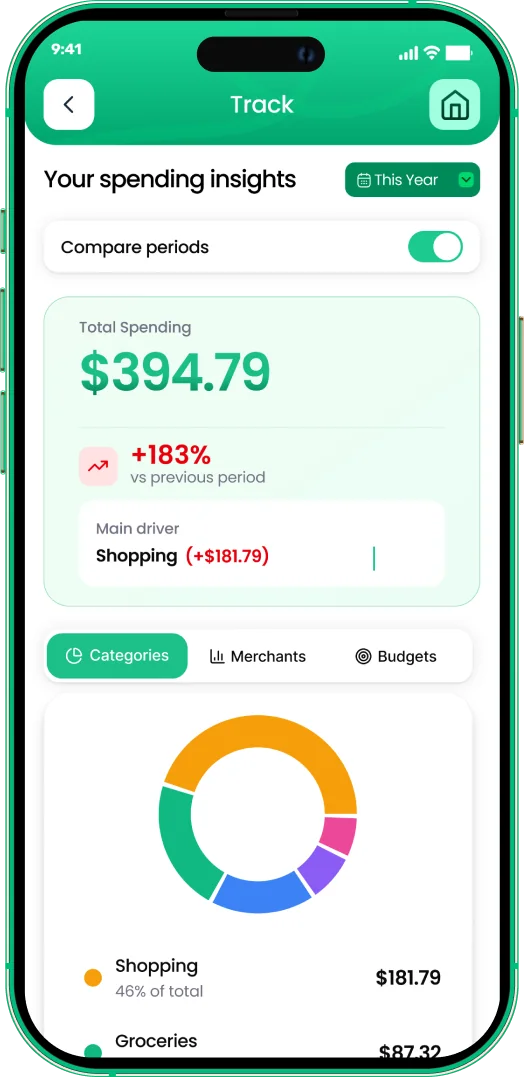
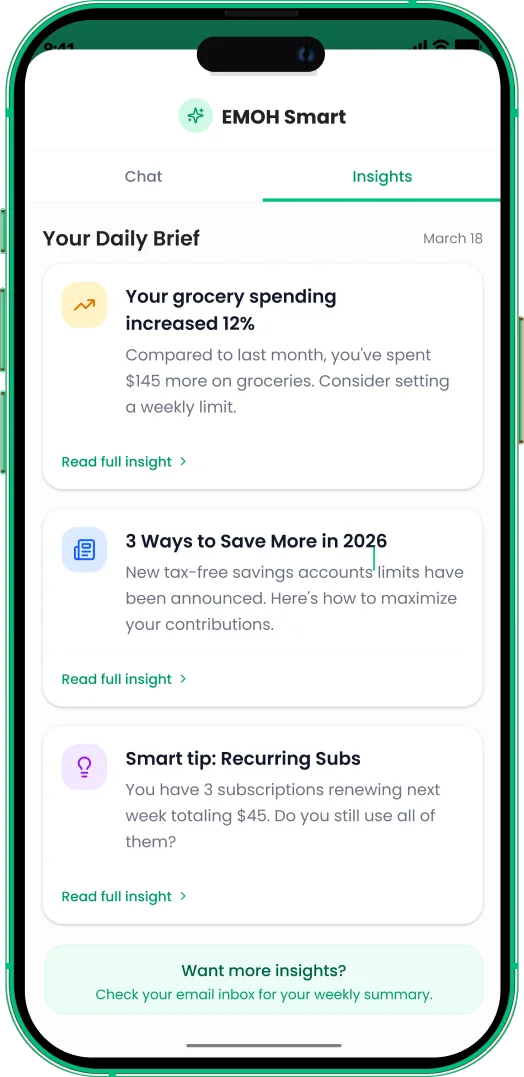

Put the numbers on autopilot
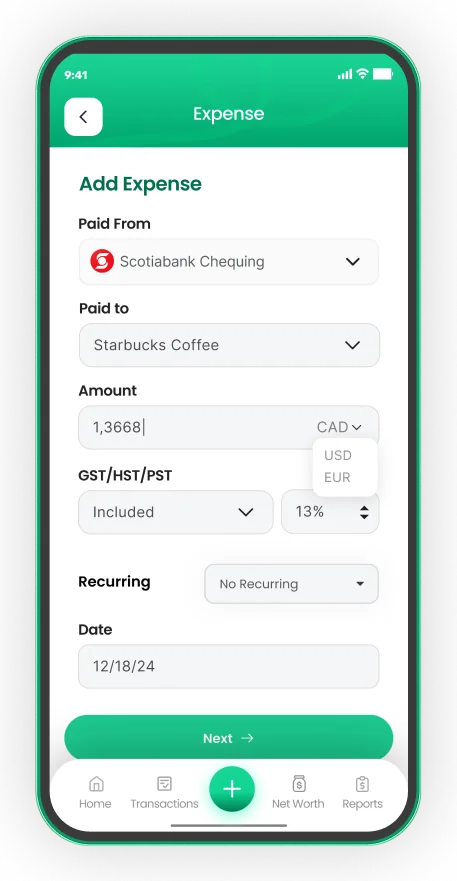
EMOH Pay tracks your spending, budgets and net worth on your phone and in the browser, always in sync. Free to start, made in Canada.
Get started free➜Reverse Budgeting: frequently asked questions
Is reverse budgeting the same as pay yourself first?
They share the core idea of saving before spending. Pay yourself first is the habit; reverse budgeting is a full budget built on it, with savings amounts set by specific goals and no category tracking for day-to-day spending.
Do I track any spending with reverse budgeting?
Only enough to know you are not overspending. Most people glance at their chequing balance weekly and review bills once a month.
What if I overspend in a reverse budget?
Treat it as a signal. Either your goal amounts are too ambitious for now, a fixed bill is too high, or you need a short spell of category tracking to find the leak.
Can couples use reverse budgeting?
Yes. Agree on shared goals, automate the transfers from a joint account, then give each partner a personal spending amount from what is left.
How much should I save with reverse budgeting?
Whatever your goals require. Add up the monthly amount for each goal, and if the total is more than you can afford, extend the deadlines rather than dropping goals.
Sources and further reading
Related guides and tools
50/30/20, zero-based, envelopes or pay-yourself-first — the best budgeting method is the one you'll still be using in March.…
Pay Yourself FirstPay yourself first means saving before you spend. See what it means, a pay yourself first example on a Canadian paycheque…
The 80/20 BudgetThe 80/20 budget saves 20% of take-home pay first and lets you spend the other 80% freely. See how it works, an 80/20 budget…
Savings Goal Calculator — Free CalculatorHow much to save per month? Enter your target amount and months until deadline — get your required monthly contribution…
The 50/30/20 Rule ExplainedThe 50/30/20 rule splits take-home pay into 50% needs, 30% wants and 20% savings. See what counts in each bucket, worked…
Zero-Based Budgeting: The Complete Beginner Guide 2026What if every dollar you earned had a specific destination — before you spent a single penny of it? That’s the premise…
Start free today
Free on iPhone, Android and the web. Upgrade to EMOH Pro anytime for bank sync and advanced AI.
Download for iOS➜ Get it on Android➜