
The 80/20 Budget
Save 20% the day you are paid, then spend the other 80% on whatever you need and want. Two numbers, no categories. The simplest budget that still builds wealth.
Get started free➜ Download the app➜
How does the 80/20 budget work?
The 80/20 budget works by moving 20% of your take-home pay into savings, investments or extra debt payments as soon as you are paid, then spending the remaining 80% on all bills and everyday costs without tracking categories. As long as the 20% is protected and you stay out of new debt, the budget is working.
How the 80/20 budget works
The 80/20 budget has one rule: 20% of every paycheque goes to your future before you spend anything. The other 80% covers rent, groceries, bills, fun and everything else, in whatever mix suits you. There are no needs and wants buckets, no envelopes and no spending categories to maintain.
It is the simplest form of reverse budgeting, with the savings amount fixed at 20% instead of calculated from individual goals. It also relies on the pay yourself first habit: the 20% should move automatically on payday, so there is nothing to remember and nothing to resist.
An 80/20 budget example
Here is an 80/20 budget example for a couple in Canada with a combined take-home pay of $6,500 a month. The 20% comes off first, then the 80% covers the rest of the month.
| Line | Monthly amount | Share |
|---|---|---|
| Emergency fund | $400 | 6% |
| TFSAs (two partners) | $500 | 8% |
| RRSP | $400 | 6% |
| Total saved (20%) | $1,300 | 20% |
| Mortgage or rent, utilities, insurance | $3,100 | 48% |
| Groceries, transport, phone | $1,200 | 18% |
| Everything else | $900 | 14% |
| Total spent (80%) | $5,200 | 80% |
Within the $5,200, the couple does not track dining out separately from clothes or hobbies. They check the joint chequing balance each weekend. If it is on course to go below zero before payday, they ease off for the rest of the month.
Shares are rounded to the nearest percent, so the lines in each block may not add exactly.
What counts toward the 20%?
The 20% is anything that raises your net worth. It is not money set aside to spend later on a holiday, which is better handled as a savings goal inside the 80%.
- Counts: emergency fund deposits, TFSA, RRSP, FHSA and RESP contributions, non-registered investments and debt payments above the minimum.
- Does not count: minimum debt payments, money parked for a planned purchase such as a new phone, or an employer pension match that never passes through your pay.
- Grey area: a vacation fund. Most people keep it in the 80% and use sinking funds to spread the cost.
Budgets that update themselves
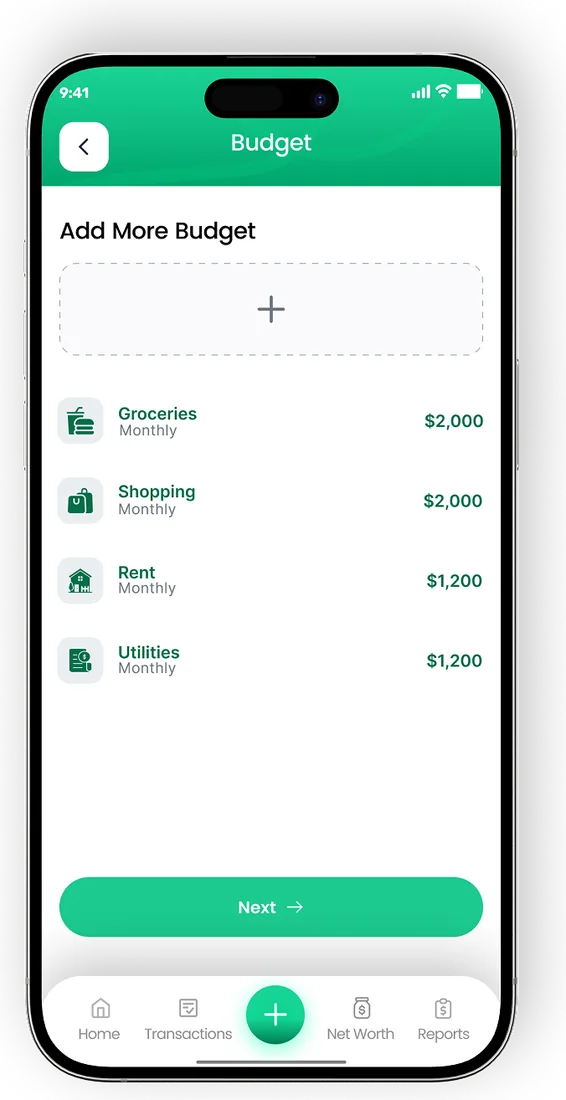
- Set monthly limits for every category
- See what is left to spend in real time
- Get a nudge before a category runs out


80/20 budget versus 50/30/20 and 70/20/10
All three reserve at least 20% for the future. The difference is how much structure they add to the spending side.
| Rule | Savings | Spending split | Effort |
|---|---|---|---|
| 80/20 | 20% | One bucket | Lowest |
| 70/20/10 | 20% plus 10% debt or giving | One bucket | Low |
| 50/30/20 | 20% | Needs 50%, wants 30% | Medium |
The 50/30/20 rule is the better choice if you tend to overspend on wants, because it caps them. The 70/20/10 budget suits people with debt to clear. The 80/20 budget suits people whose spending is already reasonable and who simply want to save consistently. Compare them all in our budgeting methods guide.
Is the 80/20 budget the same as the 80/20 rule?
Not quite. The 80/20 rule, also called the Pareto principle, is a general observation that a small share of causes often drives most of the results. Applied to money, it suggests that a few categories, such as housing, transport and food, usually account for most of your spending. Trimming those few has more effect than cutting many small ones.
The 80/20 budget is a separate idea: a savings split. You can use both together. Save 20% first, then, when you want to free up more money, look at your biggest two or three spending categories before worrying about small treats. A monthly spending report makes that easy to see.
How to start an 80/20 budget this month
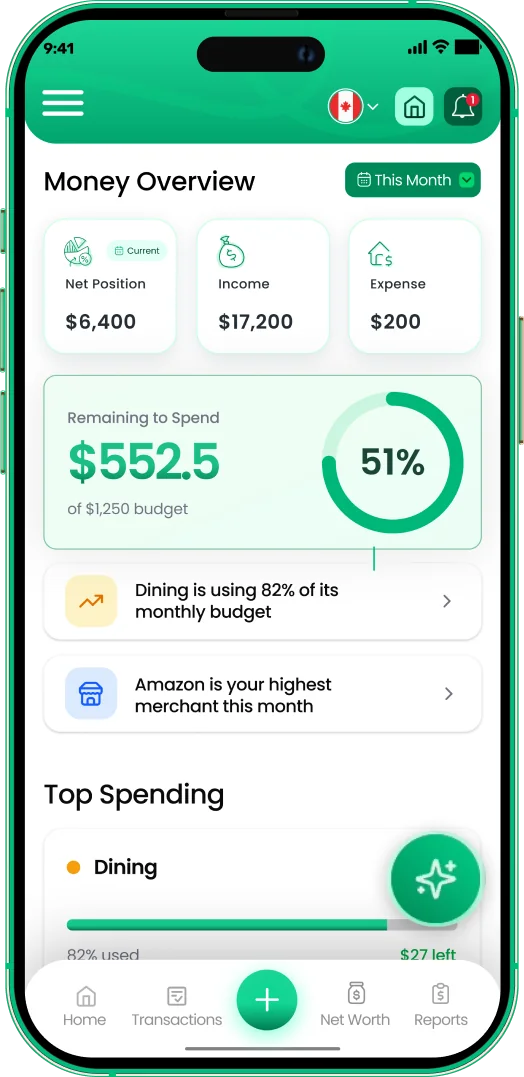
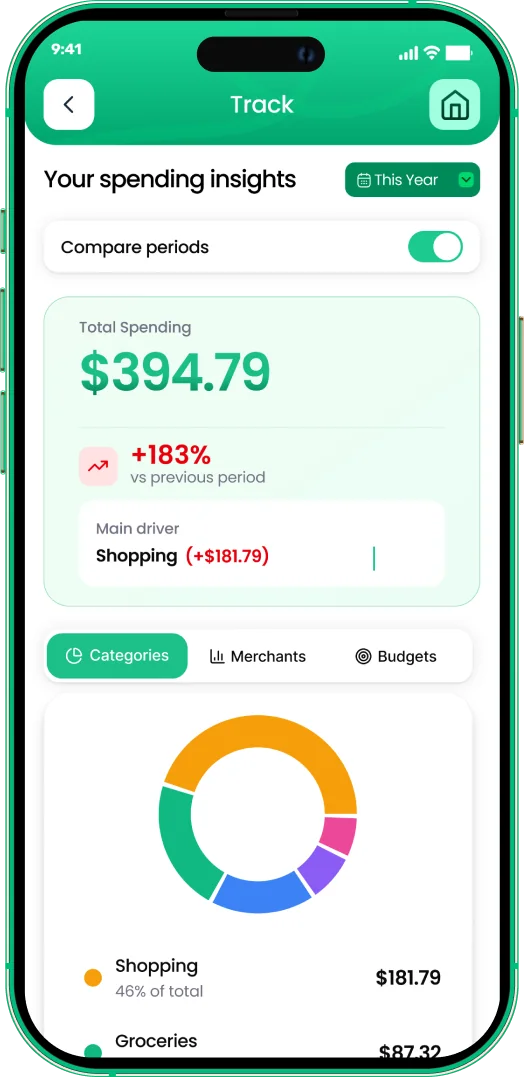
EMOH Pay fits this method well. Savings goals track the 20%, and the dashboard shows how much of the 80% is left this month without asking you to build categories. The savings rate calculator shows whether you are really hitting 20% across the year.
- Work out 20% of your take-home pay per paycheque.
- Choose where it goes: emergency fund first, then registered accounts or extra debt payments.
- Set up automatic transfers for payday.
- Spend the remaining 80% freely, checking your balance once or twice a week.
- If you run short two months in a row, drop to 15% for now and look at your largest expenses.
- Each time your pay rises, raise the savings share so extra income does not disappear into lifestyle creep.
Plan your month in EMOH Pay

Put the numbers on autopilot
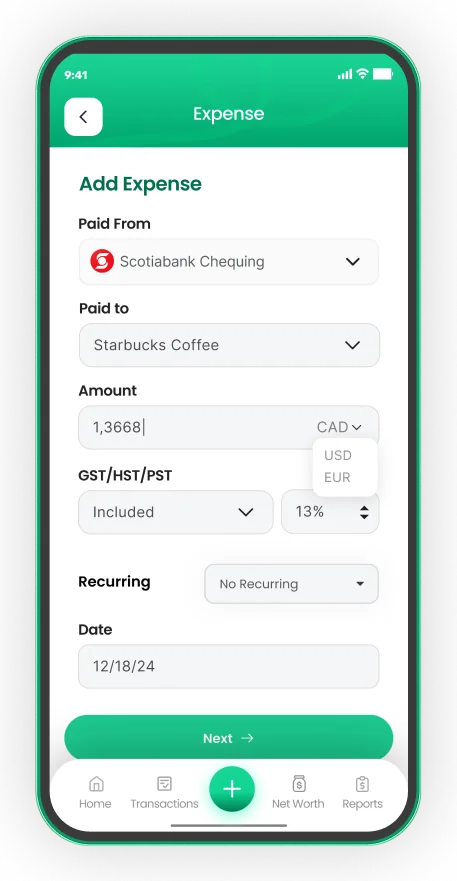
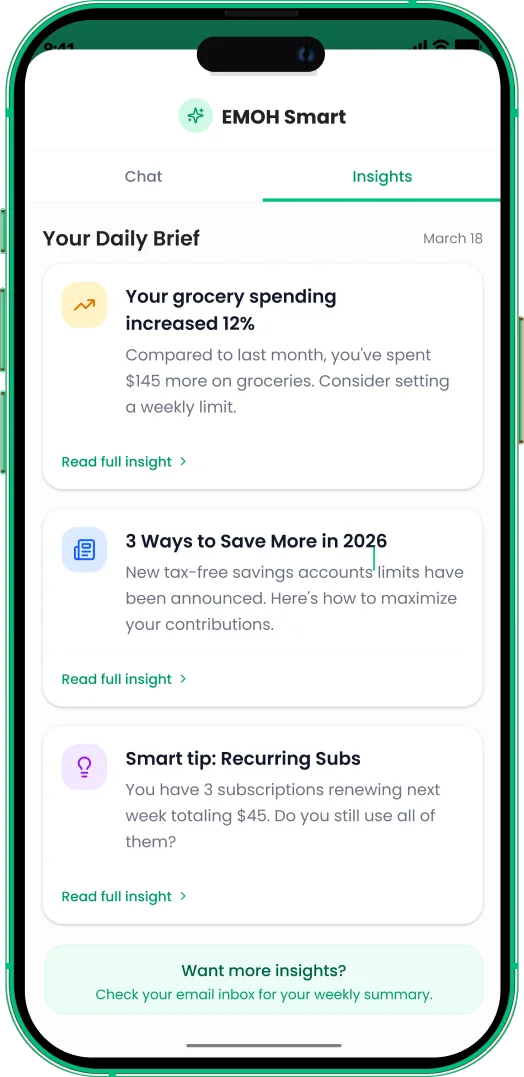
EMOH Pay tracks your spending, budgets and net worth on your phone and in the browser, always in sync. Free to start, made in Canada.
Get started free➜The 80/20 Budget: frequently asked questions
Is 20% savings realistic?
For many households it is a stretch at first. Start with whatever you can protect every month, even 5% or 10%, and raise it one or two points at a time as income rises or debts are paid off.
Should I use gross or net pay for the 80/20 budget?
Use net pay, the amount deposited after tax, CPP and EI. Workplace pension contributions taken from gross pay can count toward your 20% if you want to include them.
What if my bills take more than 80%?
Save what you can for now and focus on the largest costs, such as housing, car payments or insurance. Even a smaller fixed percentage builds the habit.
Can I use the 80/20 budget with irregular income?
Yes. Move 20% of each deposit as it arrives, and keep a buffer of one or two months of expenses so low months do not force you to spend savings.
How is the 80/20 budget different from reverse budgeting?
The 80/20 budget fixes savings at 20%. Reverse budgeting sets the savings amount from specific goals and deadlines, so the percentage can change over time.
Sources and further reading
Related guides and tools
50/30/20, zero-based, envelopes or pay-yourself-first — the best budgeting method is the one you'll still be using in March.…
Reverse BudgetingReverse budgeting starts with your savings goals and lets you spend the rest freely. See how it works, a reverse budgeting…
Pay Yourself FirstPay yourself first means saving before you spend. See what it means, a pay yourself first example on a Canadian paycheque…
The 70/20/10 Budget RuleThe 70/20/10 budget puts 70% of take-home pay toward living costs, 20% into savings and 10% to debt or giving. See examples…
The 50/30/20 Rule ExplainedThe 50/30/20 rule splits take-home pay into 50% needs, 30% wants and 20% savings. See what counts in each bucket, worked…
Savings Rate CalculatorUse this free savings rate calculator to see what percent of your take-home pay you save, how it compares with the 20%…
Start free today
Free on iPhone, Android and the web. Upgrade to EMOH Pro anytime for bank sync and advanced AI.
Download for iOS➜ Get it on Android➜