
New Year Money Checklist
January is the easiest month to reset your money. This new year financial checklist covers the tasks worth doing every year, with the Canadian dates and deadlines that fall in the first months.
Get started free➜ Download the app➜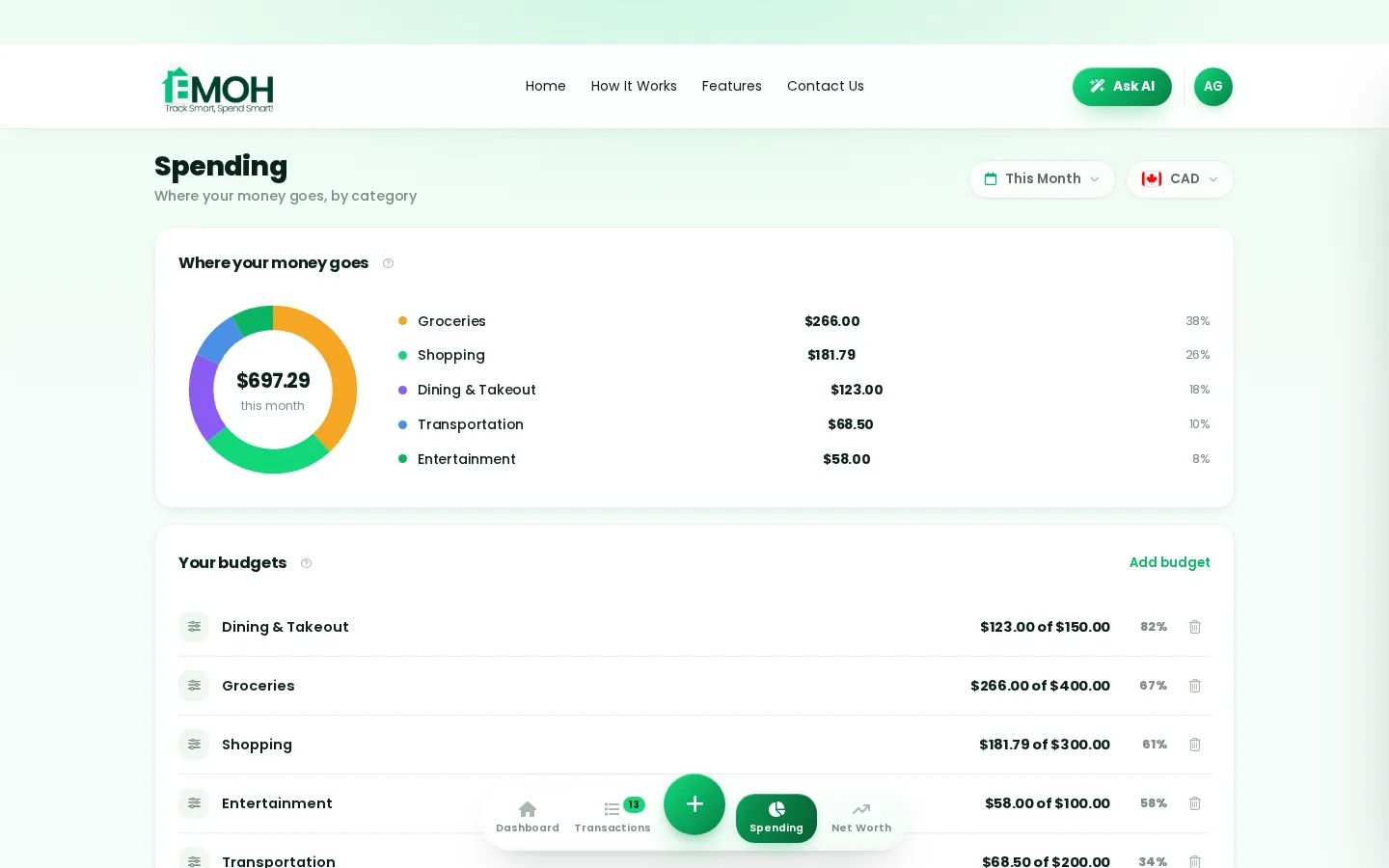
What money tasks should I do every January?
Every January, review last year's spending, set this year's goals, rebuild your budget, plan for the new TFSA room added on 1 January, schedule RRSP contributions before the deadline, gather tax slips, pay down holiday debt, check your credit report, cancel unused subscriptions and update your net worth. This new year financial checklist takes one or two evenings.
What should be on a new year financial checklist?
A good new year financial checklist covers four things: looking back at last year, setting up this year's budget and goals, handling the Canadian tax and savings dates that fall early in the year, and a quick check of debt, credit and insurance. Doing it in January means every later decision starts from an accurate picture.
You do not need to do everything in one sitting. Spread the tasks over the first two or three weeks of the month, and treat the deadlines in February, March and April as a second round.
If you want to go deeper on the first step, our guide to the new year money reset walks through reviewing a full year of spending. This page is the complete checklist.
The 12-step new year money checklist
- Review last year's spending. Total each category for the year and compare it with what you planned. Look for the three categories that grew most.
- Set two or three financial goals. Make each one specific, with an amount and a date. Our list of financial goals examples can help.
- Rebuild your monthly budget. In EMOH Pay or any budget you use, start from your January take-home pay, not last year's, and update your list of monthly expenses for new rent, rates and prices.
- Plan your TFSA contribution. New TFSA room is added on 1 January. The 2026 limit was $7,000; see the TFSA limit for 2026 and confirm the new year's limit on the CRA website.
- Schedule RRSP contributions. Contributions made by the deadline, about 60 days into the year, can be deducted on the previous year's return. Check the RRSP deadline.
- Make a plan for holiday debt. List every balance, interest rate and minimum payment, then pick a payoff order.
- Top up your emergency fund. Check that it still covers your target number of months of essential costs.
- Cancel subscriptions you do not use. January renewals and free trials that turned into charges are easy to miss.
- Check your credit report. You can request your credit report free from both Equifax and TransUnion in Canada. Look for errors and accounts you do not recognize.
- Review insurance and beneficiaries. Confirm that home, tenant, auto and life insurance still fit, and that beneficiaries on registered accounts are current.
- Set up sinking funds for the year. List irregular costs such as car repairs, gifts, travel and back to school, and save for each monthly.
- Update your net worth. Record assets and debts on the same date each year to see real progress.
Key money dates in early 2027
Several Canadian tax and savings dates fall in the first four months of the year. The table below shows the dates for the 2026 tax year, based on the rules published by the Canada Revenue Agency. Always confirm them on the CRA's important dates page.
| Date | What happens | Action |
|---|---|---|
| 1 January 2027 | New TFSA contribution room is added | Plan your TFSA contribution for the year |
| January 2027 | CPP and EI deductions restart | Check your first paycheque of the year |
| End of February 2027 | Employers issue T4 slips | Gather slips and receipts for your return |
| 1 March 2027 | RRSP deadline for the 2026 tax year | Make contributions you want to deduct for 2026 |
| 30 April 2027 | Most 2026 tax returns and balances owing are due | File on time, even if you cannot pay in full |
| 15 June 2027 | Filing deadline for self-employed people and their spouses | Any balance owing was still due 30 April |
Filing on time also keeps benefits such as the Canada Child Benefit and the GST/HST credit flowing, because they are calculated from your return. See our guide to the tax filing deadline in Canada for penalties and exceptions.
Budgets that update themselves
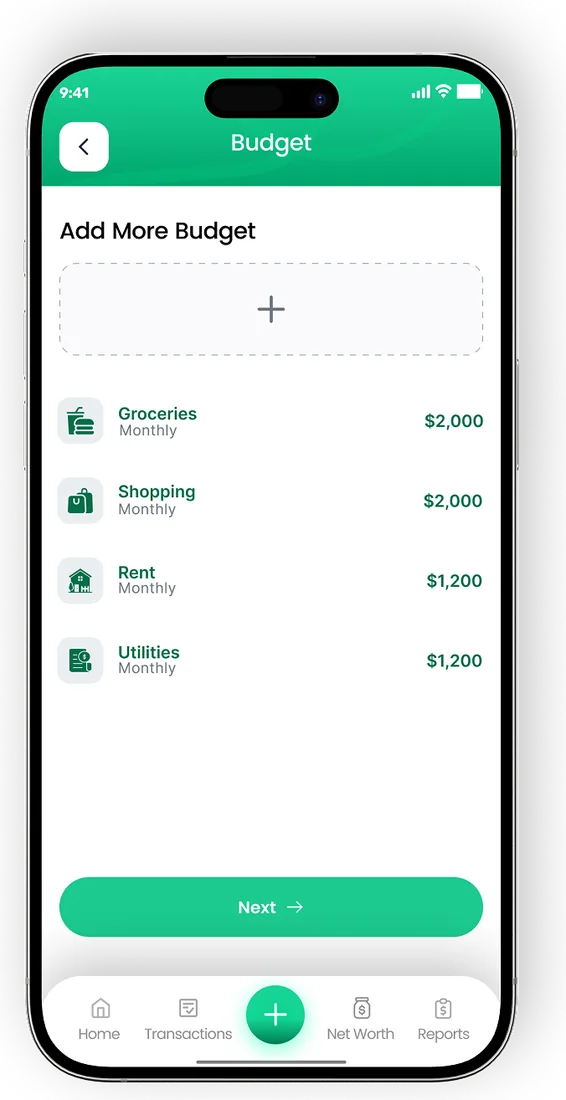
- Set monthly limits for every category
- See what is left to spend in real time
- Get a nudge before a category runs out


Why your January paycheque may look different
Your January paycheque can be smaller than December's because Canada Pension Plan and Employment Insurance contributions restart on 1 January. If you earn enough to reach the yearly maximums, you stop paying them part way through the year, so your take-home pay rises in the fall and drops again in January.
Tax bracket thresholds and contribution maximums are also updated for the new year, and a raise or new benefits can change your deductions. Budget from your actual first paycheque of the year, not from last year's. A paycheque calculator can estimate take-home pay if you want to check the numbers in advance.
How to deal with holiday spending in January
The best way to deal with holiday spending is to list every balance in the first week of January and pay more than the minimum on the highest-interest debt first. Credit card interest builds quickly, so a clear plan matters more than a perfect one.
- Pause new spending on the cards you are paying down.
- Choose a method. The avalanche method pays the highest rate first and saves the most interest. The snowball method pays the smallest balance first for quick wins. Compare them in debt snowball versus avalanche.
- Try a spending pause. A no-spend month can free cash for debt. Our guide to no-spend January covers the rules.
- Plan next December now. A holiday sinking fund of a small amount each month prevents the same problem next year.
Make the checklist stick all year
A January reset works best when it becomes a monthly habit. Pick one date each month, such as the first Sunday, to check your budget, goals and upcoming bills in 15 minutes.
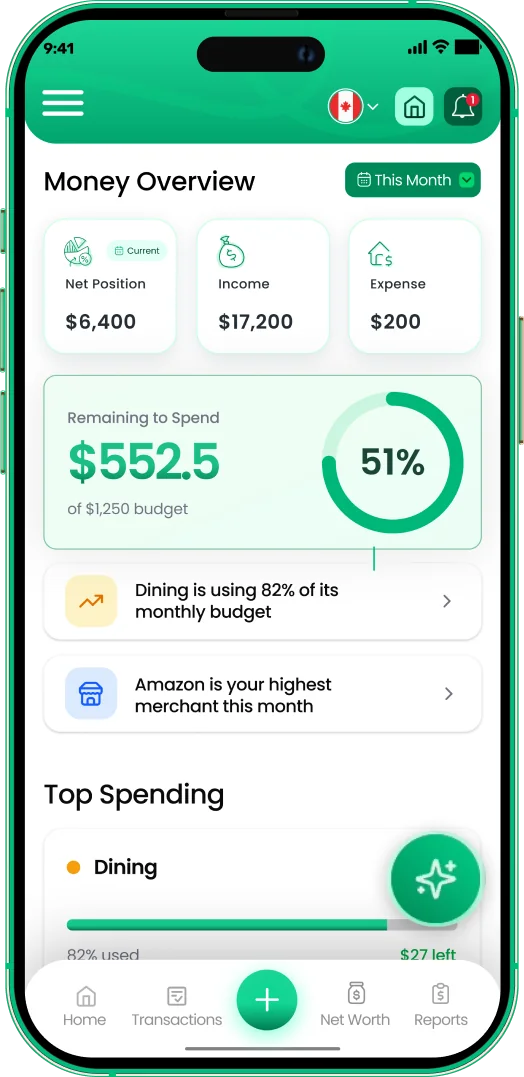
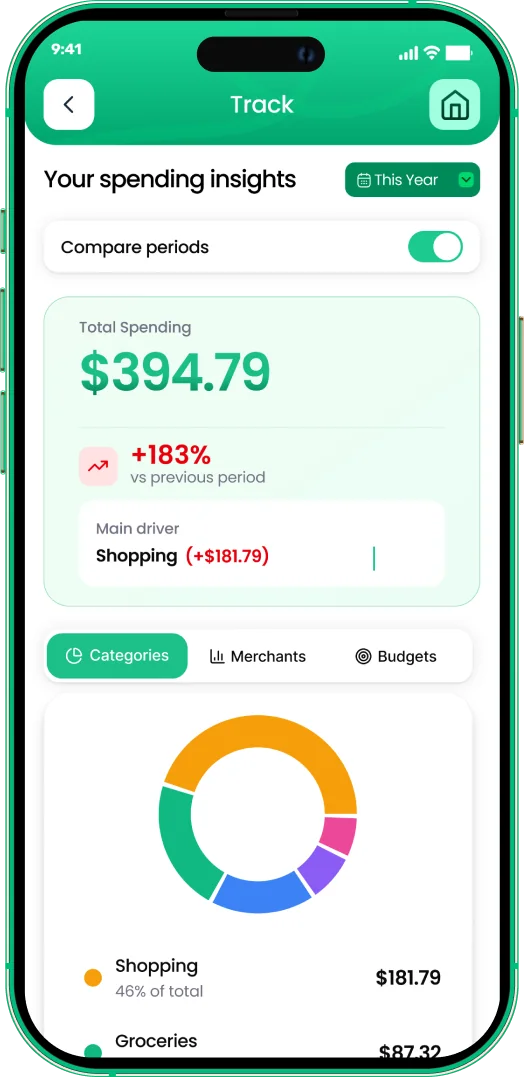
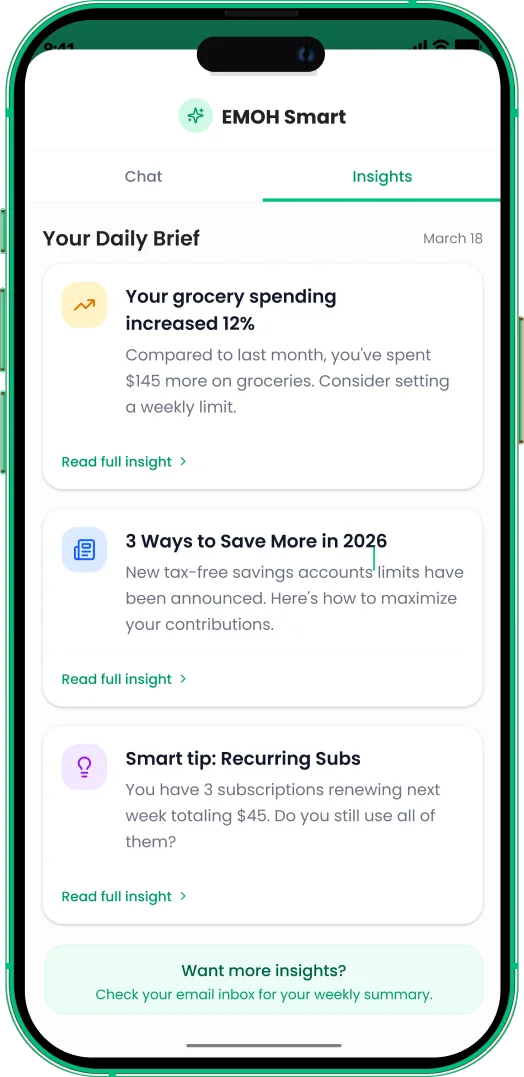
EMOH Pay helps with each step. Budgets with overspend alerts keep the new plan on track, bill tracking shows what is due, savings goals track your TFSA or emergency fund, and the net worth tracker records your yearly snapshot. It is free to start on iPhone, Android and the web, and the daily money digest keeps you up to date without opening a spreadsheet.
Plan your month in EMOH Pay

Put the numbers on autopilot
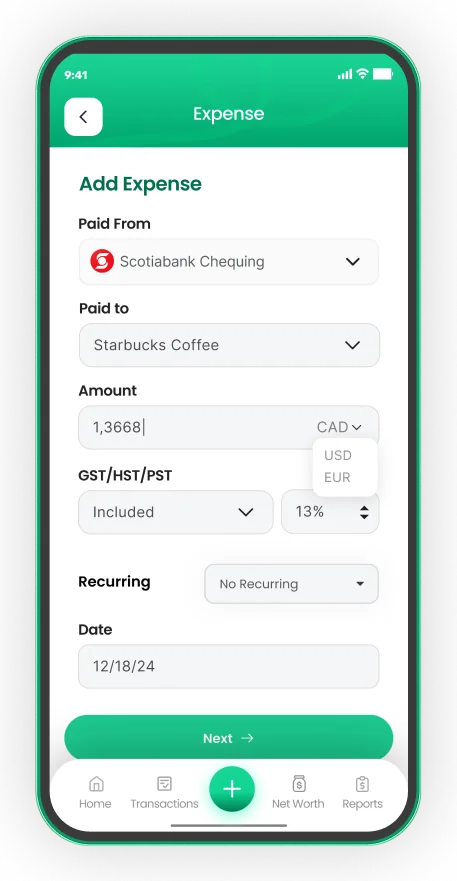
EMOH Pay tracks your spending, budgets and net worth on your phone and in the browser, always in sync. Free to start, made in Canada.
Get started free➜New Year Money Checklist: frequently asked questions
When should I do a financial check-up?
January is the natural time because TFSA room renews, pay deductions reset and tax slips arrive. A shorter monthly review keeps the plan current through the rest of the year.
When is new TFSA contribution room added?
New TFSA contribution room is added on 1 January each year, along with any amount you withdrew the previous year. The limit for 2026 was $7,000. Confirm each year's limit on the Canada Revenue Agency website.
When is the RRSP deadline for the 2026 tax year?
The RRSP deadline for the 2026 tax year is Monday 1 March 2027, the 60th day of the year. Contributions made after that count toward the 2027 tax year instead.
Why is my first paycheque of the year smaller?
Canada Pension Plan and Employment Insurance contributions restart every 1 January. If you reached the yearly maximums last year, your deductions rise again in January, which lowers take-home pay until you reach the maximums again.
How can I check my credit report for free in Canada?
You can request your credit report free from both of Canada's credit bureaus, Equifax and TransUnion. Review it for errors or unfamiliar accounts, and see our guide to improving your credit score if you want to raise it.
Related guides and tools
The TFSA limit for 2026 is $7,000, bringing total room to $109,000 for anyone eligible since 2009. See every year's limit…
RRSP Deadline 2026The RRSP deadline 2026 for 2025 contributions was 2 March 2026; the next is 1 March 2027. See how the 60-day rule works…
Tax Filing Deadline Canada 2026Tax deadline Canada 2026: 30 April for most people, 15 June for the self-employed. See every filing, payment and instalment…
Financial Goals ExamplesFinancial goals examples for every stage: short term, medium term and long term ideas with target amounts, timelines and how…
Debt Snowball vs Debt AvalancheDebt snowball vs avalanche: see how each debt payoff method works, a worked example with real numbers, which saves more…
Monthly Expenses Checklist: The Full List of Monthly ExpensesA complete list of monthly expenses to build your budget: housing, bills, food, transport, debt, savings and the irregular…
Start free today
Free on iPhone, Android and the web. Upgrade to EMOH Pro anytime for bank sync and advanced AI.
Download for iOS➜ Get it on Android➜