
Financial Goals Examples
A good financial goal has a number, a date and a monthly amount. Here are real examples to borrow, grouped by timeline, with a method to make each one stick.
Get started free➜ Download the app➜
What are good examples of financial goals?
Good examples of financial goals include building a $1,000 starter emergency fund, paying off a credit card, saving three to six months of expenses, saving for a down payment, maxing out a TFSA and investing for retirement. The best goals are specific, with a target amount, a deadline and a monthly amount you can automate.
What makes a good financial goal?
A good financial goal is specific enough to measure and realistic enough to reach. "Save more" is a wish. "Save $3,000 for a car repair fund by June by setting aside $250 a month" is a goal. It has an amount, a deadline and a monthly action you can check.
The financial goals examples on this page are grouped by timeline, because the timeline changes where the money should sit. Short-term money needs to be safe and easy to reach. Long-term money can be invested for growth. For a deeper look at the goal-setting process, see how to set financial goals effectively.
Short term financial goals examples (under one year)
Short term financial goals are ones you can reach within about 12 months. They build momentum and protect you from small emergencies. Good short-term goals are usually about stability: a starter emergency fund, clearing a small debt or getting a budget working.
- Build a $1,000 starter emergency fund for car repairs and surprise bills.
- Pay off one credit card balance in full.
- Track every expense for 90 days to learn where money actually goes.
- Cut subscriptions by $30 a month and redirect the savings.
- Save for a known expense, such as holiday gifts, back-to-school costs or a trip, in a sinking fund.
- Set up automatic savings of a fixed amount every payday.
- Check your credit report from both Canadian bureaus and fix any errors.
Medium term financial goals examples (one to five years)
Medium term financial goals take one to five years and usually involve a larger amount. They often need a dedicated savings account or a conservative investment. This is where the big life purchases start to appear.
- Build a full emergency fund of three to six months of essential expenses. The emergency fund guide explains how to size it.
- Pay off a car loan or student loan ahead of schedule.
- Save a down payment for a first home, often using a First Home Savings Account.
- Buy a car in cash instead of financing.
- Fund a wedding without borrowing.
- Pay off all consumer debt, using the snowball or avalanche method.
- Save for a career change or a course that raises your income.
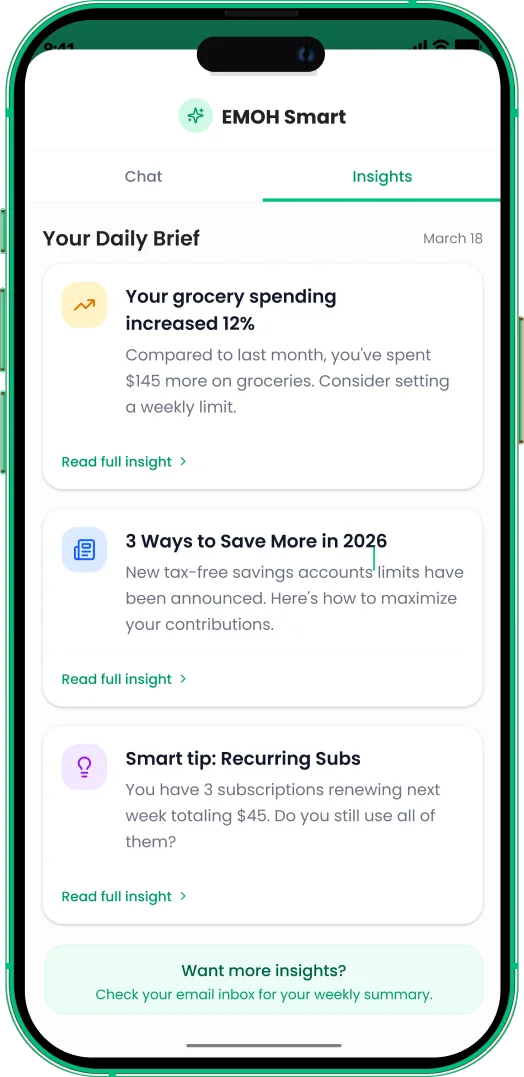
Tips that help you save
- A daily brief with practical ways to save
- Spot recurring subscriptions worth cutting
- Watch your savings show up in your net worth


Long term financial goals examples (five years or more)
Long term financial goals stretch five years or more and benefit most from compound growth. In Canada, registered accounts such as the TFSA, RRSP, FHSA and RESP are built for these goals and offer tax advantages that make each dollar go further.
- Contribute to your TFSA every year and invest it for long-term growth. See what is a TFSA.
- Save for retirement through an RRSP or workplace pension.
- Pay off your mortgage early, or before retirement.
- Save for a child's education in an RESP, where the Canada Education Savings Grant adds 20% on the first $2,500 a year of contributions, up to $500 a year.
- Reach a net worth milestone, such as $100,000 or $1 million.
- Achieve financial independence, where investments cover your living costs.
Financial goals examples with numbers
Turning a goal into a monthly amount is simple: divide the target by the number of months until the deadline. The examples below ignore interest to keep the arithmetic clear. Money in a high-interest account or investments would reach the target a little faster.
| Goal | Target | Timeline | Monthly amount |
|---|---|---|---|
| Starter emergency fund | $1,000 | 5 months | $200 |
| Holiday sinking fund | $1,200 | 12 months | $100 |
| Pay off a credit card | $3,600 | 12 months | $300 plus interest |
| Full emergency fund | $12,000 | 3 years | about $333 |
| Car bought in cash | $15,000 | 4 years | about $313 |
| FHSA down payment savings | $40,000 | 5 years | about $667 |
The FHSA has an annual contribution limit of $8,000 and a lifetime limit of $40,000, so the last example fits the account exactly over five years. The savings goal calculator works out your monthly amount with interest included, and how much to save each month helps you decide what is realistic.
How to turn financial goals into a plan
- Pick no more than three goals at once, ideally one short, one medium and one long term.
- Give each goal a target amount and a deadline.
- Divide the amount by the months available to get a monthly figure.
- Check the monthly figures fit your budget. If not, extend a deadline rather than giving up.
- Automate transfers on payday so saving happens before spending.
- Track progress monthly and celebrate milestones, such as each 25% reached.
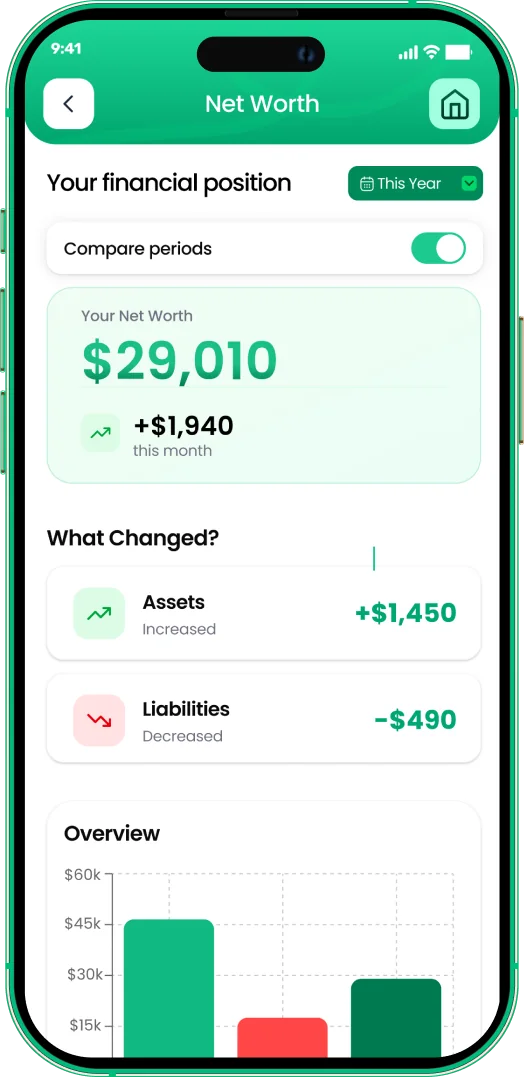
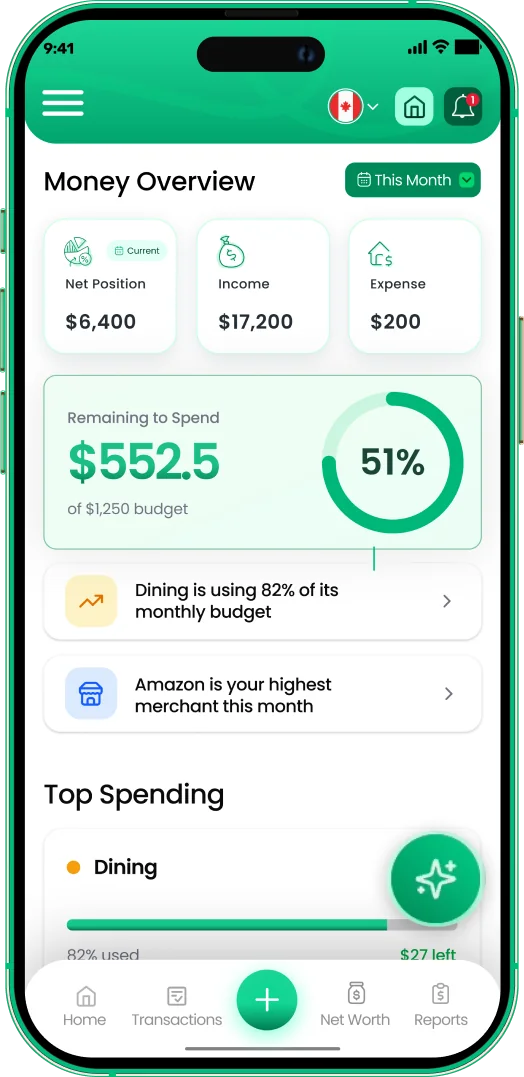
EMOH Pay's savings goals show each target with a progress bar, and budgets with overspend alerts protect the money you have set aside. See how savings goals work, or browse every tool on the features page.
Save more with EMOH Pay
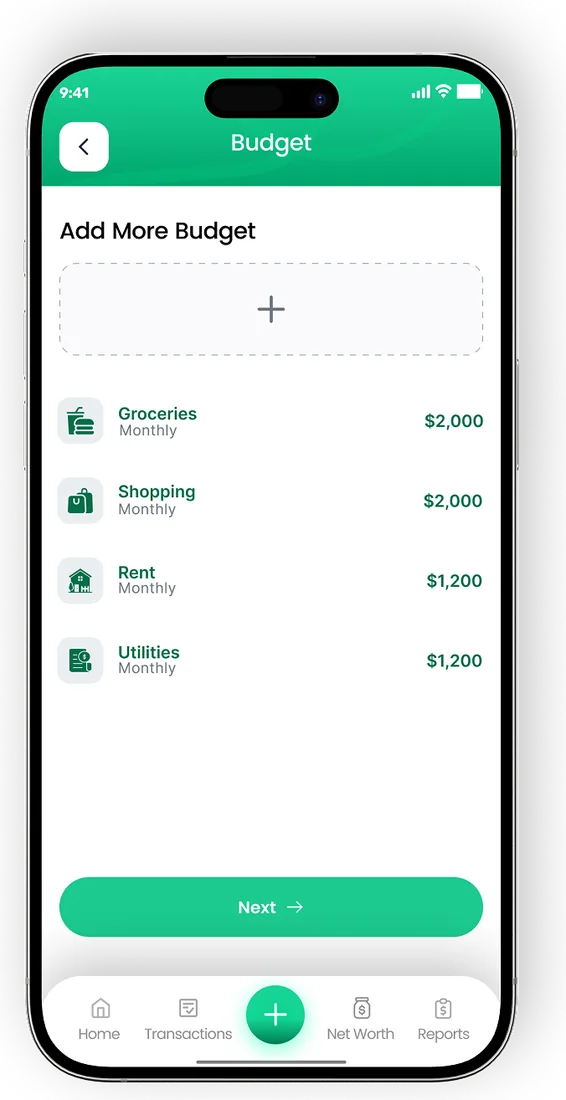

Put the numbers on autopilot
EMOH Pay tracks your spending, budgets and net worth on your phone and in the browser, always in sync. Free to start, made in Canada.
Get started free➜Financial Goals Examples: frequently asked questions
What are three examples of financial goals?
Building a $1,000 emergency fund, paying off a credit card within a year and saving a down payment for a home within five years.
What is a good short term financial goal?
A starter emergency fund of about $1,000, or paying off a small debt, are good first goals. They are reachable within months and protect you from setbacks.
How many financial goals should I have at once?
Two or three is manageable. More than that spreads your money too thin, and progress on each goal feels slow.
Should I save or pay off debt first?
Most people build a small emergency fund first, then focus on high-interest debt such as credit cards, then return to larger savings goals.
What is the difference between short and long term financial goals?
Short term goals are under a year and should be kept in safe, accessible savings. Long term goals are five years or more and can usually be invested for growth.
Related guides and tools
How much to save per month? Enter your target amount and months until deadline — get your required monthly contribution…
Give every dollar a destinationCreate savings goals — emergency fund, trip, down payment — and EMOH Pay tracks progress and tells you if you're on pace.…
How Much Should I Save Each Month?How much should I save each month? A common target is 20% of take-home pay. See how to adjust it for your income, goals and…
Emergency Fund GuideAn emergency fund is 3–6 months of essential expenses in cash — the buffer that turns a crisis into an inconvenience. Free…
How to set financial goals effectivelyEstablishing financial goals is an essential step towards success in finances. Having objective and actionable targets can…
Sinking Funds: What They Are and How to Use ThemSinking funds turn big irregular costs into small monthly savings. Learn how they work, common sinking fund categories, a…
Start free today
Free on iPhone, Android and the web. Upgrade to EMOH Pro anytime for bank sync and advanced AI.
Download for iOS➜ Get it on Android➜