
Monthly Expenses Checklist: The Full List of Monthly Expenses
Use this checklist to capture every regular cost, from rent to the annual renewals that sneak up on you, then turn it into a budget you can actually follow.
Get started free➜ Download the app➜
What are typical monthly expenses?
A typical list of monthly expenses includes housing (rent or mortgage), utilities, groceries, transportation, insurance, phone and internet, debt payments, child care, personal and household items, entertainment and savings. For most Canadian households, shelter is the largest cost, followed by transportation and food, according to Statistics Canada spending data.
The complete list of monthly expenses
This list of monthly expenses covers the costs most households pay regularly. Go through each group, write down what you pay, and mark anything that does not apply. Use your last two or three months of bank and credit card statements so the numbers are real rather than guesses.
| Category | What to include |
|---|---|
| Housing | Rent or mortgage, property tax, condo or strata fees, home or tenant insurance |
| Utilities | Electricity, heating (gas or oil), water and sewer, garbage where billed |
| Phone and internet | Mobile plans, home internet, landline if you keep one |
| Food | Groceries, household supplies bought with groceries, work lunches, takeout and restaurants |
| Transportation | Car payment or lease, fuel, insurance, parking, maintenance, transit passes, ride-hailing |
| Health and insurance | Prescriptions, dental, glasses, life and disability insurance, extended health premiums |
| Debt payments | Credit card minimums, line of credit, student loans, personal loans |
| Children and dependants | Child care, school costs, activities, support payments, allowances |
| Personal and lifestyle | Clothing, haircuts, gym, subscriptions, hobbies, gifts, pet costs |
| Savings and investing | Emergency fund, sinking funds, TFSA, RRSP, RESP or FHSA contributions |
Monthly bills checklist: fixed and variable costs
Your monthly bills fall into two types. Fixed expenses cost the same every month, such as rent, a car loan or a phone plan. Variable expenses change month to month, such as groceries, fuel and heating. Separating them shows what you can adjust quickly and what needs a bigger decision to change.
- Fixed bills: rent or mortgage, loan payments, insurance premiums, phone and internet plans, subscriptions, child care fees.
- Variable bills: groceries, utilities, fuel, dining out, clothing, entertainment, personal care.
- Periodic bills: annual insurance, vehicle registration, property tax instalments, memberships, holiday spending.
The fixed vs variable expenses guide explains how to budget for each type.
Irregular expenses people forget
The expenses that break budgets are usually the ones that do not arrive monthly. Divide each annual cost by 12 and include it in your list so the money is ready when the bill comes.
- Car insurance or registration renewals paid annually.
- Vehicle maintenance, tires and repairs.
- Home repairs and appliance replacement.
- Dental visits, eye exams and glasses.
- Birthdays, holidays and weddings.
- Back-to-school costs and kids' activities.
- Annual subscriptions, software and memberships.
- Professional dues, licences and tax preparation fees.
- Travel, including trips home to see family.
Saving a monthly amount for these costs is called a sinking fund. See the sinking funds guide for a worked example.
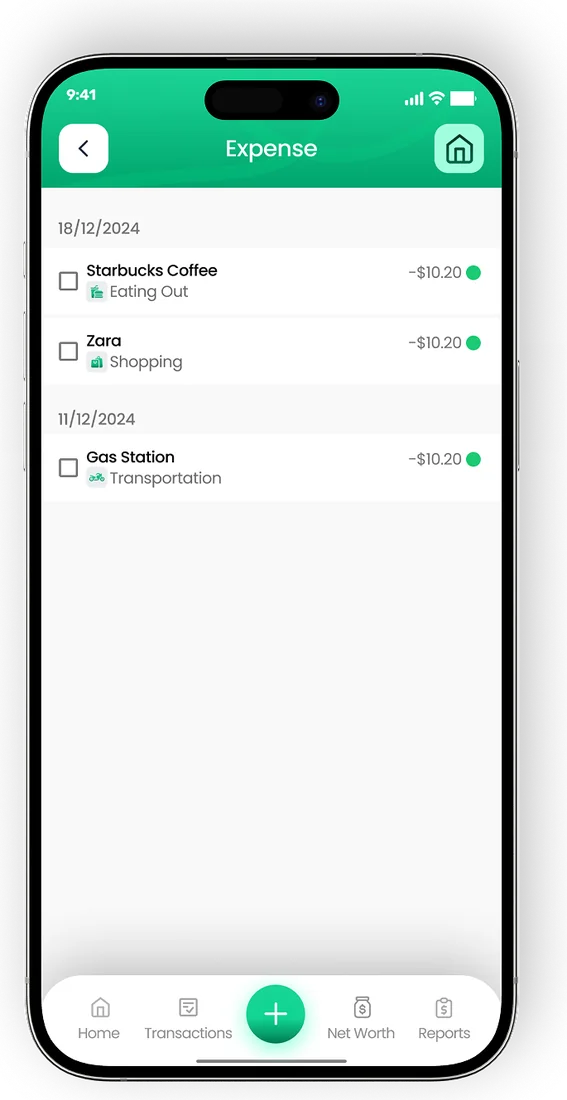
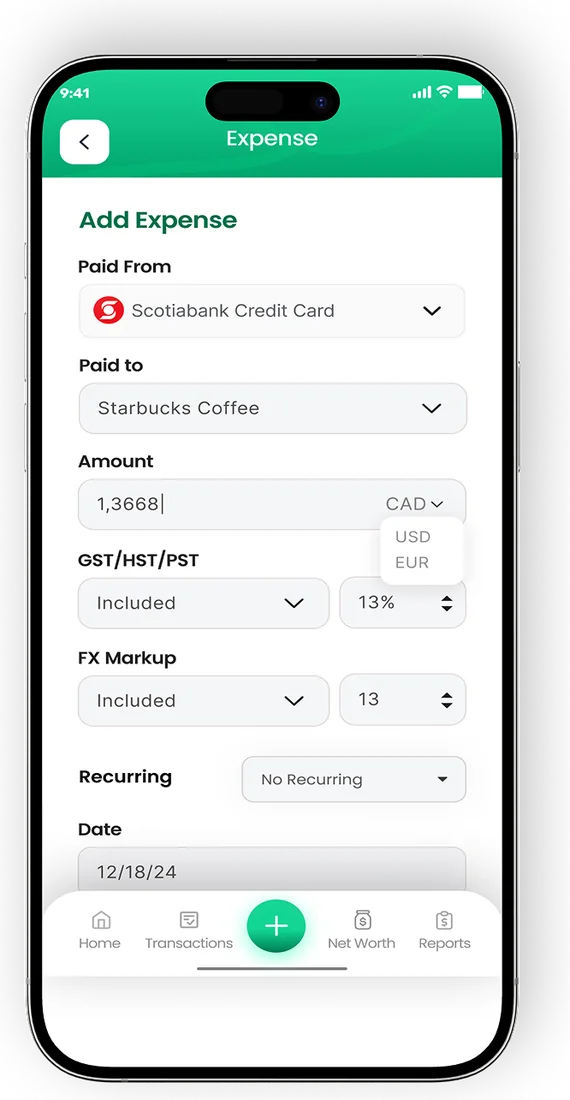
Log a purchase in two taps
- Smart categories sort every transaction
- Tag who spent what in a shared household
- Export PDF or Excel reports any month


How much do typical monthly expenses cost?
Typical monthly expenses depend heavily on where you live, household size and whether you rent or own. Statistics Canada's Survey of Household Spending consistently shows shelter as the largest share of household spending on goods and services, with transportation and food next. Beyond that, averages vary so much by city that your own statements are a better guide than any national figure.
For current Canadian figures by category, see these guides:
- Average rent in Canada for rents by city and unit size.
- Average grocery bill in Canada for food costs by household size.
- Average utility bill in Canada for electricity, heating and water.
- Canadian spending statistics for the full breakdown of household spending.
How to turn your expense list into a budget
If you want a starting framework, the 50/30/20 rule splits take-home pay into needs, wants and savings. The free budget template gives you a printable layout to fill in by hand.
- Find your monthly take-home pay: what lands in your account after tax and deductions.
- Total your fixed bills from the checklist.
- Estimate variable costs using an average of your last three months.
- Add one-twelfth of each irregular expense.
- Subtract all of it from take-home pay. A positive number is room for savings or debt repayment; a negative number shows where to cut.
- Set a budget for each category and check it weekly.
Keeping your list up to date
An expense list goes stale quickly. Rents rise, subscriptions renew at higher prices and new costs appear. Review it every few months and whenever your income or living situation changes.
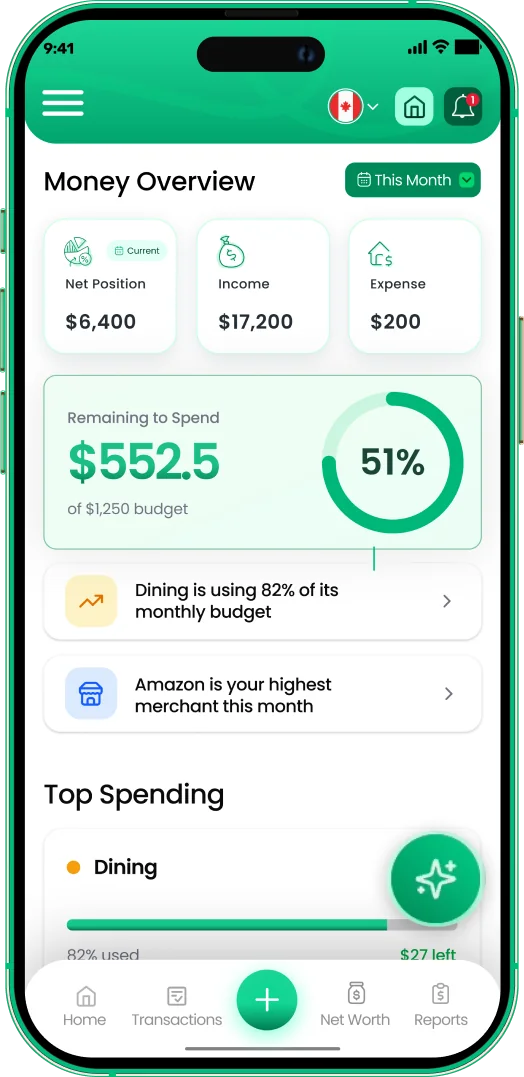
EMOH Pay can do much of this for you. It is free to start on iPhone, Android and the web, with expense tracking, bill reminders, budgets with overspend alerts and monthly reports that show where money actually went. See everything it covers on the features page.
Track every dollar
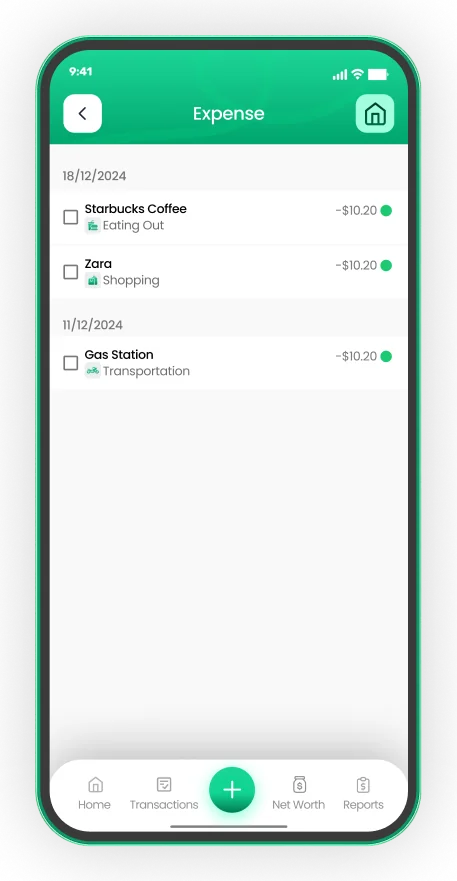

Put the numbers on autopilot
EMOH Pay tracks your spending, budgets and net worth on your phone and in the browser, always in sync. Free to start, made in Canada.
Get started free➜Monthly Expenses Checklist: The Full List of Monthly Expenses: frequently asked questions
What are the most common monthly expenses?
Housing, utilities, groceries, transportation, insurance, phone and internet, and debt payments appear in almost every household budget. Child care, subscriptions and personal spending are also common.
What percentage of income should go to monthly expenses?
A common guide is the 50/30/20 rule: about 50% of take-home pay for needs, 30% for wants and 20% for savings and extra debt payments. In high-rent cities, needs often take a larger share.
Should savings be on my list of monthly expenses?
Yes. Treating savings as a monthly bill makes it far more likely to happen. Put it near the top of the list and move the money on payday.
How do I budget for expenses that change every month?
Use the average of the last three to six months for variable costs such as groceries and utilities, then adjust as you go. Budget a little higher for seasonal costs like winter heating.
Is there a printable monthly expenses checklist?
Yes. The free budget template offers a printable layout, and you can copy the categories on this page into it.
Sources and further reading
Related guides and tools
All EMOH Pay features: expense tracking, budgets, net worth, Ask AI, family sharing, GST/HST, multi-currency and more. Free…
Fixed vs Variable ExpensesFixed vs variable expenses explained: what each means, examples, where periodic bills fit and how to budget for each so…
Canadian Spending Statistics 2026Canadian spending statistics from Statistics Canada and the Bank of Canada: how households split their budgets, what grew…
Free Budget TemplateDownload a free monthly budget template (CSV — opens in Excel or Google Sheets) with Canadian categories and the 50/30/20…
Sinking Funds: What They Are and How to Use ThemSinking funds turn big irregular costs into small monthly savings. Learn how they work, common sinking fund categories, a…
50/30/20 Budget CalculatorThe 50/30/20 rule splits after-tax income: 50% to needs, 30% to wants, 20% to savings. Enter your monthly take-home pay to…
Start free today
Free on iPhone, Android and the web. Upgrade to EMOH Pro anytime for bank sync and advanced AI.
Download for iOS➜ Get it on Android➜