
Fixed vs Variable Expenses
Fixed expenses cost the same amount every month. Variable expenses change with how much you use or buy. Knowing which is which tells you where your budget can actually flex.
Get started free➜ Download the app➜
Fixed vs Variable Expenses
Fixed expenses are costs that stay the same each month and are hard to change quickly, such as rent, a car loan or an insurance premium. Variable expenses change with your choices or usage, such as groceries, fuel, dining out and electricity. Budget fixed costs first, then set limits on variable ones, because that is where savings come from.
What is the difference between fixed and variable expenses?
The difference between fixed and variable expenses is whether the amount changes. A fixed expense costs the same each time and arrives on a set schedule, usually under a contract. A variable expense moves up or down with how much you use, buy or choose to spend. Both can be needs or wants.
The split matters because it shows where you have room to manoeuvre. You cannot cut rent this month without moving, but you can spend less on groceries or takeout starting today. Fixed costs set your baseline; variable costs are where your budget flexes.
This page is part of our money learning centre, where you will find other plain-language guides to budgeting terms.
Fixed and variable expenses: examples
The table sorts common household costs. Some sit in between: a phone plan is fixed until you exceed your data, and electricity has a fixed delivery charge plus a variable usage charge. Classify each line by what usually happens in your own bills.
| Expense | Type | Why |
|---|---|---|
| Rent or mortgage payment | Fixed | Set by lease or mortgage contract |
| Car loan or lease | Fixed | Same payment on a set schedule |
| Insurance premiums | Fixed | Set for the policy term |
| Streaming and gym memberships | Fixed | Same monthly charge until cancelled |
| Child care fees | Fixed | Usually a set monthly fee |
| Groceries | Variable | Depends on what and how much you buy |
| Fuel and transit top-ups | Variable | Depends on how far you travel |
| Electricity and heating | Variable | Depends on usage and season |
| Dining out and entertainment | Variable | Entirely by choice |
| Car repairs and medical costs | Variable | Unpredictable timing and amount |
| Property tax, annual insurance, car registration | Periodic | Predictable, but only once or twice a year |
For a complete checklist of categories to sort, see our list of monthly expenses.
What about periodic and semi-variable expenses?
Periodic expenses are predictable costs that do not arrive monthly, such as an annual insurance renewal, holiday gifts or back-to-school supplies. They behave like fixed costs in that you know they are coming, but they break budgets because they land all at once.
The fix is to turn them into a monthly amount. Divide the yearly cost by 12 and set that aside each month in a separate pot. This is the idea behind sinking funds, and it turns a $1,200 surprise into a $100 monthly line.
Semi-variable expenses have a fixed base plus a variable part. Utilities, phone plans with overage charges and some child care arrangements fit here. Budget the base as fixed and add a buffer for the variable part based on your highest recent month.
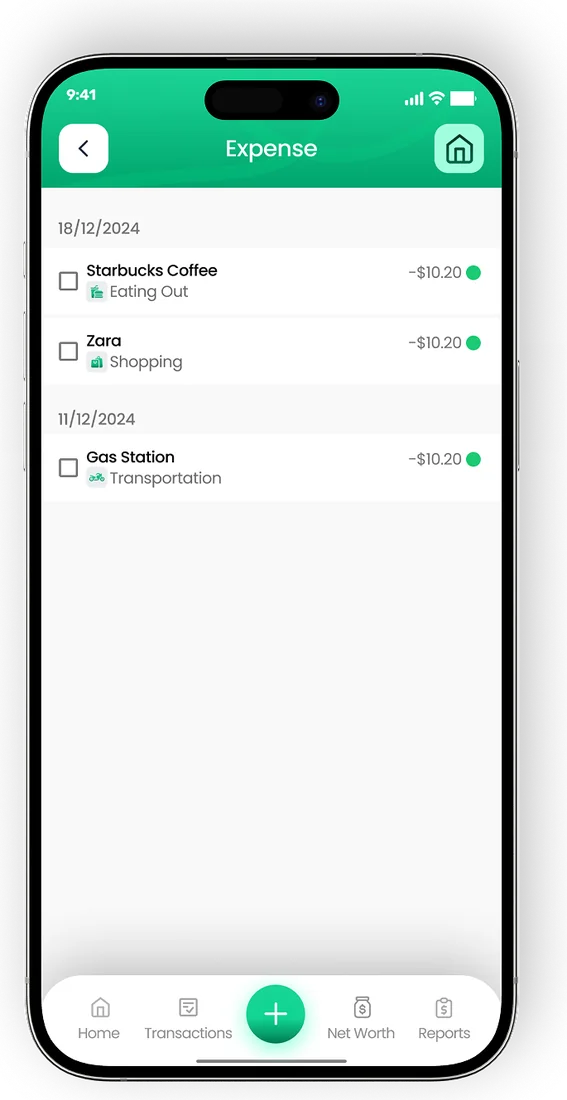
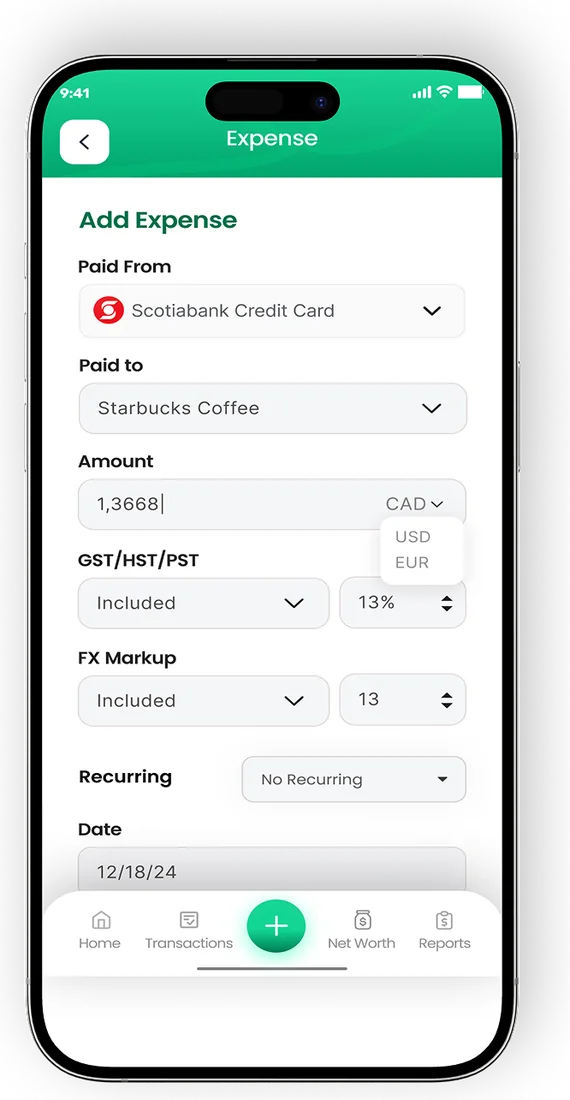
Log a purchase in two taps
- Smart categories sort every transaction
- Tag who spent what in a shared household
- Export PDF or Excel reports any month


How to budget for fixed vs variable expenses
If your fixed expenses take more than about half of your take-home pay, variable cuts alone may not balance the budget. The 50/30/20 rule offers a useful benchmark, and the budget calculator does the arithmetic for your income.
- List every fixed expense with its amount and due date. Add periodic costs divided by 12.
- Subtract the fixed total from your monthly take-home pay. What is left is the money available for variable spending and savings.
- Look at three months of history for each variable category and set a realistic limit, not an aspirational one.
- Move savings out first, right after payday, so it is treated like a fixed expense.
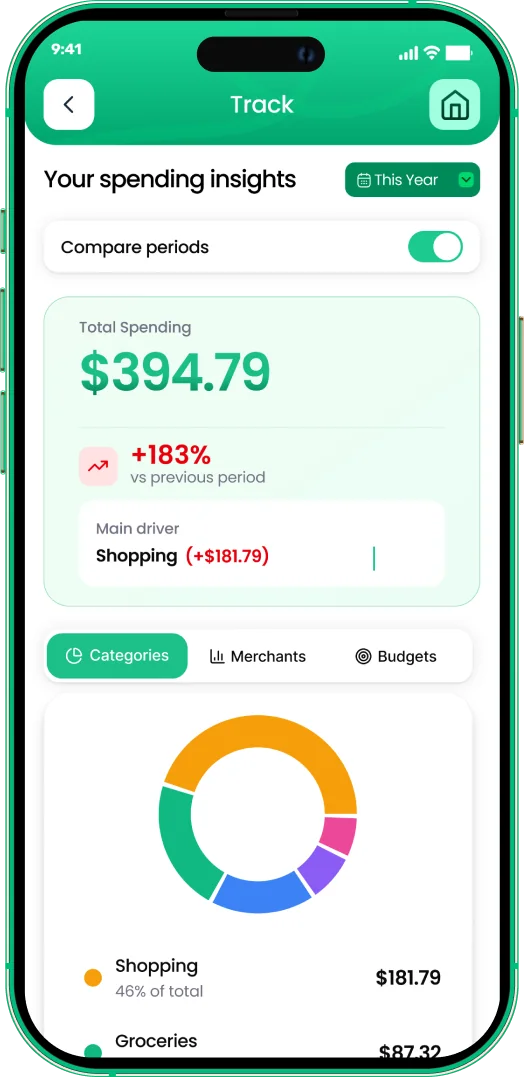
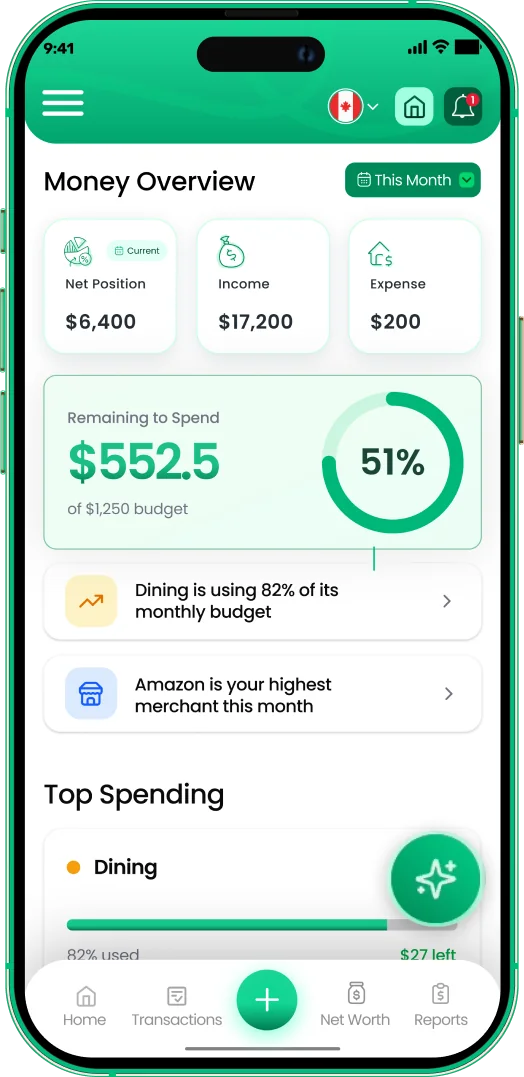
- Check variable categories weekly. A budgeting app such as EMOH Pay shows what is left in each category in real time and sends an alert when you are close to overspending.
Why the fixed vs variable split matters for saving
- Quick wins come from variable costs. Groceries, dining out and impulse buys respond to changes this week.
- Big wins come from fixed costs. Renegotiating insurance, refinancing a loan or cancelling unused subscriptions saves money every month for years with one decision.
- Emergency funds are sized from fixed costs. Three to six months of essential fixed and variable costs is a common target, so knowing your fixed baseline tells you how much you need.
- Cash flow depends on timing. Fixed costs often cluster around the first of the month. Knowing their dates helps you avoid overdrafts. Our guide to personal cash flow explains this in more detail.
Track every dollar

Put the numbers on autopilot
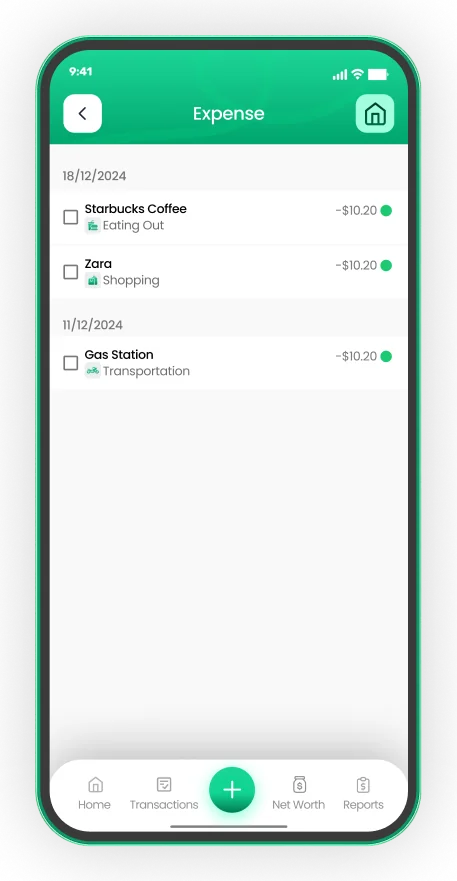
EMOH Pay tracks your spending, budgets and net worth on your phone and in the browser, always in sync. Free to start, made in Canada.
Get started free➜Fixed vs Variable Expenses: frequently asked questions
Is rent a fixed or variable expense?
Rent is a fixed expense. The amount is set by your lease and stays the same until the lease is renewed or a legal rent increase takes effect.
Are groceries fixed or variable?
Groceries are a variable expense because the amount depends on what you buy and how often. They are also a need, which is why a realistic grocery limit matters more than an ambitious one.
Is a utility bill fixed or variable?
Most utility bills are semi-variable. There is usually a fixed monthly charge plus a variable charge based on how much electricity, gas or water you use. Equal-billing plans turn them into a fixed monthly amount averaged over the year.
Can a fixed expense be a want?
Yes. A streaming subscription or gym membership is fixed because it charges the same amount each month, but it is a want because you could cancel it without real consequences. Fixed and variable describe the amount; needs and wants describe the importance.
How do I track fixed and variable expenses?
Tag each category as fixed or variable in your budget, then review the variable ones weekly. EMOH Pay's bill tracking reminds you of upcoming fixed payments, and its category budgets show variable spending as it happens.
Sources and further reading
Related guides and tools
A complete list of monthly expenses to build your budget: housing, bills, food, transport, debt, savings and the irregular…
Sinking Funds: What They Are and How to Use ThemSinking funds turn big irregular costs into small monthly savings. Learn how they work, common sinking fund categories, a…
The 50/30/20 Rule ExplainedThe 50/30/20 rule splits take-home pay into 50% needs, 30% wants and 20% savings. See what counts in each bucket, worked…
What Is Cash Flow (Personal)?What is cash flow in personal finance? A plain definition, how to calculate your monthly cash flow, a worked Canadian…
50/30/20 Budget CalculatorThe 50/30/20 rule splits after-tax income: 50% to needs, 30% to wants, 20% to savings. Enter your monthly take-home pay to…
Money GlossaryA plain-language money glossary: 36 personal finance terms from APR to TFSA, each defined in a sentence or two with links to…
Start free today
Free on iPhone, Android and the web. Upgrade to EMOH Pro anytime for bank sync and advanced AI.
Download for iOS➜ Get it on Android➜