
Average Rent in Canada by City (2026)
Rent in Canada ranges from about $1,000 in St. John's to $2,700 in Vancouver for a one-bedroom. Here is what 20 cities cost, where the numbers come from and how to read them.
Get started free➜ Download the app➜

What is the average rent in Canada?
Average rent in Canada for a one-bedroom apartment is roughly $1,400 to $2,000 a month, depending on the city and on whether you look at long-term tenants or new listings. Vancouver and Toronto sit near $2,000 to $2,700, while Quebec City, St. John's and the Prairies are often closer to $1,000 to $1,400.
What is the average rent in Canada in 2026?
Average rent in Canada in 2026 is roughly $1,400 to $2,000 a month for a one-bedroom apartment, and about $1,700 to $2,500 for a two-bedroom, with big differences between cities. Survey averages that include long-term tenants are lower. Asking rents for units listed today are higher, often by several hundred dollars.
Rents climbed quickly from 2022 to 2024 as population growth outpaced new building. Since then, more purpose-built rentals have opened and growth has slowed in many cities, and asking rents have eased in some of the most expensive markets. The national rental vacancy rate rose to 2.2% in CMHC's October 2024 survey, up from a record low of 1.5% a year earlier.
Average rent by city in Canada
The table shows approximate one-bedroom ranges for 20 cities. The low end reflects CMHC Rental Market Survey averages for purpose-built apartments in 2024 and 2025. The high end reflects typical asking rents for new listings. Treat them as a guide, not a quote.
| City | Province | Typical one-bedroom range |
|---|---|---|
| Vancouver | BC | $2,000 to $2,700 |
| Toronto | ON | $1,800 to $2,500 |
| Mississauga | ON | $1,800 to $2,400 |
| Surrey | BC | $1,600 to $2,200 |
| Brampton | ON | $1,700 to $2,200 |
| Victoria | BC | $1,600 to $2,100 |
| Ottawa | ON | $1,600 to $2,100 |
| Kelowna | BC | $1,500 to $2,000 |
| Halifax | NS | $1,500 to $2,000 |
| Calgary | AB | $1,500 to $1,900 |
| Kitchener-Waterloo | ON | $1,500 to $1,900 |
| Hamilton | ON | $1,400 to $1,900 |
| London | ON | $1,300 to $1,800 |
| Montreal | QC | $1,100 to $1,600 |
| Edmonton | AB | $1,300 to $1,600 |
| Winnipeg | MB | $1,200 to $1,500 |
| Saskatoon | SK | $1,100 to $1,400 |
| Regina | SK | $1,100 to $1,400 |
| Quebec City | QC | $1,000 to $1,400 |
| St. John's | NL | $1,000 to $1,400 |
Ranges are rounded and illustrative. Confirm current averages in CMHC's latest Rental Market Report before you sign a lease.
Cost of living guides for each city
Rent is only one line of a budget. Each guide below adds transit, utilities, taxes and sample monthly budgets for a single person and a family.
- British Columbia: Vancouver, Surrey, Victoria and Kelowna.
- Ontario: Toronto, Mississauga, Brampton, Ottawa, Hamilton, Kitchener-Waterloo and London.
- Prairies: Calgary, Edmonton, Winnipeg, Saskatoon and Regina.
- Quebec: Montreal and Quebec City.
- Atlantic Canada: Halifax and St. John's.
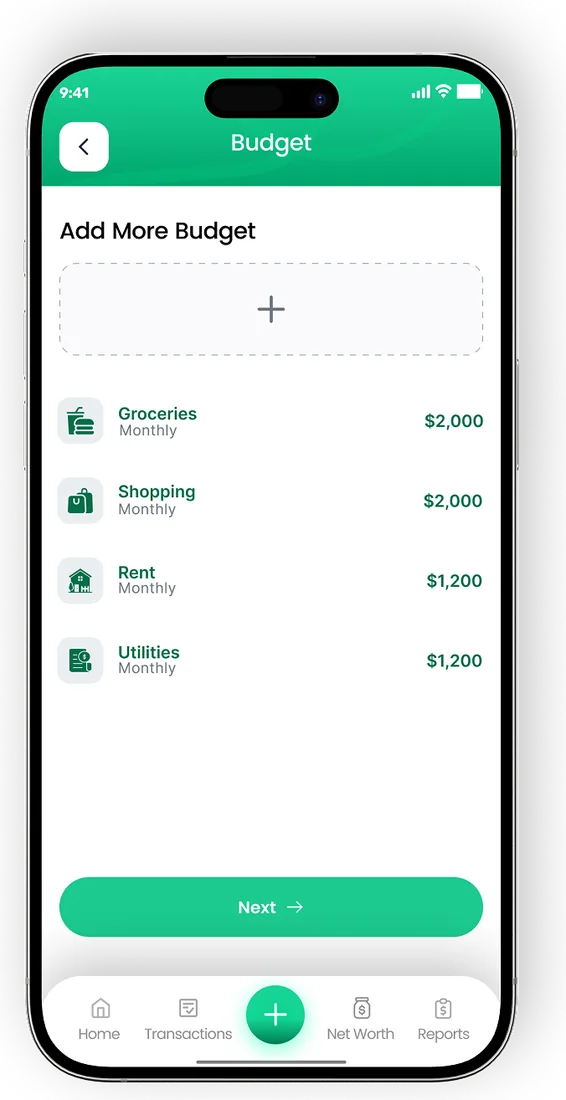
Budgets that update themselves
- Set monthly limits for every category
- See what is left to spend in real time
- Get a nudge before a category runs out


Why do rent figures in Canada disagree?
Two people can quote very different average rents for the same city and both be right. The gap comes from what is being measured.
| Measure | What it counts | Why it differs |
|---|---|---|
| CMHC Rental Market Survey | Rents paid in purpose-built rental buildings each October, including long-term tenants | Lower, because sitting tenants in rent-controlled units pay less than new ones |
| Asking rents | Rents advertised for units on the market now | Higher, because they show today's price for someone moving in |
| Consumer Price Index rent | How rent paid by households changes over time (Statistics Canada) | An index of change, not a dollar average |
If you are moving, asking rents are the better guide. If you are comparing cities over time, CMHC survey data is the most consistent series. Rent control rules also matter: several provinces cap increases for existing tenants, which widens the gap between what current and new tenants pay.
How much of your income should go to rent?
CMHC considers housing affordable when it costs less than 30% of a household's before-tax income. On a $60,000 salary, that means about $1,500 a month including utilities. In Vancouver or Toronto many renters spend more, so a common workaround is to share a two-bedroom or look one transit stop further out.
To test a specific listing against your pay, use our rent affordability calculator. It turns your income and other costs into a comfortable rent range.
- Start from your gross yearly income and divide by 12.
- Multiply by 0.3 to get a 30% rent ceiling, including utilities.
- Subtract fixed debts such as car or student loan payments if they are large.
- Compare the result with the typical range for your city above.
- Track your real rent and utilities for three months to see if the number holds.
Budgeting around high rent
When rent takes more than a third of your pay, the rest of the budget needs a plan. Our first apartment budget guide covers move-in costs such as deposits and furniture, and average utility bill in Canada shows what to add on top of rent.
EMOH Pay helps by showing rent as a fixed bill and everything else as budgets with overspend alerts. It is free on iPhone, Android and the web, and roommates or partners can share one budget with family sharing and separate logins.
Plan your month in EMOH Pay
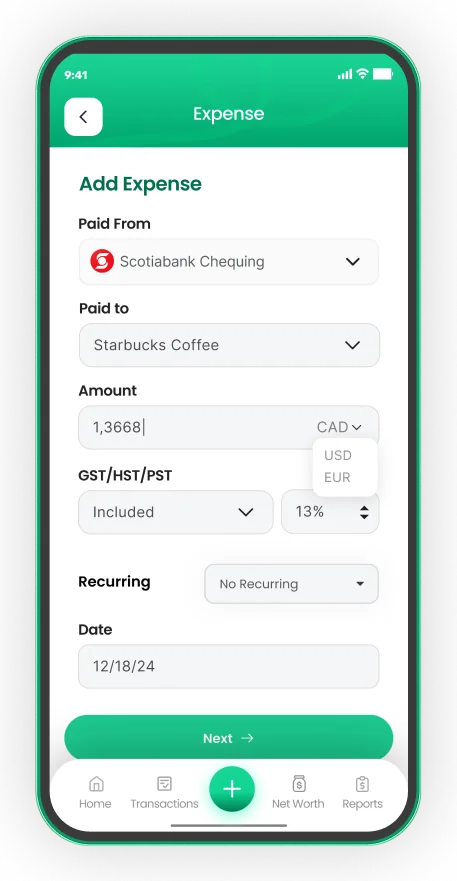



Put the numbers on autopilot
EMOH Pay tracks your spending, budgets and net worth on your phone and in the browser, always in sync. Free to start, made in Canada.
Get started free➜Average Rent in Canada by City (2026): frequently asked questions
Which Canadian city has the highest average rent?
Vancouver and Toronto have the highest rents in Canada, with one-bedroom apartments commonly listed at $2,000 to $2,700 a month. Nearby suburbs such as Surrey and Mississauga are not far behind.
Which Canadian city has the cheapest rent?
Among larger cities, Quebec City, St. John's, Regina and Saskatoon generally have the lowest rents, often about $1,000 to $1,400 for a one-bedroom.
Is rent going down in Canada?
Rent growth slowed in 2025 as new rental supply opened and population growth eased, and asking rents fell in some expensive cities. Changes vary a lot by city, so check CMHC's latest Rental Market Report for your area.
What is the average rent for a two-bedroom in Canada?
Roughly $1,700 to $2,500 a month in most large cities, and more in Vancouver and Toronto. Sharing a two-bedroom is often cheaper per person than renting a one-bedroom alone.
Does average rent include utilities?
Not always. CMHC reports rent as paid, which sometimes includes heat or water. Asking rents vary by listing. Budget separately for electricity, internet and tenant insurance unless the lease says they are included.
Sources and further reading
Related guides and tools
The classic rule: keep rent at or under 30% of gross monthly income (35% of take-home in expensive cities). Enter your…
Cost of Living in Edmonton (2026)Cost of living in Edmonton for 2026: typical rent, transit, Alberta tax, utilities and sample monthly budgets for a single…
Cost of Living in Toronto (2026): Budget GuideBudgeting in Toronto in 2026: sales tax 13% HST, typical one-bedroom rent $2,400+/month. Canada's priciest rental market…
Cost of Living in Vancouver (2026): Budget GuideBudgeting in Vancouver in 2026: sales tax 5% GST + 7% PST, typical one-bedroom rent $2,500+/month. The steepest housing in…
First Apartment BudgetPlan your first apartment budget: the upfront cash you need, deposit rules by province, a sample monthly budget and a…
Average Utility Bill in CanadaAverage utility bill in Canada: typical monthly costs for electricity, heat, water and internet, why bills differ by…
Start free today
Free on iPhone, Android and the web. Upgrade to EMOH Pro anytime for bank sync and advanced AI.
Download for iOS➜ Get it on Android➜