
Sinking Funds: What They Are and How to Use Them
Car repairs, holidays and annual insurance are not emergencies. They are predictable. A sinking fund saves for them a little at a time so they never wreck your budget.
Get started free➜ Download the app➜
What is a sinking fund?
A sinking fund is money you set aside each month for a specific expense you know is coming, such as car insurance, holiday gifts or a new laptop. You divide the expected cost by the months until you need it and save that amount regularly, so the bill is already covered when it arrives.
How sinking funds work
Sinking funds work by spreading one large, predictable cost across the months before it is due. If your car insurance renewal is $1,200 and it is due in 10 months, you save $120 a month. When the bill arrives, the money is waiting and your regular budget is untouched.
The term comes from corporate finance, where a company sets aside money over time to repay a bond. In personal budgeting the idea is the same: pay yourself in instalments before the bill, instead of paying a credit card afterwards.
Sinking funds solve a very common budgeting problem. A monthly budget can look balanced for months, then fall apart when an annual bill, a birthday or a car repair lands. Those costs are irregular, but they are rarely surprising.
Sinking fund versus emergency fund
A sinking fund pays for costs you can predict. An emergency fund pays for costs you cannot, such as a job loss or a sudden medical expense. Keeping them separate stops you from raiding your safety net for Christmas presents.
| Sinking fund | Emergency fund | |
|---|---|---|
| What it covers | Known expenses with a rough date and amount | Unexpected events such as job loss or urgent repairs |
| How much | The cost of the specific item | Often three to six months of essential expenses |
| When you spend it | On schedule, as planned | Only in a genuine emergency |
| How many | Several, one per goal | Usually one |
| After you use it | Start again for the next cycle | Rebuild it as a priority |
If you do not have an emergency fund yet, the emergency fund guide explains how to build one alongside your sinking funds.
Common sinking fund categories
Good sinking fund categories are costs that come up every year or every few years. Look back at the last 12 months of bank and card statements and list anything that was not a regular monthly bill. Most people find the same handful of categories.
- Car costs. Insurance renewals, registration, winter tires, maintenance and repairs.
- Home costs. Property tax if not included in the mortgage, repairs, appliances and renter's insurance.
- Holidays and gifts. Christmas, birthdays, weddings and other celebrations. See holiday budgeting in Canada for planning ideas.
- Travel. Flights, accommodation and time off.
- Health. Dental work, glasses and prescriptions not fully covered by a plan.
- Kids. Back-to-school supplies, sports fees, camps and activities.
- Pets. Vet visits, vaccinations and grooming.
- Technology. Replacing a phone or laptop every few years.
- Annual subscriptions and memberships. Software, warehouse club and professional dues.
Tips that help you save
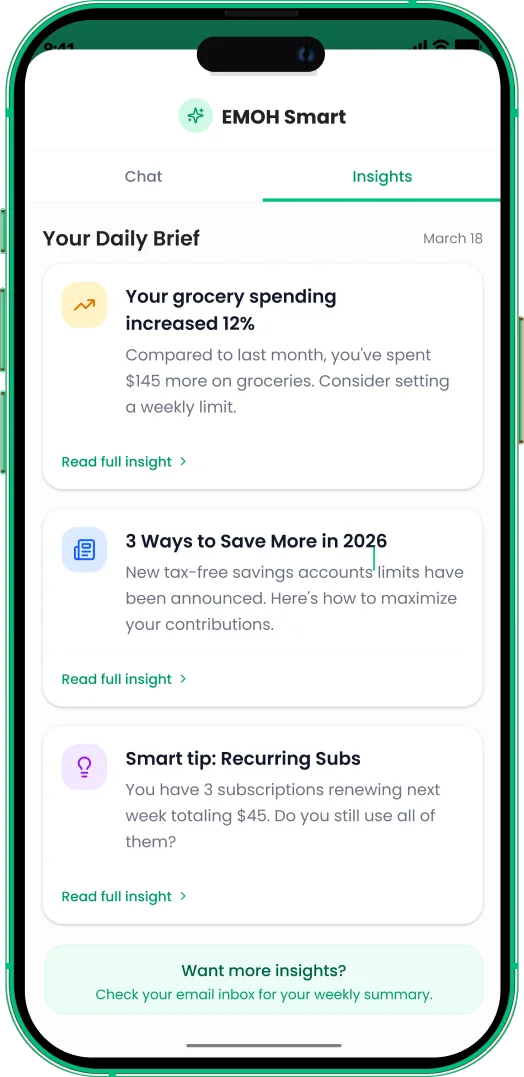
- A daily brief with practical ways to save
- Spot recurring subscriptions worth cutting
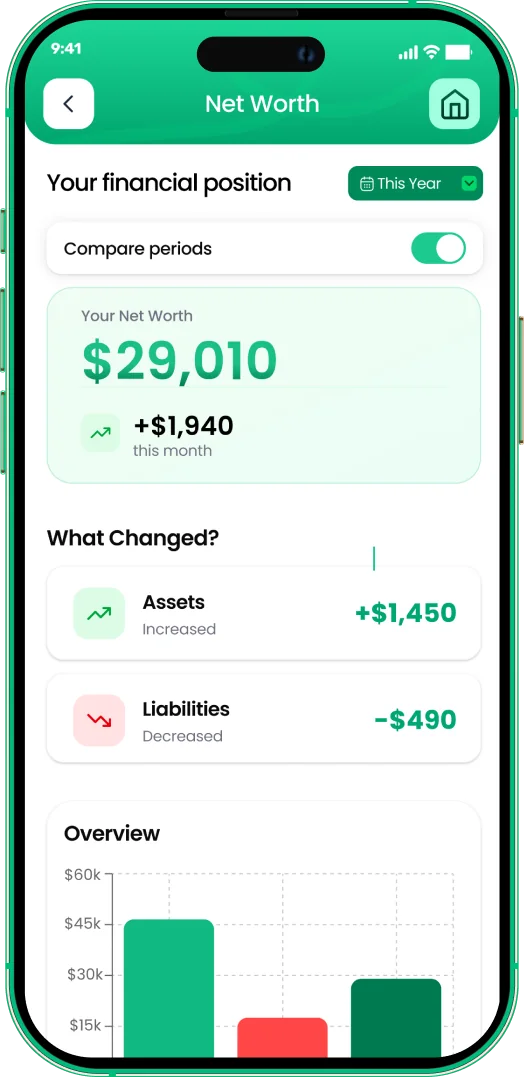
- Watch your savings show up in your net worth


How much should you put in each sinking fund?
To find how much to put in a sinking fund, divide the expected cost by the number of months until you need the money. If you are starting late, the monthly amount is higher, so it helps to set up funds as soon as you know a cost is coming. Round up slightly to cover price increases.
Here is an example for a household setting up six funds in January.
| Fund | Expected cost | Needed by | Months to save | Monthly amount |
|---|---|---|---|---|
| Car insurance | $1,500 | October | 10 | $150 |
| Holiday gifts | $900 | December | 12 | $75 |
| Summer trip | $2,400 | July | 6 | $400 |
| Winter tires | $800 | November | 11 | $73 |
| Dental and glasses | $600 | December | 12 | $50 |
| Phone replacement | $1,200 | In 24 months | 24 | $50 |
Together these funds need about $798 a month. If that is too much, stretch the timeline, lower a target or pick the two or three most urgent funds first. The savings goal calculator works out a monthly amount for any target and date.
How to set up sinking funds
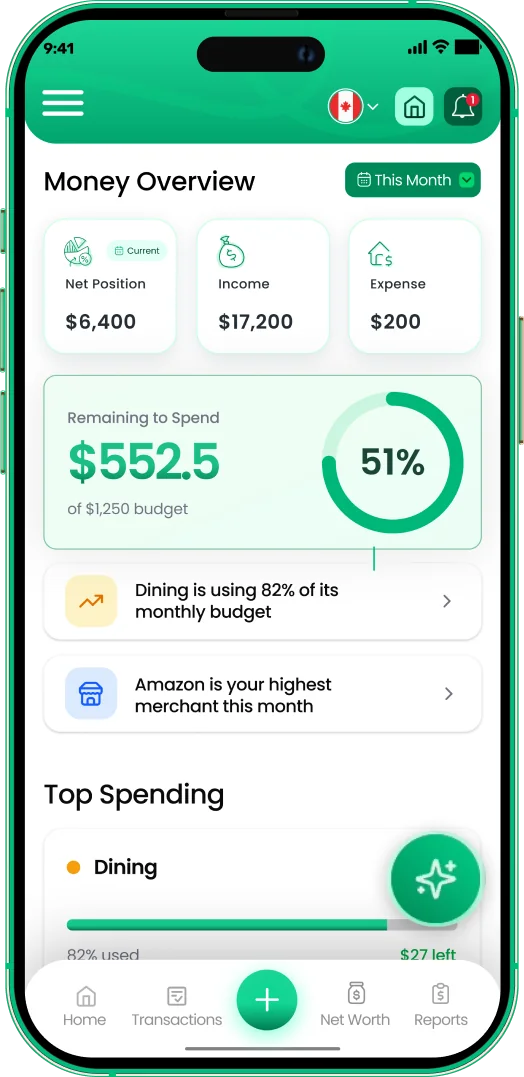
In EMOH Pay, each sinking fund can be a savings goal with a target and a date. The savings goal app shows progress for every fund, and bill tracking reminds you before the expense is due.
- List your irregular expenses from the last year and estimate each cost for the year ahead.
- Choose a due date for each and divide the cost by the months remaining.
- Add the monthly amounts to your budget as fixed lines, just like rent or a phone bill.
- Decide where the money lives. A separate high-interest savings account, or labelled sub-accounts if your bank offers them, keeps it away from everyday spending.
- Automate a transfer on payday so saving happens before spending.
- When the expense arrives, pay it from the fund and restart the cycle for next time.
Sinking funds and other budgeting methods
Sinking funds fit inside almost any budget. With the 50/30/20 rule, contributions for needs such as insurance come from the needs bucket, while travel and gifts come from wants. With envelope budgeting, each sinking fund is simply an envelope that carries its balance forward from month to month.
The key is consistency. A small monthly amount saved for a year beats a large amount found in a panic the week the bill arrives.
Save more with EMOH Pay

Put the numbers on autopilot
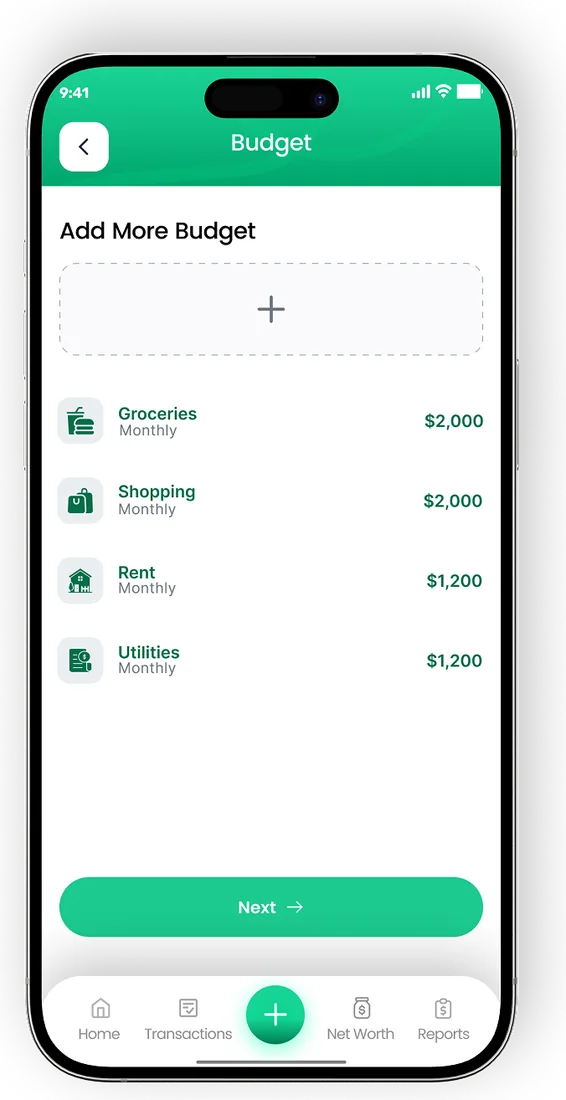
EMOH Pay tracks your spending, budgets and net worth on your phone and in the browser, always in sync. Free to start, made in Canada.
Get started free➜Sinking Funds: What They Are and How to Use Them: frequently asked questions
Should I keep sinking funds in one account or several?
Either works. One savings account with each fund tracked in a budgeting app is simpler. Separate accounts or sub-accounts make each balance visible at a glance. Choose whichever you will keep up.
Are sinking funds worth it if money is tight?
Yes, even at small amounts. Saving $20 a month toward a known cost means less goes on a credit card later. Start with the one irregular bill that hurts most.
What happens if I spend less than I saved?
Roll the leftover into the next cycle for the same fund, or move it to another goal such as your emergency fund.
Can I use a TFSA for a sinking fund?
You can, but for costs due within a year or two most people prefer a savings account because the value will not fall. Withdrawals from a TFSA restore contribution room only the following calendar year.
How many sinking funds should I have?
There is no fixed number. Many households manage four to eight. Too many can become hard to fund, so combine small related costs into one fund where it makes sense.
Sources and further reading
Related guides and tools
Create savings goals — emergency fund, trip, down payment — and EMOH Pay tracks progress and tells you if you're on pace.…
Savings Goal Calculator — Free CalculatorHow much to save per month? Enter your target amount and months until deadline — get your required monthly contribution…
Emergency Fund GuideAn emergency fund is 3–6 months of essential expenses in cash — the buffer that turns a crisis into an inconvenience. Free…
Envelope Budgeting MethodEnvelope budgeting gives every spending category a fixed pot of money. See how the cash envelope system works, a worked…
The 50/30/20 Rule ExplainedThe 50/30/20 rule splits take-home pay into 50% needs, 30% wants and 20% savings. See what counts in each bucket, worked…
Savings Challenges: 10 Ideas to TryTen savings challenge ideas compared by total saved, length and difficulty, from the 52-week and 100 envelope challenges to…
Start free today
Free on iPhone, Android and the web. Upgrade to EMOH Pro anytime for bank sync and advanced AI.
Download for iOS➜ Get it on Android➜