
Average Utility Bill in Canada
Utility costs depend on how you heat your home, where you live and the size of your place. Here are realistic monthly ranges for an apartment and a house, and how to budget for winter.
Get started free➜ Download the app➜
How much are utilities per month in Canada?
The average utility bill in Canada is roughly $150 to $300 a month for an apartment and $300 to $550 for a detached house, covering electricity, heating, water and home internet. Bills vary with the province, the heating fuel and the season, and winter bills in colder regions can be double summer ones. Figures are typical ranges.
What is the average utility bill in Canada?
The average utility bill in Canada for a typical household falls between about $150 and $550 a month once you add electricity, heating, water and internet. Where you sit in that range depends mostly on your home type and heating fuel. A one-bedroom apartment with heat included in rent may pay under $150; an older detached house heated with oil or electricity in a cold province can pay far more in January.
There is no single official monthly figure, because Statistics Canada reports household spending on utilities as annual averages that mix apartments, houses, owners and renters. The ranges on this page are built from typical usage and recent regulated rates, and should be treated as a planning guide.
Utilities are one line in a wider budget. Our list of monthly expenses shows every category to plan for.
Typical monthly utility costs by type
Electricity and heating are the largest and most variable utility costs, while water and internet are steadier. The table shows typical monthly ranges for a Canadian apartment and a detached house.
| Utility | Apartment | Detached house | What drives it |
|---|---|---|---|
| Electricity | $50 to $120 | $100 to $250 | Province, usage, electric heat or not |
| Heating (natural gas) | $0 to $80 | $80 to $250 | Winter length, insulation, fuel type |
| Water and sewer | $0 to $60 | $60 to $120 | Often included in rent; billed by city |
| Home internet | $60 to $100 | $60 to $100 | Speed and provider |
| Total | about $150 to $300 | about $300 to $550 | Season and home size |
Homes heated by oil, propane or electric baseboards can pay more than the gas figures above, especially in Atlantic Canada and rural areas. Many renters pay only electricity and internet, because heat and water are included in rent. Our budgeting app for renters page covers how to plan when some utilities are bundled.
Average hydro bill in Ontario
In Ontario, electricity is often called hydro. The Ontario Energy Board uses 700 kWh a month as its benchmark for a typical residential customer. At that usage, a total bill including delivery and regulatory charges commonly lands around $120 to $180 a month, before the Ontario Electricity Rebate, depending on your local distributor.
Most Ontario households on regulated prices can choose between time-of-use, ultra-low overnight and tiered pricing plans. Moving laundry, dishwashing and electric vehicle charging to off-peak hours lowers the bill on time-of-use plans.
Rates change on a set schedule. Check current prices on the Ontario Energy Board website and your distributor's bill.
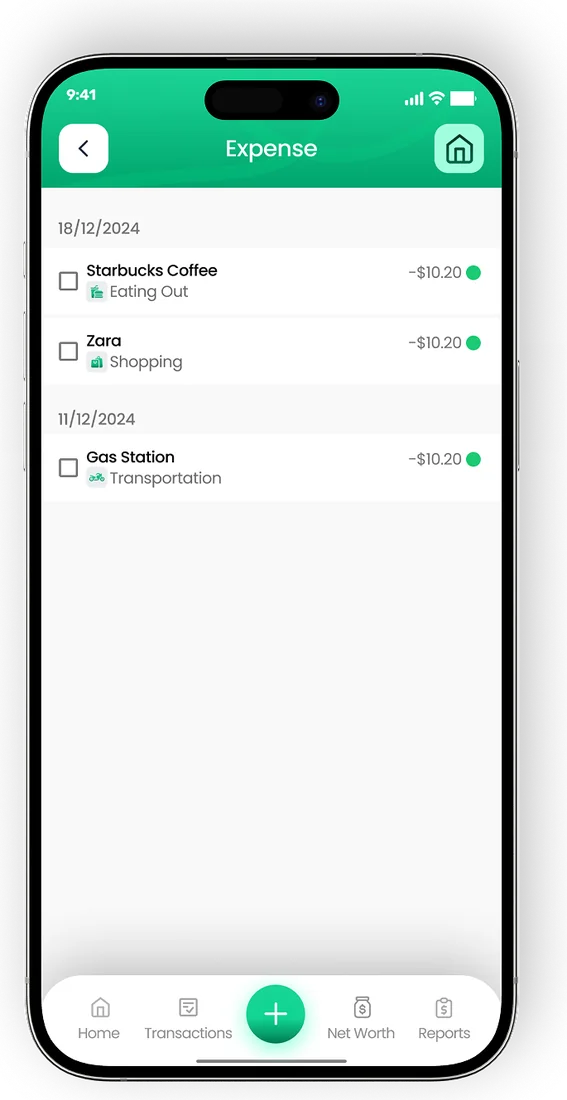
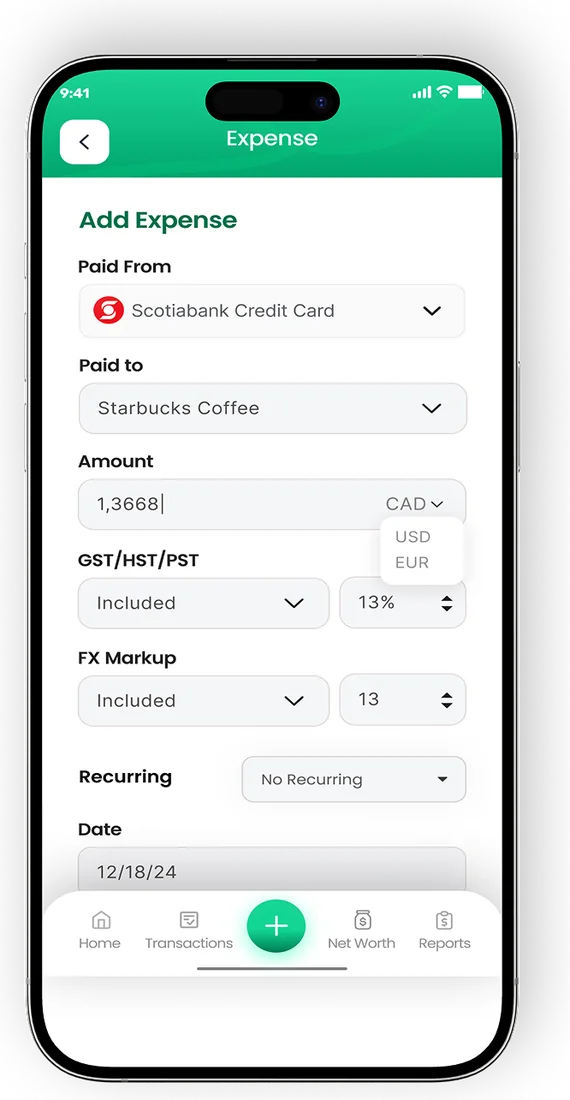
Log a purchase in two taps
- Smart categories sort every transaction
- Tag who spent what in a shared household
- Export PDF or Excel reports any month


Why utility bills differ across Canada
Utility bills differ across Canada because electricity prices, heating fuels and climates vary widely by province. Provinces with large hydroelectric systems, such as Quebec and Manitoba, generally have lower electricity rates. Regions that rely more on fossil fuels for power or heat tend to pay more.
- Heating fuel. Natural gas is common in Ontario and the Prairies, electricity in Quebec, and heating oil and heat pumps in parts of Atlantic Canada.
- Climate. Winnipeg and Edmonton need far more heating than Victoria or Vancouver.
- Market rules. Alberta's electricity market is deregulated, so you choose a retailer; most other provinces regulate rates.
- Home age and size. Older, draughty homes and larger floor areas use more energy.
- Taxes. GST or HST applies to most utility bills, and some provinces offer rebates or credits.
City guides such as cost of living in Edmonton and cost of living in Winnipeg show local utility ranges.
How to lower your utility bills
- Use a smart or programmable thermostat. Lowering the temperature at night and while you are out cuts heating costs.
- Seal draughts. Weatherstripping and caulking are cheap and make a noticeable difference in older homes.
- Shift usage off-peak. On time-of-use plans, run appliances in the evening and on weekends.
- Check rebate programs. Federal, provincial and utility programs often help pay for heat pumps, insulation and efficient appliances.
- Review your internet plan yearly. Promotional prices expire; calling to compare plans often lowers the bill.
How to budget for utilities through the year
The easiest way to budget for utilities is to smooth the cost across the year. Many utilities offer an equal billing or budget billing plan that spreads a year of costs into equal monthly payments. If yours does not, set aside a fixed amount each month and let the surplus from summer cover winter.
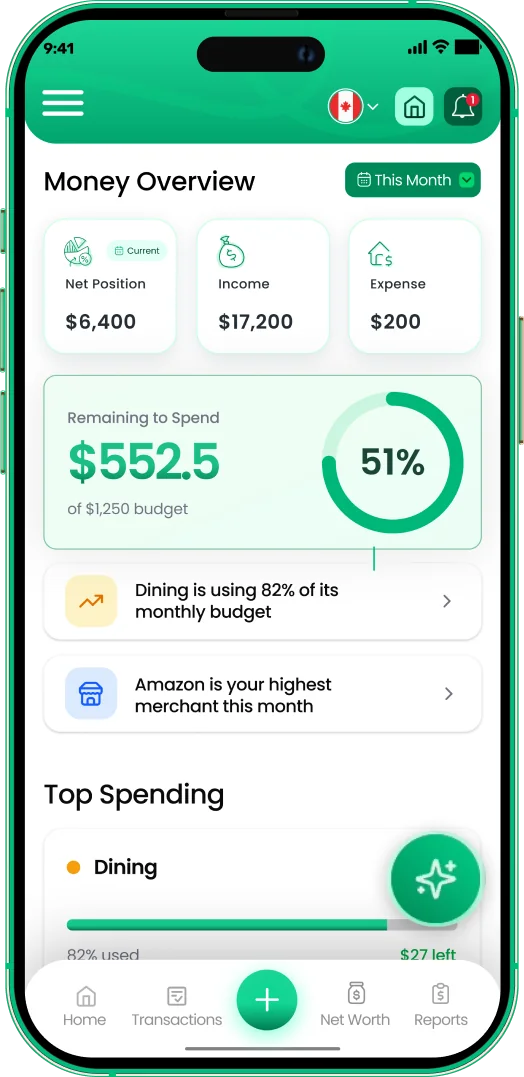
EMOH Pay's bill tracking reminds you before each bill is due, and a utilities budget with overspend alerts shows when a cold month is pushing you over. It is free to start on iPhone, Android and the web. For more on cold-weather costs, read our guide to winter budgeting in Canada, and use the bill tracker app page to see how recurring bills are organized.
Track every dollar

Put the numbers on autopilot
EMOH Pay tracks your spending, budgets and net worth on your phone and in the browser, always in sync. Free to start, made in Canada.
Get started free➜Average Utility Bill in Canada: frequently asked questions
How much are utilities for a one-bedroom apartment in Canada?
Often $100 to $200 a month for electricity and internet if heat and water are included in rent, and about $150 to $300 if you pay for everything. Electric heat and cold climates push bills higher in winter.
Are utilities included in rent in Canada?
Sometimes. Older apartment buildings often include heat and water, while newer buildings and houses usually bill tenants separately. Always ask which utilities are included before you sign a lease.
Which province has the cheapest electricity?
Quebec has some of the lowest residential electricity rates in North America thanks to Hydro-Québec's hydroelectric system. Manitoba and British Columbia also have relatively low rates.
How much should I budget for utilities?
A practical starting point is 5% to 10% of your take-home pay, then adjust after three months of real bills. Track a full winter before you settle on a final number.
Do utility bills include GST or HST?
Yes, most utility bills carry GST or HST. Some provinces give relief on the provincial portion for home energy, so check your bill to see how tax is applied.
Related guides and tools
A complete list of monthly expenses to build your budget: housing, bills, food, transport, debt, savings and the irregular…
Winter Budgeting in Canada: Smart Ways to Save with EMOH PayWinter in Canada is beautiful but undeniably expensive. From skyrocketing heating costs to rising grocery prices and the…
Bill & Subscription TrackerEMOH Pay tracks recurring bills and subscriptions — rent, phone, Netflix, gym — with reminders before they hit and totals…
Rent, bills, and everything afterEMOH Pay helps renters plan around the big monthly hit — rent reminders, utility tracking, and a clear view of what's really…
Fixed vs Variable ExpensesFixed vs variable expenses explained: what each means, examples, where periodic bills fit and how to budget for each so…
Cost of Living in Edmonton (2026)Cost of living in Edmonton for 2026: typical rent, transit, Alberta tax, utilities and sample monthly budgets for a single…
Start free today
Free on iPhone, Android and the web. Upgrade to EMOH Pro anytime for bank sync and advanced AI.
Download for iOS➜ Get it on Android➜