
How Much to Save for Retirement in Canada
There is no single magic number. Your target depends on the income you want, what CPP and OAS will pay you, and how long your savings need to last.
Get started free➜ Download the app➜
How much do I need to retire in Canada?
How much you need to retire in Canada depends on your spending, but a common method is to aim for 60% to 80% of your pre-retirement income, subtract expected CPP and OAS, and save about 25 times the annual gap. For example, a $30,000 yearly gap needs roughly $750,000 in savings using a 4% withdrawal rate.
The amount you need to retire in Canada is whatever covers the gap between your retirement spending and your guaranteed income from government pensions and any workplace pension. For many households that gap is between $15,000 and $40,000 a year, which translates into savings of roughly $375,000 to $1,000,000 using the 4% guideline.
Online figures such as "you need $1 million" are averages that fit almost nobody. A couple who own their home outright and spend $50,000 a year need far less than a renter who plans to travel. Start with your own numbers, not a headline.
Our retirement savings calculator projects how your current savings could grow, and the CPP retirement calculator estimates your Canada Pension Plan income at different start ages.
Step by step: work out your retirement number
You can estimate your number in five steps using figures you already have. The method below is the same one most planners use as a starting point, before adjusting for taxes, inflation and investment returns.
- Estimate yearly retirement spending. Start with today's spending, remove costs that end (mortgage, commuting, saving for retirement itself) and add new ones such as travel or health costs. Many people land at 60% to 80% of their working income.
- Estimate CPP. Your My Service Canada Account shows a CPP statement based on your actual contributions. Few people receive the maximum.
- Estimate OAS. Old Age Security is based on years lived in Canada after age 18. Forty years of residence usually qualifies for the full amount.
- Add any workplace pension. A defined benefit pension statement shows your projected annual pension.
- Multiply the gap by 25. Subtract steps 2 to 4 from step 1. Multiplying the remaining annual gap by 25 gives a savings target that supports a withdrawal of about 4% a year.
Worked example: a couple planning to retire at 65
This illustrative example shows how the method works. The CPP and OAS amounts are round estimates for illustration, not what any particular person will receive. Check your own statements on Canada.ca.
| Line | Amount per year |
|---|---|
| Target retirement spending | $60,000 |
| CPP for both partners (estimate) | - $20,000 |
| OAS for both partners (estimate) | - $17,000 |
| Workplace pension | - $0 |
| Annual gap to fund from savings | $23,000 |
| Savings target (gap × 25) | about $575,000 |
Taxes are not included. Withdrawals from an RRSP or RRIF are taxable income, while TFSA withdrawals are tax-free, so the mix of accounts changes how much you need. Our explainers on what an RRSP is and what a TFSA is cover the difference.
Retirement savings by age in Canada: common benchmarks
Retirement savings benchmarks by age are rules of thumb, not official targets. A popular approach expresses savings as a multiple of your current salary. They are useful for a quick check but ignore pensions, home equity and when you plan to retire.
| Age | Savings as a multiple of salary | On a $70,000 salary |
|---|---|---|
| 30 | about 1× | $70,000 |
| 40 | about 3× | $210,000 |
| 50 | about 6× | $420,000 |
| 60 | about 8× | $560,000 |
| 67 | about 10× | $700,000 |
If you have a defined benefit pension, you may need much less than these multiples. If you started late, the gap can be closed by saving more, working a few extra years or delaying CPP and OAS. See average net worth by age for context on how assets build over time.
Watch your net worth grow
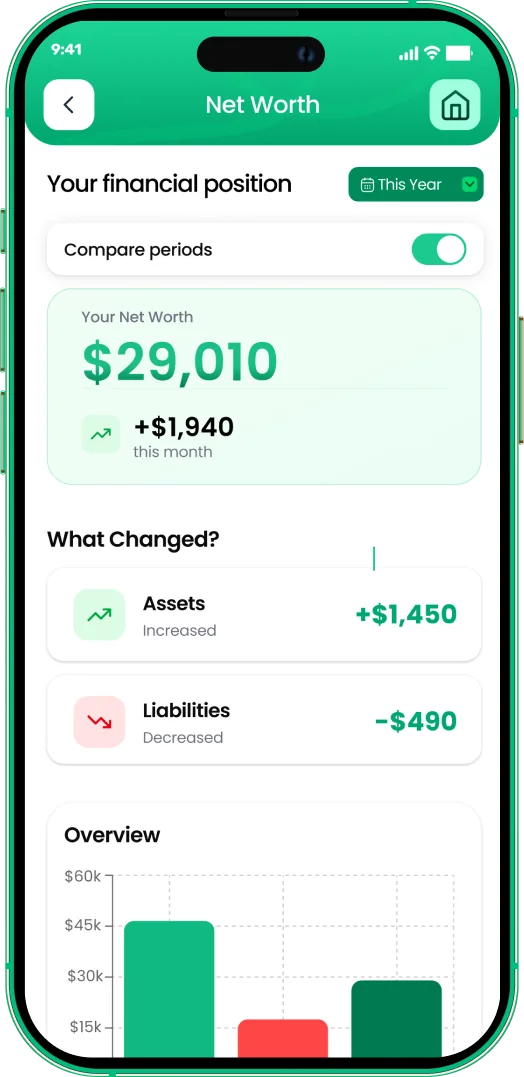
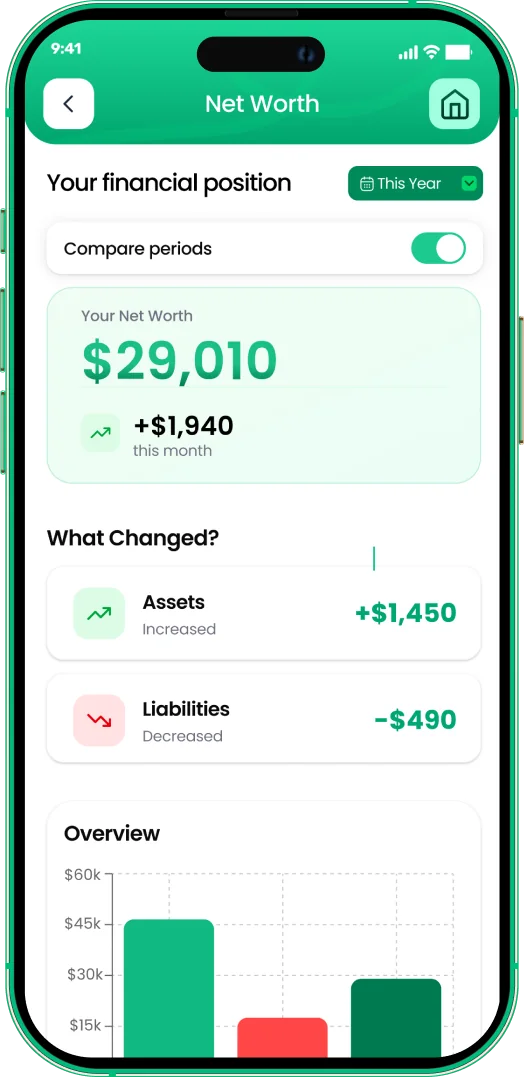
- Add assets and debts in any of 148 currencies
- See what changed month by month
- Set savings goals and track progress


How CPP and OAS fit into your plan
CPP and OAS form the base of most Canadians' retirement income, and both rise with inflation. Timing matters: you can take CPP as early as 60 or as late as 70, and OAS from 65 to 70. Starting later means larger monthly payments for life.
- CPP taken early. Your pension is reduced by 0.6% for each month before 65, up to 36% less at age 60.
- CPP taken late. It increases by 0.7% for each month after 65, up to 42% more at 70.
- OAS deferral. Each month you delay OAS after 65 adds 0.6%, up to 36% more at 70. OAS is also reduced for higher-income retirees through the recovery tax.
- Payment dates. Both are paid monthly near the end of the month. See CPP payment dates and OAS payment dates for the schedule.
Budget for retirement before you get there
The most reliable input to your retirement number is your real spending today. Track every category for a few months and you will know which costs will fall, which will stay and which will grow.
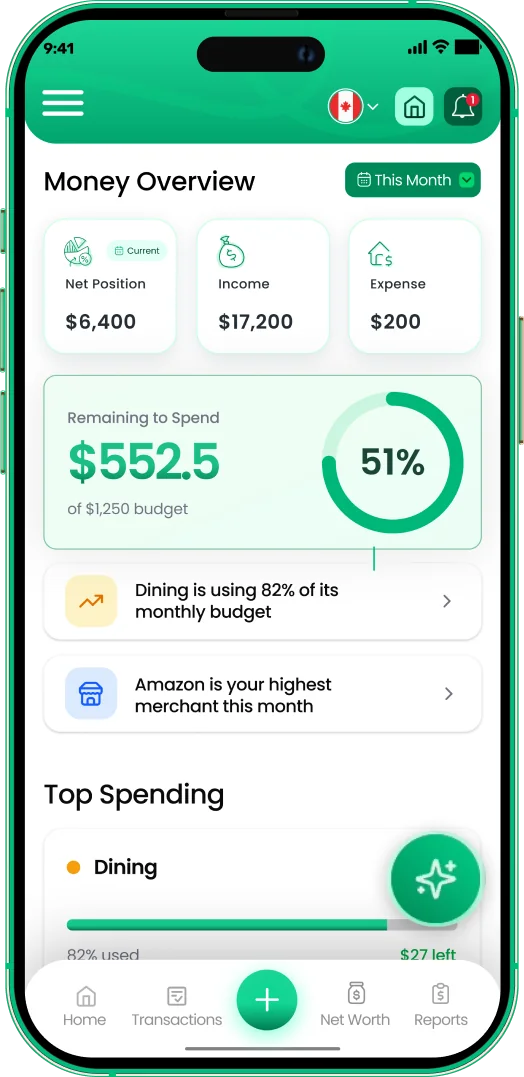
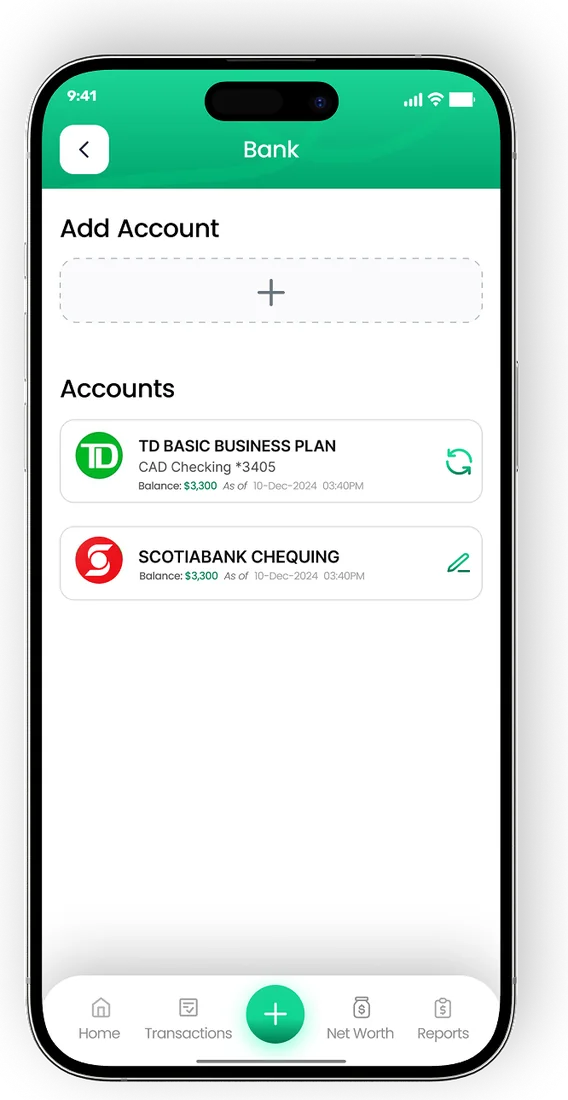
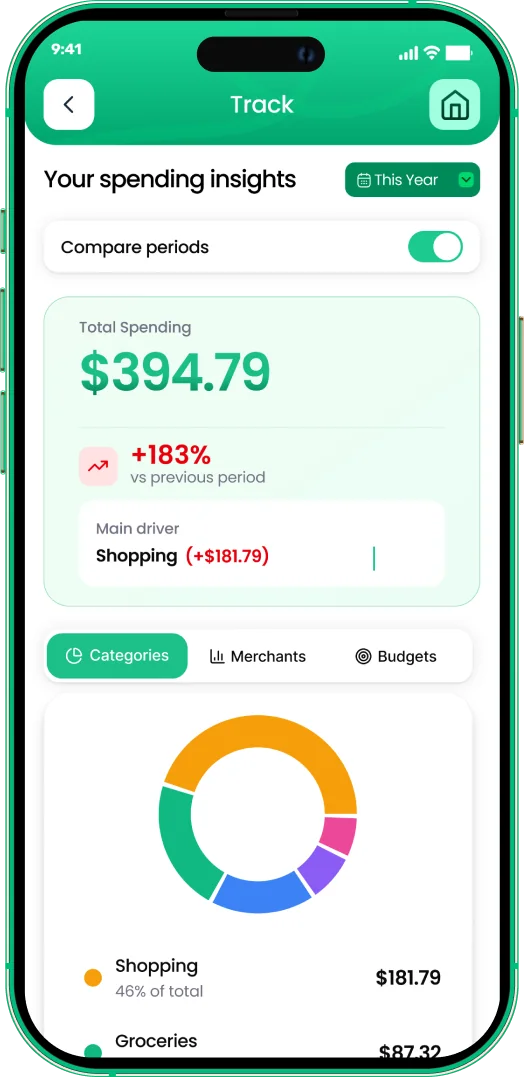
EMOH Pay's reports and net worth tracking show both sides of the picture: what you spend each month and whether your savings are growing on schedule. You can set a savings goal for your retirement accounts and watch progress. For life after work, our retirement budget app page shows how retirees use it to manage a fixed income. Starting ten years earlier makes a large difference because growth compounds.
Your net worth in EMOH Pay

Put the numbers on autopilot
EMOH Pay tracks your spending, budgets and net worth on your phone and in the browser, always in sync. Free to start, made in Canada.
Get started free➜How Much to Save for Retirement in Canada: frequently asked questions
Is $1 million enough to retire in Canada?
For many households, yes. Using the 4% guideline, $1 million supports withdrawals of about $40,000 a year before tax, on top of CPP and OAS. Whether that is enough depends on your spending, taxes and whether you own your home.
Can I retire on CPP and OAS alone?
Some people do, especially homeowners with low costs, and low-income seniors may also qualify for the Guaranteed Income Supplement. For most people, CPP and OAS alone cover basic needs but leave little room for travel, repairs or rising health costs.
What is the 4% rule?
It is a guideline that says withdrawing about 4% of your savings in the first year, then adjusting for inflation, has historically lasted around 30 years. It is a planning shortcut, not a guarantee, and some planners prefer 3% to 3.5% for early retirees.
How much should I save each month for retirement?
A common starting point is 10% to 15% of gross income, including any employer match. Starting in your 20s or 30s makes this far easier than starting in your 50s.
Should I use an RRSP or a TFSA for retirement?
Many Canadians use both. An RRSP gives a tax deduction now and is taxed on withdrawal, which suits higher earners. A TFSA gives no deduction but tax-free withdrawals that do not affect OAS. The right mix depends on your income now and in retirement.
Related guides and tools
Free CPP calculator. See how your Canada Pension Plan retirement pension changes if you start at any age from 60 to 70…
Retirement Savings CalculatorFree retirement savings calculator: project your nest egg at retirement, compare it with a 25-times-spending target and see…
What Is an RRSP?What is an RRSP? A plain-language guide to Canada's Registered Retirement Savings Plan: how the deduction works…
TFSA vs RRSP CalculatorTFSA vs RRSP: compare your tax rate today with your expected rate in retirement and see which account leaves you with more…
OAS Payment Dates 2026OAS payment dates 2026 for every month, plus current Old Age Security amounts, the recovery tax threshold and what to do if…
Confidence for the years aheadEMOH Pay helps retirees and near-retirees track spending against fixed income, watch net worth, and keep the retirement plan…
Start free today
Free on iPhone, Android and the web. Upgrade to EMOH Pro anytime for bank sync and advanced AI.
Download for iOS➜ Get it on Android➜