
Retirement Savings Calculator
Enter your age, savings, monthly contribution, expected return and the yearly spending you want in retirement. See your projected nest egg, your target and the monthly amount that gets you there.
Use the calculator➜ Try EMOH Pay free➜
Am I saving enough for retirement?
You are saving enough for retirement if your projected savings at retirement reach about 25 times the yearly spending you expect to fund yourself, a target based on the 4% rule. A 35-year-old with $50,000 saved, adding $800 a month at 5%, reaches about $889,000 by 65, short of the $1.25 million needed for $50,000 a year.
How the retirement savings calculator works
This retirement savings calculator grows your current savings and monthly contributions at your chosen return until your retirement age. It compares the result with a target of 25 times the yearly spending you want to fund from savings, then shows the surplus or shortfall and the monthly contribution that would hit the target exactly.
The 25-times target comes from the 4% rule: withdrawing about 4% of a portfolio in the first year, then adjusting for inflation, has historically lasted around 30 years in most market conditions. It is a planning guideline, not a guarantee.
- Current age and retirement age. The gap between them is how long your money has to grow.
- Saved so far. Everything already set aside for retirement: RRSPs, TFSAs, workplace plans and other investments.
- Monthly contribution. What you add each month, including any employer contributions.
- Annual return (%). Use a return after inflation, such as 3% to 5%, so the result is in today's dollars.
- Desired annual spending in retirement. The yearly amount you want your savings to provide, in today's dollars, after subtracting expected government pensions.
Am I saving enough for retirement? A worked example
Take a 35-year-old planning to retire at 65. They have $50,000 saved, add $800 a month and expect a 5% annual return. They want their savings to provide $50,000 a year.
| Result | Amount |
|---|---|
| Projected savings at 65 | about $889,000 |
| Target (25 × $50,000) | $1,250,000 |
| Shortfall | about $361,000 |
| Monthly contribution needed to hit the target | about $1,234 |
There are three ways to close a gap like this: save more each month, retire a little later, or plan to spend less from savings. Often a mix of small changes is easier than one big one. Government pensions also reduce the amount you need, which is why the spending input should only include what your savings must cover.
Why starting early matters so much
Time does more of the work than contributions. The chart shows what $500 a month grows to by age 65 at a 5% return, depending on when you start. Starting at 25 instead of 35 adds ten years of contributions, $60,000 in total, but nearly doubles the result.
The rule of 72 explains the pattern: at 5%, money doubles roughly every 14 years, so each decade of delay costs more than the contributions you skipped.
Watch your net worth grow
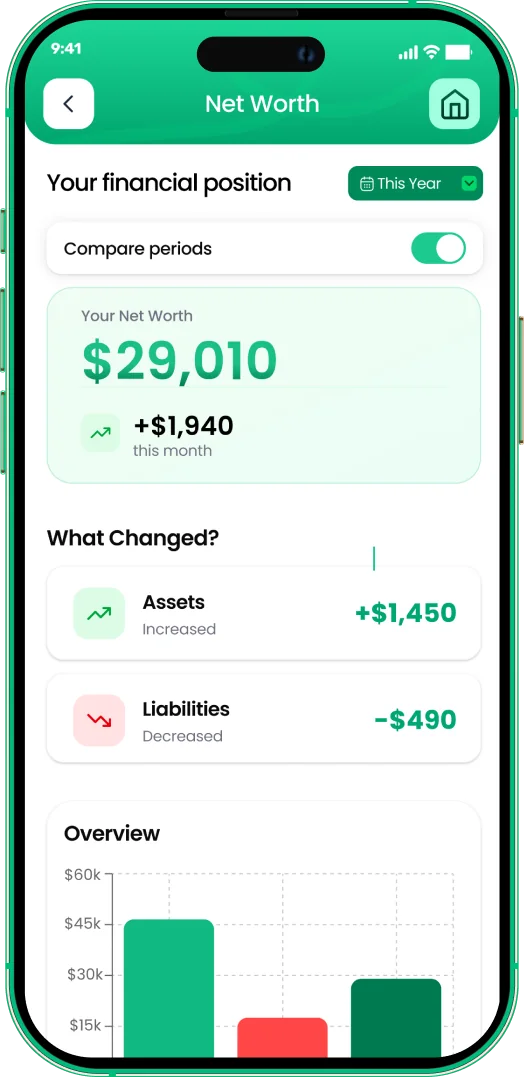
- Add assets and debts in any of 148 currencies
- See what changed month by month
- Set savings goals and track progress


How CPP and OAS reduce what you need to save
In Canada, most retirees receive the Canada Pension Plan and Old Age Security. Every dollar they provide is a dollar your savings do not have to cover, so subtract your expected government pensions from your desired spending before you enter it.
CPP can start any time from 60 to 70. Taking it before 65 reduces the payment by 0.6% for each month early, and waiting past 65 increases it by 0.7% for each month you delay. OAS normally starts at 65 and can be deferred up to 70 for a larger payment. Your CPP amount depends on your contribution history; the CPP retirement calculator estimates yours, and your My Service Canada Account shows your record.
Outside Canada, use your own country's state pension estimate in the same way.
Where to hold your retirement savings
- RRSP. Contributions are tax-deductible and growth is tax-deferred until withdrawal. Best when your tax rate now is higher than it will be in retirement. The RRSP calculator shows your tax refund.
- TFSA. No deduction going in, but growth and withdrawals are tax-free and do not affect OAS. Useful at any income. Compare the two with the TFSA vs RRSP calculator.
- Workplace pension or group RRSP. If your employer matches contributions, contribute at least enough to get the full match.
- Non-registered investments. For savings beyond your registered room, with investment income taxed each year.
How much do you need to retire?
The calculator gives a target based on your own spending, which is more useful than any national average. To work out that spending, start from your current budget and adjust for what changes in retirement: a paid-off mortgage, no commuting, more travel or health costs. Our guide to how much you need to retire in Canada walks through the numbers in detail.
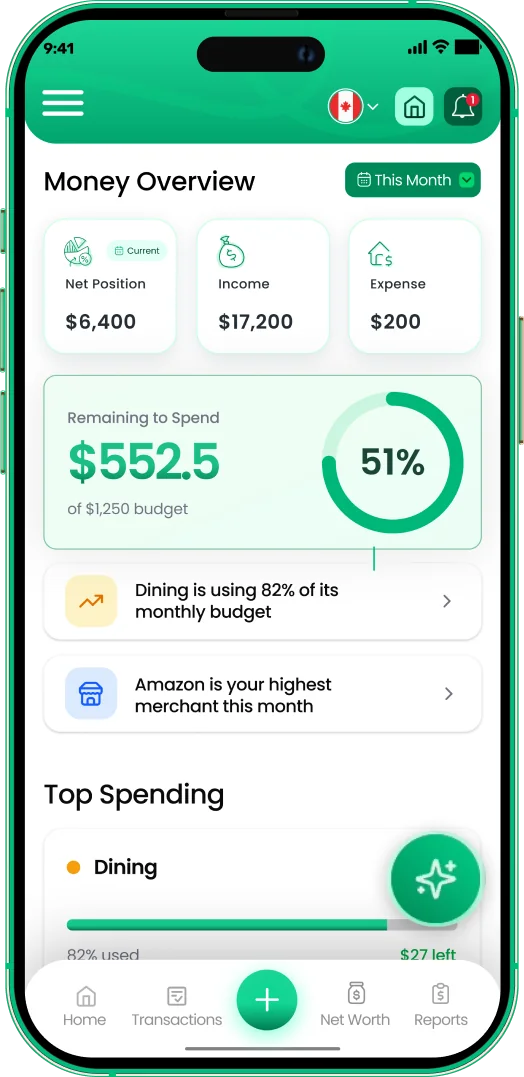
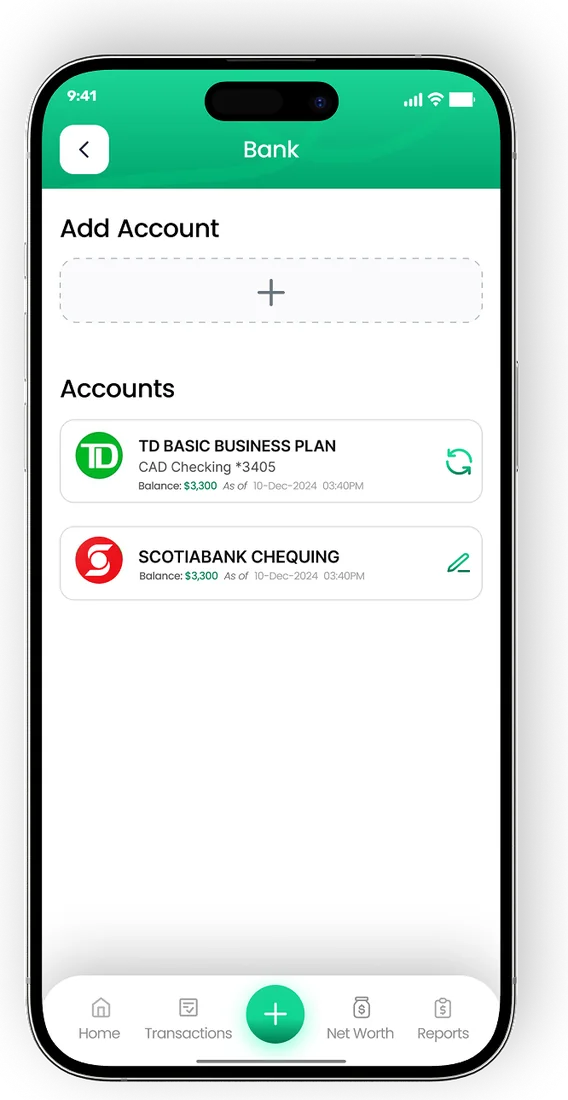
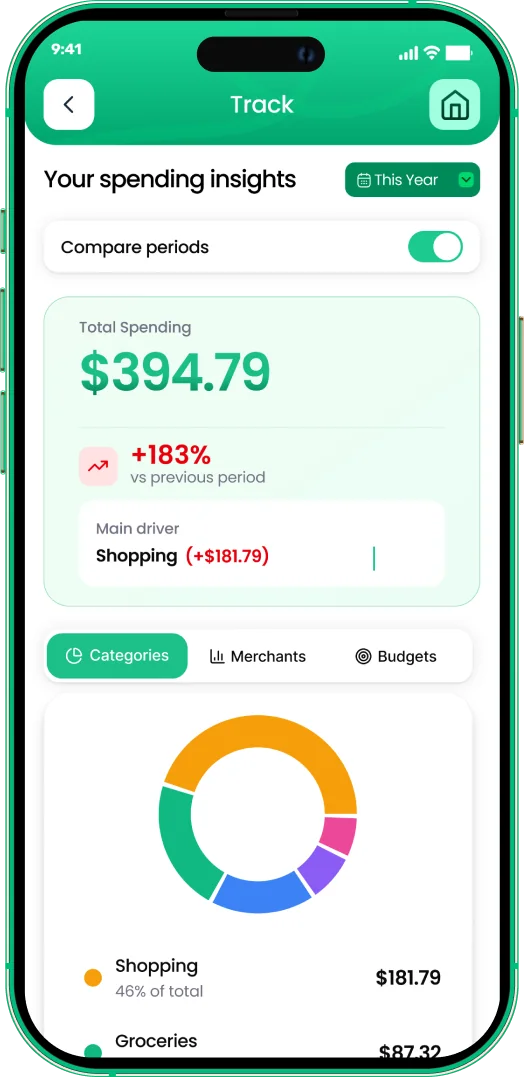
Knowing your real spending today is the foundation of a good estimate. EMOH Pay tracks spending by category, shows your net worth over time and lets you set a retirement savings goal, so you can rerun this calculator with real numbers every year.
Your net worth in EMOH Pay

Put the numbers on autopilot
EMOH Pay tracks your spending, budgets and net worth on your phone and in the browser, always in sync. Free to start, made in Canada.
Get started free➜Retirement Savings Calculator: frequently asked questions
What is the 4% rule?
The 4% rule is a guideline that withdrawing about 4% of your savings in the first year of retirement, then adjusting for inflation, has historically lasted about 30 years. It implies a target of 25 times your yearly spending.
What return should I use in a retirement calculator?
Use a conservative return after inflation, such as 3% to 5% for a balanced portfolio. Using a return after inflation keeps the results in today's dollars, so they compare directly with your spending goal.
Should I include CPP and OAS?
Yes, by reducing your desired spending. If you want $60,000 a year and expect $20,000 from CPP and OAS combined, enter $40,000 as the amount your savings must provide.
What if I am behind on retirement savings?
Increase contributions where you can, capture any employer match, consider working a few years longer and delaying CPP for a larger payment. Even modest increases make a difference over a decade or more.
Is this retirement savings calculator only for Canadians?
The math works in any country. The notes on CPP, OAS, RRSPs and TFSAs are Canadian; elsewhere, subtract your state pension and use your local tax-advantaged accounts.
Sources and further reading
Related guides and tools
How much do I need to retire in Canada? Estimate your retirement spending, subtract CPP and OAS, and find your savings…
CPP Retirement CalculatorFree CPP calculator. See how your Canada Pension Plan retirement pension changes if you start at any age from 60 to 70…
RRSP CalculatorFree RRSP calculator for 2026: see the tax refund on your contribution, what it really costs after tax, your new room and…
TFSA vs RRSP CalculatorTFSA vs RRSP: compare your tax rate today with your expected rate in retirement and see which account leaves you with more…
Compound Interest CalculatorFree compound interest calculator. Enter a starting amount, monthly contribution, return and years to see how your savings…
Confidence for the years aheadEMOH Pay helps retirees and near-retirees track spending against fixed income, watch net worth, and keep the retirement plan…
Start free today
Free on iPhone, Android and the web. Upgrade to EMOH Pro anytime for bank sync and advanced AI.
Download for iOS➜ Get it on Android➜