
Average Monthly Expenses in Canada
Canadian households spend about $6,350 a month on goods and services, before income tax. Here is how that splits by category, by household type and by province, and how to compare it with your own spending.
Get started free➜ Download the app➜
How much does the average Canadian spend per month?
The average Canadian household spends about $6,350 a month on goods and services, based on Statistics Canada's 2023 Survey of Household Spending ($76,146 a year). A person living alone spends about $3,670 a month. Including income tax, pension contributions and insurance, total household outlays average about $8,780 a month.
What are the average monthly expenses in Canada?
Average monthly expenses in Canada come to about $6,350 per household for goods and services, according to Statistics Canada's 2023 Survey of Household Spending. That is $76,146 a year divided by 12. It covers housing, food, transportation, clothing, health, recreation and other everyday spending, but not income tax, pension contributions or savings.
Add income tax (about $1,795 a month on average), personal insurance and pension contributions (about $520) and gifts and support payments (about $120), and total household outlays reach about $8,780 a month, or $105,367 a year.
These are averages across all households in the 10 provinces, including owners and renters, people with and without cars, and every income level. Your own numbers will differ, so treat them as a benchmark. The survey runs every two years, and 2023 is the latest year published.
Average monthly spending in Canada by category
Shelter is the biggest monthly cost for the average Canadian household at about $2,040, followed by transportation and food at about $1,000 each. Together those three take nearly two-thirds of spending on goods and services. The table converts Statistics Canada's annual averages to monthly amounts.
| Category | All households | One person | Couple with children |
|---|---|---|---|
| Shelter (rent or mortgage, taxes, utilities) | $2,042 | $1,352 | $2,791 |
| Transportation | $1,002 | $489 | $1,523 |
| Food (stores and restaurants) | $994 | $541 | $1,460 |
| Household operations (phone, internet, child care, supplies) | $498 | $306 | $716 |
| Recreation | $431 | $222 | $630 |
| Furnishings and equipment | $282 | $150 | $394 |
| Health care | $255 | $159 | $315 |
| Clothing and accessories | $226 | $113 | $353 |
| Personal care | $153 | $86 | $222 |
| Tobacco, alcohol and cannabis | $151 | $110 | $167 |
| Education | $138 | $33 | $308 |
| Other (miscellaneous, reading, games of chance) | $173 | $111 | $216 |
| Total goods and services | $6,346 | $3,673 | $9,095 |
Food on its own is worth a closer look, because it is the category most people can change quickly. Our guide to the average grocery bill in Canada breaks it down by household size. For the housing line, see average rent in Canada, and for heat, electricity and water, see the average utility bill in Canada.
Figures checked October 2026 against Statistics Canada tables 11-10-0222-01 and 11-10-0224-01; confirm current numbers with Statistics Canada.
Monthly expenses for a single person in Canada
A single person in Canada spends about $3,670 a month on goods and services, based on 2023 data for one-person households ($44,074 a year). Shelter takes about $1,350 of that, food about $540 and transportation about $490. One-person households make up about 30% of all households in Canada.
Living alone costs more per person than sharing. A couple without children spends about $6,330 a month in total, or roughly $3,165 each, because rent, utilities and internet are split. That is why shelter takes a bigger share of a single person's budget than it does for couples.
Remember that the single-person average mixes students, working adults and retirees, renters and owners. A young renter in Toronto or Vancouver will usually spend more on shelter than this average suggests, while a retiree who owns a paid-off home may spend less.
Budgets that update themselves
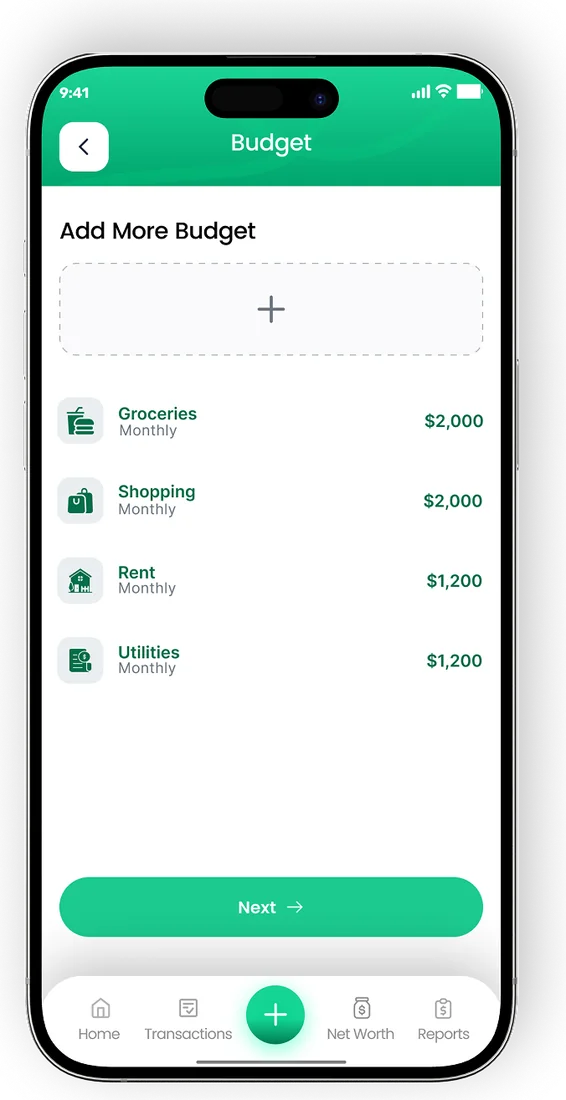
- Set monthly limits for every category
- See what is left to spend in real time
- Get a nudge before a category runs out


Average monthly expenses by household type
Monthly spending rises with household size, from about $3,670 for one person to about $9,100 for a couple with children. The table shows spending on goods and services and total outlays, which add income tax, pension contributions, insurance and gifts.
| Household type | Goods and services | Total outlays incl. taxes |
|---|---|---|
| All households | $6,346 | $8,781 |
| One person | $3,673 | $5,215 |
| Couple without children | $6,331 | $8,911 |
| Couple with children | $9,095 | $12,787 |
| Lone parent | $6,078 | $7,591 |
Couples with children spend the most on food, transportation and education. Lone-parent households spend less in total, but a larger share of their budget goes to shelter and essentials. To see how these numbers compare with what households earn, read our guide to average household income in Canada.
Average cost of living per month by province
The average cost of living per month is highest in Alberta, at about $7,130 per household on goods and services, followed by British Columbia and Ontario at about $6,900 and $6,800. New Brunswick, Quebec and Nova Scotia are the lowest at about $5,360 to $5,385. Shelter explains most of the gap.
Ontario households spent about $2,430 a month on shelter and British Columbia households about $2,400, compared with about $1,320 in Newfoundland and Labrador. Alberta's lead comes from the highest spending on transportation and food of any province, as well as housing. Quebec households spend less on shelter than most, but they pay more income tax than most, which is not counted in the goods and services figure.
The survey's national averages cover the 10 provinces only. Statistics Canada reports the territorial capitals separately, and costs there are generally higher, especially for food.
How to compare your monthly expenses with the average
To compare your spending fairly, convert everything to the same monthly basis and match your household type. Statistics Canada reports yearly figures, so divide by 12, and include irregular costs such as insurance, car repairs and gifts, which people often leave out.
- Add up three months of real spending from your bank and card statements, then divide by three for a monthly average.
- Group it into the categories in the table above: shelter, transportation, food and so on.
- Add a monthly share of annual bills. A $1,200 yearly insurance premium is $1,200 ÷ 12 = $100 a month.
- Compare each category with the line for your household type, not the all-household average.
- Look for the one or two categories that are furthest above the benchmark and start there.
Worked example: a single renter spends $1,500 on rent and utilities, $450 on groceries, $150 on restaurants, $130 on transit and $600 on everything else, for $2,830 a month. Against the one-person average of $3,673, that is $843 lower in total, but $148 higher on shelter ($1,500 minus $1,352), so housing is the line to watch.
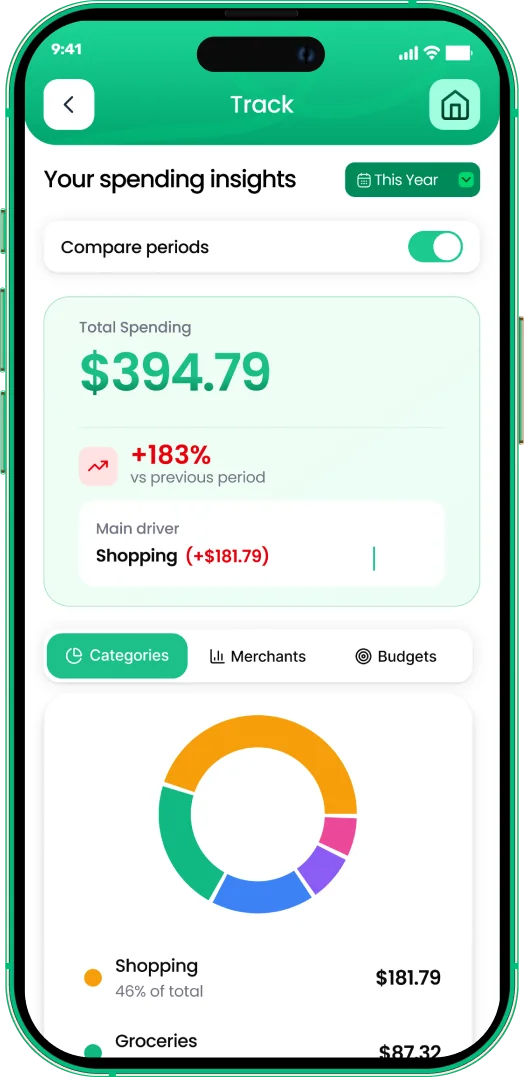
Our list of monthly expenses is a checklist of every category to include, and Canadian spending statistics shows how the shares have changed over time. EMOH Pay sorts your spending into categories automatically, so this comparison takes minutes. It is free on iPhone, Android and the web.
Plan your month in EMOH Pay

Put the numbers on autopilot
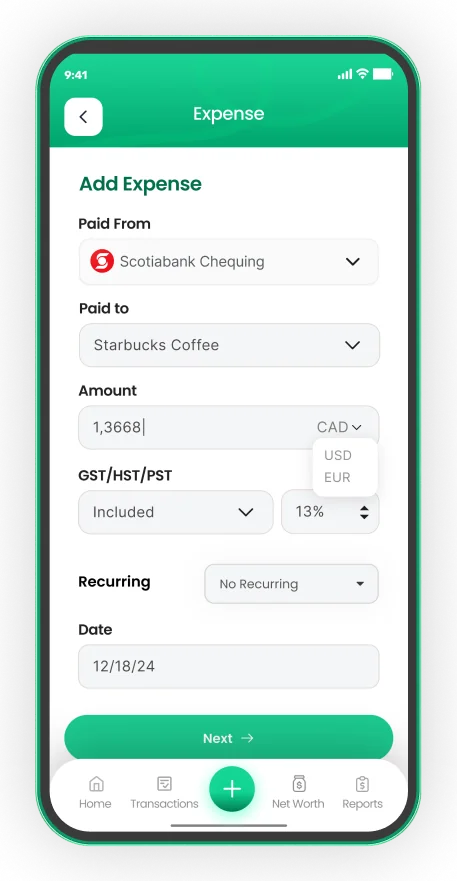
EMOH Pay tracks your spending, budgets and net worth on your phone and in the browser, always in sync. Free to start, made in Canada.
Get started free➜Average Monthly Expenses in Canada: frequently asked questions
How much does a single person spend per month in Canada?
About $3,670 a month on goods and services, based on Statistics Canada's 2023 data for one-person households. Including income tax and pension contributions, total outlays average about $5,215 a month. Rent in a large city can push this much higher.
What is the biggest monthly expense in Canada?
Shelter. The average household spent about $2,040 a month on rent or mortgage payments, property taxes, utilities and related costs in 2023, about a third of all spending on goods and services.
Does the average include income tax?
The $6,350 monthly figure does not. Statistics Canada counts income tax separately, at about $1,795 a month for the average household. Total outlays including taxes, pension contributions and insurance average about $8,780 a month.
Which province has the highest monthly expenses?
Alberta, at about $7,130 a month per household on goods and services in 2023, followed by British Columbia and Ontario. New Brunswick, Quebec and Nova Scotia had the lowest averages.
How often is this data updated?
Statistics Canada runs the Survey of Household Spending every two years. The 2023 survey is the latest published, and no data were collected for 2022. Prices have risen since 2023, so today's costs are likely higher.
How can I track my monthly expenses?
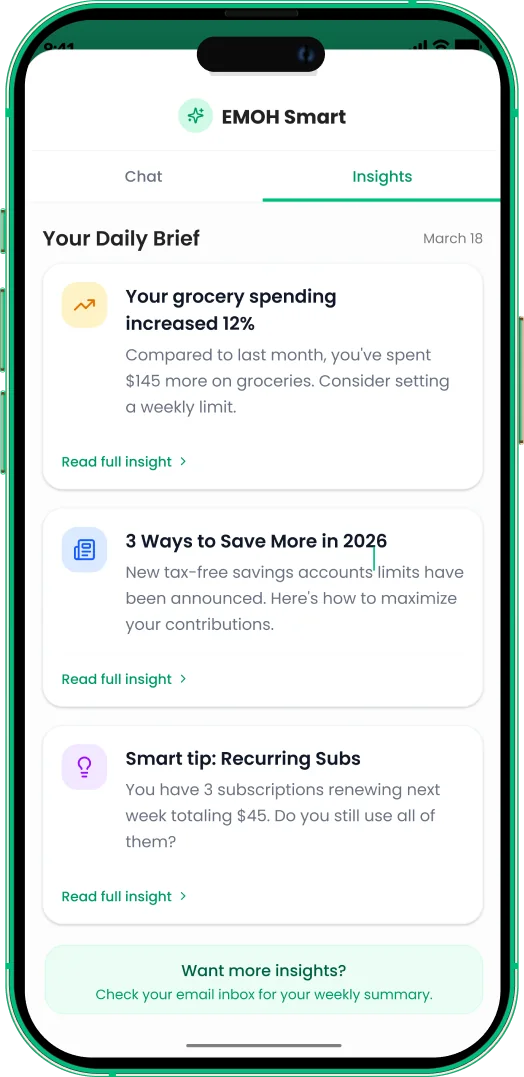
Record every purchase for at least a month and group it by category. EMOH Pay does this automatically and shows each category against your budget. Automatic bank sync with Canadian banks is free on every plan.
Related guides and tools
The average grocery bill in Canada by household size, from singles to families of five, why food prices rose, and practical…
Average Rent in Canada by City (2026)Average rent in Canada for 2026: typical one-bedroom ranges in 20 cities, why survey and asking rents differ, and how to…
Average Utility Bill in CanadaAverage utility bill in Canada: typical monthly costs for electricity, heat, water and internet, why bills differ by…
Monthly Expenses Checklist: The Full List of Monthly ExpensesA complete list of monthly expenses to build your budget: housing, bills, food, transport, debt, savings and the irregular…
Canadian Spending Statistics 2026Canadian spending statistics from Statistics Canada and the Bank of Canada: how households split their budgets, what grew…
Average Household Income in CanadaAverage household income in Canada explained: median total and after-tax income from Statistics Canada, how it differs by…
Start free today
Free on iPhone, Android and the web. Upgrade to EMOH Pro anytime for advanced AI and unlimited family sharing.
Download for iOS➜ Get it on Android➜