
Average Household Income in Canada
Household income adds up everyone's income under one roof, so it is much higher than a typical salary. Here is what the official numbers say and how to compare your own household fairly.
Get started free➜ Download the app➜
What is the average household income in Canada?
The median household income in Canada was about $84,000 before tax and about $73,000 after tax, according to the 2021 Census, which measured income for 2020. The average (mean) household income is higher, because a small number of very high earners pull it up. Median is the better guide to a typical household.
The best-known measure of average household income in Canada comes from the 2021 Census: a median total household income of about $84,000 in 2020, or about $73,000 after income taxes. Half of Canadian households earned more than that and half earned less.
Statistics Canada also publishes income data every year through the Canadian Income Survey. It measures a slightly different unit, families and unattached individuals, so its figures are not directly comparable with the Census. Recent releases have put median after-tax income in a broadly similar range, around the low $70,000s.
Household income is not the same as a salary. A household with two earners on $45,000 each has a household income of $90,000. For individual pay, see our guide to the average salary in Canada.
Median vs average family income: which number to use
Median family income is the middle value, while the average (mean) adds every income and divides by the number of households. In Canada the mean is higher than the median because incomes are unevenly spread. When you compare your own household, use the median.
| Term | What it measures | When to use it |
|---|---|---|
| Median household income | The middle household when all are ranked by income | Comparing a typical household |
| Average (mean) household income | Total income divided by number of households | Economic totals; skewed upward by high earners |
| Total income | Income before income tax, including government transfers | Comparing gross pay |
| After-tax income | Total income minus federal and provincial income tax | Budgeting and affordability |
| Economic family | Two or more related people living together | Family-level comparisons |
| Individual employment income | One person's pay from work | Salary comparisons |
How household income differs across Canada
Household income varies with the number of earners, age, location and household type. A couple with two working adults typically earns far more than a person living alone, and working-age households earn more than retired ones.
By region, the 2021 Census showed median household incomes above the national level in provinces such as Alberta and Ontario and in the territories, and below it in Quebec and most of Atlantic Canada. Living costs follow a similar pattern, so a lower income does not always mean a lower standard of living.
- Number of earners. The single biggest driver. Dual-income households sit well above the median.
- Age. Household income usually peaks between the mid-40s and mid-50s and falls in retirement.
- Household type. One-person households have the lowest median incomes; couples with children the highest.
- Location. Large cities and resource regions pay more, but housing costs more too.
- Government transfers. In 2020, pandemic benefits raised incomes for many lower-income households, which is worth remembering when comparing that year with others.
For more local detail, our province guides such as budgeting in Canada compare costs region by region.
What a median household income buys: a sample budget
An after-tax household income of about $73,000 works out to roughly $6,080 a month. Split using the popular 50/30/20 approach, that leaves about $3,040 for needs, $1,825 for wants and $1,215 for savings and extra debt payments. In many large cities, rent or a mortgage alone can take most of the needs bucket.
| Category | Monthly amount |
|---|---|
| Housing (rent or mortgage) | $2,000 |
| Utilities, internet and phones | $350 |
| Groceries | $900 |
| Transportation | $700 |
| Insurance and health | $250 |
| Personal, clothing and household | $450 |
| Entertainment, dining and travel | $450 |
| Savings and extra debt payments | $980 |
| Total | about $6,080 |
Use our 50/30/20 budget calculator to run the split on your own take-home pay, and the income tax calculator to turn a gross salary into after-tax income.

Track every paycheque
- Add each income source in seconds
- See income against spending every month
- Plan from your real take-home pay


How to compare your household income fairly
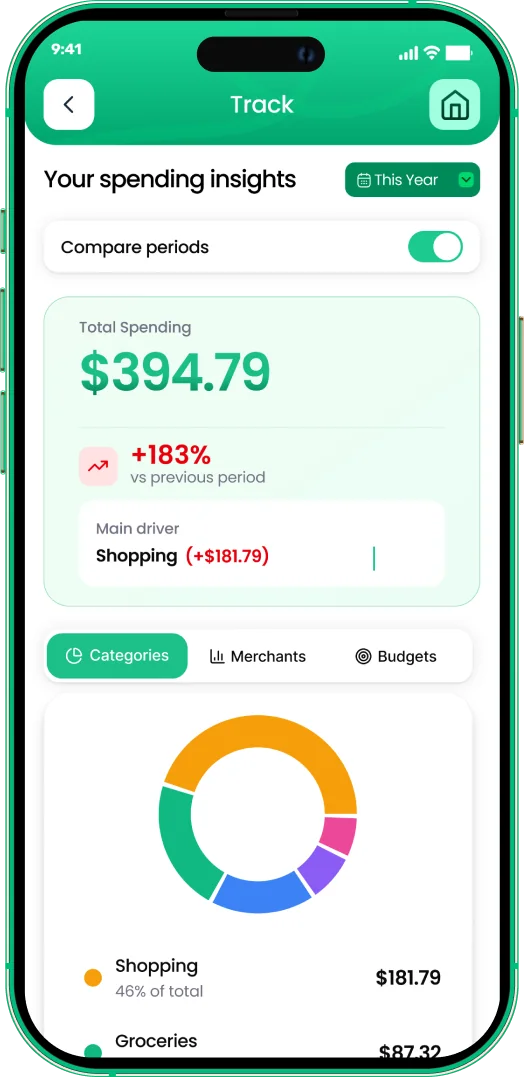
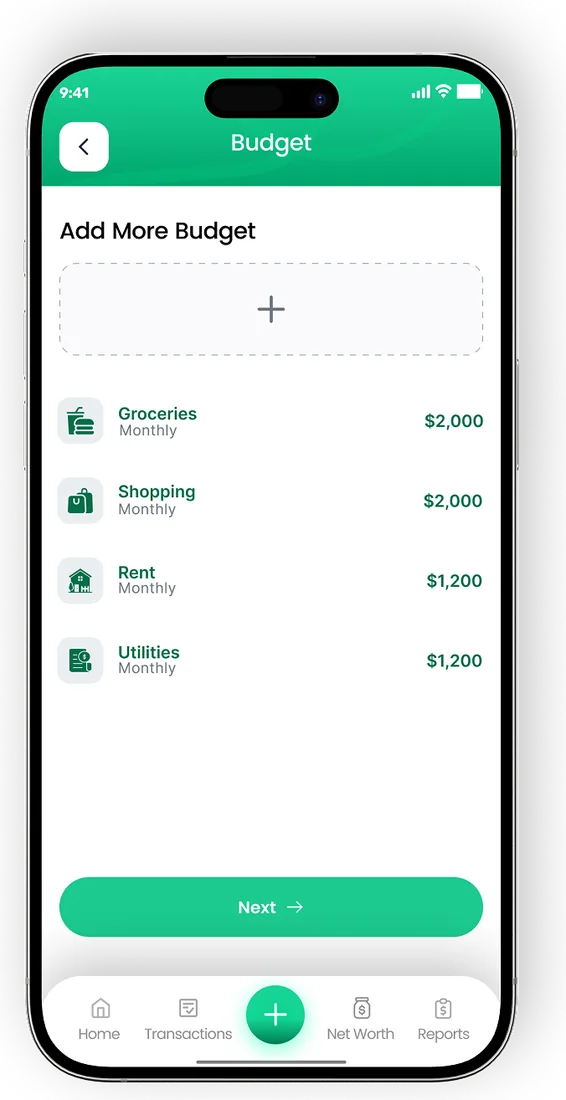
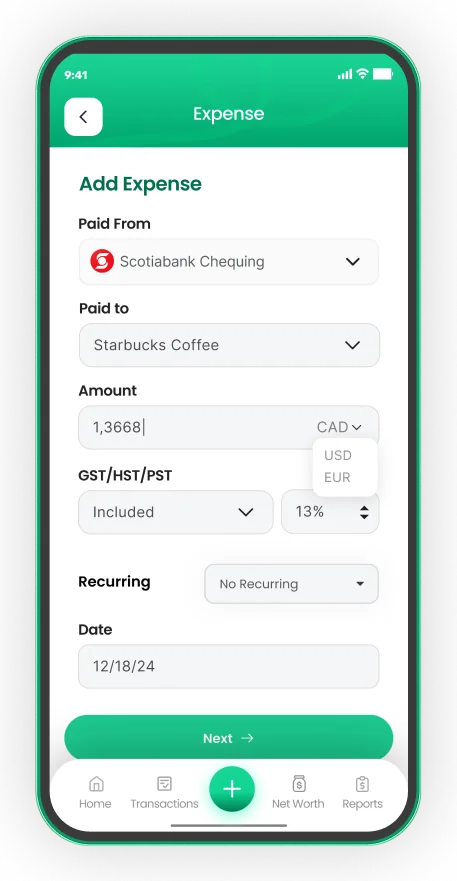
Income tells you what comes in; your budget tells you where it goes. EMOH Pay shows both in one place, with income tracking for every earner in the household and family sharing with separate logins. Reports show your savings rate each month, which is a more useful benchmark than any national average.
- Use after-tax income. It is what you actually budget with.
- Compare like with like. Match your household type and region, not only the national median.
- Adjust for inflation. Census figures describe 2020. Prices have risen since, so a 2026 income needs to be higher to buy the same things. Our inflation calculator shows by how much.
- Look at spending, not only income. Two households on the same income can have very different savings rates.
Your income in EMOH Pay

Put the numbers on autopilot
EMOH Pay tracks your spending, budgets and net worth on your phone and in the browser, always in sync. Free to start, made in Canada.
Get started free➜Average Household Income in Canada: frequently asked questions
Is $100,000 a good household income in Canada?
Yes. A household income of $100,000 is above the national median of about $84,000 from the 2021 Census. How comfortable it feels depends on your city, housing costs, the number of people it supports and your debts.
What is the median family income in Canada?
Statistics Canada publishes median family income by family type through the Census and the annual Canadian Income Survey. Couple families earn well above the household median, while lone-parent families and people living alone earn less. Check the latest tables on the Statistics Canada website.
Why is average household income higher than median?
A relatively small number of very high-income households raise the average. The median is not affected by extreme values, so it better reflects a typical household.
What counts as household income?
It includes all income received by everyone in the household: employment and self-employment income, investment income, pensions and government transfers such as the Canada Child Benefit. Statistics Canada reports it both before and after income tax.
How often is household income data updated?
The Census runs every five years, and the next one takes place in 2026. The Canadian Income Survey publishes new annual figures, usually with about a year and a half of delay.
Sources and further reading
Related guides and tools
The average salary in Canada is about $1,347 a week in 2026, roughly $70,000 a year, per Statistics Canada. See pay by…
Canadian Spending Statistics 2026Canadian spending statistics from Statistics Canada and the Bank of Canada: how households split their budgets, what grew…
50/30/20 Budget CalculatorThe 50/30/20 rule splits after-tax income: 50% to needs, 30% to wants, 20% to savings. Enter your monthly take-home pay to…
Income Tax Calculator Canada 2026Estimate your 2026 Canadian income tax, CPP, EI and take-home pay in every province and territory, with federal and…
Average Net Worth by AgeAverage net worth by age in Canada, using Statistics Canada median figures, why averages mislead, what drives the gap by age…
Run the household like a proEMOH Pay is a household budget app: rent, utilities, groceries, kids — one shared picture the whole house can see, free to…
Start free today
Free on iPhone, Android and the web. Upgrade to EMOH Pro anytime for bank sync and advanced AI.
Download for iOS➜ Get it on Android➜