
The 70/20/10 Budget Rule
Seventy percent to live on, 20% to save and 10% to pay down debt or give away. A roomier alternative to 50/30/20 for people in high-cost cities.
Get started free➜ Download the app➜
What is the 70/20/10 rule?
The 70/20/10 rule is a budgeting guideline that splits after-tax income into three parts: 70% for all living expenses, including needs and wants, 20% for savings and investing, and 10% for extra debt repayment or charitable giving. It is simpler than splitting needs from wants and gives more room to high-rent households.
How the 70/20/10 budget works
The 70/20/10 budget divides your take-home pay, not your gross salary, into three buckets. Everything you spend to live, from rent and groceries to streaming and dinners out, shares the 70% bucket. Savings and investments get 20%. The final 10% goes either to paying down debt faster or to giving, depending on your situation.
The key difference from the 50/30/20 rule is that needs and wants are merged. You do not have to decide whether your phone plan is a need. That makes the method faster to run and more forgiving when housing costs are high, while still protecting 30% of your income for your future.
What goes in each bucket?
| Bucket | What belongs there | Watch out for |
|---|---|---|
| Living expenses (70%) | Rent or mortgage, utilities, groceries, transport, insurance, phone, child care, minimum debt payments, dining out, entertainment, clothes | Letting wants squeeze out essentials because nothing separates them |
| Savings and investing (20%) | Emergency fund, TFSA, RRSP, FHSA, RESP, down-payment savings | Counting an employer pension match as your own savings |
| Debt or giving (10%) | Payments above the minimum on credit cards, loans or a line of credit; donations and tithing | Using this bucket for minimum payments, which belong in the 70% |
If you have no consumer debt and do not give regularly, most people roll the 10% into savings, which turns the plan into an 80/20 split. Our page on the 80/20 budget covers that version.
A 70/20/10 budget example at different incomes
The percentages stay the same while the dollar amounts change. Here is a 70/20/10 budget example at four monthly take-home incomes.
| Monthly take-home pay | Living (70%) | Savings (20%) | Debt or giving (10%) |
|---|---|---|---|
| $3,000 | $2,100 | $600 | $300 |
| $4,000 | $2,800 | $800 | $400 |
| $5,500 | $3,850 | $1,100 | $550 |
| $7,500 | $5,250 | $1,500 | $750 |
Take the $4,000 row. Rent of $1,600, groceries of $450, transit and phone of $250 and insurance of $100 leave $400 for dining out, subscriptions and personal spending inside the $2,800 living bucket. Savings of $800 might split into $400 for an emergency fund and $400 into a TFSA. The $400 debt bucket clears an extra chunk of a credit card balance every month.
To try your own numbers with a custom split, use the budget percentage calculator.
Budgets that update themselves
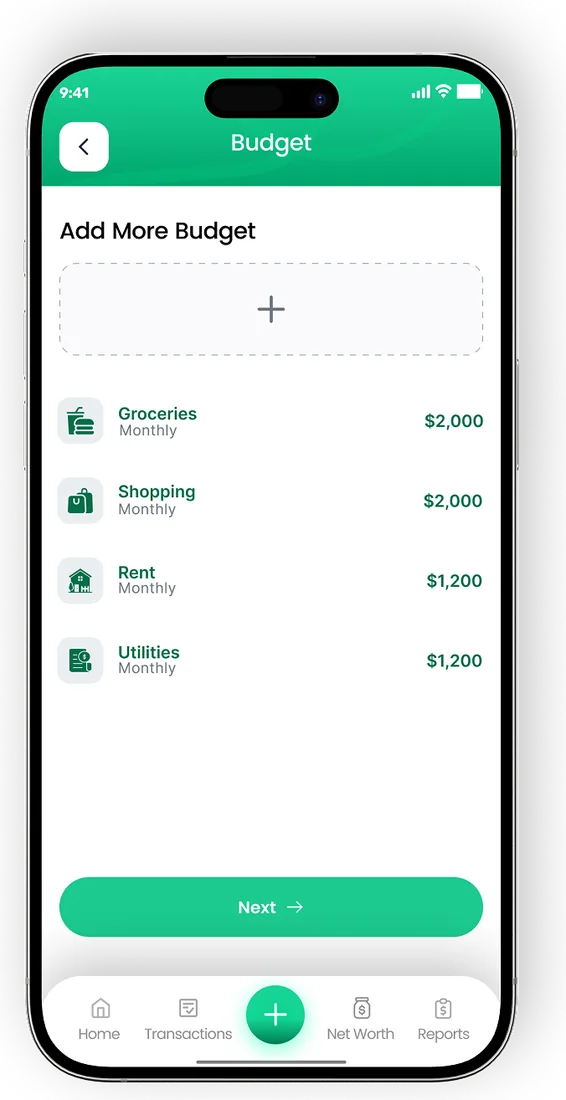
- Set monthly limits for every category
- See what is left to spend in real time
- Get a nudge before a category runs out


70/20/10 versus 50/30/20 and other splits
Percentage budgets differ mainly in how much they reserve for the future and how finely they sort spending. The right one depends on your housing costs, debts and goals.
| Rule | Spending | Future (savings plus debt) | Sorts needs from wants? |
|---|---|---|---|
| 50/30/20 | 80% | 20% | Yes |
| 70/20/10 | 70% | 30% | No |
| 80/20 | 80% | 20% | No |
| 60/20/20 | 60% | 40% | Varies by version |
The 70/20/10 rule actually reserves more for savings and debt than 50/30/20 does, while being easier to follow. It trades the needs-versus-wants discipline for simplicity. If you want every dollar assigned, zero-based budgeting is the more detailed option. All of them sit in our budgeting methods guide.
Is the 70/20/10 rule right for you?
- Good fit if rent or a mortgage takes a large share of your pay, you want a simple rule and you have some debt to clear.
- Adjust it if living costs are above 70%. Start at 80/15/5 and move one percentage point a month from living costs to savings.
- Change the 10% when your debts are gone. Roll it into savings or keep it as a giving budget.
- Consider another method if you routinely overspend on wants, since nothing in this rule caps them separately. The envelope method adds that limit.
How to set up a 70/20/10 budget
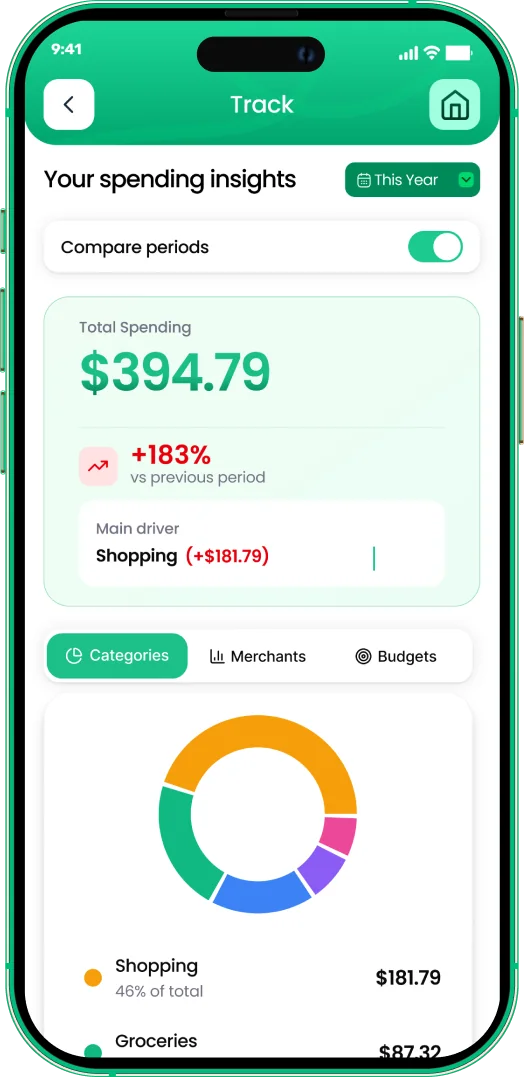
In EMOH Pay you can set three budgets that match the buckets, get an alert when living expenses approach the 70% line and watch savings goals and debt balances move each month. The net worth view shows the combined effect of the 20% and the 10% over time.
- Find your monthly take-home pay from recent bank deposits.
- Multiply by 0.7, 0.2 and 0.1 to get your three targets.
- Schedule automatic transfers on payday for the 20% savings and the 10% debt or giving amount.
- Leave the 70% in chequing for bills and daily spending, and check the balance weekly.
- Review each quarter and adjust if living costs keep running over.
Plan your month in EMOH Pay

Put the numbers on autopilot
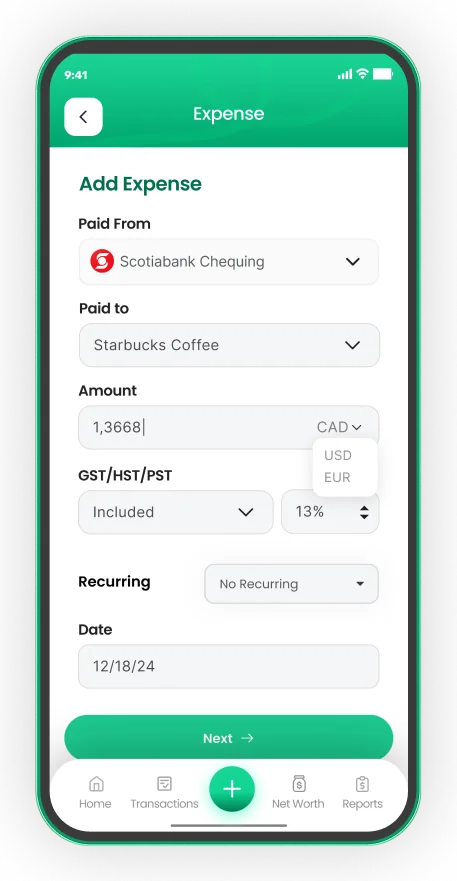
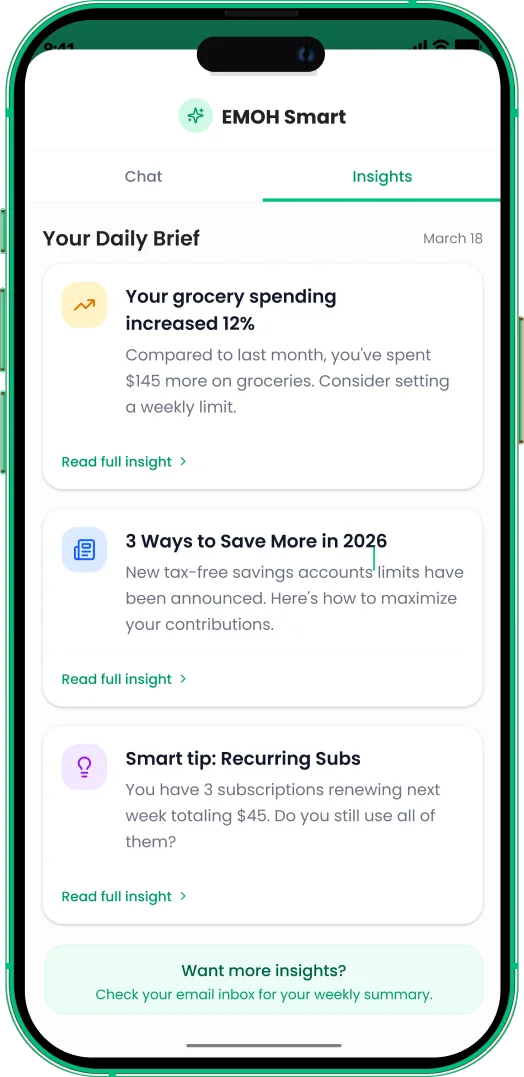
EMOH Pay tracks your spending, budgets and net worth on your phone and in the browser, always in sync. Free to start, made in Canada.
Get started free➜The 70/20/10 Budget Rule: frequently asked questions
Is the 70/20/10 rule based on gross or net income?
Net income: what lands in your account after tax, CPP and EI. Using gross pay would overstate every bucket.
Does the 10% have to go to debt?
No. Many versions use it for charitable giving, and people with no debt often add it to savings. The point is that it goes somewhere other than everyday spending.
Do minimum debt payments count in the 70% or the 10%?
Minimum payments count as living expenses in the 70%. Only payments above the minimum belong in the 10% debt bucket.
Is 70/20/10 better than 50/30/20?
Neither is better for everyone. 70/20/10 is simpler and saves more, while 50/30/20 gives tighter control over wants. Pick the one you will actually keep.
What if my living costs are more than 70%?
Start with a split you can manage, such as 80/15/5, then shift one or two points a month from living costs to savings as you trim spending or earn more.
Sources and further reading
Related guides and tools
50/30/20, zero-based, envelopes or pay-yourself-first — the best budgeting method is the one you'll still be using in March.…
The 50/30/20 Rule ExplainedThe 50/30/20 rule splits take-home pay into 50% needs, 30% wants and 20% savings. See what counts in each bucket, worked…
The 80/20 BudgetThe 80/20 budget saves 20% of take-home pay first and lets you spend the other 80% freely. See how it works, an 80/20 budget…
Budget Percentage CalculatorFree budget percentage calculator: set your own split for needs, wants and savings and see the dollar amount for each, plus…
50/30/20 Budget CalculatorThe 50/30/20 rule splits after-tax income: 50% to needs, 30% to wants, 20% to savings. Enter your monthly take-home pay to…
Envelope Budgeting MethodEnvelope budgeting gives every spending category a fixed pot of money. See how the cash envelope system works, a worked…
Start free today
Free on iPhone, Android and the web. Upgrade to EMOH Pro anytime for bank sync and advanced AI.
Download for iOS➜ Get it on Android➜