
Lifestyle Creep: What It Is and How to Avoid It
You earn more than you did five years ago, yet you are not saving more. That gap has a name. Here is how lifestyle creep happens and how to keep your next raise.
Get started free➜ Download the app➜
What is lifestyle creep?
Lifestyle creep, also called lifestyle inflation, is when your spending rises as your income rises, so a raise or promotion leaves you no better off. Small upgrades such as a nicer apartment, a newer car, more takeaway and extra subscriptions quietly become the new normal, and the money that could have gone to savings or debt disappears.
What is lifestyle creep and why does it happen?
Lifestyle creep is the gradual rise in everyday spending that follows a rise in income. It rarely feels like overspending, because each change is small and seems deserved. A slightly bigger apartment, a better phone plan, a meal kit subscription. Individually they are reasonable. Together they can absorb an entire raise.
It happens for a few reasons. New money has no job, so it gets spent by default. Peers and colleagues at a new income level spend differently. And upgrades are hard to reverse: once you are used to a car with heated seats, going back feels like a loss. Without a plan for extra income, spending expands to fill it.
Lifestyle creep examples
These lifestyle creep examples are common because each step feels like a normal part of getting older or earning more. None is wrong on its own. The problem comes when all of them happen at once and savings stay flat.
| Area | Before a raise | After a raise | Hidden cost |
|---|---|---|---|
| Housing | Shared apartment | One-bedroom on your own | Higher rent, utilities and insurance |
| Transport | Transit or an older paid-off car | New car on a loan | Payments, higher insurance, faster depreciation |
| Food | Cooking most nights | Delivery several times a week | Fees and tips on top of menu prices |
| Subscriptions | One streaming service | Four services plus apps | Small monthly charges that add up |
| Travel | One trip a year | Several trips, upgraded hotels | Harder to scale back later |
| Shopping | Buy when needed | Upgrade when something new comes out | Shorter replacement cycles |
Subscriptions are the easiest to miss. The subscription cost calculator totals what yours cost over a year.
Lifestyle creep versus inflation
Lifestyle creep and inflation both make your spending go up, but for different reasons. Inflation means the same things cost more. Lifestyle creep means you are buying more or better things. If your grocery bill rises because prices went up, that is inflation. If it rises because you now buy more takeaway and premium brands, that is lifestyle creep.
The difference matters when you get a raise. Part of it may simply keep pace with rising prices, which is not creep at all. Our guide to what inflation is explains how to tell how much of a raise is real growth in buying power.
Log a purchase in two taps
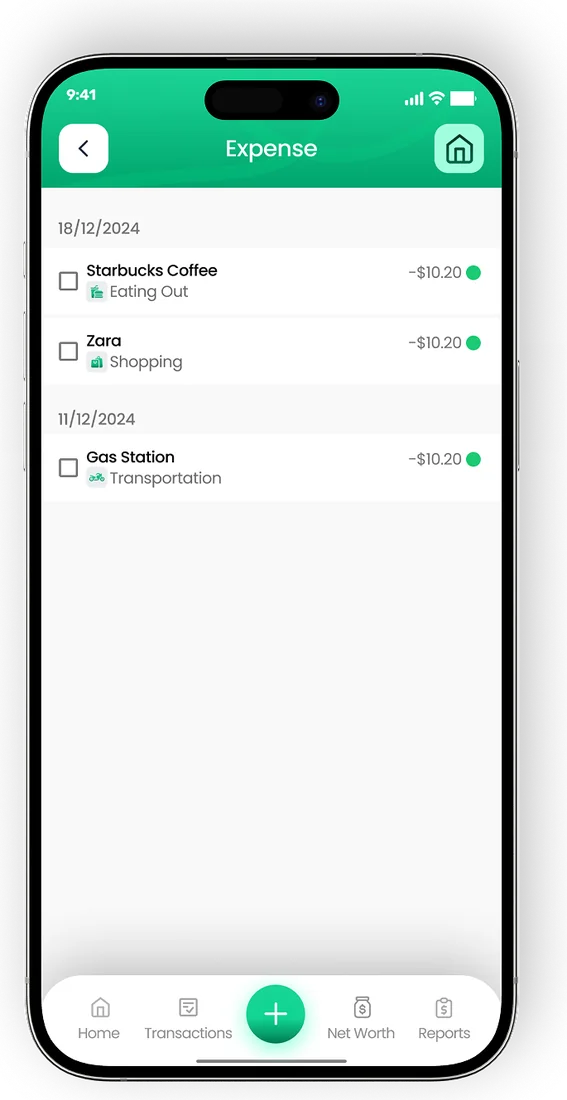
- Smart categories sort every transaction
- Tag who spent what in a shared household
- Export PDF or Excel reports any month


Warning signs of lifestyle creep
- Your savings rate has not changed even though your pay has gone up. Check it with the savings rate calculator.
- You still feel paycheque to paycheque on a higher income.
- Recurring charges keep growing. More subscriptions, memberships and instalment plans than a year ago.
- Wants have become needs. Things you once saw as treats now feel essential.
- Your net worth is flat. Income rises but assets minus debts barely move. The net worth calculator gives a quick snapshot.
How to avoid lifestyle creep
The most reliable way to avoid lifestyle creep is to decide what a raise is for before it arrives. Automatically send at least half of any increase in take-home pay to savings or debt, and let yourself enjoy the rest guilt-free. You still feel the reward, but your future gets a share every time.
- Work out the real increase. Use the raise calculator to see how much more you will actually take home each month.
- Split it before the first new paycheque. A common rule is half to savings or debt, half to lifestyle. Some people save the whole raise for a year.
- Raise your automatic transfers the same week. If the money never reaches chequing, you will not miss it. This is the pay yourself first habit applied to raises.
- Upgrade one thing at a time. Pick the upgrade that matters most and wait before adding the next.
- Set goals with price tags. Money with a named purpose is harder to drift. See financial goals examples for ideas.
- Review yearly. Compare this year's spending by category with last year's and ask whether each increase was a choice.
A lifestyle creep example: two ways to spend a raise
Imagine a raise that adds $500 a month to your take-home pay. Here is how two different approaches play out over five years, ignoring investment returns and future raises to keep it simple.
| Approach | Extra spent per month | Extra saved per month | Saved after 5 years |
|---|---|---|---|
| Spend it all | $500 | $0 | $0 |
| Save half | $250 | $250 | $15,000 |
| Save it all for year one, then half | $0, then $250 | $500, then $250 | $18,000 |
Saving half still gives you $250 a month more to enjoy, while building $15,000 over five years before any interest or growth. Invested in a TFSA or RRSP, that figure would likely be higher.
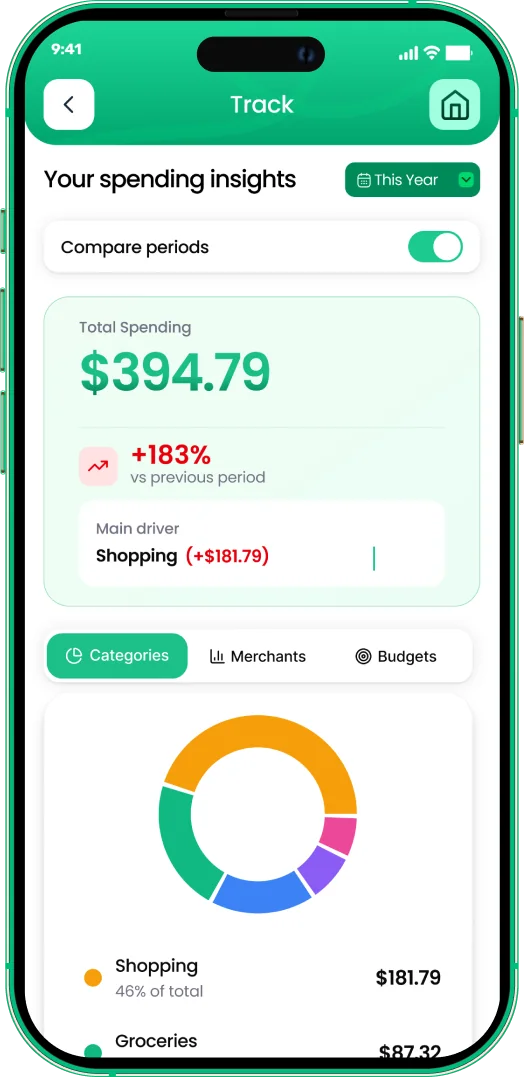
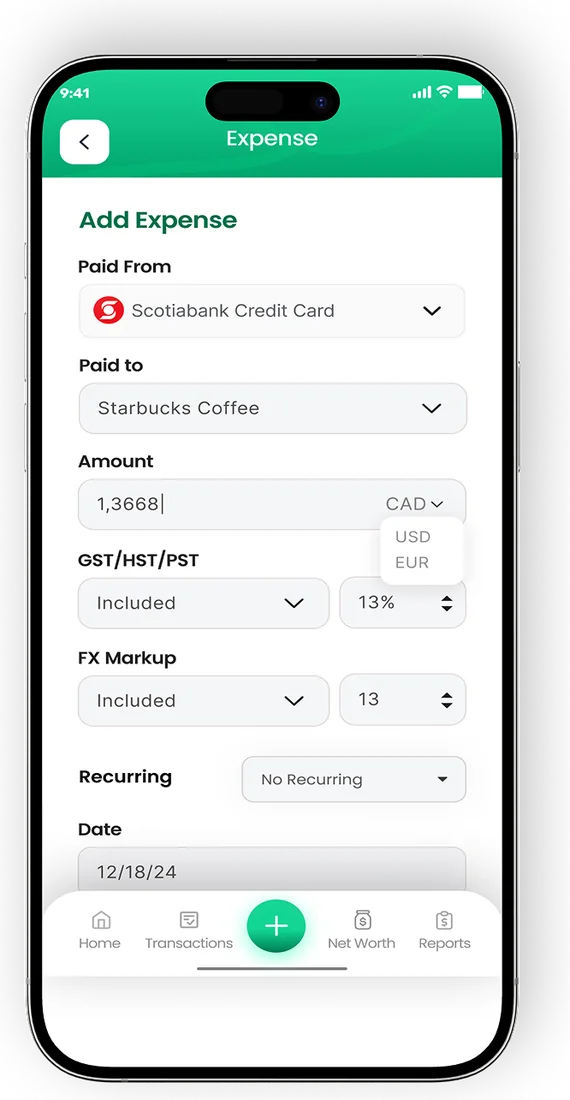
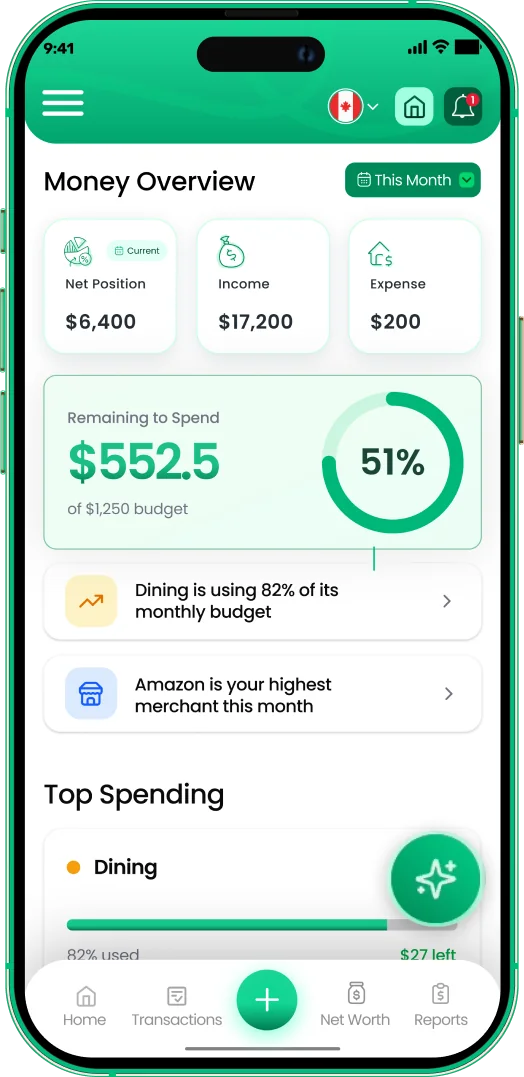
EMOH Pay makes the before-and-after easy to see. Budgets show which categories grew after a raise, and the net worth view shows whether extra income is actually building wealth. For other ways to structure your money, see our budgeting methods guide.
Track every dollar

Put the numbers on autopilot
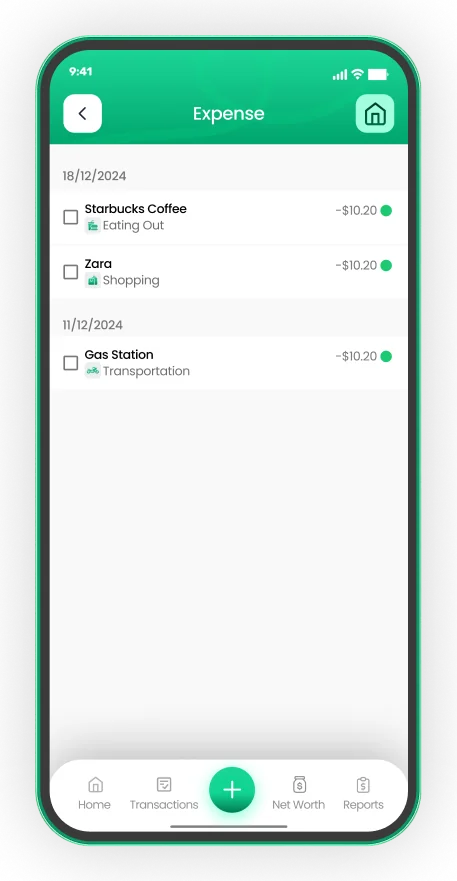
EMOH Pay tracks your spending, budgets and net worth on your phone and in the browser, always in sync. Free to start, made in Canada.
Get started free➜Lifestyle Creep: What It Is and How to Avoid It: frequently asked questions
Is lifestyle creep always bad?
No. Spending some of a raise on things that genuinely improve your life is fine. It becomes a problem when it happens by default and leaves no room for savings, debt repayment or goals.
What is the 50% rule for raises?
It is a common guideline to save or invest at least half of any increase in take-home pay and spend the rest. It lets you enjoy a raise while making sure your savings grow with your income.
How do I reverse lifestyle creep?
List your recurring costs, rank them by how much they add to your life and cut or downgrade the bottom few. Then move the freed-up money into an automatic transfer before it gets absorbed again.
Does lifestyle creep only affect high earners?
No. It can happen at any income level, from a first full-time job to a senior role. The pattern of spending rising with pay is the same.
How is lifestyle creep different from inflation?
Inflation raises the price of the same things. Lifestyle creep means buying more or better things. A raise that only matches inflation leaves your lifestyle unchanged.
Sources and further reading
Related guides and tools
50/30/20, zero-based, envelopes or pay-yourself-first — the best budgeting method is the one you'll still be using in March.…
Raise CalculatorFree raise calculator: enter your salary, raise percentage and inflation to see your new salary, extra pay per month and…
Savings Rate CalculatorUse this free savings rate calculator to see what percent of your take-home pay you save, how it compares with the 20%…
Pay Yourself FirstPay yourself first means saving before you spend. See what it means, a pay yourself first example on a Canadian paycheque…
What Is Inflation?What is inflation? A plain definition, how Canada measures it with the CPI, what causes it, the Bank of Canada's 2% target…
Financial Goals ExamplesFinancial goals examples for every stage: short term, medium term and long term ideas with target amounts, timelines and how…
Start free today
Free on iPhone, Android and the web. Upgrade to EMOH Pro anytime for bank sync and advanced AI.
Download for iOS➜ Get it on Android➜