
What Is a Credit Score?
A credit score is a three-digit summary of how you handle borrowed money. Here is how it is built, what the ranges mean and why it matters for rent, loans and more.
Get started free➜ Download the app➜
What Is a Credit Score?
A credit score is a number, usually three digits, that estimates how likely you are to repay borrowed money on time. Credit bureaus calculate it from your credit report: payment history, how much of your limits you use, how long you have had credit and recent applications. In Canada, scores run from 300 to 900.
What is a credit score? The definition in plain language
A credit score is a single number that sums up the information in your credit report so lenders can judge risk quickly. A higher number suggests you are more likely to repay on time. In Canada, scores run from 300 to 900 and are produced by the two national credit bureaus, Equifax and TransUnion.
Your credit report is the raw record: every credit card, loan, line of credit and some phone or utility accounts, with balances, limits and whether you paid on time. The score is a calculation based on that record. You do not have one single score. Each bureau, and each scoring model, can give a slightly different number on the same day.
The score does not include your income, savings, job title or bank balance. It only measures how you have handled credit. That is why someone with a high salary and no borrowing history can still have a thin file or no score at all.
How is a credit score calculated?
A credit score is calculated from five broad kinds of information in your credit report. Payment history matters most, followed by how much of your available credit you use. The length of your history, recent applications and the mix of credit types make up the rest. Exact weightings are kept private by the bureaus and scoring companies.
| Factor | What it measures | What helps |
|---|---|---|
| Payment history | Whether bills were paid on time, late or sent to collections | Paying at least the minimum by the due date, every time |
| Credit utilization | Balances compared with your total limits | Keeping balances well under a third of your limits |
| Length of history | How long your accounts have been open | Keeping your oldest account open and in use |
| New credit | Recent applications and hard inquiries | Spacing out applications instead of applying for several at once |
| Credit mix | Types of credit, such as cards, loans and lines of credit | A mix you can manage, built naturally over time |
When you check your own score, that is a soft inquiry and does not affect it. A hard inquiry happens when a lender checks your file because you applied for credit. One or two hard inquiries have a small effect; many in a short window can signal risk.
What is a good credit score in Canada?
There is no single official cut-off for a good credit score in Canada, because each lender sets its own approval rules. As a general guide, scores in the high 600s and above are usually treated as good, scores in the mid-700s and higher as very good, and scores below about 600 can make approval harder or more expensive.
The exact number matters less than the direction. A score that climbs steadily over a year says you are managing credit well. Our guide to improving your credit score in Canada explains what moves it fastest.
| Score band | How lenders tend to see it |
|---|---|
| 800 to 900 | Excellent: best rates and easiest approvals |
| 740 to 799 | Very good: most products at competitive rates |
| 660 to 739 | Good: most applications approved |
| 600 to 659 | Fair: approval possible, often at higher rates |
| 300 to 599 | Poor: harder to qualify; secured products may help |
Other countries use different scales. In the United States, common FICO scores run from 300 to 850, and UK credit reference agencies each use their own range.
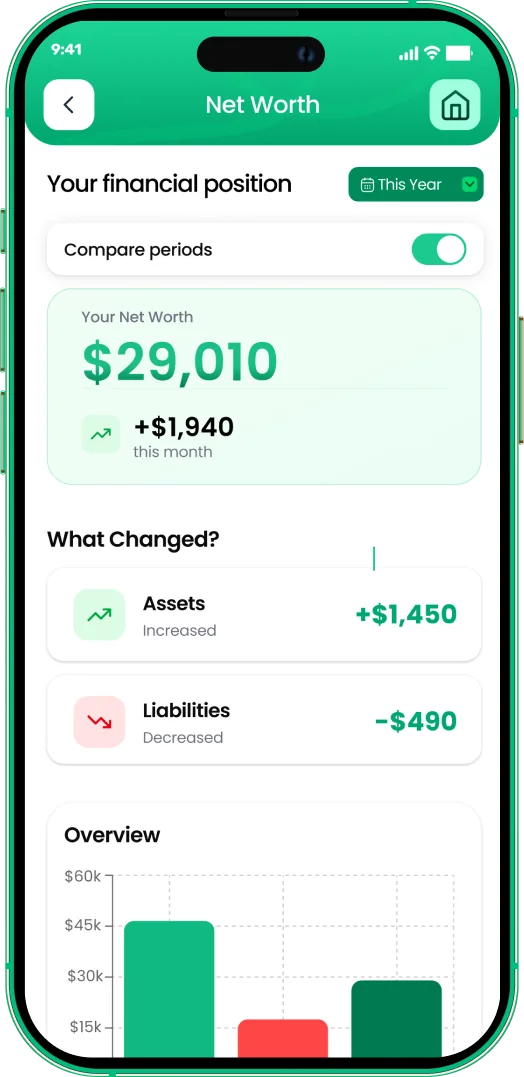
Watch your debt shrink
- Track loans, cards and your mortgage as liabilities
- See what changed each month
- Budget an extra payment into every month


A credit score example
Picture two people who each earn $60,000 a year. The first has one credit card with a $5,000 limit, owes $500 on it, has paid on time for six years and has not applied for new credit lately. The second has two cards with a combined $6,000 limit, owes $5,400, missed a payment last spring and applied for three new cards this year.
Their incomes are identical, but their credit reports look very different. The first uses 10% of available credit with a clean payment record. The second uses 90%, has a recent late payment and several hard inquiries. The first person will almost always have the higher score, and will be offered better rates on a car loan or mortgage.
The fix for the second person is not complicated: pay every bill on time from now on and bring the balance down. A lower balance usually shows up within one or two statement cycles, while a late payment can stay on a Canadian credit report for about six years.
Why does your credit score matter?
Your credit score matters because it affects whether you are approved for credit and how much that credit costs. A strong score can mean a lower mortgage rate, which on a large loan can add up to thousands of dollars over the term. It can also affect renting, phone plans and some insurance pricing.
- Mortgages and car loans. Lenders use your score to decide approval and rate. It works alongside your debt-to-income ratio, which measures whether your payments fit your income.
- Credit cards and lines of credit. Higher scores open cards with lower rates or better limits.
- Renting. Many Canadian landlords ask to check credit before signing a lease.
- Utilities and phones. A low score or no history can mean a deposit before service starts.
How to check and protect your credit score
- Request your free credit report from both Equifax and TransUnion. The Financial Consumer Agency of Canada explains how.
- Read every account listed and dispute anything that is not yours or is reported wrongly.
- Set up automatic minimum payments so a busy month never becomes a late payment.
- Track balances against limits so utilization stays low before each statement date.
- Recheck your report at least once a year, and before any big application.
Good credit starts with a budget that leaves room for every due date. EMOH Pay's bill tracking and overspend alerts help you see payments coming, and the free budget calculator shows how much you can safely put toward cards each month. If you are starting from nothing, read how to build credit in Canada.
Pay it down with EMOH Pay
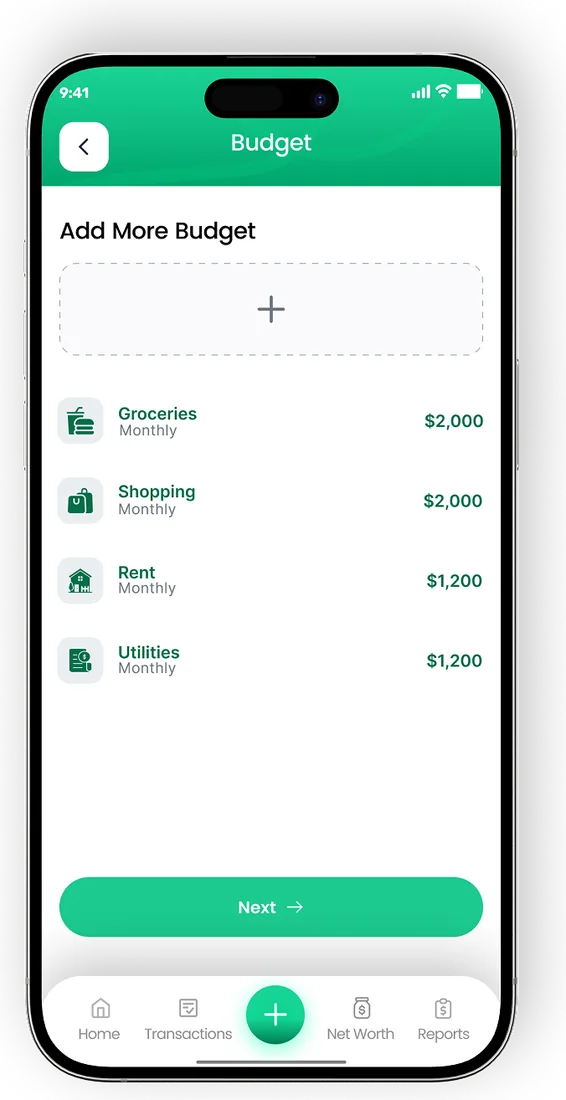

Put the numbers on autopilot
EMOH Pay tracks your spending, budgets and net worth on your phone and in the browser, always in sync. Free to start, made in Canada.
Get started free➜What Is a Credit Score?: frequently asked questions
What is a credit score in simple terms?
It is a number from 300 to 900 in Canada that shows lenders how reliably you have repaid credit in the past. Higher means lower risk.
Does checking my own credit score lower it?
No. Checking your own score or report is a soft inquiry and has no effect. Only hard inquiries from credit applications can lower it slightly.
Why do I have different credit scores?
Equifax and TransUnion hold slightly different information and may use different scoring models. Lenders may also use their own versions, so small differences are normal.
Does my income affect my credit score?
No. Income and savings are not part of your credit report. Lenders look at income separately when they assess whether you can afford a loan.
How long does it take to get a credit score?
Usually a few months of activity on at least one credit account. A secured card used lightly and paid in full each month is a common starting point.
Sources and further reading
Related guides and tools
How to build credit in Canada from zero: secured cards, on-time payments, low utilization and checking your Equifax and…
How to Improve Your Credit Score in CanadaHow to improve your credit score in Canada: the factors Equifax and TransUnion weigh, which fixes work fastest, what takes…
What Is Debt-to-Income Ratio?What is debt to income ratio? A clear definition, the simple formula, a worked example and how lenders in Canada use GDS and…
What Is APR?What is APR? A plain definition of annual percentage rate, how it differs from an interest rate and APY, how credit card APR…
Credit Card Interest CalculatorFree credit card interest calculator. Enter your balance, APR and monthly payment to see the total interest you will pay and…
Money GlossaryA plain-language money glossary: 36 personal finance terms from APR to TFSA, each defined in a sentence or two with links to…
Start free today
Free on iPhone, Android and the web. Upgrade to EMOH Pro anytime for bank sync and advanced AI.
Download for iOS➜ Get it on Android➜