
What Is Debt-to-Income Ratio?
Your debt-to-income ratio shows how much of your gross pay already goes to debt payments. Here is the formula, an example and why lenders care.
Get started free➜ Download the app➜
What Is Debt-to-Income Ratio?
Debt-to-income ratio (DTI) is the share of your gross monthly income that goes to debt payments. You calculate it by dividing total monthly debt payments, such as rent or mortgage, car loans and minimum card payments, by gross monthly income. A $2,000 debt load on $6,000 of monthly income is a 33% ratio.
What is debt to income ratio? A plain definition
Debt-to-income ratio is a percentage that compares what you owe each month with what you earn each month. It answers one question for a lender: after your existing payments, is there room in your income for another one? The lower the ratio, the more breathing room you have.
The ratio uses payments, not balances. Someone who owes $30,000 on a car loan with a $550 monthly payment counts $550, not $30,000. It also uses gross income, which is your pay before income tax, CPP and EI are taken off.
This page covers the definition. To work out your own number, use the debt to income ratio calculator, which also shows the Canadian mortgage versions of the ratio.
How do you calculate debt-to-income ratio?
To calculate debt-to-income ratio, add up every required monthly debt payment, divide by your gross monthly income and multiply by 100. Include housing, car and student loans, minimum credit card payments and support payments. Leave out groceries, utilities and subscriptions, because they are living costs rather than debts.
- List each debt and its required monthly payment: rent or mortgage, car loan, student loan, line of credit and the minimum on each credit card.
- Add them together to get total monthly debt payments.
- Find gross monthly income: annual salary before tax divided by 12, plus any regular extra income.
- Divide total debt payments by gross monthly income.
- Multiply by 100 to turn the result into a percentage.
A debt-to-income ratio example
Take someone earning $72,000 a year, or $6,000 a month before tax. Their monthly debt payments look like this:
| Payment | Monthly amount |
|---|---|
| Rent | $1,650 |
| Car loan | $420 |
| Student loan | $210 |
| Credit card minimums | $120 |
| Total debt payments | $2,400 |
| Debt-to-income ratio | $2,400 ÷ $6,000 = 40% |
At 40%, four dollars of every ten earned are already spoken for before tax. That is above the common 36% guideline. Paying off the $120 card minimums and the $210 student loan would bring the ratio down to about 35%, even with no raise.
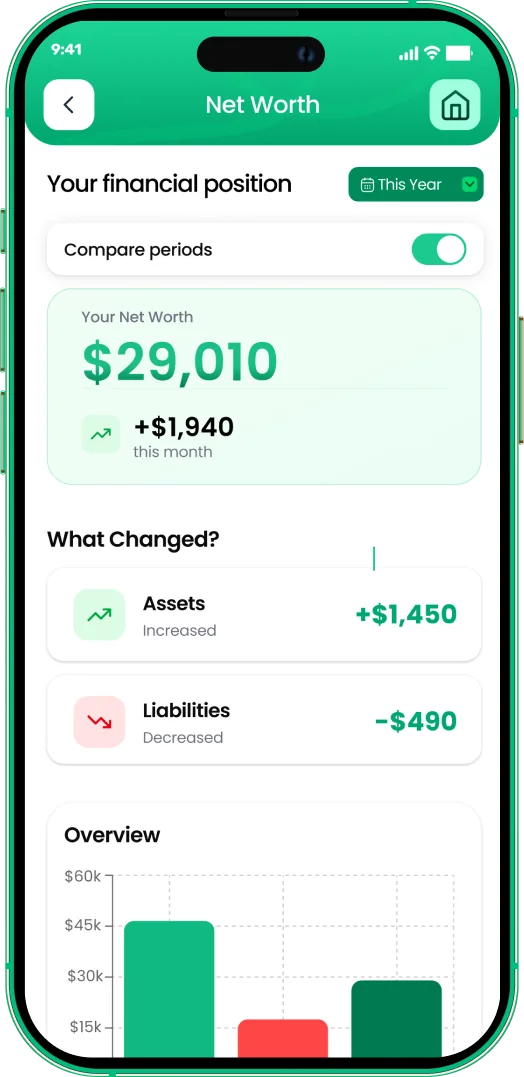
Watch your debt shrink
- Track loans, cards and your mortgage as liabilities
- See what changed each month
- Budget an extra payment into every month


What is a good debt-to-income ratio?
A widely used rule of thumb is that total debt payments should stay at or below about 36% of gross income, with lower being better. Under about 20% is comfortable for most households. Above about 43% usually means lenders see more risk and your own budget has little slack for savings or surprises.
These are guidelines rather than laws. Each lender sets its own limits, and Canadian mortgage lenders use their own two-part test, explained below.
| Ratio | What it usually means |
|---|---|
| Under 20% | Low debt load; plenty of room to save |
| 20% to 36% | Manageable for most people |
| 36% to 43% | Getting tight; new credit may be harder to get |
| Over 43% | High; focus on paying debt down before borrowing more |
Debt-to-income ratio for a mortgage in Canada: GDS and TDS
Canadian mortgage lenders split the idea into two ratios. Gross debt service (GDS) compares housing costs, meaning mortgage payment, property tax, heating and half of any condo fees, with gross income. Total debt service (TDS) adds every other debt payment on top.
For mortgages insured through CMHC, the published limits are a GDS of 39% and a TDS of 44%. Lenders also test your payments at a qualifying rate higher than your contract rate, so the ratio is calculated as if rates were higher than they are. The mortgage affordability calculator applies these rules to a home price.
Debt-to-income ratio versus the national debt-to-income figure
You may see headlines that Canadian households owe well over $1.70 for every dollar of disposable income. That figure from Statistics Canada is a different measure. It compares total debt balances with a year of after-tax income across the whole country, not monthly payments with monthly pay.
Both are useful, but only your personal DTI decides whether you qualify for a loan. For the national picture, see our page on household debt in Canada.
How to lower your debt-to-income ratio
- Pay off small debts first. Clearing a card or small loan removes a whole payment from the ratio. The debt payoff calculator shows how fast.
- Avoid new borrowing before a big application. A new car loan six months before a mortgage can push TDS over the limit.
- Raise income. A raise, a second income in the household or steady side income increases the denominator.
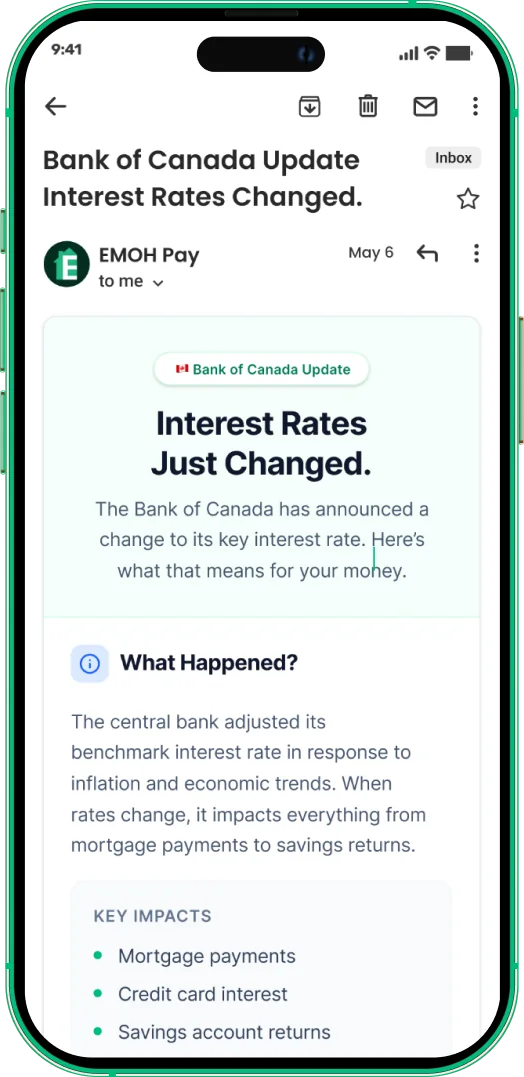
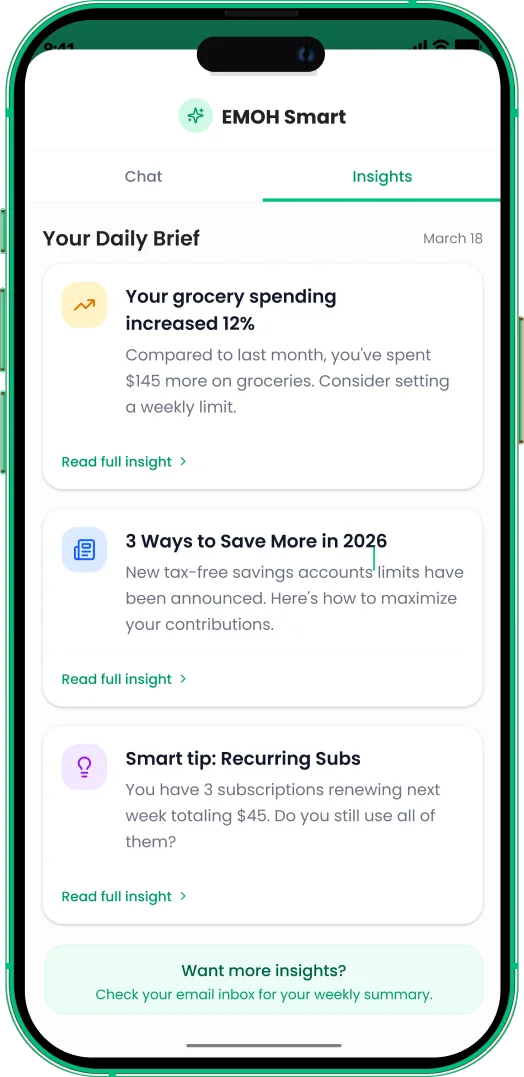
- Track payments in one place. EMOH Pay's bill tracking lists every recurring payment, so you can see your true monthly debt load and watch it fall.
Pay it down with EMOH Pay
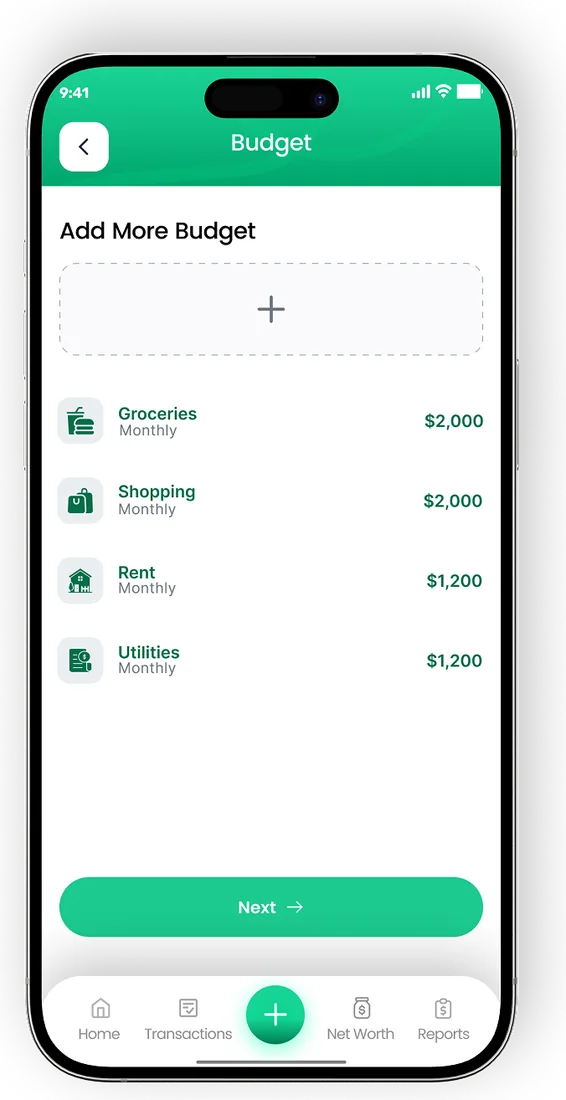

Put the numbers on autopilot
EMOH Pay tracks your spending, budgets and net worth on your phone and in the browser, always in sync. Free to start, made in Canada.
Get started free➜What Is Debt-to-Income Ratio?: frequently asked questions
Is debt-to-income ratio based on gross or net income?
Gross income, before tax and payroll deductions. Using take-home pay would give a higher ratio than lenders calculate.
Does rent count in debt-to-income ratio?
For a general DTI, many lenders include rent as a housing payment. When you apply for a mortgage, the new mortgage payment replaces rent in the calculation.
Do utilities and phone bills count as debt?
No. Utilities, phone, insurance and groceries are living expenses. Only loan, card, line of credit, housing and support payments are counted.
Does debt-to-income ratio affect my credit score?
No. Credit bureaus do not know your income, so DTI is not part of your credit score. Lenders look at both separately.
What counts as a credit card payment in the ratio?
The required minimum payment, even if you usually pay more. Some lenders use a set percentage of the balance instead of the stated minimum.
Sources and further reading
Related guides and tools
Free debt to income ratio calculator: enter gross income, housing costs and debt payments to see your DTI, housing ratio and…
Mortgage Affordability Calculator CanadaMortgage affordability calculator for Canada: see the home price you could qualify for under the stress test, then check…
Canadian Household Debt StatisticsHousehold debt in Canada explained with Statistics Canada and Bank of Canada data: debt-to-income ratio, what Canadians owe…
Debt Payoff Calculator — Free CalculatorSee your debt-free date: enter balance, interest rate and monthly payment to calculate payoff time and total interest. Free…
What Is a Credit Score?What is a credit score? A plain-language definition, how the number is calculated, what a good score looks like in Canada…
Money GlossaryA plain-language money glossary: 36 personal finance terms from APR to TFSA, each defined in a sentence or two with links to…
Start free today
Free on iPhone, Android and the web. Upgrade to EMOH Pro anytime for bank sync and advanced AI.
Download for iOS➜ Get it on Android➜