
Salary to Hourly Calculator
Enter your annual salary, hours per week and paid weeks per year. See your hourly rate, what you earn in an eight-hour day and your gross monthly pay.
Use the calculator➜ Try EMOH Pay free➜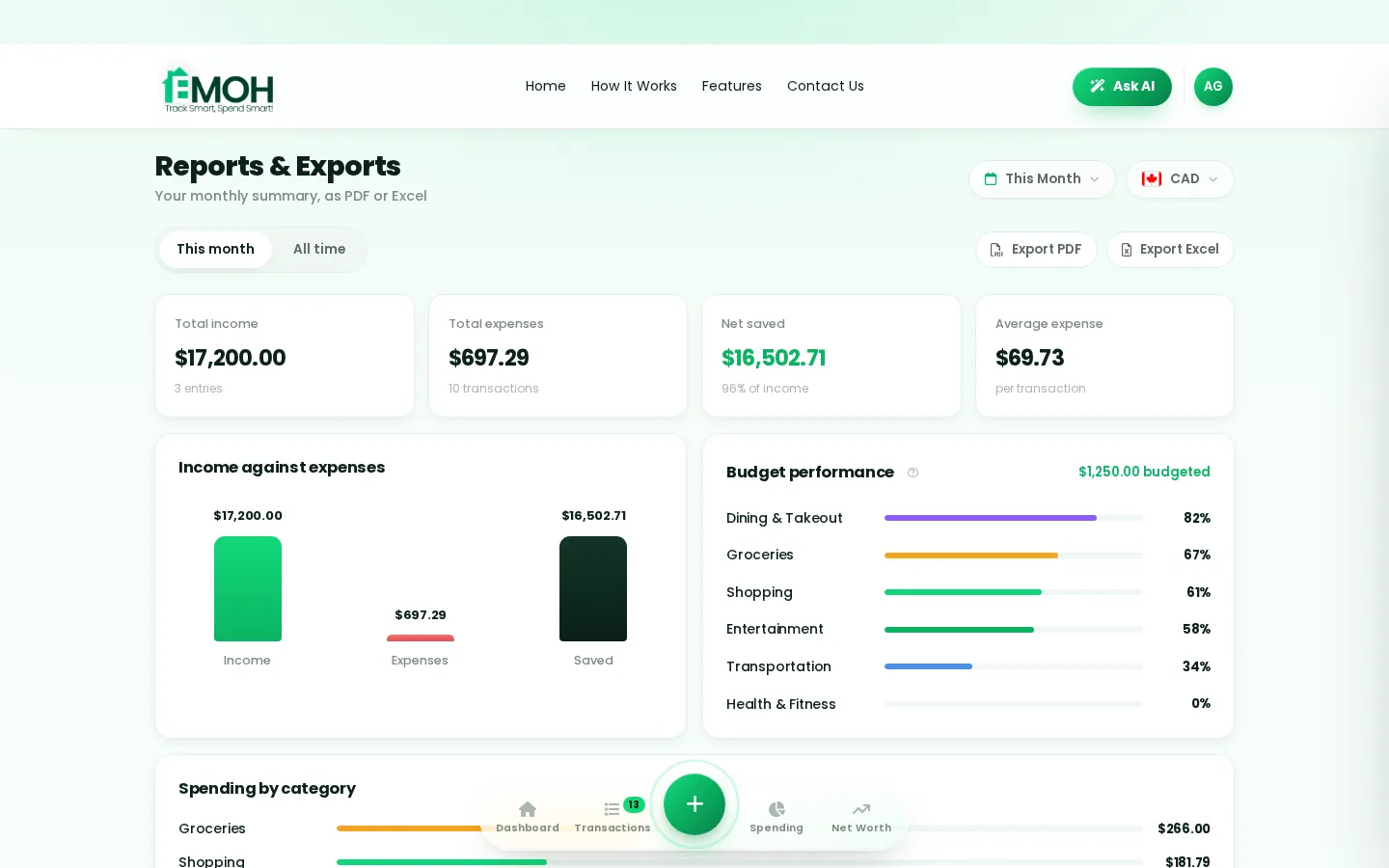

What is my salary as an hourly wage?
To convert a salary to an hourly wage, divide your annual salary by the hours you work in a year. A full-time 40-hour week over 52 weeks is 2,080 hours, so a $60,000 salary works out to about $28.85 an hour. At 37.5 hours a week, the same salary is about $30.77 an hour.
How the salary to hourly calculator works
The salary to hourly calculator divides your annual salary by the number of hours you are paid for in a year. It multiplies your hours per week by your paid weeks per year to get that total. It then shows your daily pay for an eight-hour day and your gross monthly pay, which is simply your salary divided by 12.
This page converts a salary into an hourly figure. If you are paid by the hour and want to know your annual equivalent, use the hourly to salary calculator instead.
- Annual salary. Your gross yearly pay before tax, as written in your offer or contract.
- Hours per week. The hours you are actually expected to work. Many offices use 37.5 or 35; others use 40. The calculator assumes 40 if you leave it blank.
- Paid weeks per year. Use 52 if your vacation and statutory holidays are paid, which is normal for salaried employees. Use fewer if you take unpaid time off.
- Read the result. You see your hourly rate, pay for an eight-hour day and gross monthly pay.
Salary to hourly conversion table
The table shows common salaries converted at 40, 37.5 and 35 hours a week, all over 52 paid weeks.
| Annual salary | 40 hrs / week | 37.5 hrs / week | 35 hrs / week |
|---|---|---|---|
| $40,000 | $19.23 | $20.51 | $21.98 |
| $50,000 | $24.04 | $25.64 | $27.47 |
| $60,000 | $28.85 | $30.77 | $32.97 |
| $75,000 | $36.06 | $38.46 | $41.21 |
| $80,000 | $38.46 | $41.03 | $43.96 |
| $100,000 | $48.08 | $51.28 | $54.95 |
| $120,000 | $57.69 | $61.54 | $65.93 |
A quick mental shortcut for a 40-hour week: halve the salary and drop three zeros. $60,000 becomes about $30 an hour. It slightly overstates the true figure because it assumes 2,000 hours instead of 2,080.
How many working hours are in a year?
A standard full-time year is 2,080 hours: 40 hours a week for 52 weeks. At 37.5 hours it is 1,950 hours, and at 35 hours it is 1,820. These totals include paid vacation and statutory holidays, because a salaried employee is paid for those days even though they do not work them.
If you want your rate for the hours you actually work, subtract vacation and holiday weeks from 52. For example, three weeks of vacation and about two weeks of statutory holidays leaves roughly 47 working weeks. Your salary divided over those hours gives a higher effective hourly rate.
Minimum vacation depends on where you work. In Canada, federally regulated employees get at least two weeks of paid vacation after one year, three weeks after five years and four weeks after ten years. Each province sets its own rules for other workers, so check your provincial employment standards.

Track every paycheque
- Add each income source in seconds
- See income against spending every month
- Plan from your real take-home pay


Comparing a salaried job with an hourly or contract offer
Converting salary to hourly is most useful when you are weighing two offers that are paid differently. The hourly number alone can mislead, so compare the whole package.
- Overtime. Hourly workers are usually paid for extra hours, often at a higher rate. Many salaried roles expect extra hours without extra pay, which lowers your real hourly rate.
- Paid time off. Salaried roles usually pay for vacation, holidays and sick days. Contract rates often do not, so a contractor needs a higher hourly rate to earn the same.
- Benefits and pension. Health, dental and employer retirement contributions are part of your pay even though they do not appear in the hourly figure.
- Self-employment costs. Independent contractors in Canada pay both halves of CPP and cover their own equipment and admin time. Our guide to self-employed taxes in Canada explains what to set aside.
From gross hourly pay to take-home pay
The calculator shows gross pay. Income tax, CPP and EI come off before the money reaches your account, so your take-home hourly rate is lower. The paycheque calculator for Canada shows what lands in your account each pay period, and the average salary in Canada page helps you see how your pay compares.
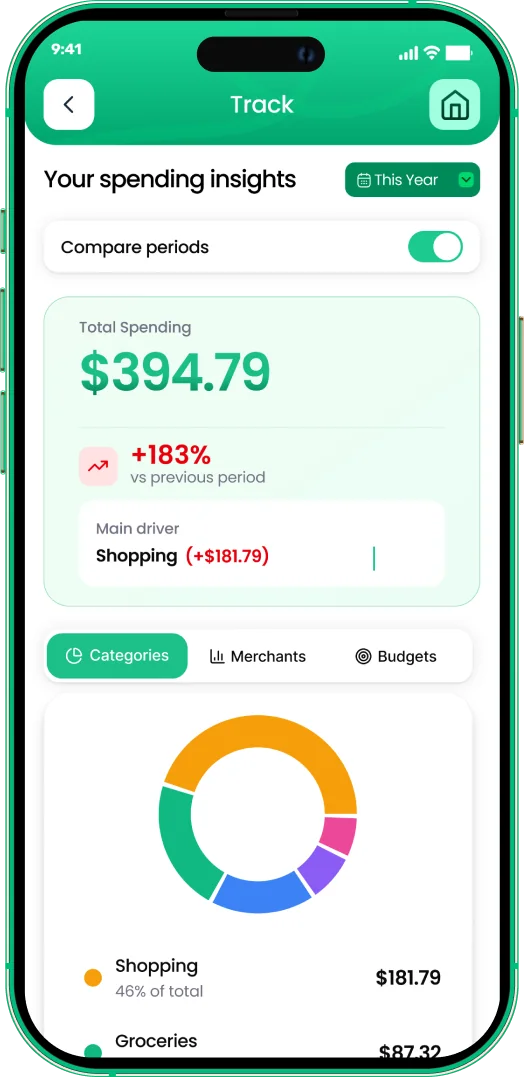
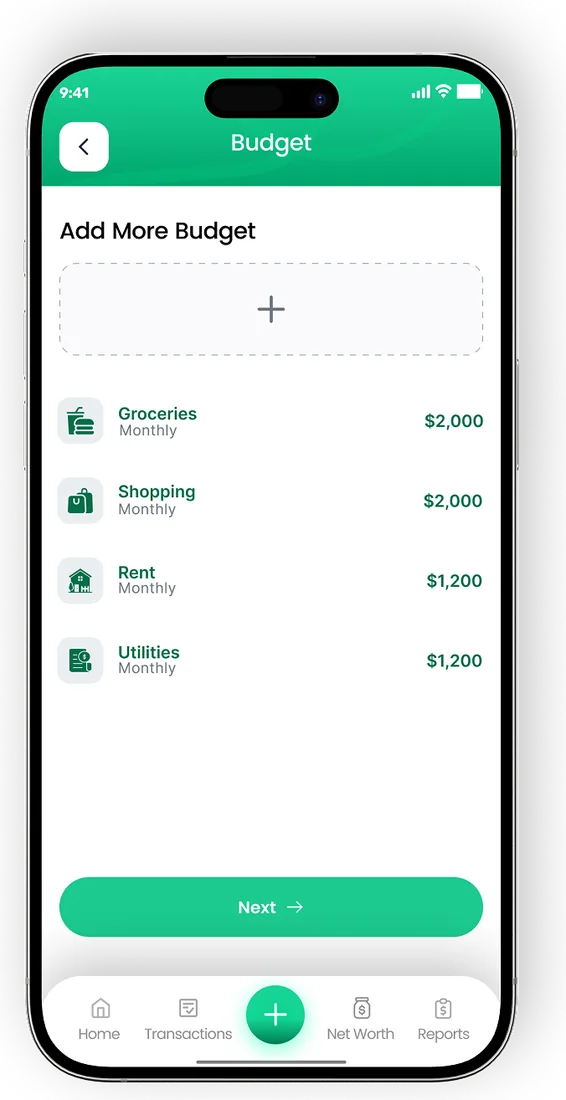
Once you know your hourly rate, it becomes a handy way to judge spending: a $120 purchase at $30 an hour after tax costs four hours of work. EMOH Pay's income tracker records each paycheque as it arrives, and budgets with overspend alerts show how many of those hours each category is using.
Your income in EMOH Pay

Put the numbers on autopilot
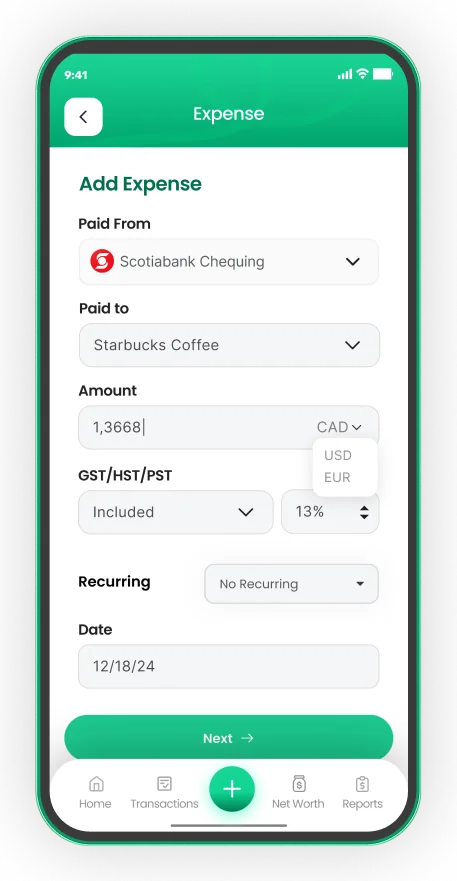
EMOH Pay tracks your spending, budgets and net worth on your phone and in the browser, always in sync. Free to start, made in Canada.
Get started free➜Salary to Hourly Calculator: frequently asked questions
How do I convert my salary to an hourly wage?
Divide your annual salary by your hours per week multiplied by your paid weeks per year. For a 40-hour week and 52 weeks, divide by 2,080.
What is $50,000 a year hourly?
About $24.04 an hour at 40 hours a week, or $25.64 at 37.5 hours, over 52 paid weeks. The figure is before tax.
Should I use 52 weeks or fewer?
Use 52 if your vacation and holidays are paid, which gives the rate your employer is paying. Use fewer weeks if you want your rate for the hours you actually work, or if some time off is unpaid.
Does the hourly rate include tax?
No. It is your gross rate. Income tax, CPP or QPP and EI are deducted from your pay, so your take-home rate is lower.
How do I compare a salary with a contract rate?
Convert the salary to hourly, then add the value of paid time off, benefits and any employer pension contributions. Contractors usually need a noticeably higher hourly rate to match a salaried package.
How can I use my hourly rate in my budget?
Divide a purchase price by your after-tax hourly rate to see how many hours of work it costs. EMOH Pay records your income as it arrives and compares spending with your budget, which makes this a habit rather than a one-off calculation.
Sources and further reading
Related guides and tools
Free hourly to salary calculator. Convert an hourly wage to annual, monthly, bi-weekly and weekly pay, with tables for…
Paycheque Calculator CanadaPaycheque calculator for Canada: enter gross pay per cheque, pay frequency and province to see income tax, CPP, EI and your…
Average Salary in Canada (2026)The average salary in Canada is about $1,347 a week in 2026, roughly $70,000 a year, per Statistics Canada. See pay by…
Income Tax Calculator Canada 2026Estimate your 2026 Canadian income tax, CPP, EI and take-home pay in every province and territory, with federal and…
Raise CalculatorFree raise calculator: enter your salary, raise percentage and inflation to see your new salary, extra pay per month and…
Hourly to Salary CalculatorFree hourly to salary calculator. Convert an hourly wage to annual, monthly, bi-weekly and weekly pay, with tables for…
Start free today
Free on iPhone, Android and the web. Upgrade to EMOH Pro anytime for bank sync and advanced AI.
Download for iOS➜ Get it on Android➜