
Nova Scotia Salary Calculator 2026
Enter your salary to see your take-home pay in Nova Scotia after federal tax, provincial tax, CPP and EI. No sign-up, no email.
Use the calculator➜ Try EMOH Pay free➜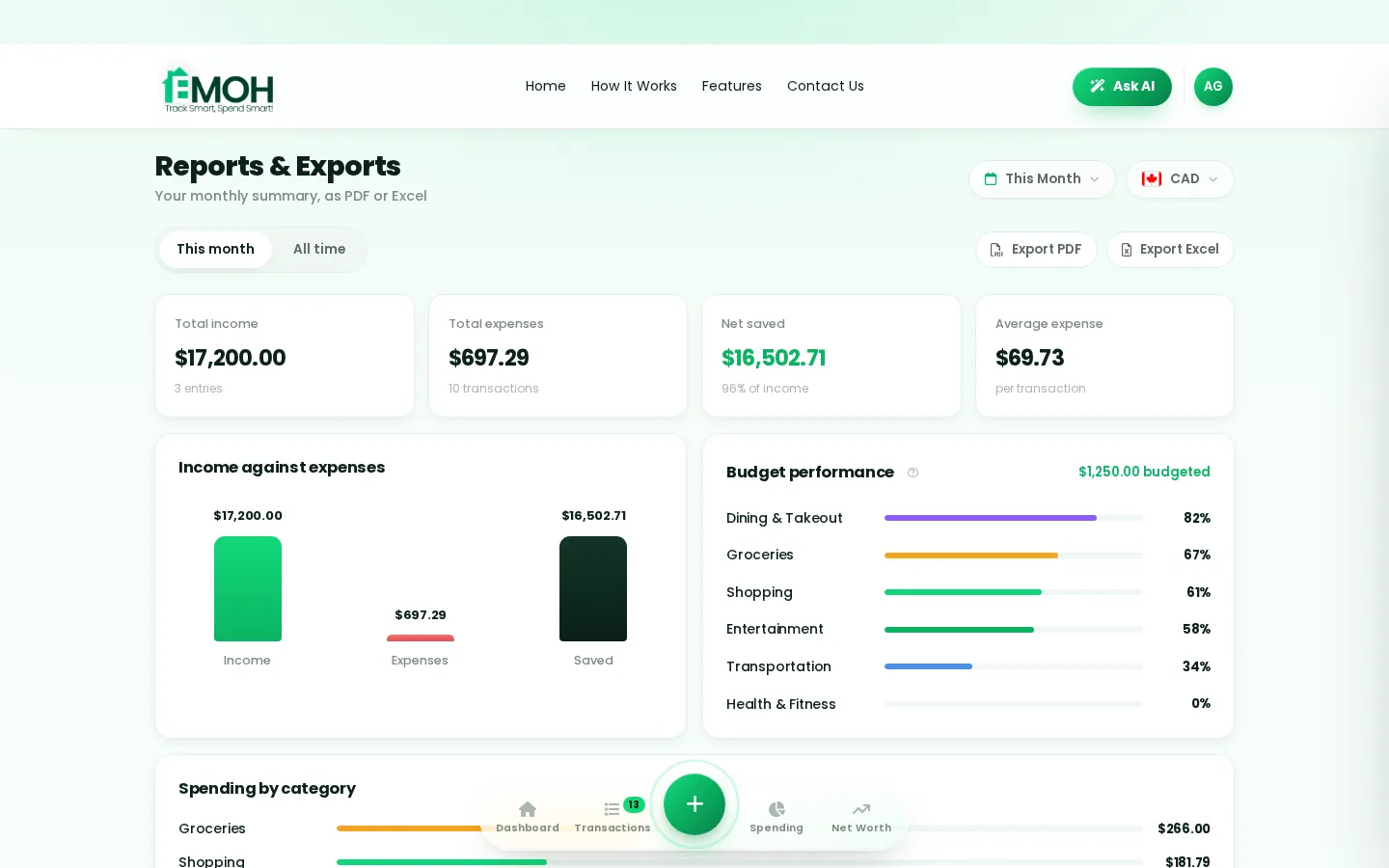
What is my take-home pay in Nova Scotia?
On a $75,000 salary in Nova Scotia, take-home pay in 2026 is about $53,100 a year, or roughly $4,430 a month. About $8,500 goes to federal tax, $8,000 to Nova Scotia tax, $4,250 to CPP and $1,120 to EI, an average deduction rate near 29%. Enter your own salary above for your figure.
2026 rates for a resident employee with the basic personal amount only. Verify against the CRA and provincial tables each January.
How to use the Nova Scotia salary calculator
The Nova Scotia salary calculator estimates take-home pay for a resident employee in 2026. It applies the federal brackets, Nova Scotia's five provincial brackets, Canada Pension Plan contributions and Employment Insurance premiums to your gross salary.
The same engine powers our Canada income tax calculator, which compares every province. This page focuses on Nova Scotia, where recent changes to the basic personal amount and indexing have shifted the numbers for many workers.
- Annual gross salary. Enter your yearly pay before deductions. For hourly work, multiply your rate by weekly hours and by 52.
- RRSP contributions (optional). Anything you contribute lowers taxable income and therefore income tax. CPP and EI do not change.
- Show take-home pay per. Choose monthly, semi-monthly, bi-weekly, weekly or annual to match your pay cycle.
The estimate uses the basic personal amount plus the CPP and EI credits only. It does not include workplace pension plans, group benefits, union dues or credits such as the Canada employment amount.
Nova Scotia tax brackets in 2026
Nova Scotia has five brackets, from 8.79% to 21%. For years the province did not index its thresholds to inflation. Starting with the 2025 tax year, Nova Scotia raised its basic personal amount to about $11,744 and began indexing brackets and credits each year. The 2026 thresholds below are estimates based on indexation.
| Taxable income | Nova Scotia rate |
|---|---|
| Up to about $31,100 | 8.79% |
| About $31,100 to $62,200 | 14.95% |
| About $62,200 to $97,800 | 16.67% |
| About $97,800 to $157,700 | 17.5% |
| Over about $157,700 | 21% |
The second bracket starts at a lower income than in most provinces, which is why Nova Scotia's deductions are relatively high for middle earners. On $75,000 the combined federal and provincial marginal rate is about 37%. Our guide to tax brackets in Canada explains how the layers combine.
Take-home pay in Nova Scotia at common salaries
Take-home pay in Nova Scotia at common salaries ranges from about $2,630 a month on $40,000 to about $8,130 a month on $150,000. These estimates are for an employee with no RRSP contribution and no extra workplace deductions.
| Gross salary | Annual take-home | Monthly take-home | Average deduction rate |
|---|---|---|---|
| $40,000 | about $31,500 | about $2,630 | about 21% |
| $50,000 | about $38,000 | about $3,170 | about 24% |
| $60,000 | about $44,500 | about $3,700 | about 26% |
| $75,000 | about $53,100 | about $4,430 | about 29% |
| $100,000 | about $68,400 | about $5,700 | about 32% |
| $150,000 | about $97,600 | about $8,130 | about 35% |
If you are paid per cheque rather than on a salary, our paycheque calculator starts from gross pay per period instead.

Track every paycheque
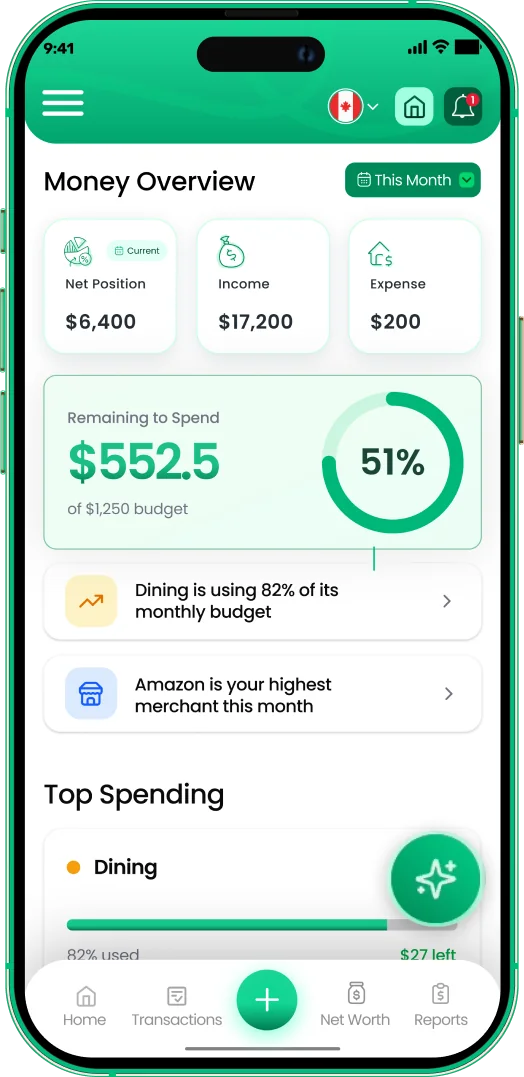
- Add each income source in seconds
- See income against spending every month
- Plan from your real take-home pay


How does Nova Scotia compare with other Atlantic provinces?
Nova Scotia keeps slightly less of a $75,000 salary than New Brunswick or Newfoundland and Labrador, and about the same as Prince Edward Island. Compared with Ontario, the gap is roughly $4,300 a year, driven by Nova Scotia's higher provincial rates on middle incomes.
Housing costs also differ widely. Halifax rents have risen quickly in recent years, as our cost of living in Halifax guide explains, while smaller Nova Scotia towns remain cheaper.
Ways to keep more of your pay in Nova Scotia
- RRSP contributions. At a 37% combined marginal rate, a $5,000 contribution saves roughly $1,850 in tax. Model it with our RRSP calculator.
- FHSA contributions. First-time buyers can deduct up to $8,000 a year and withdraw tax-free for a qualifying home.
- Provincial credits for lower incomes. Nova Scotia's low-income tax reduction and the Nova Scotia Affordable Living Tax Credit, paid with the GST/HST credit, are only available if you file.
- Common deductions. Child-care costs, union dues, moving costs for a new job and medical expenses above the threshold.
- Know the HST. Nova Scotia's HST fell from 15% to 14% on 1 April 2025. See GST vs HST for how it works.
Budgeting on a Nova Scotia salary
With your monthly take-home pay in hand, set aside money for rent or mortgage first, then heating, transportation and groceries, then savings. Winter heating oil or electric heat can swing bills sharply, so spread that cost across the year. Our guide to budgeting in Nova Scotia covers provincial costs in detail.
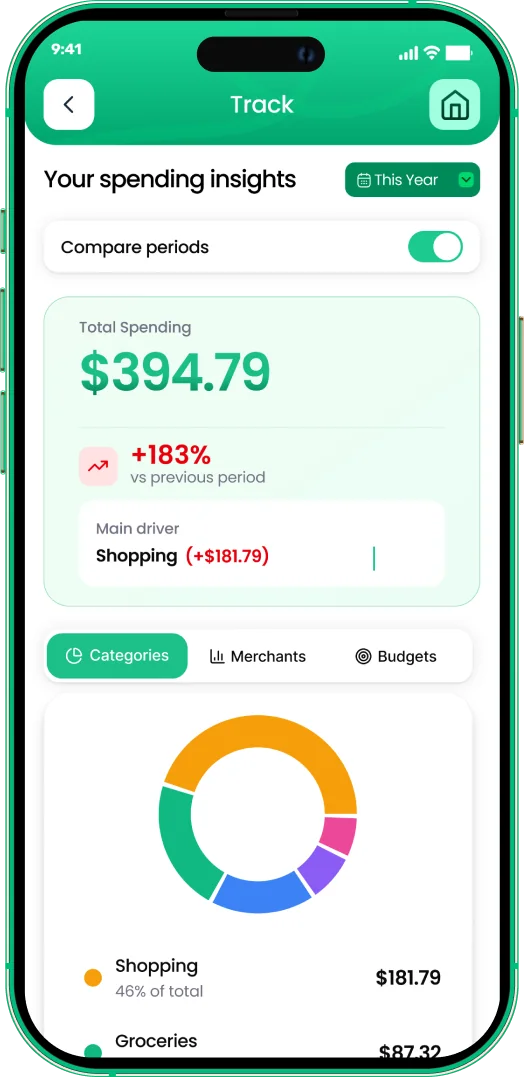
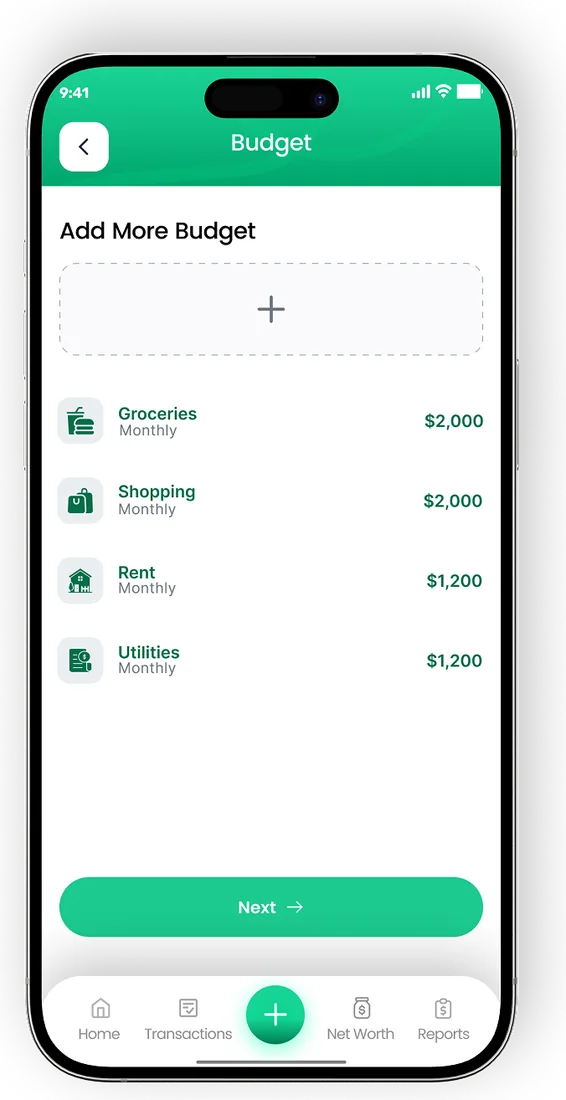
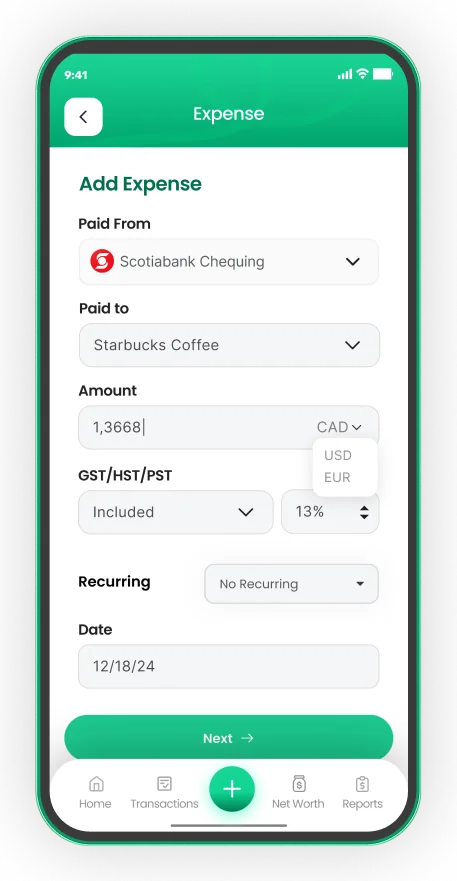
EMOH Pay is free to start on iPhone, Android and the web. Log your net pay, set category budgets with overspend alerts and track GST and HST on expenses if you need it for work or a side business.
Your income in EMOH Pay

Put the numbers on autopilot
EMOH Pay tracks your spending, budgets and net worth on your phone and in the browser, always in sync. Free to start, made in Canada.
Get started free➜Nova Scotia Salary Calculator 2026: frequently asked questions
How much is $60,000 after tax in Nova Scotia?
About $44,500 a year, or roughly $3,700 a month, in 2026 for an employee with no RRSP contribution, after federal tax, Nova Scotia tax, CPP and EI.
What is the Nova Scotia basic personal amount?
Nova Scotia raised its basic personal amount to about $11,744 for 2025 and now indexes it each year, so the 2026 amount is slightly higher. Confirm the current figure with the CRA or the province.
Why does Nova Scotia take more tax than other provinces?
Its second bracket starts at about $31,000 at 14.95%, and rates reach 16.67% before $100,000. Many provinces keep their lowest rate on a much wider band of income.
Does the calculator include CPP and EI?
Yes. It deducts 2026 CPP contributions, including the second tier between $74,600 and $85,000, and EI premiums of 1.63% on insurable earnings up to $68,900.
What is the HST rate in Nova Scotia?
14% since 1 April 2025, made up of the 5% federal portion and a 9% provincial portion. It was 15% before that date.
Sources and further reading
Related guides and tools
Estimate your 2026 Canadian income tax, CPP, EI and take-home pay in every province and territory, with federal and…
Budgeting in Nova Scotia (2026 Guide)Budgeting in Nova Scotia: sales tax is 14% HST, minimum wage $15.30/hr, typical rent $1,700/month. Halifax rents climbed…
Cost of Living in Halifax (2026)Cost of living in Halifax for 2026: average rent, the 14% HST, Nova Scotia income tax, heating and utilities, plus sample…
Tax Brackets Canada 2026Tax brackets Canada 2026: federal rates from 14% to 33%, every provincial bracket, how marginal tax works and worked…
RRSP CalculatorFree RRSP calculator for 2026: see the tax refund on your contribution, what it really costs after tax, your new room and…
GST vs HST: What's the Difference?GST vs HST: what's the difference? GST is the 5% federal sales tax; HST blends it with a provincial tax in five provinces.…
Start free today
Free on iPhone, Android and the web. Upgrade to EMOH Pro anytime for bank sync and advanced AI.
Download for iOS➜ Get it on Android➜