
Tax Brackets Canada 2026
The 2026 federal brackets run from 14% to 33%, and each province adds its own. Here is every threshold, how bracket tax is actually calculated and what it means for your pay.
Get started free➜ Download the app➜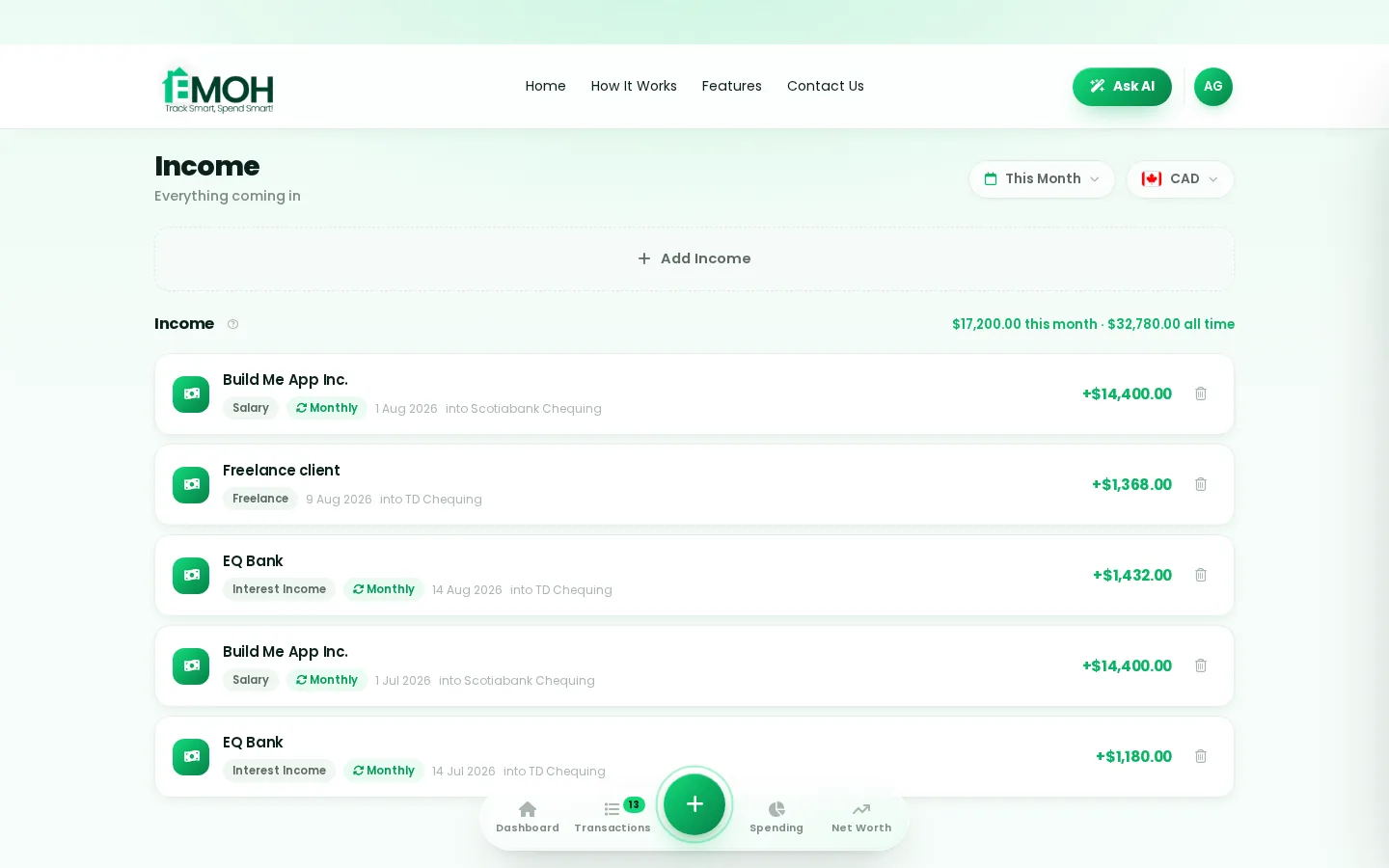

What are the 2026 federal tax brackets?
The 2026 federal tax brackets in Canada are 14% on taxable income up to $58,523, 20.5% from $58,523 to $117,045, 26% from $117,045 to $181,440, 29% from $181,440 to $258,482 and 33% above $258,482. Each rate applies only to income inside its bracket, and provincial or territorial tax is added on top.
Tax brackets Canada 2026: federal rates
The tax brackets Canada 2026 uses for federal income tax are set by the Government of Canada and published by the Canada Revenue Agency. The thresholds rise with inflation every January; for 2026 they were increased by 2.0%. The lowest rate also fell to 14%, down from 15% before July 2025.
| Taxable income | Federal rate |
|---|---|
| $0 to $58,523 | 14% |
| $58,523 to $117,045 | 20.5% |
| $117,045 to $181,440 | 26% |
| $181,440 to $258,482 | 29% |
| Over $258,482 | 33% |
Everyone also claims the basic personal amount, $16,452 for most people in 2026, as a non-refundable credit at 14%. It is gradually reduced for incomes in the top two brackets. You will file these rates on your 2026 return, due by the tax filing deadline of 30 April 2027.
How federal tax rates in Canada are applied
Canada uses marginal tax brackets. Your income is sliced into layers and each layer is taxed at its own rate, so moving into a higher bracket only raises the tax on the dollars above the threshold. A raise can never leave you with less money after federal tax.
Take $80,000 of taxable income. The first $58,523 is taxed at 14%, which is $8,193. The remaining $21,477 is taxed at 20.5%, which is $4,403. That totals $12,596 before credits. Subtracting the basic personal amount credit of about $2,303 leaves roughly $10,293, before other credits such as CPP, EI and the Canada employment amount.
| Taxable income | Federal tax | Average federal rate | Marginal federal rate |
|---|---|---|---|
| $40,000 | about $3,297 | 8.2% | 14% |
| $60,000 | about $6,193 | 10.3% | 20.5% |
| $80,000 | about $10,293 | 12.9% | 20.5% |
| $100,000 | about $14,393 | 14.4% | 20.5% |
| $150,000 | about $26,455 | 17.6% | 26% |
EMOH Pay calculation from CRA 2026 brackets. Excludes provincial tax, CPP, EI and other credits.
Provincial and territorial tax brackets for 2026
Provincial tax is calculated the same way, on the same taxable income, using your province of residence on 31 December. Lowest rates range from 4% in Nunavut to 10.8% in Manitoba and 10.5% in Saskatchewan, while top rates run from 11.5% in Nunavut to 21.8% in Newfoundland and Labrador. Quebec sets and collects its own income tax through Revenu Québec.
A low first rate does not always mean the lowest overall tax. Alberta's first bracket is 8%, but it applies to income up to $61,200, and Alberta's basic personal amount is among the largest in the country. For Ontario's full schedule, surtax and health premium, see Ontario tax brackets 2026.

Track every paycheque
- Add each income source in seconds
- See income against spending every month
- Plan from your real take-home pay


Marginal versus average tax rate
Your marginal rate is the combined federal and provincial rate on your next dollar of income. Your average rate is your total tax divided by your total income. The marginal rate is always higher once you pass the first bracket.
Use the marginal rate for decisions at the edge: whether overtime is worth it, how much an RRSP contribution will save, or what a raise really adds. Use the average rate to understand your overall tax bill. Our income tax calculator shows both for your province and salary.
- RRSP contributions are deducted at your marginal rate, so a $1,000 contribution in the 20.5% federal bracket saves $205 in federal tax alone. The RRSP deadline page covers timing.
- Capital gains are taxed at your marginal rate on half of the gain. See capital gains tax in Canada.
- Credits such as the basic personal amount are worth 14% federally no matter your bracket.
How to use tax brackets in your budget
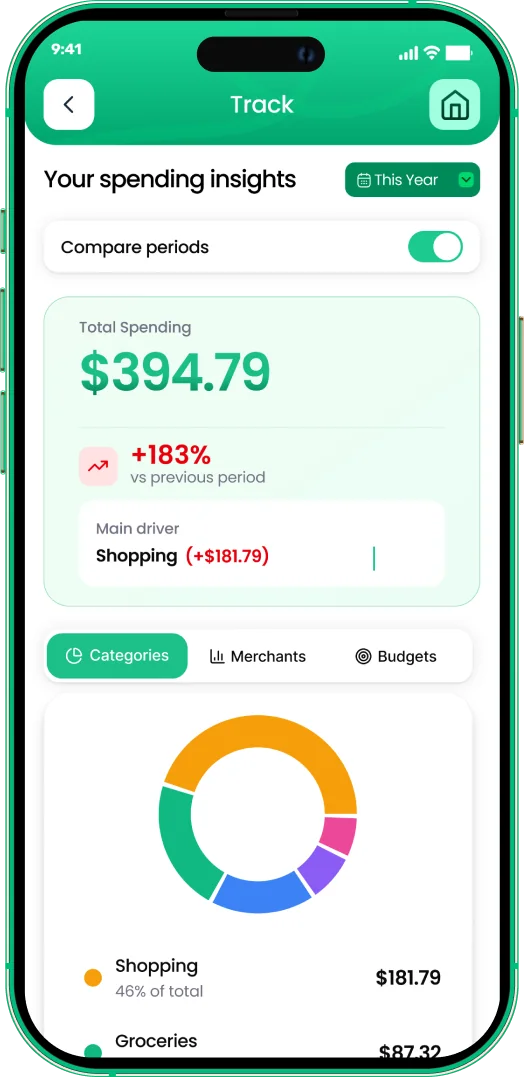
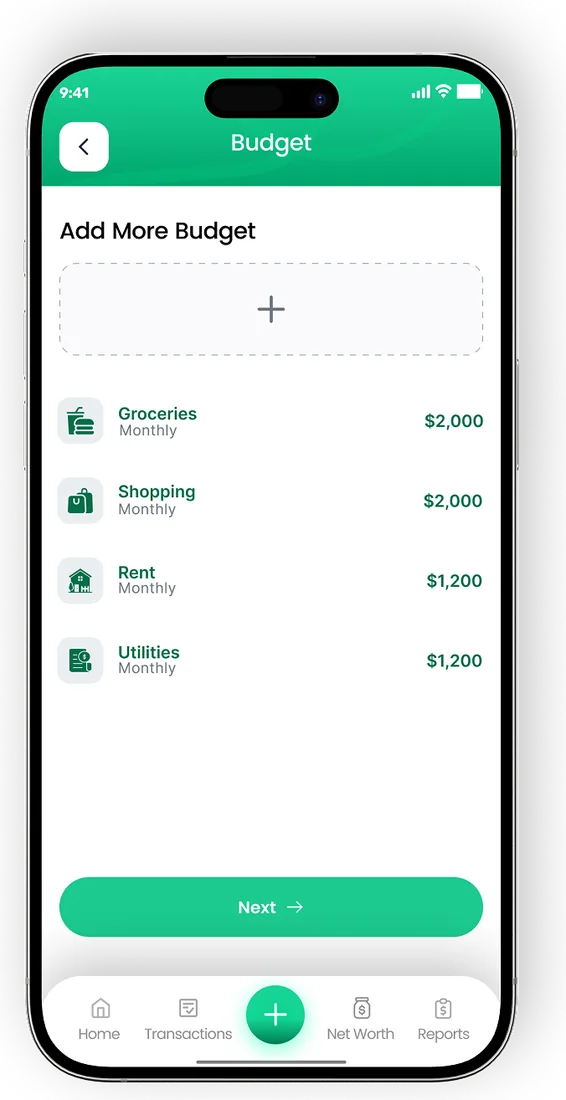
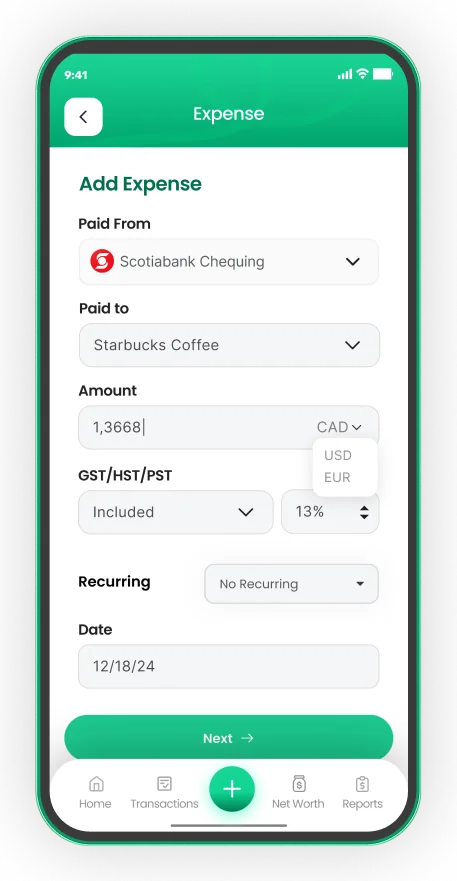
EMOH Pay records your net pay as it lands and compares it with your budget, so you plan with the money you actually receive. Its reports and PDF or Excel exports also help when gathering figures for your return.
- Estimate your taxable income: salary plus other income, minus deductions such as RRSP and FHSA contributions.
- Find your federal and provincial brackets and note your marginal rate.
- Budget from take-home pay, not gross salary. Tax, CPP and EI together can take a quarter or more of a middle income.
- If you have untaxed income, such as freelance work, set aside at least your marginal rate on it.
- Revisit each January, when brackets and credits are indexed.
Your income in EMOH Pay

Put the numbers on autopilot
EMOH Pay tracks your spending, budgets and net worth on your phone and in the browser, always in sync. Free to start, made in Canada.
Get started free➜Tax Brackets Canada 2026: frequently asked questions
Did the lowest federal tax rate change for 2026?
Yes. The lowest federal rate was cut from 15% to 14% effective 1 July 2025, which worked out to 14.5% for the 2025 year. The full 14% rate applies for 2026.
Are tax brackets based on gross or taxable income?
Taxable income, which is your total income minus deductions such as RRSP contributions, child-care expenses and union dues.
Will moving into a higher bracket reduce my take-home pay?
No. Only the income above the threshold is taxed at the higher rate, so you always keep more after tax when you earn more. Some income-tested benefits can shrink, though.
When do tax brackets change?
Every 1 January, when the CRA indexes thresholds and credit amounts to inflation. Provinces index their own brackets, and some thresholds, such as Ontario's $150,000 and $220,000, are fixed.
What is the highest combined tax rate in Canada?
It depends on the province. Combined top rates exceed 50% in several provinces, including Ontario, where the top combined rate is 53.53%.
Related guides and tools
Ontario tax brackets 2026 run from 5.05% to 13.16%. See every threshold, how the Ontario surtax and health premium work, and…
Income Tax Calculator Canada 2026Estimate your 2026 Canadian income tax, CPP, EI and take-home pay in every province and territory, with federal and…
Tax Filing Deadline Canada 2026Tax deadline Canada 2026: 30 April for most people, 15 June for the self-employed. See every filing, payment and instalment…
Capital Gains Tax in CanadaCapital gains tax in Canada explained: the 50% inclusion rate, how to calculate what you owe, worked examples, exemptions…
RRSP Deadline 2026The RRSP deadline 2026 for 2025 contributions was 2 March 2026; the next is 1 March 2027. See how the 60-day rule works…
Paycheque Calculator CanadaPaycheque calculator for Canada: enter gross pay per cheque, pay frequency and province to see income tax, CPP, EI and your…
Start free today
Free on iPhone, Android and the web. Upgrade to EMOH Pro anytime for bank sync and advanced AI.
Download for iOS➜ Get it on Android➜