
RRSP Calculator
Enter your income, province and planned contribution to see your estimated RRSP tax refund, the real cost of the contribution after that refund, and what it could be worth when you retire.
Use the calculator➜ Try EMOH Pay free➜
How much tax will my RRSP save?
An RRSP contribution saves tax at your marginal rate. In Ontario, someone earning $85,000 who contributes $10,000 saves about $2,965, because each deducted dollar would otherwise be taxed at roughly 29.65%. Lower incomes save closer to 20% of the contribution, and high incomes in most provinces save 40% or more.
How the RRSP calculator works
The RRSP calculator compares your income tax with and without the contribution. Enter your annual income, the RRSP contribution you plan to make and your province or territory. The difference in tax is your estimated refund.
Two more inputs project growth. Years until retirement and expected annual return show what the contribution could be worth if it compounds untouched. A 6% return is a common planning assumption, not a promise; use a lower figure if you hold mostly GICs or cash.
You get four results: the estimated tax refund, the effective cost of the contribution after that refund, your maximum new RRSP room for the year and the projected future value. The room figure uses 18% of the income you enter, capped at the 2026 limit, as a quick guide. Your real room is on your notice of assessment.
How is an RRSP tax refund calculated?
An RRSP tax refund equals your contribution multiplied by your marginal tax rate, as long as the whole contribution falls within one tax bracket. The contribution is deducted from taxable income, so the tax you already paid through payroll on that income comes back when you file your return.
| Income | Approximate marginal rate | Estimated refund | Real cost of $5,000 |
|---|---|---|---|
| $45,000 | about 19% | about $950 | about $4,050 |
| $60,000 | about 20% to 30% | about $1,250 | about $3,750 |
| $85,000 | about 29.65% | about $1,480 | about $3,520 |
| $120,000 | about 40% to 43% | about $2,060 | about $2,940 |
| $160,000 | about 45% | about $2,250 | about $2,750 |
At $60,000, part of the $5,000 deduction comes out of a higher bracket and part out of a lower one, which is why the refund sits between the two rates. The calculator handles this automatically for every province.
To see which bracket you are in, use the Canadian income tax calculator or our overview of Canadian tax brackets.
How much can I contribute to my RRSP in 2026?
Your 2026 RRSP room is 18% of your 2025 earned income, up to a maximum of $33,810, minus any pension adjustment from a workplace plan, plus unused room carried forward from earlier years. Your exact figure is printed on your notice of assessment and shown in CRA My Account.
- Carry forward. Unused room never expires, so a year of low contributions leaves room for later, higher-income years.
- Over-contribution. You can go up to $2,000 over your limit without penalty. Beyond that the CRA charges 1% per month on the excess.
- Deadline. Contributions made in the first 60 days of 2027 can be deducted on your 2026 return. See the RRSP deadline page for the exact date.
- Withdrawals. Money taken out is taxed as income in that year, and the room used is not restored, unlike a TFSA.
- Home Buyers' Plan. First-time buyers can borrow up to $60,000 from their RRSP for a home and repay it over time.
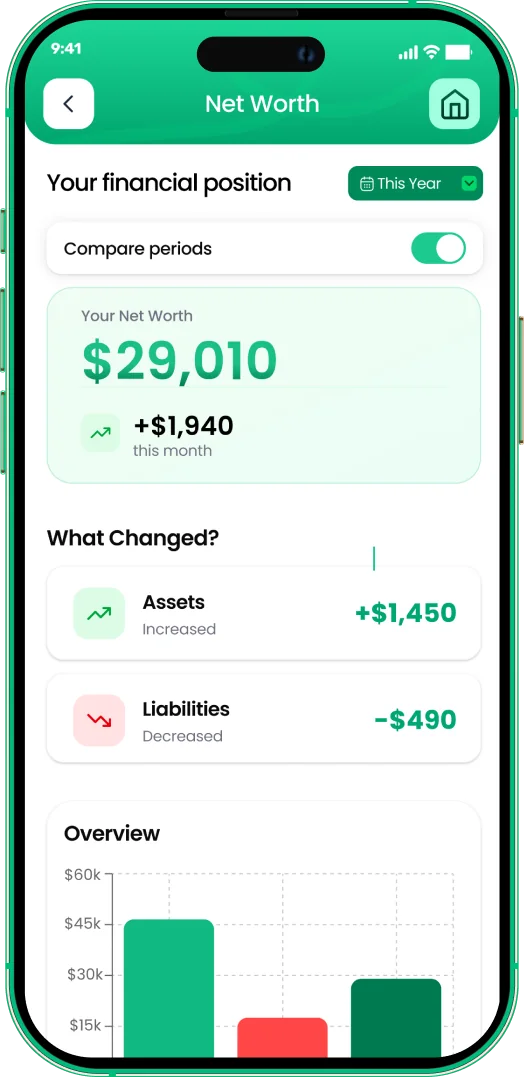
Watch your net worth grow
- Add assets and debts in any of 148 currencies
- See what changed month by month
- Set savings goals and track progress


What an RRSP contribution could grow to
The refund is only half the benefit. Money inside an RRSP grows without tax each year until you withdraw it. This chart shows a single $10,000 contribution at a 6% annual return, the calculator's default.
Withdrawals in retirement are taxed as income, so the RRSP works best when your tax rate then is lower than your rate today. If you expect a higher rate later, the TFSA vs RRSP calculator shows when a TFSA comes out ahead.
Making the most of your RRSP refund
A refund is your own tax coming back, so decide what it is for before it arrives. Common choices are topping up a TFSA, paying down high-interest debt or reinvesting it in next year's RRSP contribution.
Rather than a lump sum in February, many people contribute monthly through pre-authorized deposits. Use the budget calculator to find a monthly amount you can sustain. You can also ask your employer to reduce tax withheld at source with CRA form T1213, so the saving shows up on each paycheque instead of at filing time.
EMOH Pay lets you set an RRSP savings goal, track each contribution and see your net worth in one place. It is free to start on iPhone, Android and the web.
Your net worth in EMOH Pay

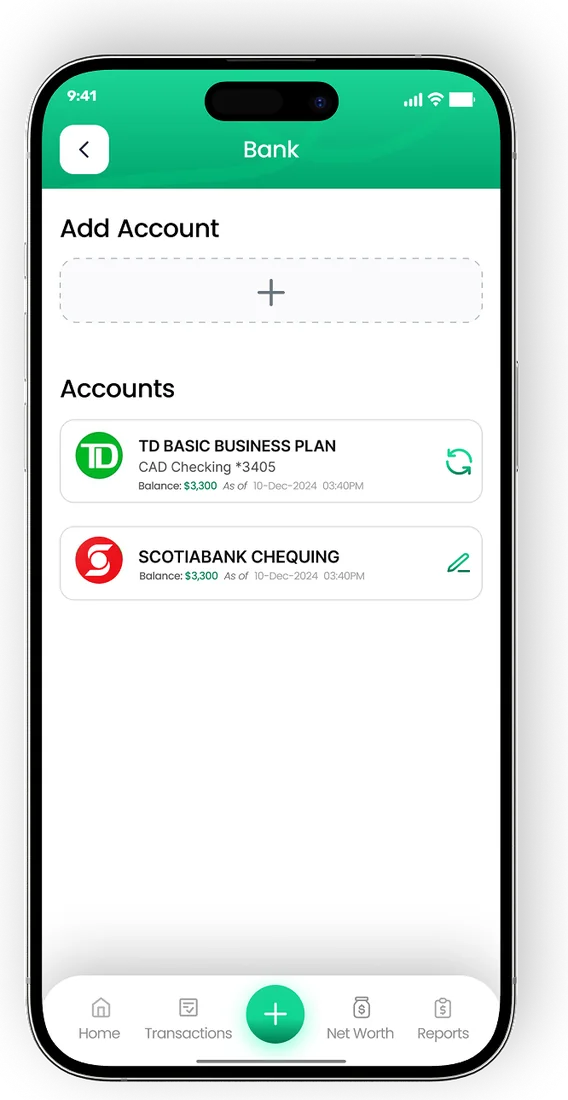
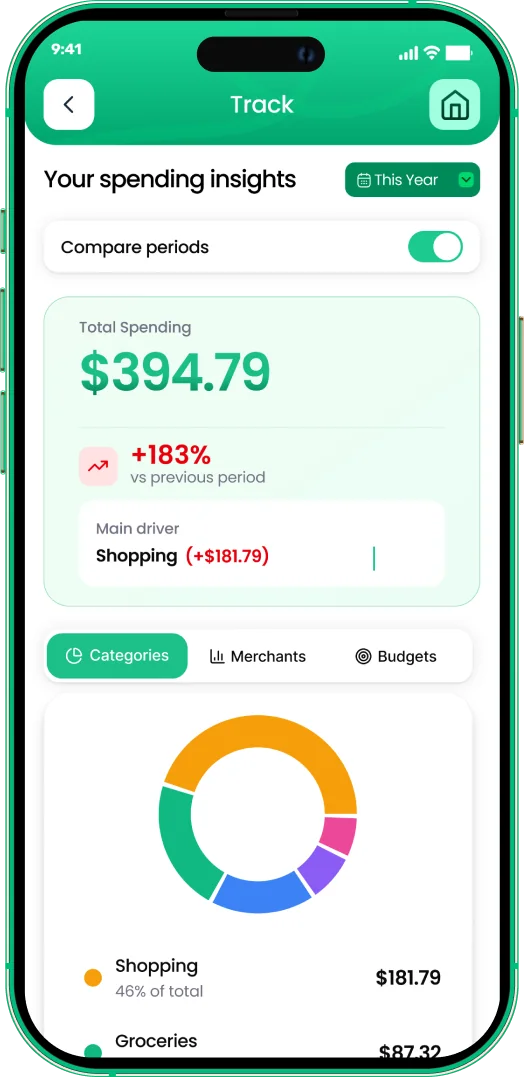

Put the numbers on autopilot
EMOH Pay tracks your spending, budgets and net worth on your phone and in the browser, always in sync. Free to start, made in Canada.
Get started free➜RRSP Calculator: frequently asked questions
Is the RRSP refund free money?
No. It is income tax you already paid through payroll that is returned because the contribution lowers your taxable income. You pay tax on the money later when you withdraw it, ideally at a lower rate.
Should I contribute to an RRSP if I earn under $50,000?
Often a TFSA suits lower incomes better, because the refund is smaller and RRSP withdrawals later can reduce income-tested benefits. You can still contribute now and carry the deduction forward to a higher-income year.
When will I get my RRSP refund?
You claim the deduction when you file your tax return, and the refund arrives with your assessment, usually within a few weeks of filing online. A T1213 request can spread the saving across your paycheques instead.
What is the 2026 RRSP contribution limit?
The dollar maximum for 2026 is $33,810, or 18% of your 2025 earned income if that is less, minus any pension adjustment, plus unused room from earlier years.
What happens to my RRSP at 71?
By the end of the year you turn 71 you must convert your RRSP to a RRIF or an annuity, or withdraw it as taxable income. A RRIF then requires a minimum withdrawal each year.
Related guides and tools
What is an RRSP? A plain-language guide to Canada's Registered Retirement Savings Plan: how the deduction works…
TFSA vs RRSP CalculatorTFSA vs RRSP: compare your tax rate today with your expected rate in retirement and see which account leaves you with more…
RRSP Deadline 2026The RRSP deadline 2026 for 2025 contributions was 2 March 2026; the next is 1 March 2027. See how the 60-day rule works…
Income Tax Calculator Canada 2026Estimate your 2026 Canadian income tax, CPP, EI and take-home pay in every province and territory, with federal and…
Retirement Savings CalculatorFree retirement savings calculator: project your nest egg at retirement, compare it with a 25-times-spending target and see…
50/30/20 Budget CalculatorThe 50/30/20 rule splits after-tax income: 50% to needs, 30% to wants, 20% to savings. Enter your monthly take-home pay to…
Start free today
Free on iPhone, Android and the web. Upgrade to EMOH Pro anytime for bank sync and advanced AI.
Download for iOS➜ Get it on Android➜