
Rule of 72 Calculator
Enter an annual return or interest rate to see how many years it takes money to double using the rule of 72, alongside the exact compound-interest answer.
Use the calculator➜ Try EMOH Pay free➜
How long will it take my money to double?
Divide 72 by your annual rate of return to estimate how many years your money takes to double. At 6% a year, money doubles in about 72 ÷ 6 = 12 years; at 8%, in about 9 years. The rule of 72 assumes returns compound once a year and is most accurate for rates between about 6% and 10%.
Your money doubles in about 72 divided by your yearly return. The harder part is choosing a realistic rate. A high-interest savings account, a GIC, a balanced fund and a stock index fund all grow at different rates, and investment returns vary from year to year, so treat any doubling time as an estimate.
Use a return after fees. A fund that earns 7% but charges 2% in fees is effectively growing at 5%, which stretches the doubling time from about 10 years to about 14. If you want the result in today's dollars, subtract expected inflation from the return first.
The rule of 72 answers a one-number question. To see how regular contributions add up over time, use the compound interest calculator, which projects a balance year by year.
What is the rule of 72?
The rule of 72 is a mental shortcut for compound growth. Divide 72 by an annual percentage rate and the answer is roughly the number of years it takes an amount to double at that rate. No spreadsheet needed.
It works because compounding is exponential. The exact doubling time is the natural log of 2 divided by the natural log of one plus the rate. For typical rates, that result is very close to 72 divided by the rate, and 72 is easy to divide by 2, 3, 4, 6, 8, 9 and 12.
To use the calculator, enter one number: the annual return or interest rate as a percentage. It shows the rule of 72 estimate and the exact answer side by side, so you can see how close the shortcut is.
Rule of 72 table: years to double at common rates
The table compares the rule of 72 with the exact doubling time for annual compounding. The shortcut stays within a few months across the range most savers and investors deal with.
| Annual rate | Rule of 72 | Exact answer |
|---|---|---|
| 2% | 36.0 years | 35.0 years |
| 3% | 24.0 years | 23.4 years |
| 4% | 18.0 years | 17.7 years |
| 5% | 14.4 years | 14.2 years |
| 6% | 12.0 years | 11.9 years |
| 7% | 10.3 years | 10.2 years |
| 8% | 9.0 years | 9.0 years |
| 10% | 7.2 years | 7.3 years |
| 12% | 6.0 years | 6.1 years |
| 20% | 3.6 years | 3.8 years |
At very low rates the rule slightly overstates the time, and at high rates it slightly understates it. For most planning, the difference does not change the decision.
Using the rule of 72 for inflation and debt
Inflation
The same shortcut shows how fast prices rise. The Bank of Canada aims to keep inflation at 2% a year. At that rate, prices double in about 36 years, so money sitting in cash loses half its buying power over a working life. The inflation calculator for Canada shows how prices have actually changed.
Credit card debt
Debt compounds too. An unpaid balance charging about 20% interest doubles in under four years if you make no payments. That is why paying high-interest debt usually beats investing. The credit card interest calculator shows how long a balance takes to clear at your payment.
Salary growth
If your income rises 3% a year, it takes about 24 years to double. Comparing that with inflation shows whether your raises are real gains or just keeping pace.
Watch your net worth grow
- Add assets and debts in any of 148 currencies
- See what changed month by month
- Set savings goals and track progress


Rule of 72 vs rule of 70 and rule of 69
Some people use 70 or 69.3 instead of 72. The rule of 69.3 is closest for continuous compounding, and 70 is popular for low rates such as inflation or economic growth. The rule of 72 is slightly less precise in theory but far easier to use in your head, and it fits annual compounding at typical investment returns very well.
Whichever you use, the lesson is the same: small differences in rate make large differences in time. Moving from 4% to 8% does not just double your growth, it cuts the doubling time in half, from about 18 years to about 9. Learn more in our explainer on how compound interest works.
Put the rule of 72 to work
Knowing your doubling time is most useful when it changes behaviour. It makes the case for starting early, choosing low-fee investments and clearing expensive debt first. Pair it with a plan: the retirement savings calculator shows whether your contributions are on track.
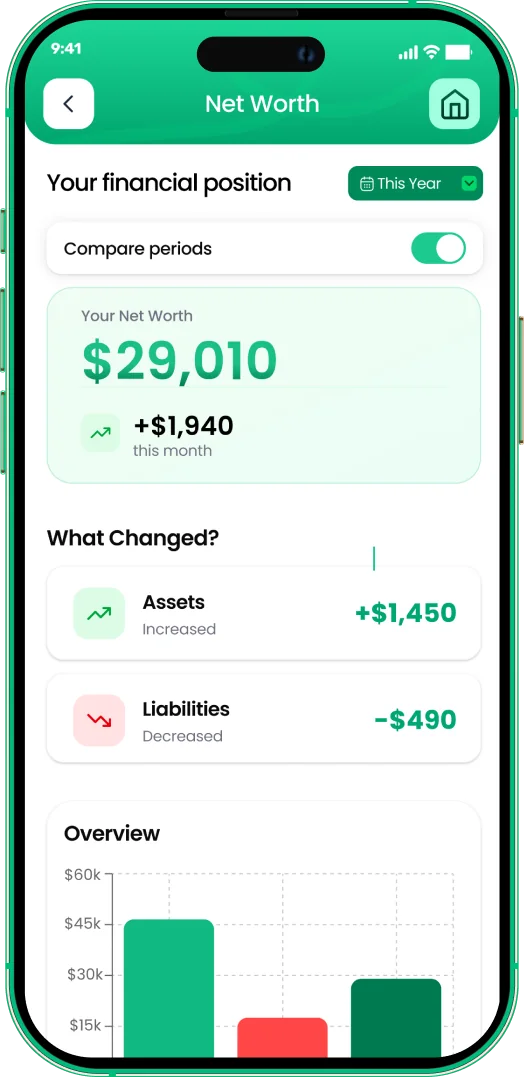
EMOH Pay's net worth tracker and savings goals show your balances growing month by month, so you can compare real progress with what the rule of 72 predicts.
Your net worth in EMOH Pay



Put the numbers on autopilot
EMOH Pay tracks your spending, budgets and net worth on your phone and in the browser, always in sync. Free to start, made in Canada.
Get started free➜Rule of 72 Calculator: frequently asked questions
How accurate is the rule of 72?
For annual compounding at rates between about 6% and 10%, it is within a few months of the exact answer. It is less precise at very low or very high rates but still close enough for quick estimates.
How long does it take money to double at 10%?
About 7.2 years using the rule of 72. The exact answer with annual compounding is about 7.3 years.
Can I use the rule of 72 to find the rate I need?
Yes. Divide 72 by the number of years instead. To double your money in 12 years, you need a return of about 72 ÷ 12 = 6% a year.
Does the rule of 72 include contributions?
No. It only shows how long a single amount takes to double with no deposits or withdrawals. Use a compound interest calculator to include regular contributions.
Does the rule of 72 account for taxes and fees?
Only if you use a rate after taxes and fees. Using the gross return will make your money appear to double faster than it really will.
How can I see how fast my own savings are growing?
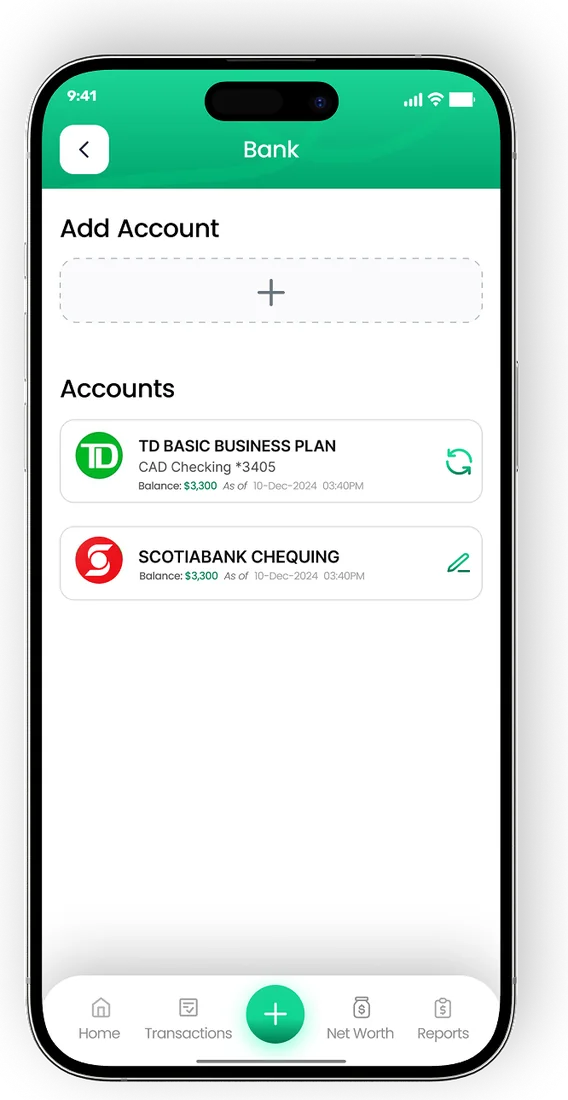
Track your balances over time rather than relying on estimates. EMOH Pay's net worth view records savings, investments and debts in one place on iPhone, Android and the web, so you can compare real growth with your rule of 72 estimate each year.
Sources and further reading
Related guides and tools
Free compound interest calculator. Enter a starting amount, monthly contribution, return and years to see how your savings…
What Is Compound Interest?What is compound interest? A plain definition, the formula, how compounding frequency changes results, simple vs compound…
Inflation Calculator CanadaInflation calculator for Canada: see what a dollar amount from any year since 2000 is worth today, using Statistics Canada…
Retirement Savings CalculatorFree retirement savings calculator: project your nest egg at retirement, compare it with a 25-times-spending target and see…
Credit Card Interest CalculatorFree credit card interest calculator. Enter your balance, APR and monthly payment to see the total interest you will pay and…
Compound Interest CalculatorFree compound interest calculator. Enter a starting amount, monthly contribution, return and years to see how your savings…
Start free today
Free on iPhone, Android and the web. Upgrade to EMOH Pro anytime for bank sync and advanced AI.
Download for iOS➜ Get it on Android➜