
Remittance Fees Explained
The advertised fee is only part of what a transfer costs. Learn where the money actually goes, how to compare providers on what your family receives, and how to keep more of every transfer.
Get started free➜ Download the app➜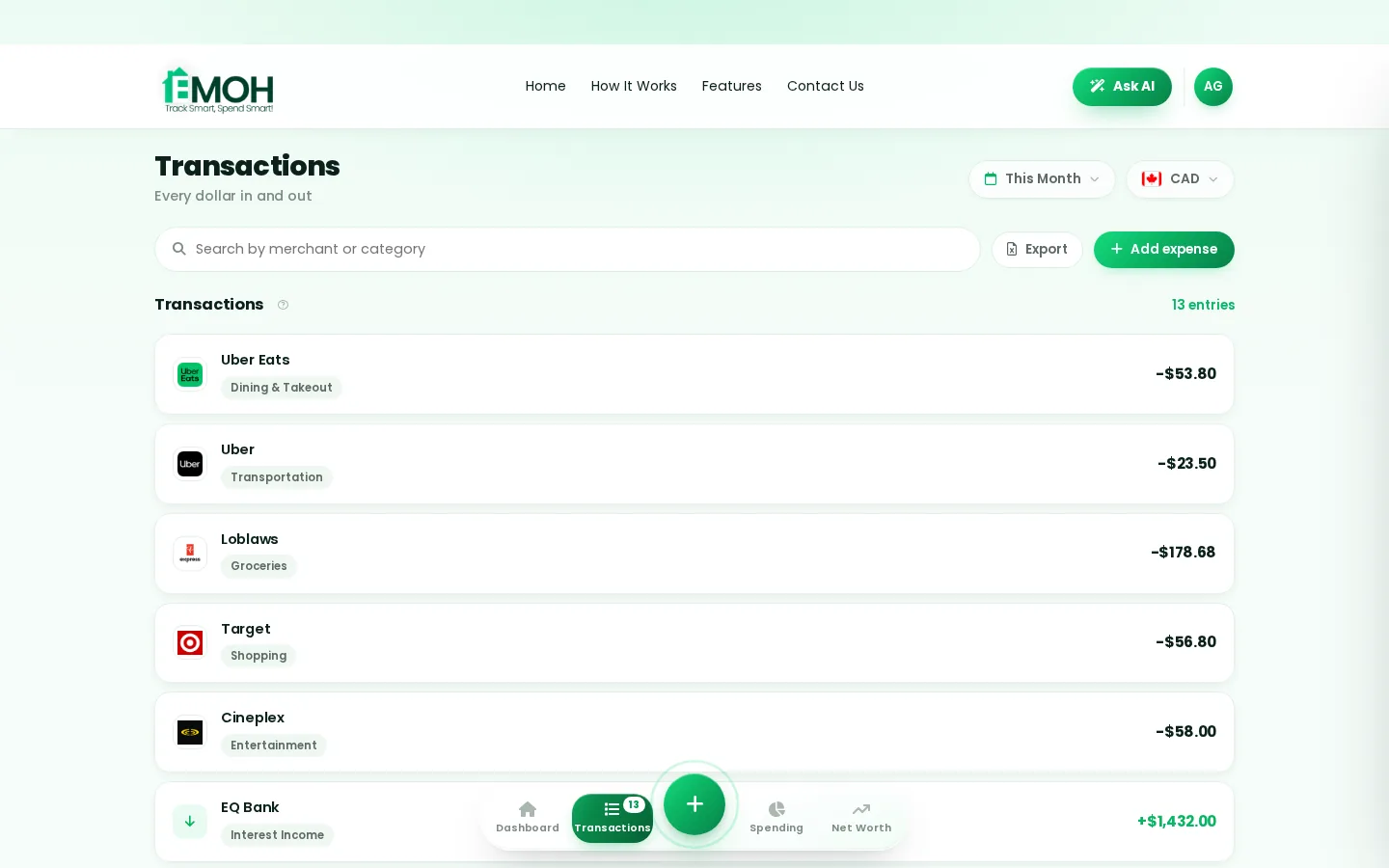
How do I avoid high fees when sending money home?
To avoid high remittance fees, compare providers on the amount your family actually receives, not the advertised fee. Check the exchange rate against the mid-market rate, avoid cash-funded and card-funded transfers when cheaper options exist, send larger amounts less often, and use licensed online or app-based services, which usually cost less than traditional bank wires.
You avoid high fees by comparing total cost, choosing a cheaper payment method and sending less often. Use the amount received as your yardstick, fund transfers from a bank account rather than a credit card or cash where you can, and pick a licensed provider that shows its rate and fees clearly before you pay.
- Fund from a bank account. Credit card funding can trigger cash advance fees and interest. Cash at a counter often costs more too.
- Send larger amounts less often. A flat fee hurts less on one monthly transfer than on four weekly ones, as long as your family's budget allows it.
- Watch receiving charges. Some banks deduct a fee on incoming international wires. Mobile wallet or account-to-account delivery can avoid it.
- Beware of dynamic currency conversion. When a card terminal or website offers to charge you in your home currency, the rate is usually poor.
- Recheck every few months. Prices change, and the cheapest provider last year may not be the cheapest now.
What are remittance fees?
Remittance fees are everything you pay to move money from one country to another, not just the fee printed on the screen. A transfer has up to three costs: an upfront fee, an exchange-rate margin hidden in the rate you are given, and sometimes charges taken by an intermediary or receiving bank. Add them together to see the true price.
The exchange margin is often the largest piece. A provider that advertises no fee can still be the most expensive if its rate is poor. That is why the only fair comparison is the amount that lands in the recipient's account for the same amount sent.
Once you know the real cost, you can plan around it. Our guide to building a remittance budget shows how to fit regular transfers into your monthly plan.
The hidden cost: exchange rate margins
The mid-market rate is the midpoint between the buy and sell prices in the currency market, the rate you usually see in search results or a currency converter. Providers rarely give you this rate. They offer a slightly worse one and keep the difference, called the margin or spread.
A margin of 1% means that on a $1,000 transfer, $10 disappears before any fee is charged. At 3%, it is $30. Because the margin is not listed as a fee, many people never notice it.
To work out the margin, divide the rate you are offered by the mid-market rate at the same moment, subtract that from one and multiply by 100. Check within minutes of each other, because rates move constantly.
How to calculate the real cost of a transfer
- Note the amount you will send, including any fee added on top.
- Find the mid-market rate at the same moment and multiply to see what the money is worth with no costs.
- Take the provider's quoted amount received, after every fee and any known receiving charge.
- Subtract the amount received from the mid-market value and divide by the mid-market value. That is your total cost as a percentage.
| Provider type | Upfront fee | Exchange margin | Rupees received | Total cost |
|---|---|---|---|---|
| "No fee" app | $0 | 2% | ₹29,890 | 2.0% |
| Low-margin app | $5 | 0.5% | ₹30,044 | 1.5% |
| Flat-fee service | $15 | 0% | ₹29,585 | 3.0% |
| Bank wire with receiving charge | $30 | 3% plus ₹500 | ₹27,310 | 10.5% |
The "no fee" app is not the cheapest, and the bank wire costs about seven times as much as the best option in this example. Each corridor behaves differently. Try the same maths on our CAD to INR converter, CAD to PKR converter or CAD to PHP converter.
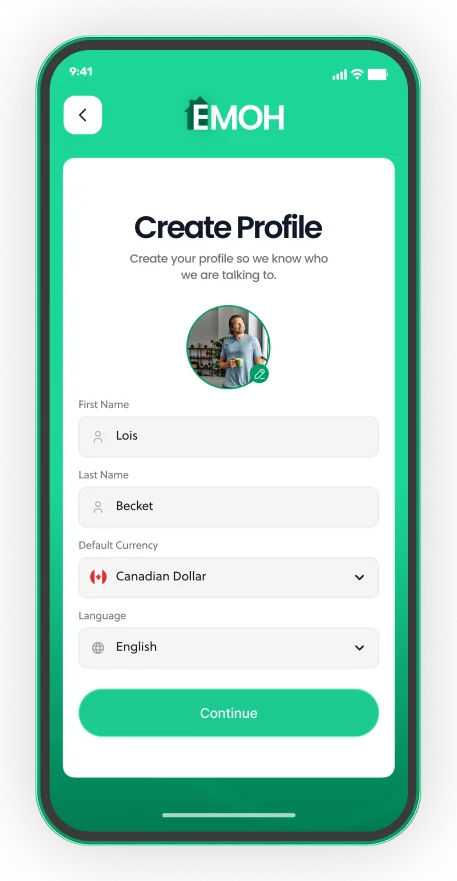
Your home currency, any spending currency
- 148 currencies with automatic conversion
- Record FX markup on card purchases
- Phone and web always in sync


What is the cheapest way to send money home?
There is no single cheapest provider for every route. The World Bank's Remittance Prices Worldwide database tracks costs across hundreds of corridors and has found that the global average cost of sending $200 has stayed above 6% in recent years. Banks have typically been the most expensive channel in that data, while digital services tend to cost less.
The United Nations Sustainable Development Goals aim to cut average remittance costs below 3% by 2030 and remove corridors costing more than 5%. Many routes are still above that level, so shopping around pays.
The World Bank's site lets you compare typical costs for your route. Use it to judge whether a quote is reasonable, then check live prices with licensed providers.
Sending money safely
- Use regulated providers. In Canada, businesses that transfer money must register with FINTRAC as money services businesses. You can search its public registry before you send.
- Avoid informal channels. Hawala, hundi and similar systems offer no protection if money goes missing and leave no record.
- Know the scam signs. Never send money to someone you have only met online, or to anyone who pressures you to pay urgently by transfer or gift card.
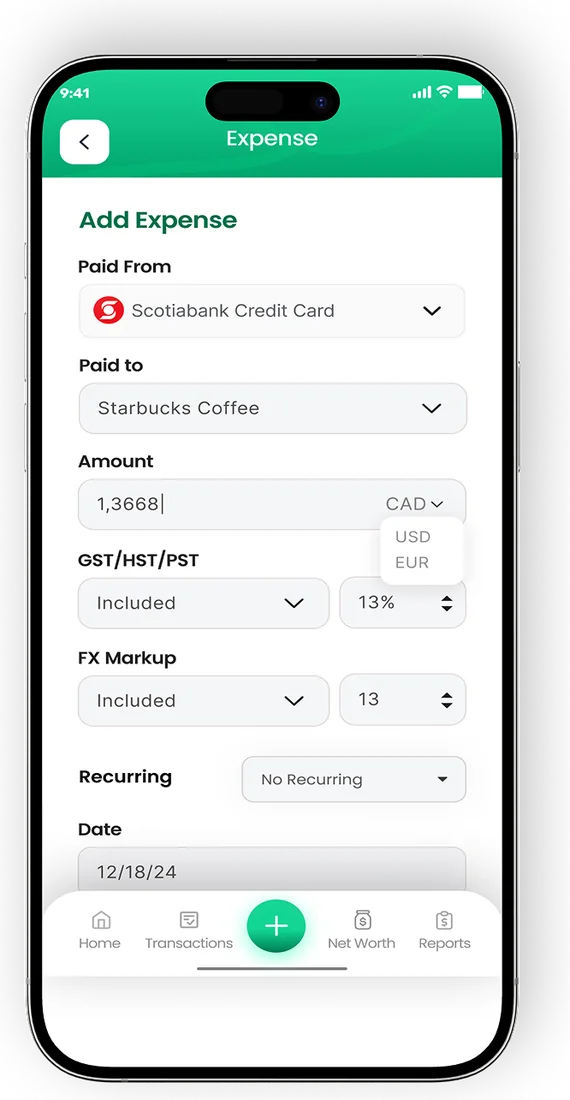
- Keep records. Save every receipt. EMOH Pay lets you log each transfer as an expense in your own currency and the recipient's, with 148 currencies converted automatically.
Every currency in one app
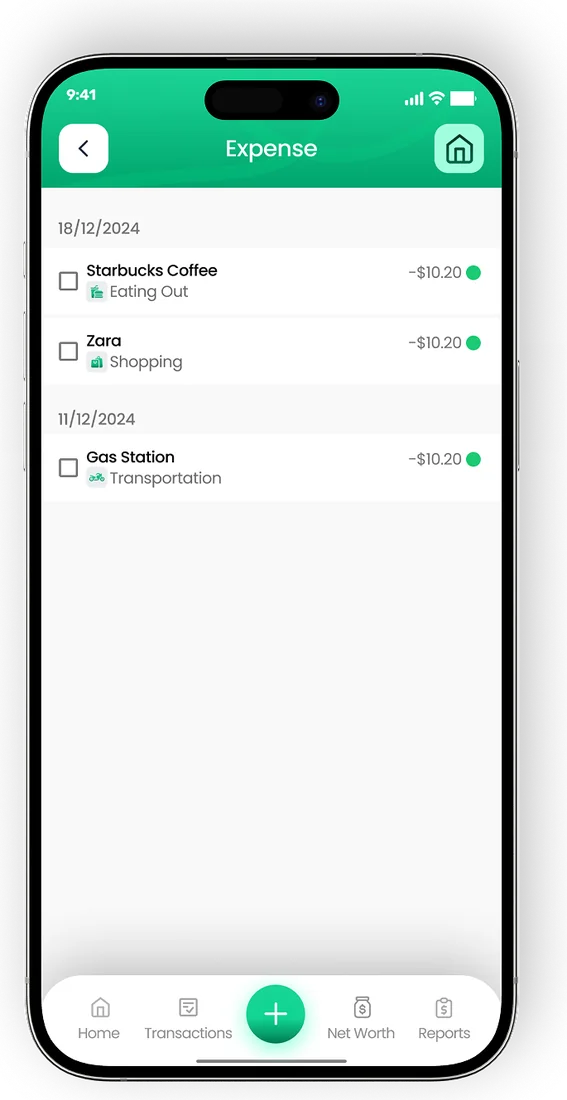
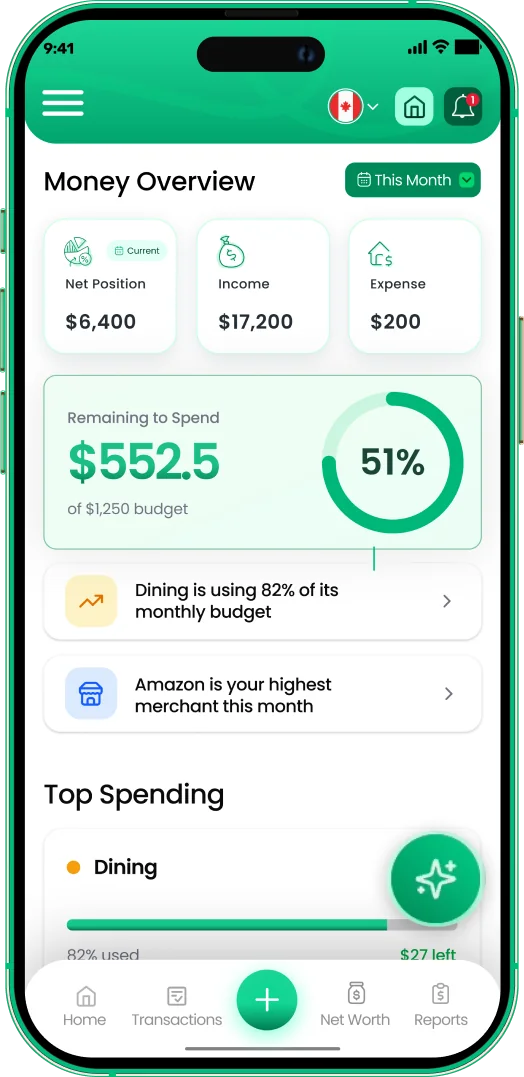
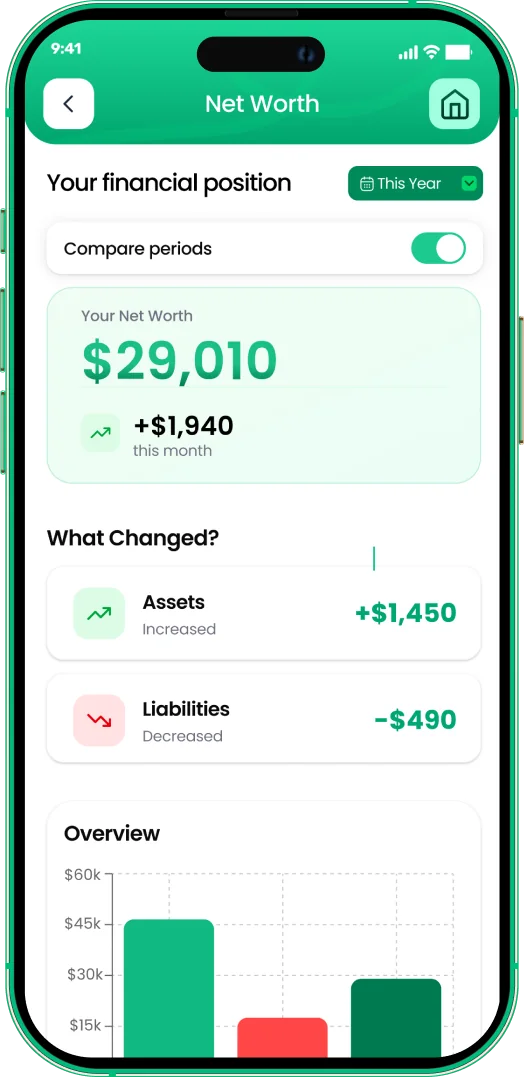

Put the numbers on autopilot
EMOH Pay tracks your spending, budgets and net worth on your phone and in the browser, always in sync. Free to start, made in Canada.
Get started free➜Remittance Fees Explained: frequently asked questions
What is a remittance fee?
It is the total cost of sending money abroad: the upfront fee, the exchange-rate margin and any intermediary or receiving charges. Compare the amount received to see it clearly.
Are no-fee transfers really free?
Rarely. Most providers that charge no upfront fee earn money through the exchange rate. Compare their rate with the mid-market rate to see the real cost.
Is it cheaper to send money through a bank?
Not usually. In the World Bank's global data, banks have typically been the most expensive way to send remittances, while digital services tend to cost less. Check your own route.
How much should I send at once?
Fewer, larger transfers reduce the impact of flat fees. Balance that against what your family needs each month and any limits your provider sets.
How can I track money I send home?
Log each transfer as a regular bill in a budget. EMOH Pay is free on iPhone, Android and the web and shows both currencies, so you can see what you spent and what your family received.
Sources and further reading
Related guides and tools
Build a remittance budget that supports family without draining your own savings: how much money to send home, handling…
Currency ConverterQuick conversion between major currencies (indicative 2026 rates — live rates inside the EMOH Pay app, with 148 currencies…
CAD to INR Converter + Budget PlannerConvert CAD to INR, see what arrives after transfer fees and plan a monthly budget for sending money to India. Indicative…
CAD to PKR Converter + Budget PlannerConvert CAD to PKR, see what arrives after transfer fees and plan a monthly budget for sending money to Pakistan. Indicative…
Multi-Currency Budgeting: A Complete GuideBuild a multi currency budget that works: pick a home currency and a conversion method, and plan for fees and rate swings…
Expat Money GuideA practical guide to expat finances: tax residency, banking in two countries, currency, emergency funds and a monthly money…
Start free today
Free on iPhone, Android and the web. Upgrade to EMOH Pro anytime for bank sync and advanced AI.
Download for iOS➜ Get it on Android➜