
Moving Cost Checklist
The truck is the cost everyone remembers. This moving cost checklist lists the rest, from deposits and overlap rent to cleaning and time off work, with typical ranges for local and long-distance moves.
Get started free➜ Download the app➜
How much does it cost to move?
Moving typically costs about $300 to $800 for a local do-it-yourself apartment move in Canada, $800 to $2,500 with professional movers, and $3,000 to $10,000 or more long distance. A full moving cost checklist also includes deposits, overlap rent and setup costs, which can add as much again. These are illustrative estimates, not an official statistic.
Moving usually costs a few hundred dollars for a small do-it-yourself local move, around $800 to $2,500 for a local move with professional movers, and several thousand dollars for a long-distance move. The size of your home, the distance and the date are the three biggest factors.
The price of the move itself is only half the story, which is why a moving cost checklist helps. First and last month's rent or a security deposit, utility setup, a few days of overlapping rent and replacing items that do not fit the new place often cost as much as the movers.
The ranges on this page are illustrative, based on typical 2026 prices. They are not an official statistic, and moving quotes vary widely by city and season. If you are relocating to Canada from abroad, our guide to the cost of moving to Canada covers immigration fees and proof of funds instead.
The moving cost checklist
Work through this moving cost checklist line by line and write an estimate beside each item. Skip anything that does not apply to you, but check each one before you decide.
| Item | Typical range | Notes |
|---|---|---|
| Professional movers, local | $800 to $2,500 | Usually charged by the hour for a crew and truck |
| Truck or van rental, local | $150 to $500 | Add fuel, kilometres and insurance |
| Long-distance movers | $3,000 to $10,000 or more | Priced by weight or volume and distance |
| Boxes, tape and packing supplies | $50 to $300 | Free boxes cut this sharply |
| Packing service | $300 to $1,500 | Optional; depends on home size |
| Rental deposit or last month's rent | up to one month's rent | Rules differ by province |
| Overlap rent | a few days to a month | When the old and new leases overlap |
| Cleaning the old home | $0 to $400 | Needed to get a deposit back in some provinces |
| Utility and internet setup | $0 to $150 | Connection or activation fees |
| Time off work | one or two days of pay | Unless you move on a weekend |
| Storage | $100 to $300 a month | If move-out and move-in dates do not line up |
| New essentials | $200 to $1,000 | Curtains, shelves, cleaning supplies, furniture that fits |
Moving costs people forget
The costs people forget when moving are mostly the small ones that happen in the same week. Each looks minor, but together they can add several hundred dollars to the budget.
- Parking permits or elevator bookings. Some cities and buildings charge for moving-truck parking or a reserved elevator.
- Takeout meals. The kitchen is packed for two or three days.
- Address changes. Mail forwarding, plus address updates for your driver's licence, health card and vehicle registration.
- Pet and child care on moving day.
- Tips for the moving crew, if you choose to give them.
- Replacement items. Things that break, get lost or do not fit the new space.
How to lower the cost of moving
The cheapest way to move is to own less, move midweek and mid-month, and book early. Movers charge more at month ends and in summer, when demand is highest. In Quebec, where many leases end on 30 June, the days around 1 July are especially busy.
- Declutter first. Every box you sell, donate or recycle is one you do not pay to move.
- Get at least three written quotes, and ask whether each is a fixed price or an hourly estimate.
- Choose a weekday in the middle of the month if your leases allow it.
- Collect free boxes from friends, local stores or online marketplaces.
- Pack yourself and hire movers only for the heavy lifting.
- Clean the old home yourself and document its condition with photos to protect your deposit.
Budgets that update themselves
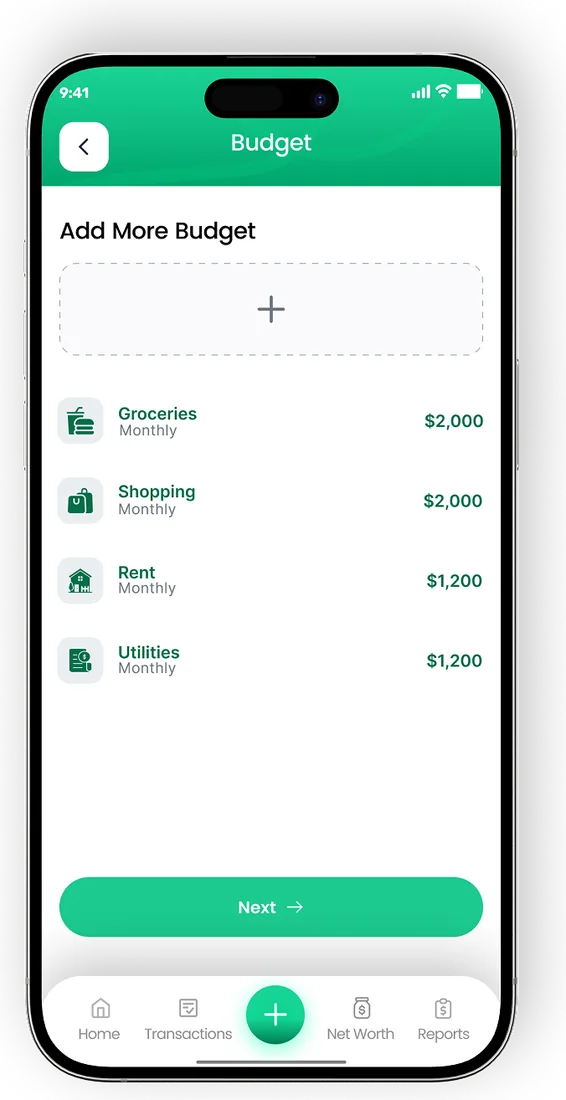
- Set monthly limits for every category
- See what is left to spend in real time
- Get a nudge before a category runs out


Can you deduct moving expenses in Canada?
You may be able to deduct eligible moving expenses on your tax return if you move to work, run a business or study full time at a post-secondary school, and your new home is at least 40 km closer to that new location. The Canada Revenue Agency sets out which costs qualify.
Eligible costs generally include transportation and storage of household items, travel costs and some costs of selling your old home. You can usually only deduct them from income earned at the new location. Keep every receipt, and confirm the current rules on the CRA website before you claim.
EMOH Pay's receipt tracking keeps moving receipts together in one place, and the PDF and Excel exports make it easy to hand a list to whoever prepares your return.
How to build a moving budget
A moving budget works best as a sinking fund you start two or three months before the move. Add up the checklist, include a buffer of about 10%, and divide by the months you have left.
- Fill in the checklist with your own quotes and estimates.
- Add a 10% buffer for last-minute costs.
- Save the total monthly in a dedicated sinking fund.
- Create a Moving category in your budget and log every cost as it happens.
- After the move, rebuild your monthly budget around the new rent and utilities.
If you are moving into your first place, our first apartment budget covers setup costs in more detail. Before you sign a new lease, check the rent against your income with the rent affordability calculator, and look at the average utility bill in Canada for the new place. Once you are settled, update your list of monthly expenses.
Plan your month in EMOH Pay


Put the numbers on autopilot
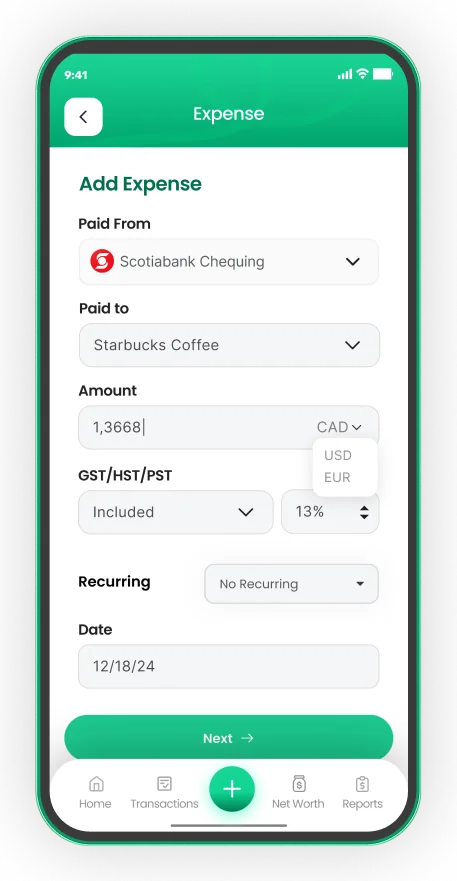
EMOH Pay tracks your spending, budgets and net worth on your phone and in the browser, always in sync. Free to start, made in Canada.
Get started free➜Moving Cost Checklist: frequently asked questions
How much does it cost to hire movers for a one-bedroom apartment?
A local move of a one-bedroom apartment with professional movers often costs about $800 to $1,500, depending on the city, the crew size, stairs or elevators and how long the job takes. Get several written quotes.
When is the cheapest time to move?
Midweek and mid-month, outside the summer peak, is usually cheapest. Month ends, weekends and summer months are busiest. In Quebec, the days around 1 July are especially busy because many leases end on 30 June.
How much should I save before moving?
Add up the moving cost checklist, then add any rental deposit, first month's rent and a buffer of about 10%. For many local apartment moves, that means saving at least one month's rent plus the cost of the move itself.
Are moving expenses tax deductible in Canada?
They can be if you move to work, run a business or study full time and your new home is at least 40 km closer to the new location. Check the Canada Revenue Agency's current rules and keep all receipts.
Is it cheaper to move yourself?
Renting a truck and moving yourself is usually cheaper for small local moves. For larger homes or long distances, the cost of your time, fuel, insurance and the risk of damage can make professional movers the better value.
Sources and further reading
Related guides and tools
Plan your first apartment budget: the upfront cash you need, deposit rules by province, a sample monthly budget and a…
Cost of Moving to CanadaThe real cost of moving to Canada in 2026: IRCC fees, proof of funds, flights, rental deposits and a first three months…
Sinking Funds: What They Are and How to Use ThemSinking funds turn big irregular costs into small monthly savings. Learn how they work, common sinking fund categories, a…
Rent Affordability CalculatorThe classic rule: keep rent at or under 30% of gross monthly income (35% of take-home in expensive cities). Enter your…
Average Utility Bill in CanadaAverage utility bill in Canada: typical monthly costs for electricity, heat, water and internet, why bills differ by…
Monthly Expenses Checklist: The Full List of Monthly ExpensesA complete list of monthly expenses to build your budget: housing, bills, food, transport, debt, savings and the irregular…
Start free today
Free on iPhone, Android and the web. Upgrade to EMOH Pro anytime for bank sync and advanced AI.
Download for iOS➜ Get it on Android➜