
First Apartment Budget
Moving out for the first time takes more than first month's rent. Here is how much cash you need upfront, what a first apartment costs each month, and a checklist so nothing catches you off guard.
Get started free➜ Download the app➜
How much do I need for my first apartment?
A first apartment budget in Canada should include about two to three times the monthly rent in cash before you move in. That covers first month's rent, any deposit your province allows, moving, tenant insurance, utility setup and basic furniture. After that, budget for rent plus about $900 to $1,700 a month in other costs.
How much do you need for your first apartment?
A first apartment budget has two parts: the cash you need to move in, and the amount you need every month after that. Most first-time renters need about two to three times the monthly rent saved before moving day. For a $1,500 apartment, that is roughly $3,000 to $4,500.
The monthly side is rent plus utilities, internet, phone, groceries, transportation, insurance and personal spending. Outside of rent, a single person usually needs about $900 to $1,700 a month, depending on the city and whether they drive.
These are illustrative ranges based on typical 2026 Canadian costs, not an official statistic. Start by listing every cost on a list of monthly expenses, then check the rent against your income before you start viewing apartments.
Upfront costs of a first apartment
Upfront costs are what make a first apartment hard to afford, because they all arrive at once. Price each line below before you sign a lease.
| Cost | Typical range | Notes |
|---|---|---|
| First month's rent | $1,500 | Due at or before move-in |
| Deposit | $0 to $1,500 | Depends on your province's rules |
| Moving costs | $150 to $800 | Truck rental or a small local mover |
| Tenant insurance, first month | $20 to $40 | Many landlords require proof |
| Utility and internet setup | $0 to $150 | Activation or connection fees |
| Bed, mattress and basic furniture | $300 to $1,200 | Second-hand saves a lot |
| Kitchen, bathroom and cleaning basics | $150 to $400 | Dishes, pots, towels, shower curtain |
| Groceries to stock the kitchen | $100 to $250 | Pantry staples cost more the first time |
| Total | about $2,200 to $5,800 | Two to three months' rent is a safe target |
Landlords usually check your credit and income, and some ask for a guarantor if you have little credit history. Our guide on how to build credit in Canada explains how to start. The moving cost checklist covers the move itself in more detail.
Rental deposit rules by province
Deposit rules for a first apartment depend on your province. Some allow a security or damage deposit, some allow only a last month's rent deposit, and Quebec does not allow landlords to require a deposit. Check the rules before you pay anything.
- Ontario. A landlord can ask for a rent deposit of no more than one month's rent, used for your last month. Damage deposits are not allowed, though a refundable key deposit is.
- British Columbia. A security deposit can be up to half of one month's rent, and a pet damage deposit up to another half month.
- Alberta. A security deposit can be up to one month's rent.
- Quebec. A landlord cannot require a deposit. They can ask for the first month's rent in advance.
- Other provinces and territories. Each sets its own limits. Your provincial residential tenancy office lists them.
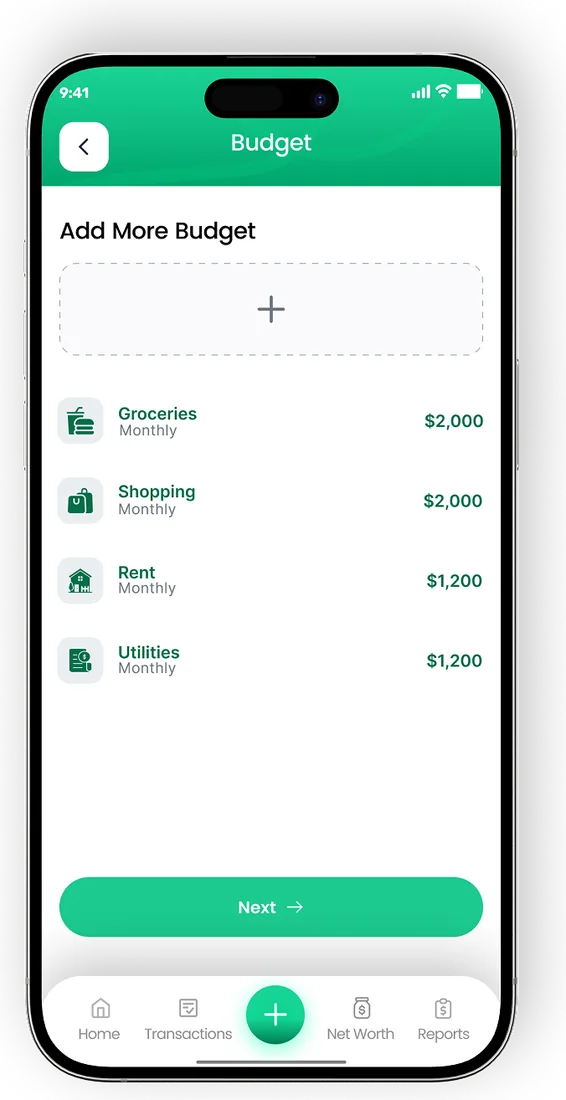
Budgets that update themselves
- Set monthly limits for every category
- See what is left to spend in real time
- Get a nudge before a category runs out


Sample monthly budget for a first apartment
A single person in a first apartment usually spends rent plus about $900 to $1,700 a month on everything else. Sharing with a roommate is the fastest way to cut the total, because rent and utilities are split.
| Category | Living alone (1-bed) | With one roommate (2-bed) |
|---|---|---|
| Rent | $1,400 to $1,800 | $900 to $1,200 (your share) |
| Utilities | $80 to $180 | $60 to $120 (your share) |
| Internet and phone | $100 to $150 | $80 to $120 |
| Tenant insurance | $20 to $40 | $20 to $30 |
| Groceries | $300 to $450 | $300 to $450 |
| Transportation | $100 to $150 (transit pass) | $100 to $150 (transit pass) |
| Personal and household | $100 to $200 | $100 to $200 |
| Entertainment and dining | $100 to $250 | $100 to $250 |
| Savings | $100 to $300 | $150 to $350 |
| Total | about $2,300 to $3,500 | about $1,800 to $2,900 |
Rents vary widely by city. See average rent in Canada for your area, and our guide on how to split bills with roommates if you are sharing.
Figures checked September 2026; confirm current rents with CMHC and tenancy rules with your provincial government.
How much rent can I afford for my first apartment?
A common benchmark is to keep housing costs under 30% of your gross income, which is how CMHC defines affordable housing. On a $54,000 salary, that is about $1,350 a month. In expensive cities many renters go above it, which leaves less room for savings.
Run your numbers through the rent affordability calculator before you apply. If the result is below local rents, a roommate, a smaller unit or a neighbourhood further out are the usual fixes.
First apartment checklist and budgeting tips
- Save two to three months' rent before you start looking seriously.
- Check the rent against 30% of your gross income.
- Confirm your province's deposit rules and what is included in rent.
- Buy tenant insurance before move-in day.
- Furnish in stages: bed, a place to sit and kitchen basics first, the rest later.
- Set up a budget in your first week and track every expense for a month.
- Start a small emergency fund, even $25 a paycheque. Our emergency fund guide explains how much to aim for.
EMOH Pay is free on iPhone, Android and the web and is built for this moment. Set a budget for each category with overspend alerts, track bills such as rent and internet so due dates never slip, and add a savings goal for your emergency fund. Our budgeting app for renters page shows how it works for tenants.
Plan your month in EMOH Pay
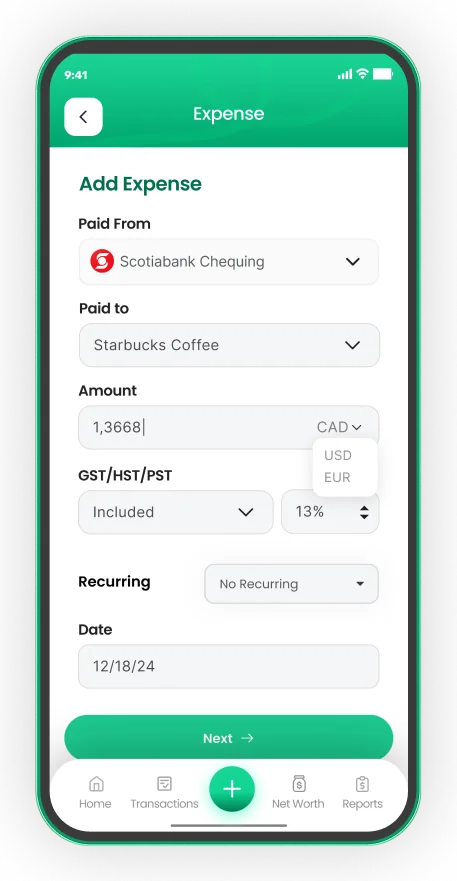
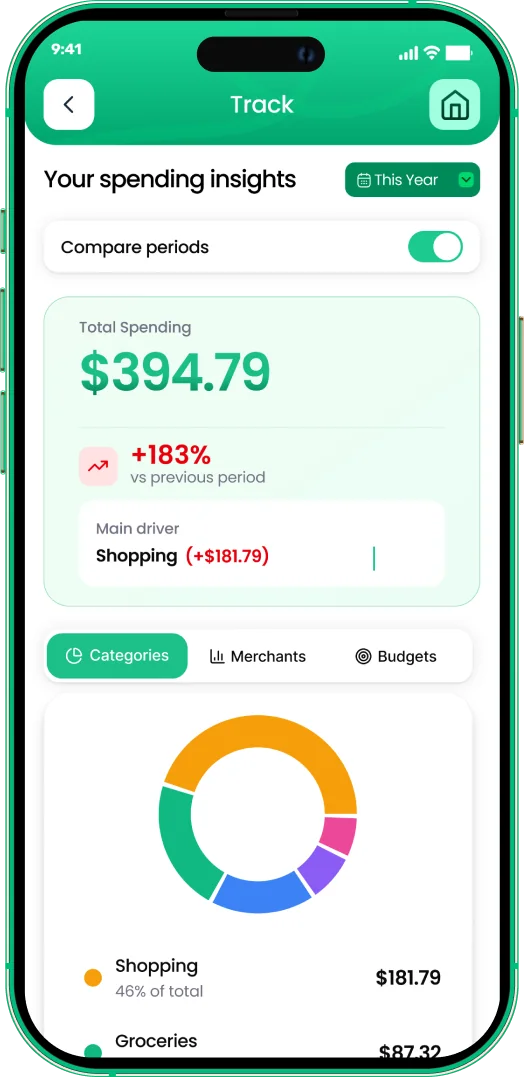
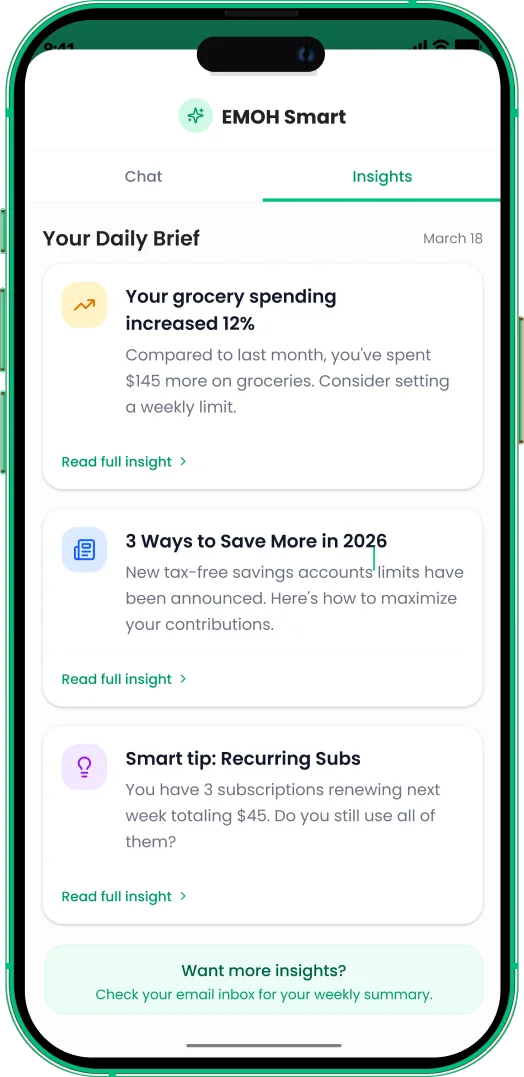

Put the numbers on autopilot
EMOH Pay tracks your spending, budgets and net worth on your phone and in the browser, always in sync. Free to start, made in Canada.
Get started free➜First Apartment Budget: frequently asked questions
How much money should I save before moving out?
Aim for about two to three times your expected monthly rent. That covers first month's rent, any allowed deposit, moving, tenant insurance, setup fees and basic furniture, with a small buffer for surprises.
What should I buy first for my first apartment?
Start with a bed, bedding, basic kitchen items, towels, a shower curtain and cleaning supplies. Add a table, seating and decor later as your budget allows. Second-hand furniture keeps the upfront cost down.
Do I need tenant insurance?
Many landlords require it, and it is inexpensive, often about $20 to $40 a month. It covers your belongings and your liability if you accidentally damage the building or injure someone.
Can a landlord ask for a damage deposit?
It depends on your province. Ontario does not allow damage deposits but allows a last month's rent deposit. BC allows up to half a month's rent. Alberta allows up to one month. Quebec landlords cannot require a deposit.
How much should rent be compared with my income?
A common benchmark is under 30% of gross income, which matches CMHC's definition of affordable housing. Staying under it leaves more room for savings and unexpected costs.
Related guides and tools
The classic rule: keep rent at or under 30% of gross monthly income (35% of take-home in expensive cities). Enter your…
Average Rent in Canada by City (2026)Average rent in Canada for 2026: typical one-bedroom ranges in 20 cities, why survey and asking rents differ, and how to…
Moving Cost ChecklistA moving cost checklist that covers everything: movers, truck rental, supplies, deposits, utilities and overlap rent, with…
How to Split Bills With RoommatesHow to split bills with roommates fairly: four methods for rent and utilities, worked examples, what to put in writing and…
Rent, bills, and everything afterEMOH Pay helps renters plan around the big monthly hit — rent reminders, utility tracking, and a clear view of what's really…
Monthly Expenses Checklist: The Full List of Monthly ExpensesA complete list of monthly expenses to build your budget: housing, bills, food, transport, debt, savings and the irregular…
Start free today
Free on iPhone, Android and the web. Upgrade to EMOH Pro anytime for bank sync and advanced AI.
Download for iOS➜ Get it on Android➜