
First-Time Home Buyer Programs in Canada (2026)
Canada's main first-time buyer supports are two tax-sheltered savings routes, a tax credit, a GST/HST rebate of up to $50,000 on new homes and provincial land transfer tax relief. Here is how they stack.
Get started free➜ Download the app➜
What help is there for first-time home buyers in Canada?
First-time home buyers in Canada can save in a First Home Savings Account, withdraw up to $60,000 from their RRSP under the Home Buyers' Plan, claim the $10,000 home buyers' amount on their tax return, get up to $50,000 back in GST/HST on a new home, and in several provinces get land transfer tax relief.
What first time home buyer incentives does Canada offer?
As a first time home buyer in Canada you can use five main federal and provincial incentives: the First Home Savings Account (FHSA), the Home Buyers' Plan (HBP), the home buyers' amount tax credit, the first-time home buyers' GST/HST rebate on new homes and provincial land transfer tax rebates. Most can be combined for the same purchase.
| Program | What it gives you | Key limit | Run by |
|---|---|---|---|
| First Home Savings Account | Tax-deductible contributions and tax-free withdrawals for a first home | $8,000 a year, $40,000 lifetime | Federal (CRA) |
| Home Buyers' Plan | Borrow from your RRSP tax-free, repay over 15 years | $60,000 per person | Federal (CRA) |
| Home buyers' amount | Non-refundable federal tax credit | $10,000 claim per home | Federal (CRA) |
| FTHB GST/HST rebate | Rebate of GST or the federal part of HST on a new home | Up to $50,000; homes under $1.5 million | Federal (CRA) |
| Ontario land transfer tax refund | Refund of provincial land transfer tax | Up to $4,000 | Ontario |
| BC first time home buyers' program | Property transfer tax exemption on the first $500,000 | Homes up to $835,000, partial to $860,000 | British Columbia |
Figures checked October 2026; confirm current amounts with the CRA and your provincial government before you buy.
How does the FHSA help first-time buyers?
The FHSA lets you contribute up to $8,000 a year, to a lifetime maximum of $40,000, deduct the contributions like an RRSP and withdraw the money tax-free to buy a qualifying first home. It combines the best parts of an RRSP and a TFSA, and you can use it alongside the Home Buyers' Plan for the same home.
Unused room carries forward, but only once you have opened an account, so opening one early matters. For the full rules, read what is an FHSA, and to project your balance by your purchase date, use the FHSA calculator.
How does the Home Buyers' Plan work?
The Home Buyers' Plan lets you withdraw up to $60,000 from your RRSPs to buy or build a qualifying home, without paying tax on the withdrawal. You repay it to your RRSP over 15 years. A couple who both qualify can withdraw up to $120,000 together for the same home.
Repayments normally start in the second year after your first withdrawal. Temporary relief now pushes that back: if your first withdrawal is between January 1, 2026 and December 31, 2028, the 15-year repayment period starts in the fifth year after it. A first withdrawal in 2026 means your first repayment year is 2031. Missed repayments are added to your income for that year.
Repayments do not use up RRSP contribution room, and repaying more than the minimum in one year lowers the minimum for later years. To check how much RRSP room you have, see the RRSP contribution limit page.
Tips that help you save
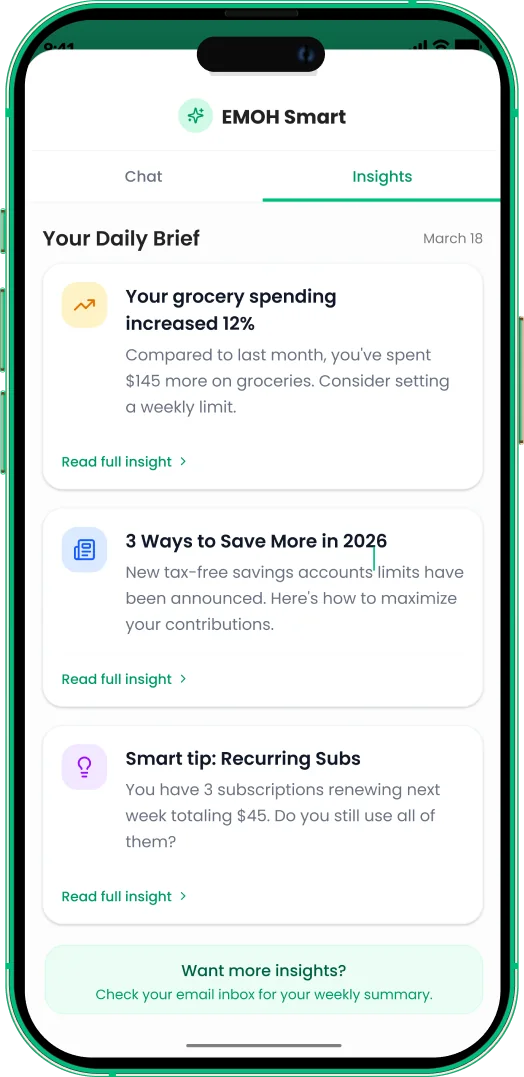
- A daily brief with practical ways to save
- Spot recurring subscriptions worth cutting
- Watch your savings show up in your net worth


Is there a first time home buyer tax credit?
Yes. The first-time home buyers' tax credit, called the home buyers' amount, lets you claim $10,000 on line 31270 of your tax return in the year you buy a qualifying home. It is a non-refundable credit, so it reduces federal tax you owe. At the 14% lowest federal rate for 2026, a $10,000 claim cuts federal tax by $1,400.
You and your spouse or common-law partner can split the claim, but the total for one home cannot exceed $10,000. The CRA lists $10,000 for each year from 2022 to 2025, up from $5,000 before 2022. You also qualify if you are buying a home for a person eligible for the disability tax credit.
Is there a GST rebate for first time buyers?
Yes, on new homes only. The first-time home buyers' GST/HST rebate returns up to 100% of the GST, or the federal part of the HST, to a maximum of $50,000, on a newly built or substantially renovated home that will be your main residence. The full rebate applies at $1 million or less and shrinks to nothing at $1.5 million.
For a home bought from a builder, you must have signed the agreement of purchase and sale on or after March 20, 2025 and before 2031. Construction must begin before 2031 and be substantially completed before 2036. Resale homes do not qualify, and neither you nor your spouse can have received this rebate before.
| New home value | Share of maximum rebate | Maximum rebate |
|---|---|---|
| $1,000,000 or less | 100% | $50,000 |
| $1,125,000 | 75% | $37,500 |
| $1,250,000 | 50% | $25,000 |
| $1,375,000 | 25% | $12,500 |
| $1,500,000 or more | 0% | $0 |
The actual rebate can never exceed the GST or federal HST you paid. At 5% GST, a $1 million new home carries $50,000 of GST, which is why the cap sits at that level.
What land transfer tax rebates are there for first-time buyers?
Several provinces reduce land transfer tax for first-time buyers. Ontario refunds up to $4,000 of provincial land transfer tax. British Columbia exempts the property transfer tax on the first $500,000 of the price for homes worth up to $835,000, with a partial exemption up to $860,000. Other provinces have their own rules or no such tax.
Ontario's refund requires that you have never owned a home anywhere in the world, that you move in within nine months and that you apply within 18 months of registration. Toronto buyers also pay a municipal land transfer tax with its own first-time buyer rebate. The Ontario land transfer tax calculator shows the net amount, and the guide to closing costs in Canada covers the other fees on closing day.
How do the programs stack? A worked example
Take a couple, both first-time buyers, who have each maxed out their FHSA and saved in their RRSPs, buying a newly built Ontario home for $800,000 with an agreement signed in 2026.
- FHSA withdrawals: 2 times $40,000 is $80,000, plus any growth, tax-free.
- Home Buyers' Plan: 2 times $60,000 is $120,000, repaid over 15 years starting in 2031.
- Total down payment from registered plans: $80,000 plus $120,000 is $200,000, which is 25% of $800,000.
- FTHB GST/HST rebate: the home is under $1 million, so they can recover the federal part of the HST, up to $50,000. 5% of $800,000 is $40,000.
- Home buyers' amount: $10,000 claim, worth $1,400 in federal tax at 14%, split between them as they choose.
- Ontario land transfer tax refund: up to $4,000 if neither has ever owned a home.
Few buyers use every program, and the right mix depends on your income, savings and the type of home. Track your down payment goal in EMOH Pay so you can see progress across accounts, and read how to save for a house in Canada for a savings plan. The minimum down payment guide explains how much you need before mortgage insurance applies.
Save more with EMOH Pay
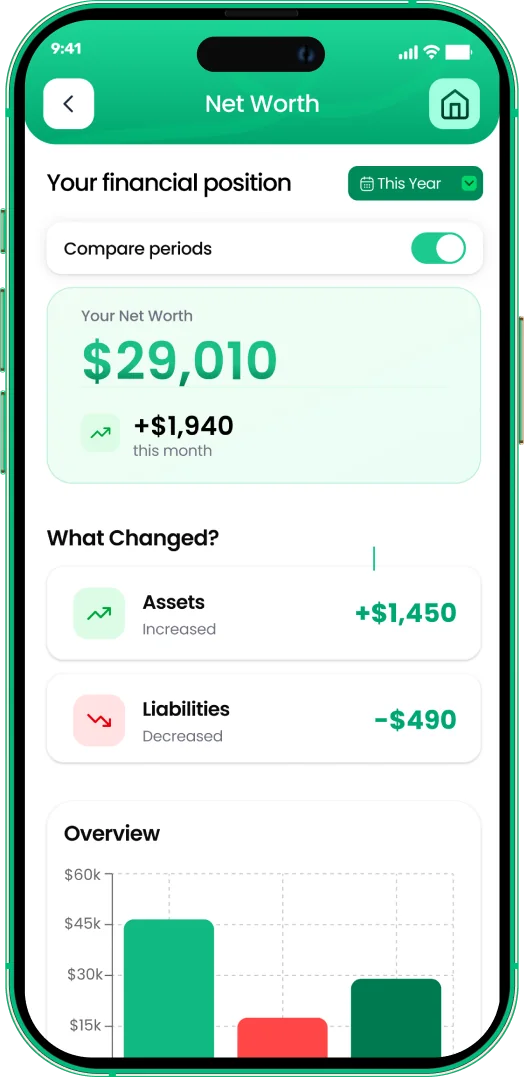
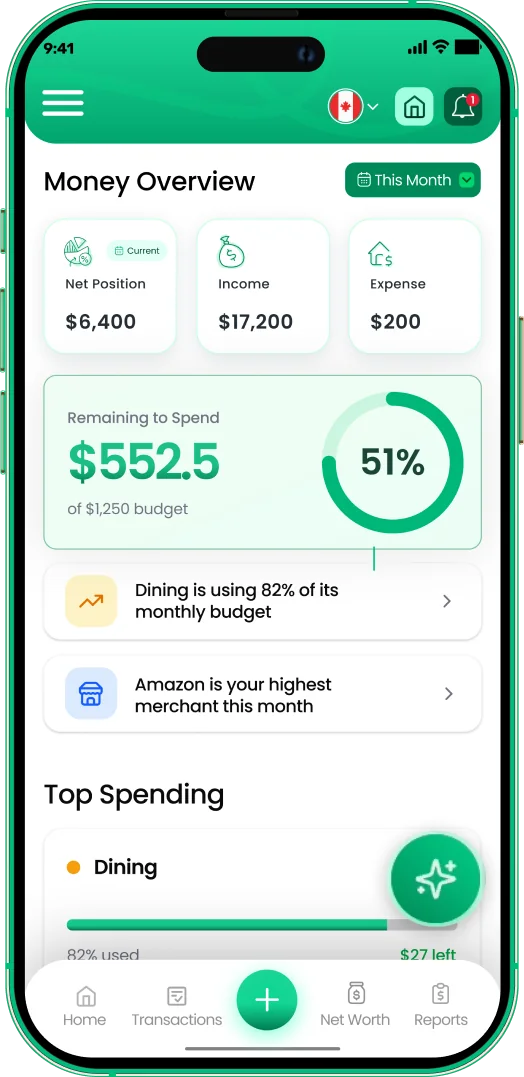

Put the numbers on autopilot
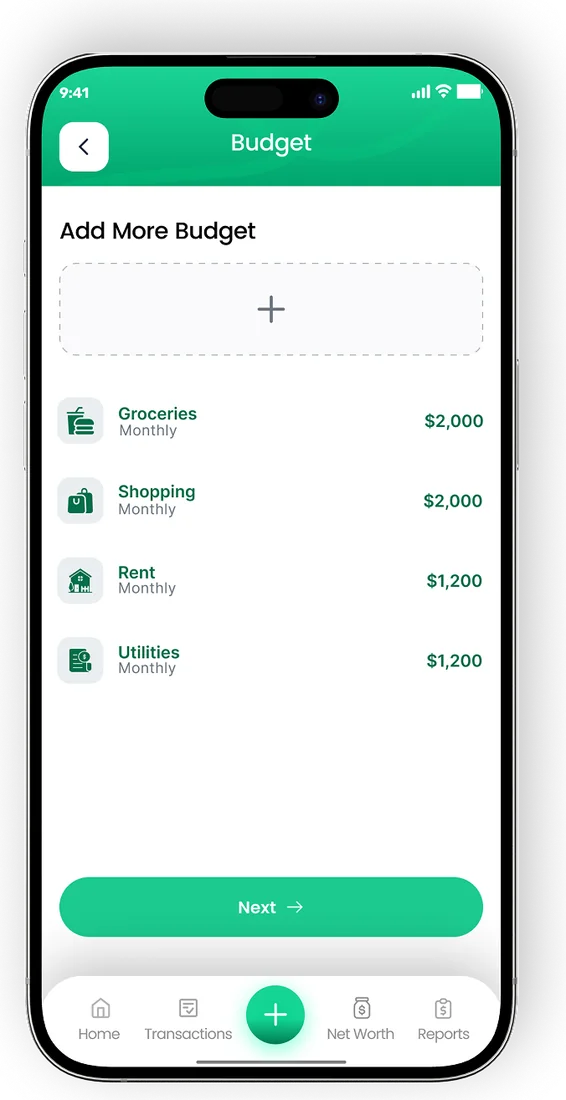
EMOH Pay tracks your spending, budgets and net worth on your phone and in the browser, always in sync. Free to start, made in Canada.
Get started free➜First-Time Home Buyer Programs in Canada (2026): frequently asked questions
Who counts as a first-time home buyer in Canada?
For the FHSA, the HBP and the GST/HST rebate, you generally qualify if you did not live in a home owned by you or your spouse as your main residence in the current year or the previous four calendar years. Provincial programs, such as Ontario's, can be stricter.
Can I use the FHSA and the Home Buyers' Plan together?
Yes. You can make a qualifying FHSA withdrawal and an HBP withdrawal for the same home, as long as you meet the conditions for each at the time you withdraw.
Does the GST/HST rebate apply to resale homes?
No. The first-time home buyers' GST/HST rebate only applies to newly built or substantially renovated homes, generally where at least 90% of the interior has been removed or replaced.
Do I have to repay the FHSA like the Home Buyers' Plan?
No. A qualifying FHSA withdrawal is tax-free and never has to be repaid. Only Home Buyers' Plan withdrawals must be paid back to your RRSP.
Can first-time buyers get a 30-year mortgage?
Yes. Since December 15, 2024, first-time buyers can get 30-year amortizations on insured mortgages. A longer amortization lowers the payment but raises the total interest you pay.
Related guides and tools
What is an FHSA? A plain-language guide to Canada's First Home Savings Account: who qualifies, the $8,000 yearly limit…
FHSA CalculatorFHSA calculator: see how your First Home Savings Account grows year by year, when you hit the $40,000 lifetime limit and how…
Minimum Down Payment in CanadaThe minimum down payment in Canada is 5% on the first $500,000, 10% on the rest up to $1.5 million and 20% above. See worked…
How to Save for a House in CanadaHow to save for a house in Canada: work out your down payment, use the FHSA, RRSP and TFSA, budget for closing costs and…
Closing Costs in Canada: What to BudgetClosing costs in Canada run 1.5% to 4% of the purchase price. See land transfer tax by province, an itemised list and a…
Mortgage Affordability Calculator CanadaMortgage affordability calculator for Canada: see the home price you could qualify for under the stress test, then check…
Start free today
Free on iPhone, Android and the web. Upgrade to EMOH Pro anytime for advanced AI and unlimited family sharing.
Download for iOS➜ Get it on Android➜