
Mortgage Affordability Calculator Canada
See how much house you can afford in Canada under the lender rules, including the mortgage stress test and debt-service limits, then check what that payment really leaves in your monthly budget.
Use the calculator➜ Try EMOH Pay free➜
How much house can I afford in Canada?
Most Canadian households can afford a home priced at roughly four to five times their gross annual income, depending on debts, down payment and rates. A household earning $120,000 with $400 of monthly debts and $60,000 down qualifies for about $571,000 at a 4.5% rate, because lenders test you at 6.5%.
How the mortgage affordability calculator works
This mortgage affordability calculator for Canada applies the same two tests lenders use. Enter your household gross annual income, your other monthly debt payments such as car loans, student loans and minimum credit card payments, your down payment, the mortgage rate you have been offered and the amortization in years.
It first sets the qualifying rate: the greater of your rate plus 2% or 5.25%. It then finds the largest monthly payment that keeps housing costs within 39% of gross income and all debts within 44%, allowing about $450 a month for property tax and heating. That payment, at the qualifying rate, sets your maximum mortgage.
You see your maximum home price (mortgage plus down payment), the maximum mortgage, the monthly payment at your actual rate and the stress-test rate used. It does not add mortgage insurance premiums, condo fees or closing costs, which lenders and you will need to account for.
How much house can I afford in Canada on my income?
You can typically afford a home worth about 4 to 5 times your household income if you have modest debts and at least a 10% down payment. The stress test is the main limit: at a 4.5% rate you qualify as if the rate were 6.5%, which cuts the maximum mortgage by roughly a fifth.
| Household income | Maximum mortgage | Maximum price | Monthly payment at 4.5% |
|---|---|---|---|
| $80,000 | about $308,500 | about $368,500 | about $1,715 |
| $100,000 | about $414,700 | about $474,700 | about $2,305 |
| $120,000 | about $511,000 | about $571,000 | about $2,840 |
| $150,000 | about $655,400 | about $715,400 | about $3,645 |
| $200,000 | about $896,000 | about $956,000 | about $4,980 |
Debt changes the picture quickly. Raising other debts on a $120,000 income from $400 to $1,000 a month lowers the maximum price from about $571,000 to about $497,000, because the 44% total debt limit starts to bind.
The rules that set your limit
The mortgage stress test
Federally regulated lenders must qualify borrowers at the greater of the contract rate plus 2% or 5.25%. The rule applies to insured and uninsured mortgages, so you need to show you could still pay if rates rose.
GDS and TDS ratios
Gross debt service (GDS) covers mortgage payments, property tax, heating and half of any condo fees, and is generally capped at 39% of gross income. Total debt service (TDS) adds every other debt payment and is capped at 44%.
Down payment minimums
You need at least 5% of the first $500,000 and 10% of the portion between $500,000 and $1.5 million. Homes priced at $1.5 million or more need 20% down.
Mortgage default insurance
With less than 20% down, the mortgage must be insured. CMHC's premium is 4% of the loan with 5% to 9.99% down, 3.1% with 10% to 14.99% and 2.8% with 15% to 19.99%, usually added to the mortgage.
Amortization
Insured mortgages are generally limited to 25 years, but first-time buyers and buyers of newly built homes can choose 30 years. A longer amortization raises the amount you qualify for and the total interest you pay.
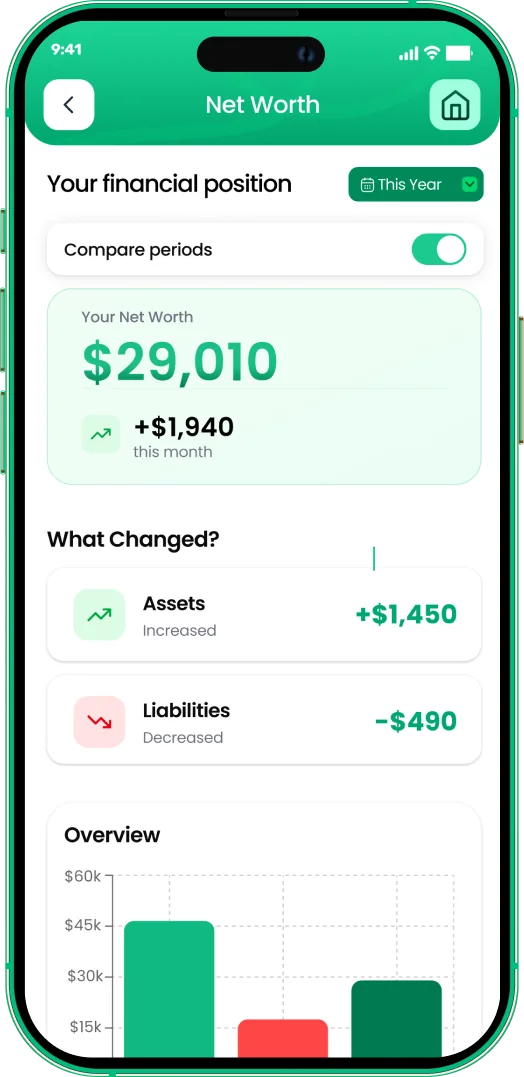
Watch your debt shrink
- Track loans, cards and your mortgage as liabilities
- See what changed each month
- Budget an extra payment into every month


What you qualify for vs what you can comfortably afford
A lender's maximum is not a budget. The GDS and TDS limits are based on gross income, but you pay the mortgage from take-home pay, after tax, CPP and EI.
Take a two-income household earning $60,000 each in Ontario. Their combined take-home pay is about $7,950 a month. The $2,840 payment on a $571,000 home, plus about $450 for property tax and heat, is about 41% of their net income, before utilities, insurance, maintenance, child care, transport and savings.
- Work out your monthly take-home pay with the income tax calculator.
- List your fixed costs and savings goals in the budget calculator.
- Set a comfortable housing figure, often 30% to 35% of take-home pay, and work backwards to a price.
- Keep an emergency fund for repairs and job loss. The emergency fund calculator suggests a target.
- Budget closing costs, commonly 1.5% to 4% of the price, including land transfer tax where it applies. Ontario buyers can use the land transfer tax calculator.
Ways to afford more house, or the same house more safely
- Pay down other debts first. Every $100 a month of debt removed can add thousands to your borrowing limit once the TDS ratio is the constraint. Check your ratio with the debt-to-income ratio calculator.
- Save a larger down payment. Reaching 20% avoids mortgage insurance. An FHSA lets first-time buyers save up to $40,000 with tax deductions; see the FHSA calculator.
- Shop your rate. A lower contract rate lowers your payment, although the 5.25% floor limits how much it raises your qualifying amount.
- Compare with renting. If buying stretches you, the rent affordability calculator shows a comfortable rent on the same income.
EMOH Pay helps you save for a down payment with a savings goal, track every bill once you own and share a household budget with a partner through separate logins. It is free to start on iPhone, Android and the web.
Pay it down with EMOH Pay
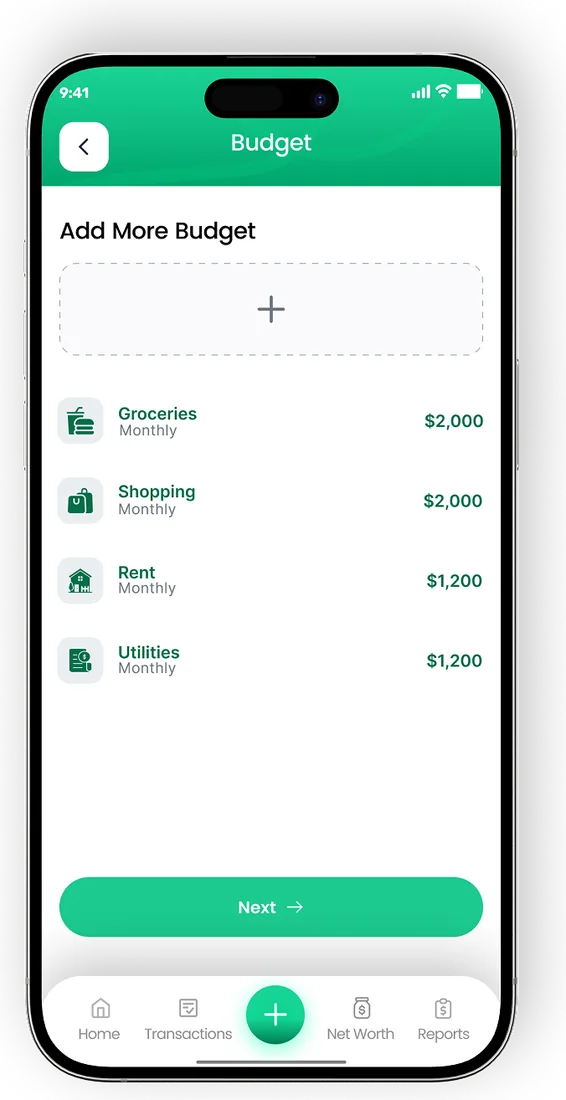

Put the numbers on autopilot
EMOH Pay tracks your spending, budgets and net worth on your phone and in the browser, always in sync. Free to start, made in Canada.
Get started free➜Mortgage Affordability Calculator Canada: frequently asked questions
How much house can I afford on $100,000 a year in Canada?
With $400 of other monthly debts, $60,000 down and a 4.5% rate over 25 years, about $475,000. Fewer debts, a larger down payment or a longer amortization raise that; a higher rate lowers it.
Does the stress test apply to everyone?
It applies to mortgages from federally regulated lenders, insured or uninsured. Some provincially regulated credit unions set their own rules. Borrowers switching lenders at renewal without increasing the loan are no longer required to requalify at federally regulated lenders.
Should I use gross or net income?
Lenders use gross household income for GDS and TDS. For your own budget, use take-home pay, because that is the money you actually pay the mortgage from.
Does the calculator include CMHC insurance?
No. With less than 20% down, the insurance premium is usually added to your mortgage, which raises the payment slightly. Allow for it if your down payment is under 20%.
Is this a mortgage pre-approval?
No. It is an estimate based on standard rules. A lender will also check your credit score, employment history, the property and your documents before approving a mortgage.
Sources and further reading
Related guides and tools
The 50/30/20 rule splits after-tax income: 50% to needs, 30% to wants, 20% to savings. Enter your monthly take-home pay to…
Rent Affordability CalculatorThe classic rule: keep rent at or under 30% of gross monthly income (35% of take-home in expensive cities). Enter your…
FHSA CalculatorFHSA calculator: see how your First Home Savings Account grows year by year, when you hit the $40,000 lifetime limit and how…
Debt-to-Income Ratio CalculatorFree debt to income ratio calculator: enter gross income, housing costs and debt payments to see your DTI, housing ratio and…
Ontario Land Transfer Tax CalculatorFree land transfer tax calculator for Ontario. See provincial and Toronto land transfer tax on any price, plus the…
Income Tax Calculator Canada 2026Estimate your 2026 Canadian income tax, CPP, EI and take-home pay in every province and territory, with federal and…
Start free today
Free on iPhone, Android and the web. Upgrade to EMOH Pro anytime for bank sync and advanced AI.
Download for iOS➜ Get it on Android➜