Closing Costs in Canada: What to Budget
The down payment is only part of the cash you need on closing day. Here is what closing costs in Canada include, how land transfer tax differs by province, and how to budget for them.
Get started free➜ Download the app➜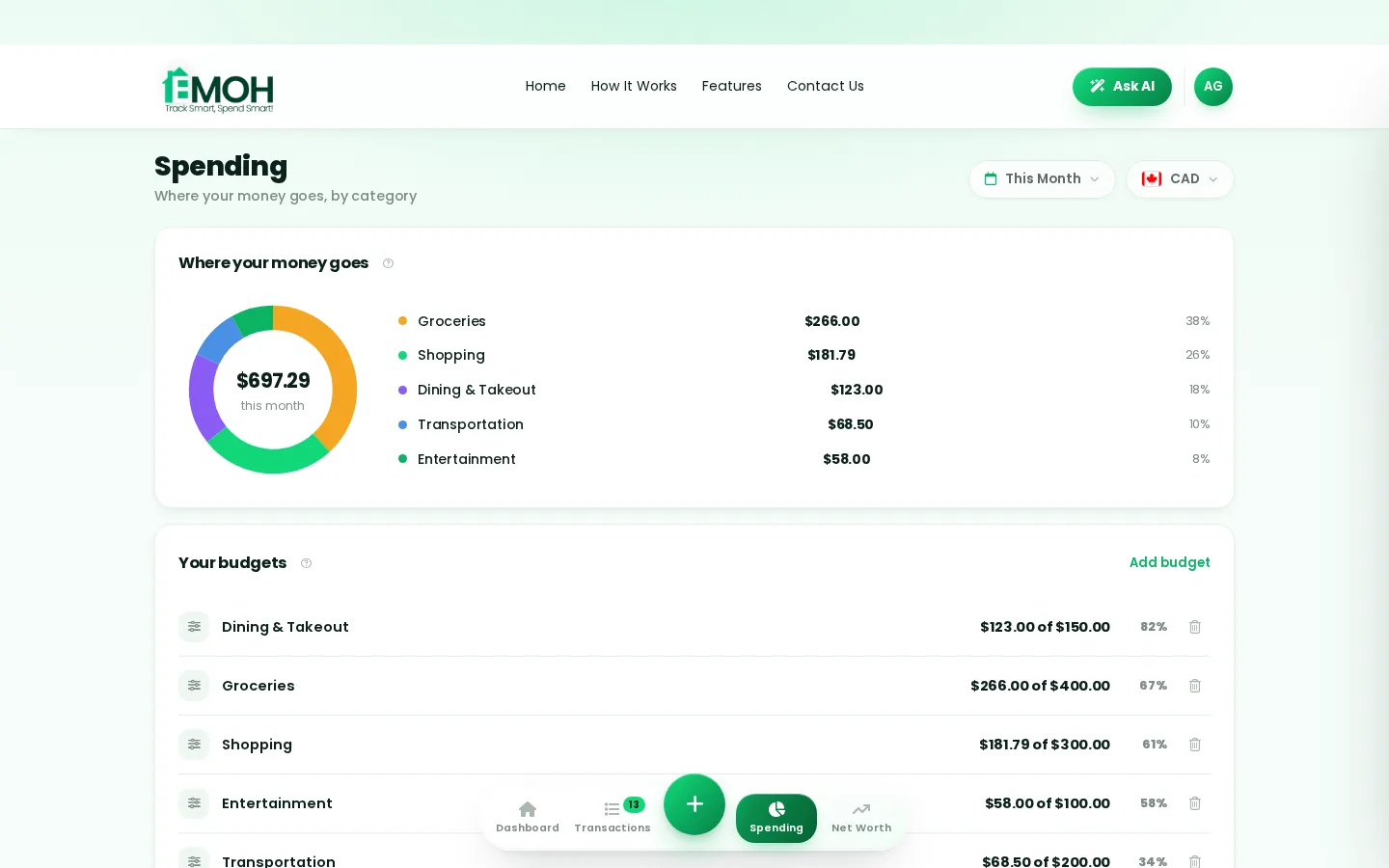
How much are closing costs when buying a home in Canada?
Closing costs in Canada usually come to 1.5% to 4% of the home's purchase price, according to CMHC and the Financial Consumer Agency of Canada. On a $600,000 home that is about $9,000 to $24,000. Land transfer tax is usually the largest item, followed by legal fees, adjustments, inspection and title insurance.
What are closing costs in Canada?
Closing costs in Canada are the one-time fees and taxes you pay on top of the purchase price and down payment when you buy a home. The Financial Consumer Agency of Canada tells buyers to be ready to spend 1.5% to 4% of the purchase price on them, and most must be paid in cash, not added to the mortgage.
Lenders check that you have this money before they approve you. If your savings cover only the down payment, you may have to delay closing or borrow at a high rate. That is why closing costs belong in your plan from the first day you start to save for a house, alongside the minimum down payment.
How much are closing costs in Canada, item by item?
Closing costs in Canada add up from six to ten separate items. Land transfer tax is usually the biggest, and it is set by your province and sometimes your city. Most of the rest are professional fees that vary by provider, so get two or three quotes rather than relying on an average.
| Item | Who sets the price | Paid when |
|---|---|---|
| Land transfer tax | Province, and some cities such as Toronto and Montreal | On closing, through your lawyer or notary |
| Legal or notary fees and disbursements | Your lawyer (a notary in Quebec) | On closing |
| Title insurance | Insurer, often arranged by your lawyer | On closing |
| Home inspection | Inspector | Before you waive conditions |
| Appraisal | Lender or appraiser; some lenders cover it | Before mortgage approval |
| Property tax and utility adjustments | Amount the seller has prepaid | On closing |
| Provincial sales tax on mortgage default insurance | Province, where it applies | On closing; cannot be added to the mortgage |
| GST or HST | Federal and provincial; usually new homes only | On closing, often built into the price |
| Home insurance | Insurer; lenders require it before closing | First premium before closing |
| Moving and set-up costs | Movers, utilities, locksmith | Around closing |
Resale homes are generally exempt from GST or HST, so the tax line mostly matters for newly built homes. First-time buyers of a new home may qualify for a federal GST/HST rebate; our first-time home buyer guide covers the programs.
How does land transfer tax differ by province?
Land transfer tax is a provincial tax on the value of the property you buy, and it is the largest closing cost in most of Canada. Rates range from none in Alberta and Saskatchewan to tiered rates of up to 2.5% or more in Ontario, British Columbia and Quebec. Some cities add their own tax.
| Province | Tax | Rates | First-time buyer relief |
|---|---|---|---|
| Ontario | Land transfer tax | 0.5% to $55,000, 1% to $250,000, 1.5% to $400,000, 2% to $2 million, 2.5% above; Toronto adds a municipal tax | Refund up to $4,000 |
| British Columbia | Property transfer tax | 1% to $200,000, 2% to $2 million, 3% above; a further 2% on residential value over $3 million | Exemption on the first $500,000 (up to $8,000) for homes worth $835,000 or less, phasing out by $860,000 |
| Quebec | Transfer duties (welcome tax), collected by the municipality | 2026: 0.5% to $62,900, 1% to $315,000, 1.5% above; cities may charge more above $500,000, and Montreal more again | Set by Quebec and municipal programs |
| Manitoba | Land transfer tax | 0% to $30,000, 0.5% to $90,000, 1% to $150,000, 1.5% to $200,000, 2% above | Check the province |
| New Brunswick | Real property transfer tax | 1% of the greater of the price or assessed value | Check the province |
| Prince Edward Island | Real property transfer tax | 1% of the greater of the price or assessed value | Full exemption for eligible first-time buyers |
| Nova Scotia | Deed transfer tax | Rate set by each municipality | Check your municipality |
| Alberta | No land transfer tax | Land Titles registration fees based on the property value and the mortgage amount | None needed |
| Saskatchewan | No land transfer tax | Land titles transfer fee based on value | None needed |
Newfoundland and Labrador and the territories charge registration fees rather than a percentage land transfer tax. Ontario buyers can run their exact numbers, including Toronto's municipal tax, in our Ontario land transfer tax calculator.
Figures checked October 2026 on the Ontario, British Columbia, Quebec, Manitoba, New Brunswick and Prince Edward Island government sites. Thresholds change, so confirm current amounts with your province before you budget.
Tips that help you save
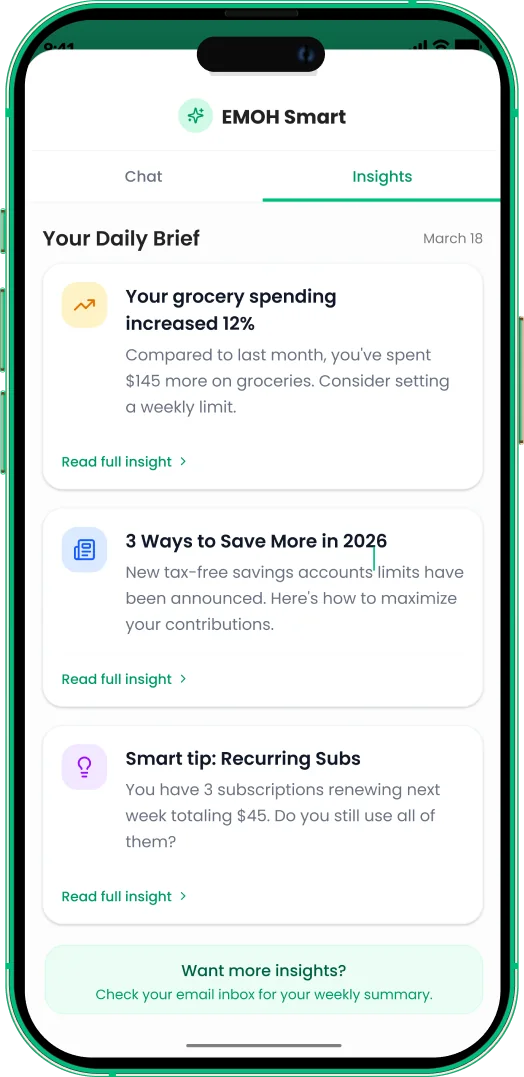
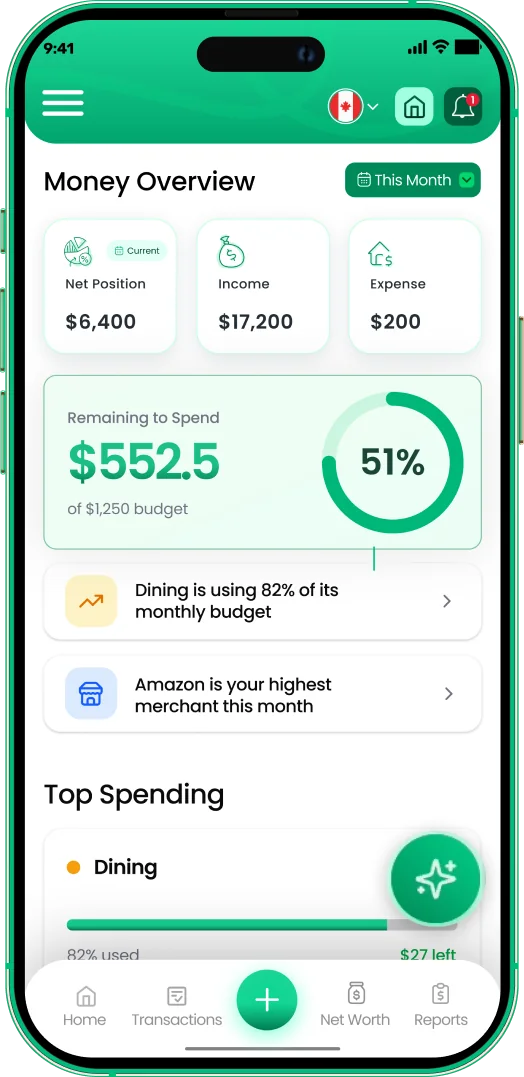
- A daily brief with practical ways to save
- Spot recurring subscriptions worth cutting
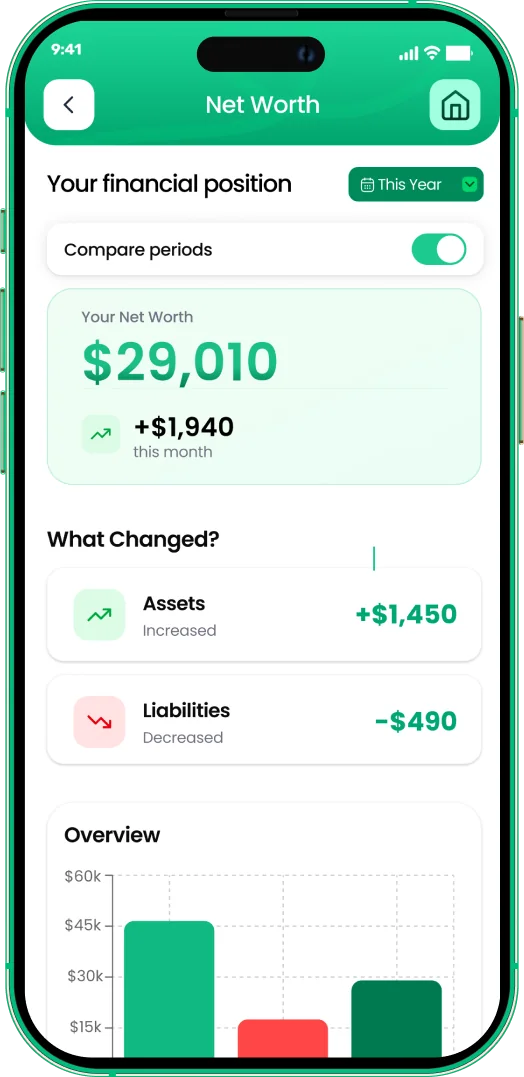
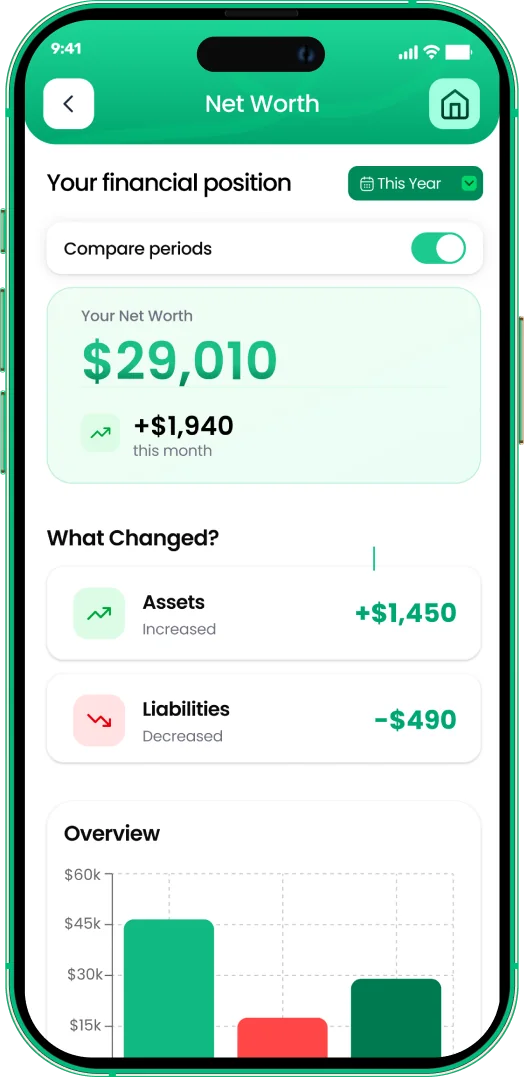
- Watch your savings show up in your net worth


Closing costs in Ontario: a worked example
On a $600,000 resale home in Ottawa with 20% down, closing costs come to about $14,000, or 2.3% of the price, before any first-time buyer refund. The land transfer tax is calculated exactly. The other lines are example assumptions you should replace with your own quotes.
- First $55,000 at 0.5%: $55,000 × 0.005 = $275.
- Next $195,000 (to $250,000) at 1%: $195,000 × 0.01 = $1,950.
- Next $150,000 (to $400,000) at 1.5%: $150,000 × 0.015 = $2,250.
- Last $200,000 (to $600,000) at 2%: $200,000 × 0.02 = $4,000.
- Land transfer tax: $275 + $1,950 + $2,250 + $4,000 = $8,475. An eligible first-time buyer gets up to $4,000 back, which brings the total closing costs to about $10,025.
| Item | Amount | How it is worked out |
|---|---|---|
| Ontario land transfer tax | $8,475 | $275 + $1,950 + $2,250 + $4,000 (see below) |
| Legal fees and disbursements | $2,000 | Assumption; get quotes |
| Title insurance | $350 | Assumption |
| Home inspection | $500 | Assumption |
| Property tax and utility adjustments | $1,200 | Assumption; depends on what the seller prepaid |
| Moving | $1,500 | Assumption |
| Total | $14,025 | 2.3% of $600,000 |
The same home in Toronto would also pay the city's municipal land transfer tax, which pushes total closing costs well toward the top of the 1.5% to 4% range. With less than 20% down, add the provincial sales tax on the mortgage default insurance premium, which Ontario charges and which must be paid in cash at closing.
Can closing costs be added to the mortgage?
Mostly no. Land transfer tax, legal fees, adjustments and the provincial sales tax on mortgage default insurance must be paid from your own money on or before closing. The default insurance premium itself can usually be added to the mortgage, but the tax on it cannot, according to the Financial Consumer Agency of Canada.
Some lenders offer cash-back mortgages that pay you a lump sum at closing, usually in return for a higher rate or a clawback if you break the mortgage early. Read the terms carefully before treating cash back as a way to cover closing costs.
How to budget for closing costs
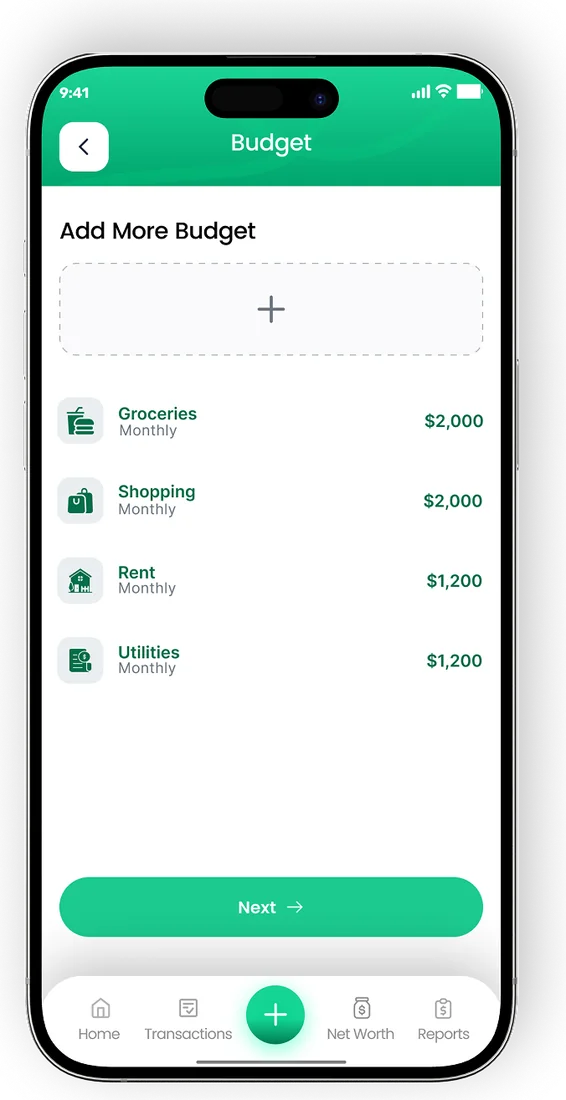
A separate savings goal in EMOH Pay shows how far you are from your closing cost target each month, and the receipts feature keeps your lawyer's statement of adjustments with the rest of your home-buying paperwork.
- Estimate the purchase price you are aiming for with the mortgage affordability calculator.
- Multiply that price by 4% for a safe upper estimate, or calculate your province's land transfer tax exactly and add 1% for everything else.
- Subtract any first-time buyer refund or exemption only once you have confirmed you qualify.
- Keep the closing cost fund in a separate savings goal from your down payment, so you can see both totals grow.
- Keep a further cushion for the first months of ownership, such as repairs and furniture. Our emergency fund guide explains how much.
Save more with EMOH Pay

Put the numbers on autopilot
EMOH Pay tracks your spending, budgets and net worth on your phone and in the browser, always in sync. Free to start, made in Canada.
Get started free➜Closing Costs in Canada: What to Budget: frequently asked questions
Do I pay closing costs if I am a first-time buyer?
Yes, but you may pay less. Ontario refunds up to $4,000 of land transfer tax for eligible first-time buyers, British Columbia exempts the first $500,000 on homes worth $835,000 or less, and Prince Edward Island offers a full exemption to eligible buyers. Each program has its own conditions.
Who pays closing costs in Canada, the buyer or the seller?
The buyer pays land transfer tax, their own legal fees, title insurance, inspection and adjustments. The seller pays their own legal fees and usually the real estate commission, and is credited for property taxes they have prepaid through the adjustments.
Are closing costs lower in Alberta?
Usually, because Alberta has no land transfer tax. Buyers pay Land Titles registration fees on the transfer and the mortgage instead, which are much smaller than a percentage land transfer tax on the same price.
What is the welcome tax in Quebec?
It is the common name for Quebec's transfer duties, charged by the municipality on the value of the property. For 2026 the rates are 0.5% up to $62,900, 1% up to $315,000 and 1.5% above, and cities can set higher rates above $500,000. The municipality bills you after the sale is registered.
When do I pay closing costs?
Most are paid on closing day through your lawyer or notary, who sends you a statement of adjustments a few days before. Inspection and appraisal fees are paid earlier, and Quebec's welcome tax is billed by the municipality after the sale.
Related guides and tools
Free land transfer tax calculator for Ontario. See provincial and Toronto land transfer tax on any price, plus the…
Minimum Down Payment in CanadaThe minimum down payment in Canada is 5% on the first $500,000, 10% on the rest up to $1.5 million and 20% above. See worked…
First-Time Home Buyer Programs in Canada (2026)First time home buyer Canada guide for 2026: the FHSA, the $60,000 Home Buyers' Plan, the $10,000 tax credit, the new-home…
Mortgage Affordability Calculator CanadaMortgage affordability calculator for Canada: see the home price you could qualify for under the stress test, then check…
How to Save for a House in CanadaHow to save for a house in Canada: work out your down payment, use the FHSA, RRSP and TFSA, budget for closing costs and…
Rent vs Buy in Canada: How to DecideRent vs buy in Canada comes down to unrecoverable costs, not rent versus mortgage. Use the 5% rule, a worked example and a…
Start free today
Free on iPhone, Android and the web. Upgrade to EMOH Pro anytime for advanced AI and unlimited family sharing.
Download for iOS➜ Get it on Android➜