
How to Split Bills With Roommates
Most roommate money fights are not about the amount; they are about a method nobody agreed on. Here are the fair options for splitting rent and utilities, with examples.
Get started free➜ Download the app➜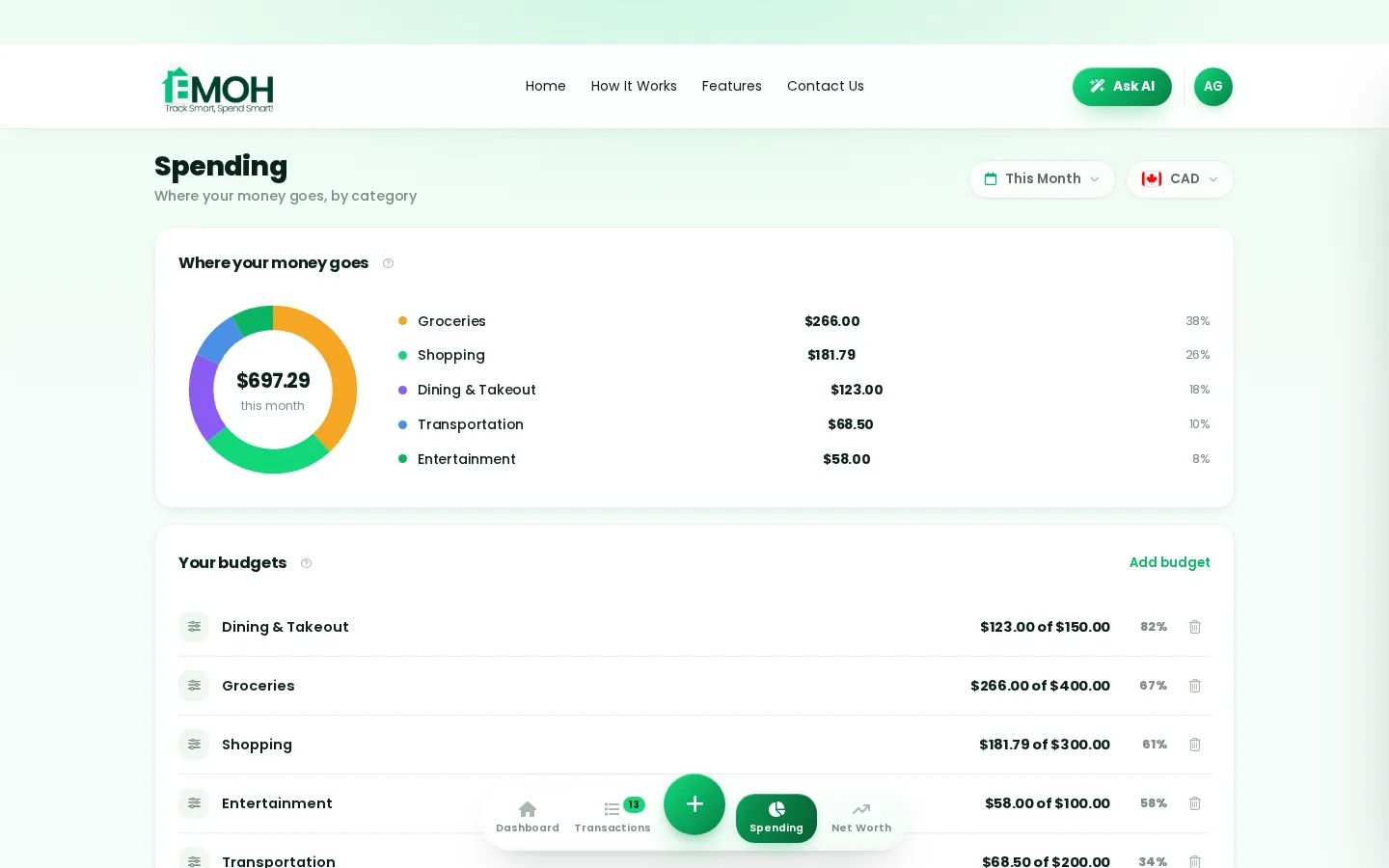

What is the fairest way to split bills with roommates?
The fairest way to split bills with roommates is to split rent by the size and features of each room, and split shared utilities and supplies equally, unless someone clearly uses far more. Agree the method in writing before move-in, name one person to pay each bill, and settle up on a fixed date every month.
How to split bills with roommates: start with an agreement
Knowing how to split bills with roommates starts before the first bill arrives. Sit down together, list every shared cost and agree how each one will be divided. A method everyone accepts on day one is worth more than a perfectly fair formula nobody signed up for.
Put the agreement in writing, even as a shared note. Include who pays each bill, how others pay them back, when you settle up and what happens when someone moves out. If you are setting up your first shared place, our first apartment budget guide covers the costs to expect.
Four ways to split rent and utilities
There are four common ways to split shared costs. Most households mix them: one method for rent and another for utilities and supplies.
| Method | How it works | Best for | Watch out for |
|---|---|---|---|
| Equal split | Divide the bill by the number of people | Similar rooms, utilities, internet, cleaning supplies | Feels unfair if one room is much bigger |
| By room size | Each person pays a share based on bedroom square footage | Rent when rooms differ in size | Ignore shared spaces in the calculation |
| By features | Adjust shares for a private bathroom, parking spot or balcony | Rent when one room has clear extras | Agree the adjustment before move-in |
| By income | Each person pays in proportion to earnings | Couples sharing with others, or close friends | Requires sharing income details |
What is the fairest way to split rent?
The fairest way to split rent is usually by bedroom size, with small adjustments for extras such as a private bathroom or parking. Shared spaces like the kitchen and living room are used equally, so only the private space is weighted. Everyone can see the maths, which makes it easy to agree on.
Worked example: splitting $2,700 rent three ways
Three roommates share a $2,700 apartment. Their bedrooms measure 150, 120 and 100 square feet, for 370 in total. A simple method is to split half the rent equally for shared space and half by bedroom size. Half the rent, $1,350, divided equally gives $450 each. The other $1,350 is divided by room share: about $547, $438 and $365. Final rent is about $997, $888 and $815.
Adding a feature adjustment
If the 150-square-foot room also has a private bathroom, the roommates might agree to add $75 to that share and take $37.50 off each of the other two. The exact amount is a judgment call. What matters is that everyone agrees before signing the lease.
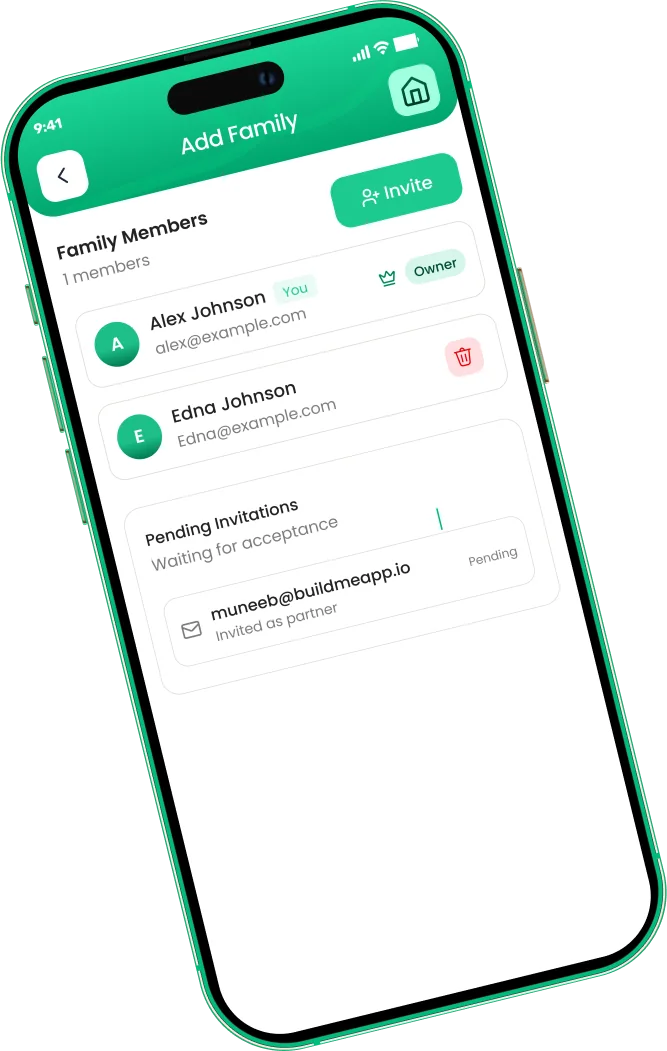
Budget together, with separate logins
- Invite a partner or family by email
- Everyone sees the same live budget
- Tag who spent what, free on every plan


Splitting utilities, internet and supplies
Splitting utilities is usually simplest done equally, because usage is hard to measure and differences tend to even out. Internet, heat, hydro and water are shared services. Household supplies such as toilet paper, dish soap and cleaning products work best from a small shared kitty that everyone tops up monthly.
- Equal by default. Split hydro, heat, water and internet by head count.
- Adjust for big differences. If one person works from home all day with a space heater, a small agreed top-up is fair.
- Keep groceries separate. Shared groceries cause more friction than any other bill. Share only staples like milk, oil and spices.
- Plan for winter. Heating costs in much of Canada rise sharply in winter. Averaging the year's bills into a fixed monthly amount avoids arguments in January.
Who should pay the bills, and how do roommates settle up?
Name one person as the account holder for each bill and have the others pay their share by a set date each month. Spreading the bills across roommates shares the responsibility and the credit risk. Settle by e-Transfer on the same day every month so nobody has to chase.
- List every shared bill with its amount, due date and account holder.
- Agree each person's share using the methods above.
- Set one settle-up date a few days before rent is due.
- Keep receipts for variable bills like hydro so everyone can check the amount.
- Review the split every six months or when someone moves in or out.
Tracking shared costs without a spreadsheet
A shared record stops small debts from piling up. For a one-off shared expense, such as a takeout order or a cleaning supply run, the split bill calculator does the maths in seconds. For ongoing bills, use one place everyone can see.
EMOH Pay lets you track bills, attach receipts and set budgets with overspend alerts. With family sharing, each person has a separate login to the same household budget, so everyone sees the same live numbers on iPhone, Android or the web. See all budgeting app features, or the budgeting app for renters page if renting is your main focus.
What happens when a roommate moves out or stops paying?
Agree on the process in advance. Most shared agreements ask for a set notice period, such as 30 or 60 days, and for the leaving person to help find a replacement or cover their share until one is found. If everyone signed the lease, the landlord can usually expect the full rent regardless of who has left.
If a roommate stops paying, raise it early and in writing. Tenancy rules are set by each province, so check your province's residential tenancy office before taking further steps. Knowing how much rent you could carry alone is useful; the rent affordability calculator shows it quickly.
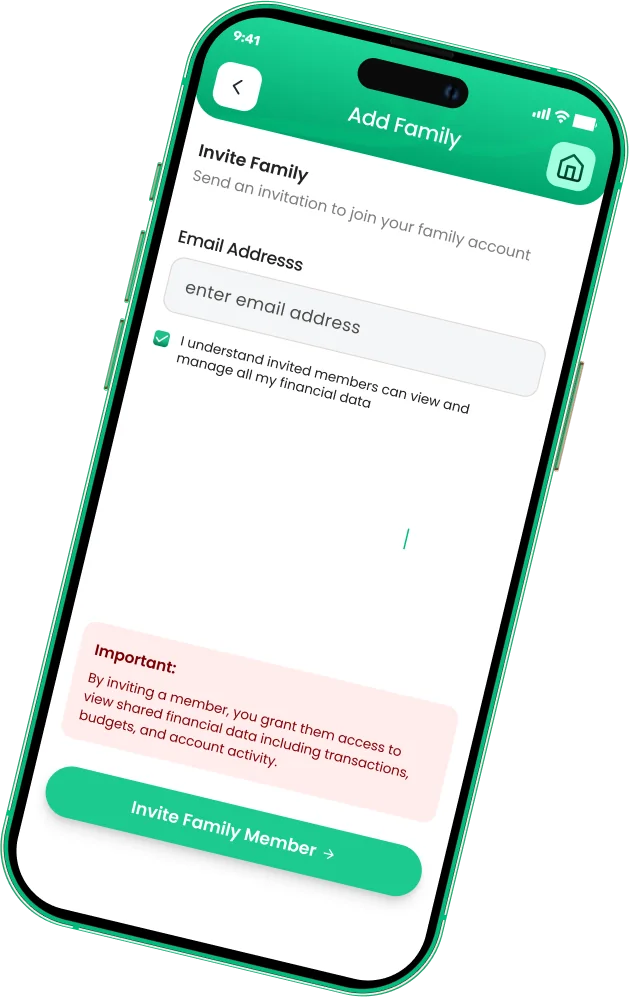
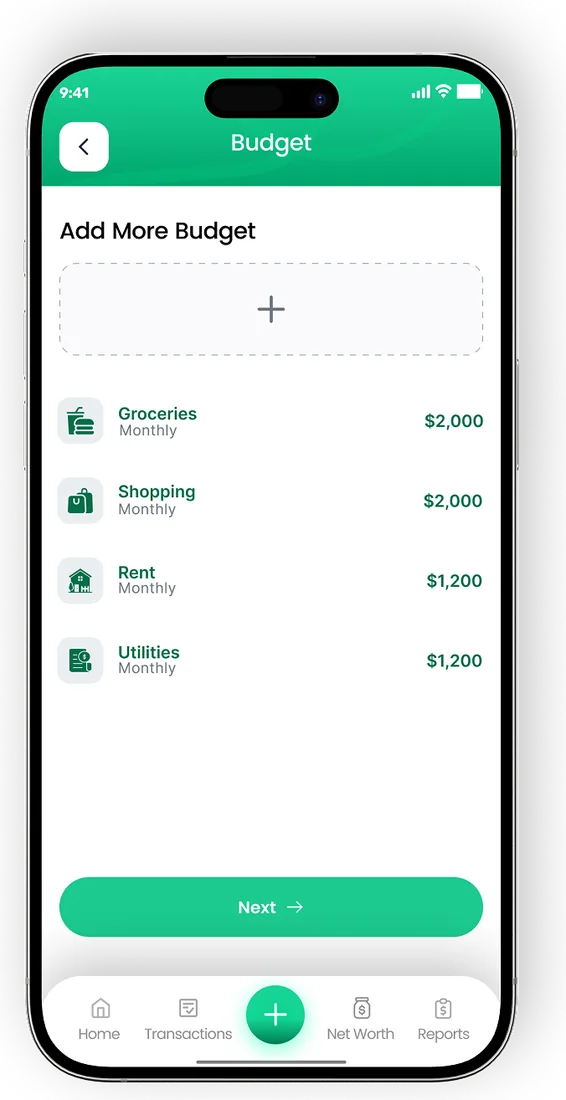
Budget together

Put the numbers on autopilot
EMOH Pay tracks your spending, budgets and net worth on your phone and in the browser, always in sync. Free to start, made in Canada.
Get started free➜How to Split Bills With Roommates: frequently asked questions
Should roommates split rent equally?
Only if the rooms are similar. When one bedroom is noticeably larger or has a private bathroom, splitting by size and features is fairer.
How do you split utilities fairly with roommates?
Split them equally by head count in most cases. Adjust only when one person clearly uses much more, such as working from home with extra heating.
Who should have the bills in their name?
Spread them across roommates so no one person carries all the risk. Each account holder pays the bill and collects shares by a set date.
Should roommates share groceries?
Usually not. Separate groceries avoid most disputes. A small shared kitty for staples like milk, oil and cleaning supplies works well.
What if my roommate earns much more than me?
You can split by income if both agree, but many roommates prefer splitting by room. Discuss it openly before signing the lease.
Sources and further reading
Related guides and tools
Free split bill calculator: enter the bill, the number of people and a tip to see what each person owes, plus fair ways to…
Rent, bills, and everything afterEMOH Pay helps renters plan around the big monthly hit — rent reminders, utility tracking, and a clear view of what's really…
First Apartment BudgetPlan your first apartment budget: the upfront cash you need, deposit rules by province, a sample monthly budget and a…
Rent Affordability CalculatorThe classic rule: keep rent at or under 30% of gross monthly income (35% of take-home in expensive cities). Enter your…
Average Utility Bill in CanadaAverage utility bill in Canada: typical monthly costs for electricity, heat, water and internet, why bills differ by…
EMOH Pay Features — Budgets, Tracking, AI & MoreAll EMOH Pay features: expense tracking, budgets, net worth, Ask AI, family sharing, GST/HST, multi-currency and more. Free…
Start free today
Free on iPhone, Android and the web. Upgrade to EMOH Pro anytime for bank sync and advanced AI.
Download for iOS➜ Get it on Android➜