
Cost of Living in Edmonton (2026)
Edmonton pairs no provincial sales tax with rents well below Calgary, Toronto and Vancouver. Here is what housing, transit, utilities and taxes really cost, and two sample monthly budgets.
Get started free➜ Download the app➜
How much does it cost to live in Edmonton?
A single person renting a one-bedroom in Edmonton typically needs about $2,600 to $3,300 a month, and a family of four about $5,700 to $7,500, based on CMHC rent data and typical household costs. Rent is the biggest line, while Alberta's 5% GST-only sales tax and fare-capped transit keep other costs lower than in most large Canadian cities.
The cost of living in Edmonton is moderate for a large Canadian city. A single renter usually spends about $2,600 to $3,300 a month on essentials and modest extras, and a family of four about $5,700 to $7,500. Housing takes the biggest share, but it costs noticeably less than in Calgary or the big coastal cities.
Edmonton's advantages are simple to list: no provincial sales tax, a relatively large supply of purpose-built rentals, and the lowest provincial income tax on the first $60,000 of income of any province. The costs to watch are winter heating, car insurance and the distances that make many households rely on a car.
If you are comparing cities inside the province, our guide to budgeting in Alberta covers the provincial picture, and budgeting in Calgary shows how the two largest cities differ.
Average rent in Edmonton
Average rent in Edmonton for a purpose-built one-bedroom sat in the range of about $1,300 to $1,500 a month in CMHC's most recent Rental Market Surveys (October 2024 and 2025). Newly listed units usually ask more than the survey average, because the average includes tenants who have stayed in place for years.
| Unit type | Typical range | What to expect |
|---|---|---|
| Bachelor | $1,050 to $1,250 | Older buildings near downtown and Oliver |
| One bedroom | $1,300 to $1,500 | Widest choice; heat often included in older walk-ups |
| Two bedroom | $1,550 to $1,800 | Common for roommates and small families |
| Three bedroom | $1,800 to $2,300 | Mostly townhouses and suburban houses |
Areas near the University of Alberta, Whyte Avenue and the downtown core cost more per square foot. Suburbs such as Mill Woods, Clareview and the west end offer more space for the money. Use our rent affordability calculator to check a listing against your income, and see average rent in Canada for national context.
Transit and getting around Edmonton
Edmonton Transit Service runs buses and the LRT, and the Arc card caps what you pay, so frequent riders never pay more than the monthly pass price of about $100 for an adult at recent fares. Post-secondary students usually get a U-Pass through their tuition.
Many Edmontonians still drive. A car adds insurance, fuel, winter tires, parking and maintenance, which commonly runs $600 to $900 a month for a financed vehicle. Alberta's car insurance premiums are among the higher ones in Canada, so get quotes before you commit to a suburb far from the LRT.
Taxes in Edmonton: income tax and sales tax
- Sales tax. Alberta has no provincial sales tax, so most purchases carry only the 5% GST. That saves 7% to 10% compared with shoppers in Ontario, BC or the Atlantic provinces. See GST, HST and PST explained.
- Provincial income tax. Starting with the 2025 tax year, Alberta charges 8% on the first $60,000 of taxable income and 10% above that up to its next threshold, with higher brackets for high earners.
- Federal income tax. The lowest federal rate is 14% for 2026, applied on top of the provincial amount. Our Alberta salary calculator turns a gross salary into take-home pay.
- Property tax and fees. Homeowners pay City of Edmonton property tax plus provincial education tax. Renters pay it indirectly through rent.
Budgets that update themselves
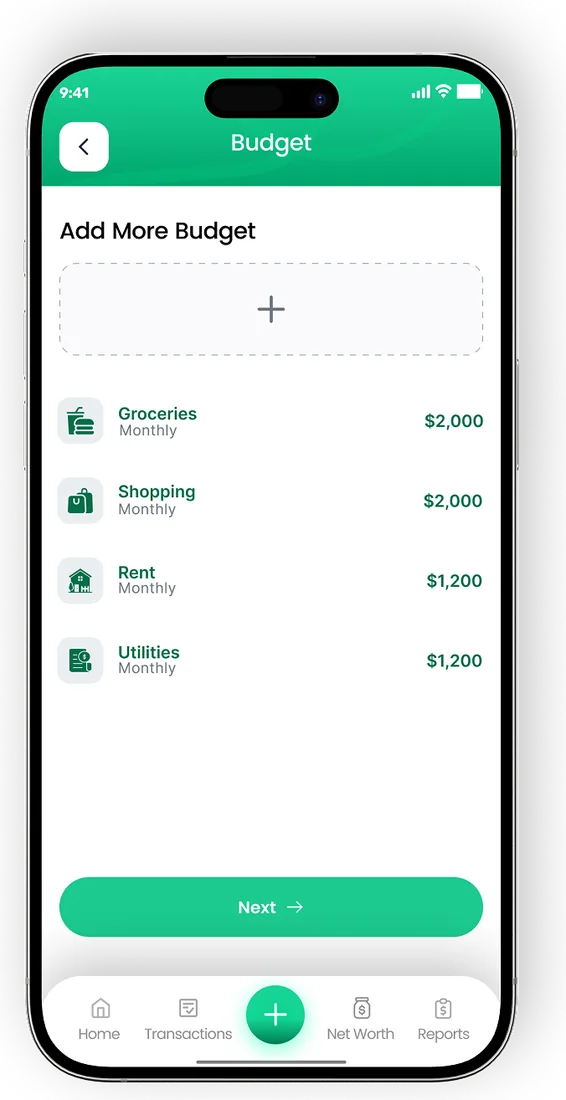
- Set monthly limits for every category
- See what is left to spend in real time
- Get a nudge before a category runs out


Utilities, phone and internet in Edmonton
Alberta's electricity and natural gas markets are deregulated. You can sign with a retailer on a fixed or variable plan, or stay on the default regulated rate. Water, wastewater and drainage come from EPCOR, and the City bills a separate waste utility fee.
For a one-bedroom apartment, electricity, heat and water usually total about $150 to $250 a month, or less when heat is included in rent. A detached house can reach $300 to $450 in January. Add about $120 to $170 for home internet and one phone plan. Our average utility bill in Canada guide shows how Alberta compares.
Sample monthly budget for Edmonton
These budgets are illustrative ranges built from CMHC rents, local transit fares and typical household costs. They are not an official statistic. The family budget assumes two adults, two children, one car and one transit pass.
| Category | Single person | Family of four |
|---|---|---|
| Rent | $1,300 to $1,500 (1-bed) | $1,900 to $2,300 (3-bed) |
| Utilities | $150 to $250 | $250 to $400 |
| Internet and phones | $120 to $170 | $180 to $250 |
| Groceries | $350 to $450 | $1,200 to $1,500 |
| Transportation | $100 (transit pass) | $750 to $1,100 (car plus pass) |
| Child care | None | About $330 to $700 |
| Insurance (tenant, life) | $20 to $40 | $60 to $120 |
| Personal, clothing, household | $150 to $250 | $350 to $500 |
| Entertainment and dining | $150 to $300 | $250 to $450 |
| Savings | $250 to $400 | $400 to $700 |
| Total | About $2,600 to $3,300 | About $5,700 to $7,500 |
Child care assumes Alberta's flat parent fee for full-time licensed care, about $326 per child a month from April 2025, plus any extra charges some centres add. School-age care costs extra. For a full breakdown of raising kids, see the cost of raising a child in Canada.
Figures checked September 2026; confirm current numbers with CMHC, Edmonton Transit Service and the Government of Alberta.
Budgeting in Edmonton: practical tips
- Budget for winter from September. Set aside an extra $50 to $100 a month so January heating bills do not land on a credit card.
- Compare electricity and gas retailers once a year. Fixed rates protect against price spikes; the default rate can be cheaper in calm markets.
- Take advantage of GST-only pricing on large purchases such as furniture and electronics.
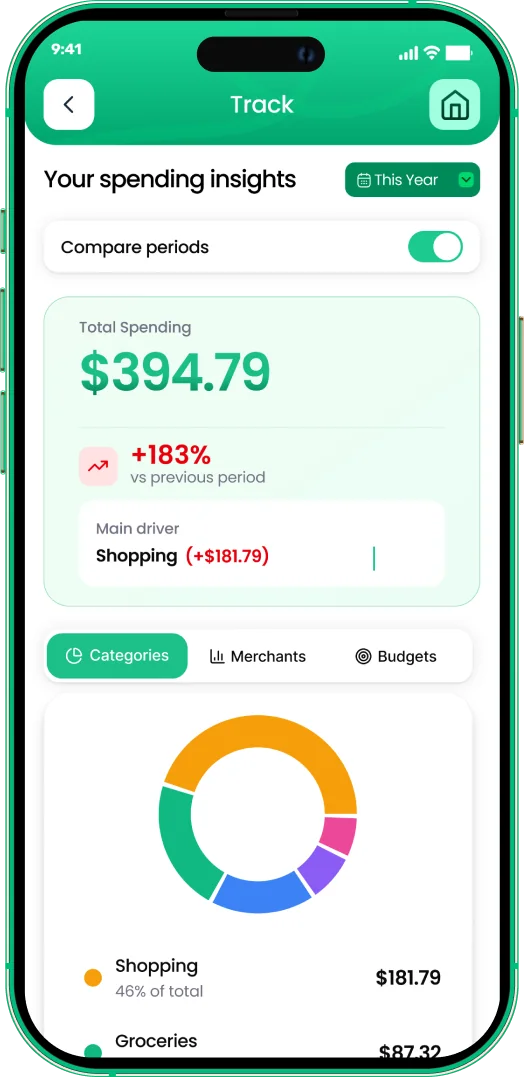
- Track every category for one month before you set limits. EMOH Pay is free on iPhone, Android and the web, and its budgets show what is left in each category in real time.
- Review your budget against the national picture in our guide to budgeting in Canada.
Plan your month in EMOH Pay

Put the numbers on autopilot
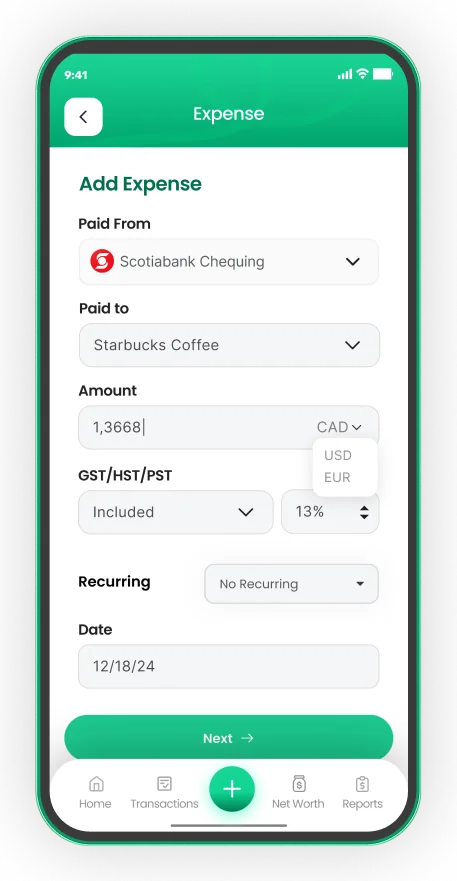
EMOH Pay tracks your spending, budgets and net worth on your phone and in the browser, always in sync. Free to start, made in Canada.
Get started free➜Cost of Living in Edmonton (2026): frequently asked questions
Is Edmonton cheaper than Calgary?
Generally yes, mainly because rent is lower. Both cities share Alberta's 5% GST-only sales tax and provincial income tax rates, so the gap comes from housing, and to a lesser degree from commuting distances.
What salary do you need to live comfortably in Edmonton?
A single renter spending about $3,000 a month needs roughly $45,000 to $55,000 a year before tax to cover costs and still save. A family of four on one car usually needs a combined household income of about $90,000 or more. Your rent choice moves this more than anything else.
Does Edmonton have a provincial sales tax?
No. Alberta has no provincial sales tax, so most purchases in Edmonton carry only the 5% federal GST. EMOH Pay's GST/HST tracking separates the tax portion of each expense if you need it for business records.
How much are utilities in Edmonton?
Expect about $150 to $250 a month for electricity, heat and water in a one-bedroom apartment, and $250 to $450 for a house, with the highest bills in December through February. Rates depend on your retailer plan.
Is rent going up in Edmonton?
Rents rose quickly in 2023 and 2024 as people moved to Alberta, then growth slowed as new rental buildings opened. Check CMHC's latest Rental Market Report before you sign a lease.
Sources and further reading
Related guides and tools
Budgeting in Alberta: sales tax is 5% GST only, minimum wage $15.00/hr, typical rent $1,400/month. No provincial sales tax…
Budgeting in Canada — Province GuideCost of living, sales tax and budgeting guidance for every Canadian province and territory. Free budgeting app made in…
Cost of Living in Calgary (2026): Budget GuideBudgeting in Calgary in 2026: sales tax 5% GST only, typical one-bedroom rent $1,700/month. No provincial sales tax and…
Alberta Salary CalculatorAlberta salary calculator for 2026: see federal and Alberta tax, CPP and EI on your pay, including the new 8% bracket and a…
Average Rent in Canada by City (2026)Average rent in Canada for 2026: typical one-bedroom ranges in 20 cities, why survey and asking rents differ, and how to…
Rent Affordability CalculatorThe classic rule: keep rent at or under 30% of gross monthly income (35% of take-home in expensive cities). Enter your…
Start free today
Free on iPhone, Android and the web. Upgrade to EMOH Pro anytime for bank sync and advanced AI.
Download for iOS➜ Get it on Android➜