
Canadian Household Debt Statistics
Canadians owe about $1.75 for every dollar of disposable income, and most of it is mortgage debt. Here is what the official numbers show and how to judge your own debt load.
Get started free➜ Download the app➜
How much debt does the average Canadian have?
Household debt in Canada totals roughly $3 trillion, or about $1.75 in credit market debt for every dollar of household disposable income, according to Statistics Canada. Mortgages make up about three quarters of that total. The rest is consumer credit such as lines of credit, credit cards and car loans. Debt levels vary widely by age and home ownership.
The average Canadian household carries debt equal to about 175% of its yearly disposable income, but a typical household's debt depends heavily on age and whether it owns a home. Homeowners with a mortgage owe far more than renters, and households in their 30s and 40s owe the most, while many retirees are debt-free.
Statistics Canada's Survey of Financial Security measures debt by household type and age every few years. It consistently shows that younger homeowners carry the highest debt loads relative to income, and that the share of households with no debt rises in retirement.
Debt service ratio
The debt service ratio measures how much of disposable income goes to required principal and interest payments each month. Nationally it has been around 14% to 15% in recent years, higher than before 2022 because of higher interest rates.
Mortgage renewals
The Bank of Canada has noted that many households who borrowed when rates were very low face higher payments when their mortgages renew. That is one of the main risks it monitors in its Financial System Review.
How big is household debt in Canada?
Household debt in Canada is large by international standards. Statistics Canada's quarterly national balance sheet data put total household credit market debt at roughly $3 trillion, and the ratio of that debt to household disposable income at about 175% through 2024 and 2025. In plain terms, households owe about $1.75 for each dollar they have left after taxes in a year.
The ratio peaked in the low-to-mid 180s around 2021 and 2022, when home prices and mortgage borrowing surged, and eased slightly as higher interest rates slowed new borrowing and incomes rose.
A high ratio does not mean every household is struggling. Households also hold substantial assets, mainly homes and pensions, and many Canadians owe nothing at all. The averages hide a wide spread.
Canadian debt statistics by type of debt
Mortgages are by far the largest part of Canadian household debt, at about three quarters of the total. The remaining quarter is consumer credit and other loans. The table shows the main types and why each matters for a budget.
| Debt type | Approximate share | Typical interest cost |
|---|---|---|
| Mortgages | about 75% | Lowest; secured by the home |
| Lines of credit, including HELOCs | a large part of the rest | Variable; usually above mortgage rates |
| Car loans and leases | part of consumer credit | Moderate; set by the lender and your credit |
| Credit cards | a small share of the total | Highest; often around 20% or more |
| Student loans | a small share of the total | Federal portion currently interest-free |
Credit card debt is a small share of the national total but often the most expensive debt a household carries. Our credit card interest calculator shows what a balance costs each month.
How to measure your own debt load
The simplest way to judge your own debt is your debt-to-income ratio: total monthly debt payments divided by gross monthly income. Lenders use it to decide how much you can borrow, and it is a good early warning sign.
- List every debt. Mortgage, lines of credit, car loans, student loans and card balances, with the rate and minimum payment for each.
- Add up monthly payments. Include minimum card payments, not what you usually pay.
- Divide by gross monthly income. The result is your debt-to-income ratio.
- Compare with lender guidelines. Lenders typically want total debt payments, including housing, below about 40% to 44% of gross income.
- Rank by interest rate. Highest-rate balances are the most urgent to pay down.
Our debt-to-income ratio calculator does the arithmetic, and what is debt-to-income ratio explains how lenders read it.
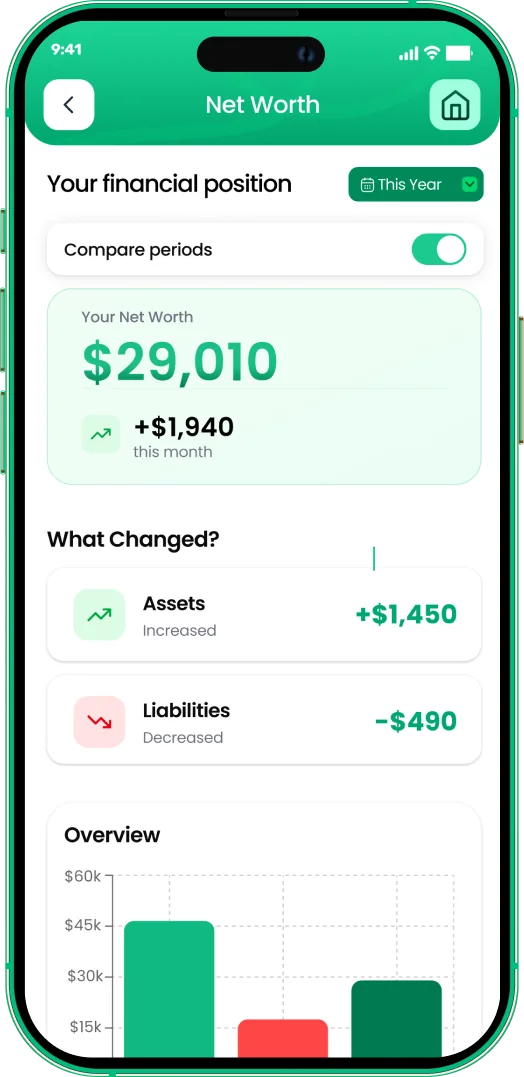
Watch your debt shrink
- Track loans, cards and your mortgage as liabilities
- See what changed each month
- Budget an extra payment into every month


How to reduce your household debt
Reducing household debt starts with stopping new borrowing, then directing every spare dollar at one balance at a time. Two methods work well: the avalanche, which pays the highest interest rate first and saves the most money, and the snowball, which pays the smallest balance first and builds momentum.
- Model your payoff date. The debt payoff calculator shows how extra payments shorten your timeline and cut interest.
- Choose a method. Our comparison of debt snowball vs avalanche helps you pick.
- Build a small buffer. A starter emergency fund stops new card debt when something breaks.
- Ask for help early. Non-profit credit counselling can negotiate with lenders before missed payments pile up.
EMOH Pay helps by showing every debt next to your assets in its net worth view, tracking bill due dates and alerting you when spending in a category runs over. It is free to start, and our full guide on how to pay off debt in Canada walks through a complete plan.
Pay it down with EMOH Pay
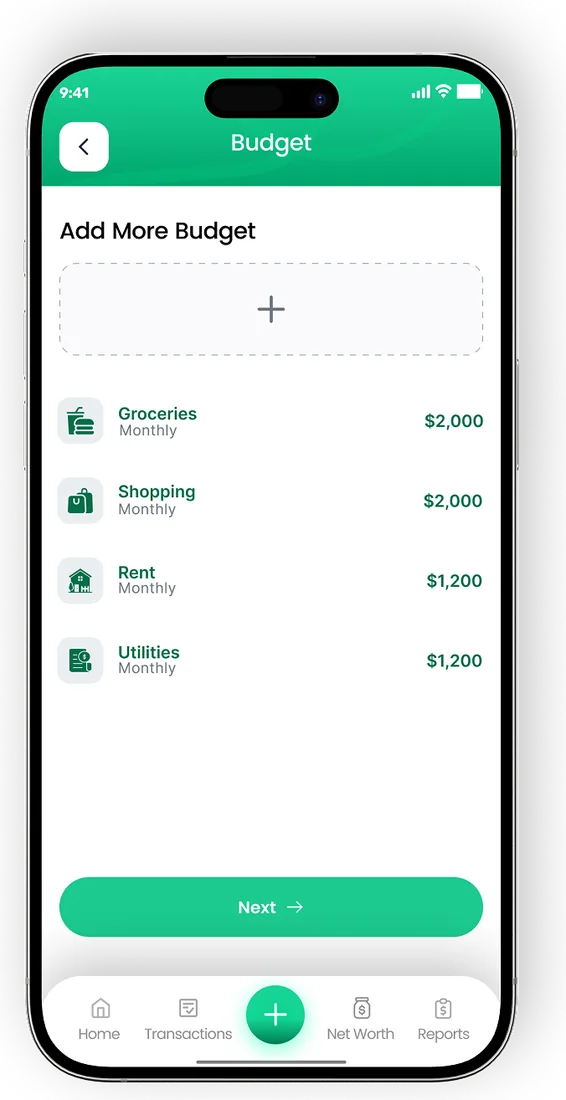

Put the numbers on autopilot
EMOH Pay tracks your spending, budgets and net worth on your phone and in the browser, always in sync. Free to start, made in Canada.
Get started free➜Canadian Household Debt Statistics: frequently asked questions
What is the household debt-to-income ratio in Canada?
It has been about 175% in 2024 and 2025, meaning households owe about $1.75 in credit market debt for every dollar of disposable income, according to Statistics Canada. It is published every quarter.
Is Canadian household debt high compared with other countries?
Yes. Canada's household debt relative to income and GDP is among the highest in the G7, largely because of high home prices and mortgage borrowing.
How much credit card debt does the average Canadian have?
Credit card balances are a small share of total household debt, but amounts vary widely by person. Many Canadians pay their cards in full each month, while others carry balances at high interest rates. Check the Statistics Canada and Bank of Canada websites for current national figures.
Why does the Bank of Canada watch household debt?
Heavily indebted households are more sensitive to higher interest rates and job losses. If many cut spending at once, the whole economy slows. The Bank of Canada tracks household debt as a key financial system vulnerability.
What counts as a healthy amount of debt?
A common guide is to keep housing costs under about 30% to 32% of gross income and total debt payments under about 40%. Carrying no high-interest consumer debt is a good goal for most households.
Related guides and tools
See your debt-free date: enter balance, interest rate and monthly payment to calculate payoff time and total interest. Free…
How to Pay Off Debt in CanadaTwo proven orders of attack — avalanche saves the most interest, snowball keeps you motivated. Pick one and automate it.…
Debt Snowball vs Debt AvalancheDebt snowball vs avalanche: see how each debt payoff method works, a worked example with real numbers, which saves more…
Debt-to-Income Ratio CalculatorFree debt to income ratio calculator: enter gross income, housing costs and debt payments to see your DTI, housing ratio and…
Credit Card Interest CalculatorFree credit card interest calculator. Enter your balance, APR and monthly payment to see the total interest you will pay and…
Canadian Spending Statistics 2026Canadian spending statistics from Statistics Canada and the Bank of Canada: how households split their budgets, what grew…
Start free today
Free on iPhone, Android and the web. Upgrade to EMOH Pro anytime for bank sync and advanced AI.
Download for iOS➜ Get it on Android➜