
Small Supplier GST Threshold ($30,000 Rule)
Under $30,000 in taxable sales, most Canadian businesses do not have to charge GST/HST. Here is exactly how the test works, what counts toward it and what to do the day you cross it.
Get started free➜ Download the app➜
Do I need to charge GST under $30,000?
No. If your worldwide taxable sales stay at or below $30,000 over four consecutive calendar quarters, you are a small supplier and do not have to register for or charge GST/HST. You can register voluntarily. Once you exceed $30,000 in one quarter or over four quarters, you must register and start charging. Taxi and ride-sharing drivers must register regardless.
What is the small supplier threshold?
The small supplier threshold is the $30,000 sales limit below which a business does not have to register for GST/HST. It applies to your total taxable sales, before expenses, not your profit. It is set in the Excise Tax Act and is not indexed to inflation, so it is the same figure today that it has been for many years.
Being a small supplier is optional in one direction only. You may register early at any time, but once you pass the limit you must register. Charities and other public service bodies use a $50,000 threshold instead, with extra rules.
How the $30,000 GST rule in Canada works
The CRA applies two tests. Both look at taxable sales in calendar quarters: January to March, April to June, July to September and October to December.
| Situation | When you stop being a small supplier | When to start charging |
|---|---|---|
| You go over $30,000 in a single calendar quarter | Immediately, on the sale that takes you over | On that sale and every one after it |
| You go over $30,000 across four consecutive quarters, but not in any single quarter | At the end of the month after the quarter in which you went over | From the first sale after you stop being a small supplier |
In either case you must register within 29 days of the date you are required to start charging. The four-quarter test is rolling, so at the end of every quarter, add up the last four.
A worked example
Take a freelance designer who starts in January. Sales run $6,000, $8,000 and $9,000 in the first three quarters: $23,000 so far, still a small supplier. In the fourth quarter, October to December, sales are $8,500. The four-quarter total is now $31,500.
- The designer crossed $30,000 in the October to December quarter, but never in a single quarter.
- They stay a small supplier until the end of the following month, 31 January.
- From the first sale on or after 1 February, they must charge GST/HST.
- They must register within 29 days of that first taxable sale.
- From then on, they charge GST or HST at the rate for the customer's province and file returns.
Had the designer invoiced $32,000 in a single quarter instead, they would have stopped being a small supplier on the sale that crossed $30,000, and GST/HST would apply to that sale itself. Logging each invoice in EMOH Pay as it is paid keeps this rolling total up to date.
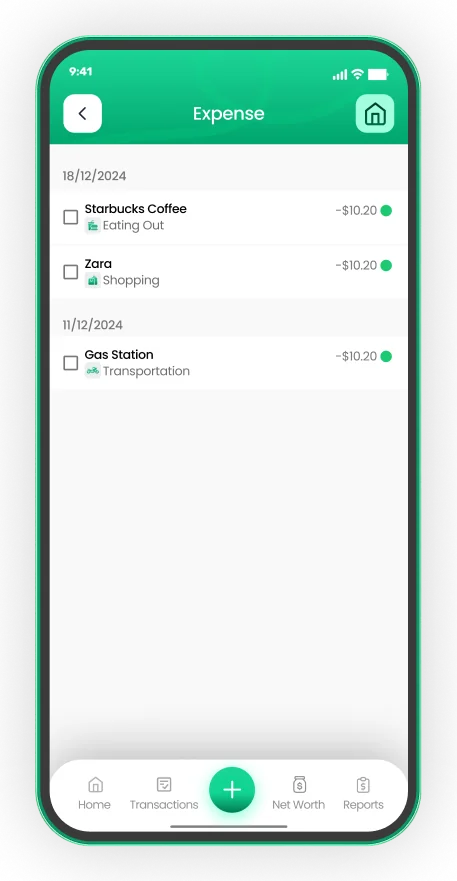
GST/HST on every expense
- Record GST/HST as you log each purchase
- Mark recurring bills once
- Export tax-ready PDF or Excel reports


What counts toward the small supplier limit?
The total includes your worldwide taxable sales, plus those of any associated businesses. Several common types of income are left out.
- Counts: taxable sales at the regular rate, and zero-rated sales such as basic groceries, prescription drugs and most exports.
- Counts: sales made by businesses associated with yours, for example a second company you control.
- Does not count: exempt supplies, such as residential rent, most health and dental services and many educational services.
- Does not count: financial services, sales of capital property such as equipment you used, and goodwill when you sell the business.
Employment income never counts, because it is not a sale. If you have both a job and a side business, only the side business sales are tested.
Should you register for GST/HST before $30,000?
Registering early lets you claim input tax credits, meaning you recover the GST/HST you pay on business purchases. That can be worth it if you have large start-up costs or sell mainly to businesses, which can claim back the tax you charge them.
The trade-off is that you must charge GST/HST on every taxable sale and file regular returns. If your customers are mostly consumers, adding 5% to 15% to your prices can matter. Once registered, you generally have to stay registered for at least one year before you can cancel.
| Register early if | Stay a small supplier if |
|---|---|
| Most clients are GST/HST-registered businesses | Most customers are individual consumers |
| You have big start-up purchases with GST/HST | Your business expenses are small |
| You expect to pass $30,000 soon anyway | Sales are well below $30,000 and steady |
Tracking your sales against the threshold
The hardest part of the rule is noticing when you cross it. Totalling sales by calendar quarter and checking the rolling four-quarter figure every three months takes a few minutes and avoids an expensive surprise, because GST/HST you should have charged is still owed even if you never collected it.
EMOH Pay's GST/HST tracking tags each sale and expense, and reports make the quarterly total easy to read. Our GST/HST expense tracker explains the setup, and when it is time to register, follow our guide on how to register for a GST/HST number.
Not sure which tax applies in your province? Read GST vs HST, and use the GST/HST calculator to add the right rate to an invoice. Quebec businesses also register for the QST with Revenu Québec, which uses the same $30,000 threshold.
Tax-ready tracking
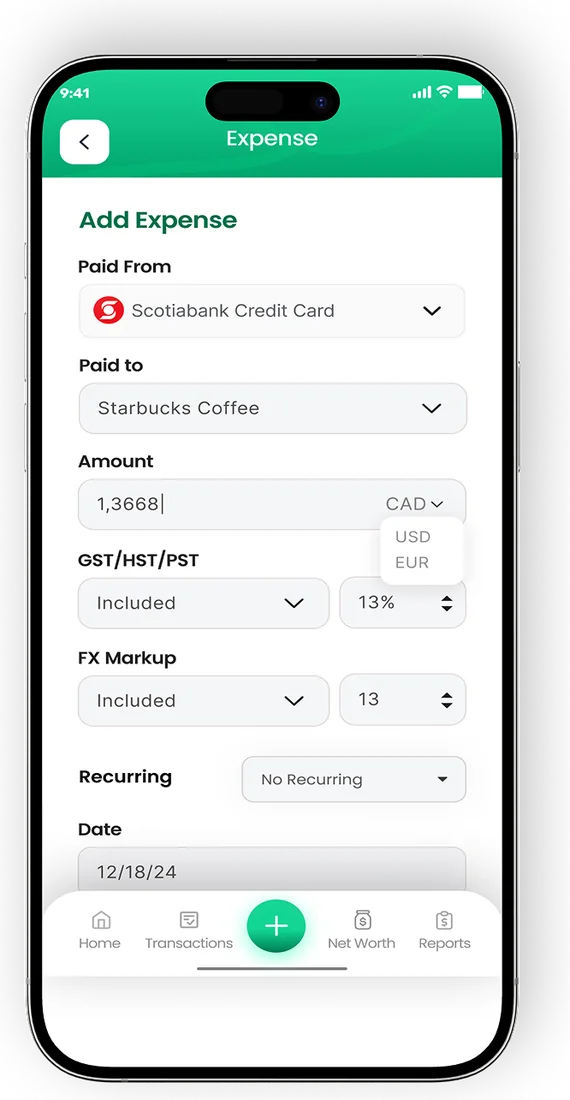
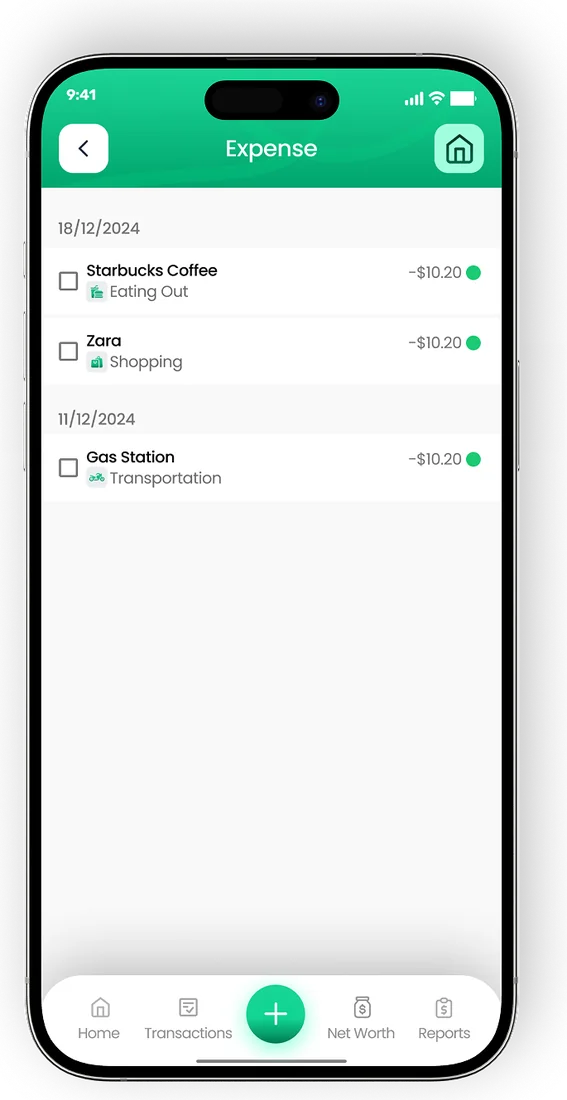
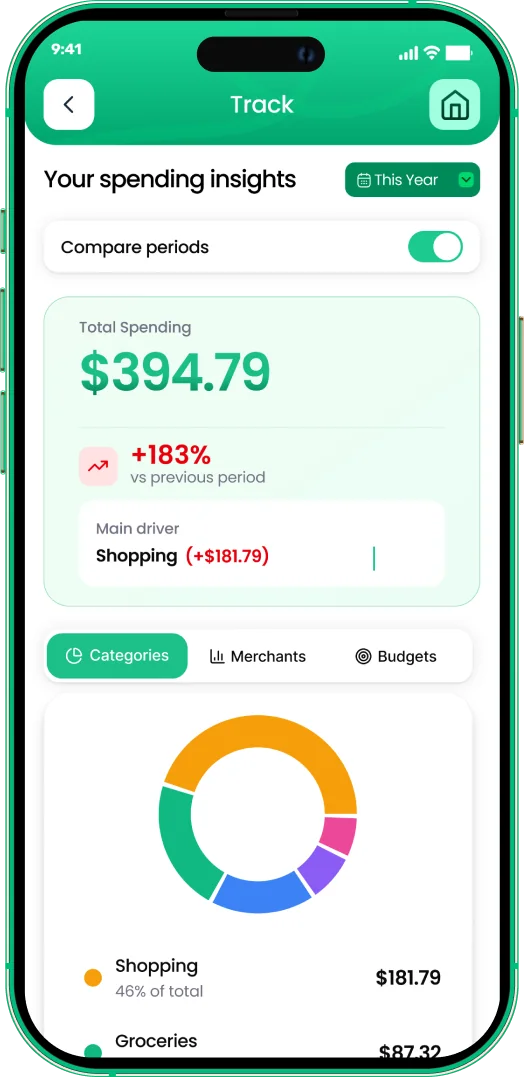

Put the numbers on autopilot
EMOH Pay tracks your spending, budgets and net worth on your phone and in the browser, always in sync. Free to start, made in Canada.
Get started free➜Small Supplier GST Threshold ($30,000 Rule): frequently asked questions
Is the $30,000 GST threshold based on revenue or profit?
Revenue. The test uses total taxable sales before expenses. A business with $35,000 of sales and $20,000 of expenses is over the threshold.
Is the small supplier threshold per year?
Not exactly. It is measured over any four consecutive calendar quarters, or in a single quarter, rather than a fixed calendar year.
Do Uber and taxi drivers need a GST number under $30,000?
Yes. Taxi and commercial ride-sharing drivers must register for GST/HST from their first fare, whatever their sales.
Do I owe GST on sales before I registered?
If you went over the threshold and kept selling without charging, you can owe the GST/HST you should have collected. Register promptly and speak to the CRA or an accountant about past sales.
Can I deregister if my sales fall below $30,000?
Usually yes, once you have been registered for at least one year and your sales have dropped back under the threshold. You then stop charging GST/HST and stop claiming input tax credits.
Sources and further reading
Related guides and tools
How to register for a GST number in Canada: when registration is required, what you need, the three ways to apply to the CRA…
GST/HST Expense TrackerEMOH Pay tracks the GST/HST portion of your expenses automatically — a lifesaver for Canadian freelancers, contractors and…
GST vs HST: What's the Difference?GST vs HST: what's the difference? GST is the 5% federal sales tax; HST blends it with a provincial tax in five provinces.…
GST/HST Calculator (All Provinces)Calculate Canadian sales tax for any province instantly: enter an amount, pick your province, and see GST, PST/QST and total…
Self-Employed Taxes in CanadaSelf employed taxes in Canada explained: income tax, both halves of CPP, GST/HST and instalments, with a worked 2026 example…
QST Calculator (Quebec)Free QST calculator for Quebec. Enter any amount to add 5% GST and 9.975% QST, see each tax separately, and learn how to…
Start free today
Free on iPhone, Android and the web. Upgrade to EMOH Pro anytime for bank sync and advanced AI.
Download for iOS➜ Get it on Android➜