
What Is Cash Flow (Personal)?
Personal cash flow is the money coming in minus the money going out over a set period. Positive cash flow funds your goals; negative cash flow quietly builds debt.
Get started free➜ Download the app➜
What Is Cash Flow (Personal)?
Personal cash flow is the difference between the money you receive and the money you spend over a period, usually a month. If take-home pay and other income exceed your spending, cash flow is positive and you can save or pay down debt. If spending is higher, cash flow is negative and savings or credit fill the gap.
What is personal cash flow?
Personal cash flow is the net amount of money moving into and out of your accounts over a period. Money in includes take-home pay, government benefits, side income and any interest you receive. Money out includes every bill, purchase, debt payment and transfer you make to someone else.
Businesses track cash flow because a profitable company can still fail if cash runs out before the bills are paid. Households work the same way. You can earn a good salary and still feel broke if rent, a car payment and a credit card bill all land in the same week.
Cash flow is one of the core ideas in our money learning centre. It pairs naturally with net worth, which we cover below.
How do you calculate your personal cash flow?
To calculate personal cash flow, add up all the money you received in a month, add up everything you spent, and subtract spending from income. Use actual amounts from your bank and card statements rather than estimates, and use take-home pay after income tax, CPP and EI rather than your gross salary.
| Item | Amount |
|---|---|
| Take-home pay (two pay cheques) | $4,200 |
| Interest on a savings account | $30 |
| Total money in | $4,230 |
| Rent | $1,650 |
| Utilities, phone and internet | $230 |
| Groceries | $450 |
| Transit and ride-hailing | $160 |
| Tenant insurance and subscriptions | $90 |
| Dining out and entertainment | $380 |
| Credit card minimum and student loan | $320 |
| Clothing, personal and gifts | $250 |
| Total money out | $3,530 |
| Net cash flow | +$700 |
A positive $700 means this person can direct money to an emergency fund, a TFSA or extra debt payments. Dividing net cash flow by income gives a savings rate of about 17%. The savings rate calculator does this for your own numbers.
Positive vs negative cash flow
- Positive cash flow. More comes in than goes out. The surplus is only useful if you give it a job, such as savings, investing or debt repayment. Otherwise it tends to disappear into extra spending.
- Break-even cash flow. Income and spending match. You are not falling behind, but there is no cushion for a surprise bill, which is why many people in this position feel they are living paycheque to paycheque.
- Negative cash flow. Spending exceeds income. The gap is covered by drawing down savings or by borrowing on credit cards and lines of credit. A single negative month is not a crisis; a pattern of them is how debt builds.
Budgets that update themselves
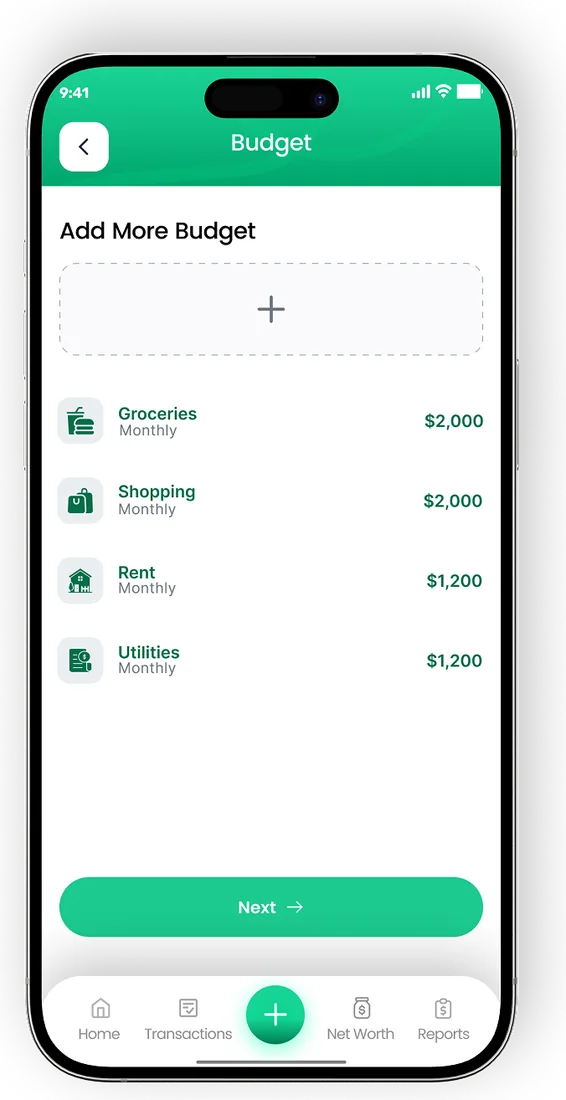
- Set monthly limits for every category
- See what is left to spend in real time
- Get a nudge before a category runs out


Cash flow vs net worth: what is the difference?
Cash flow measures money moving over time. Net worth measures what you own minus what you owe at a single point in time. Think of cash flow as a video and net worth as a photo.
The two are linked. Positive cash flow that you save or use to repay debt raises your net worth each month. Negative cash flow lowers it. Our guide on how to calculate net worth walks through the snapshot side.
How to improve your personal cash flow
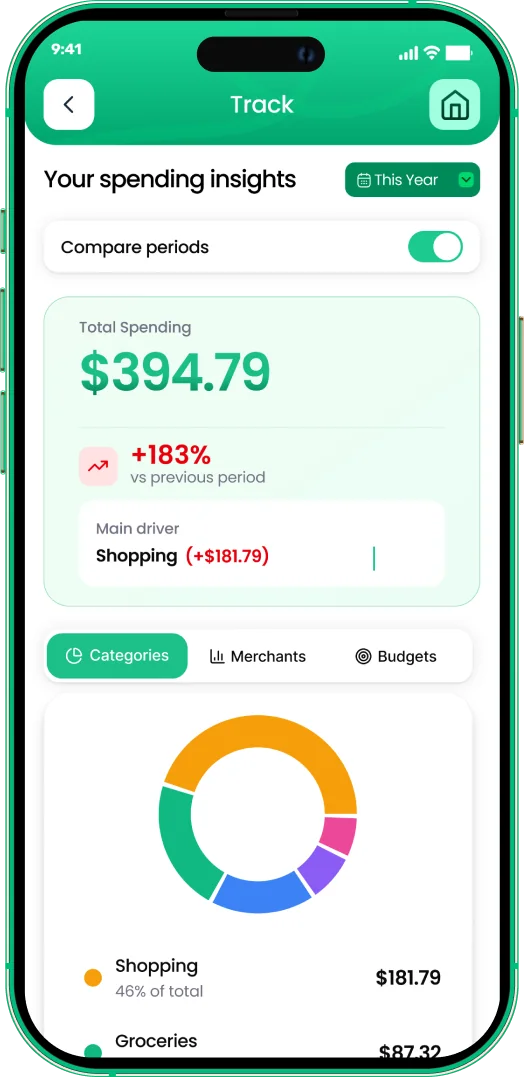
- Track every transaction for one full month so you know your real numbers. EMOH Pay's reports show money in, money out and the difference for any period.
- Separate fixed and variable expenses. Variable costs are the quickest to trim.
- Line up bill due dates with your paydays. Many lenders and utilities let you change the date, which smooths cash flow without spending less.
- Turn irregular costs such as annual insurance into monthly set-asides so they do not create negative months.
- Build a buffer. Even one month of expenses in savings means a timing mismatch never forces you onto credit. The emergency fund calculator suggests a target.
- Raise income where you can: a raise, overtime, a side job or claiming benefits you are eligible for.
Plan your month in EMOH Pay

Put the numbers on autopilot
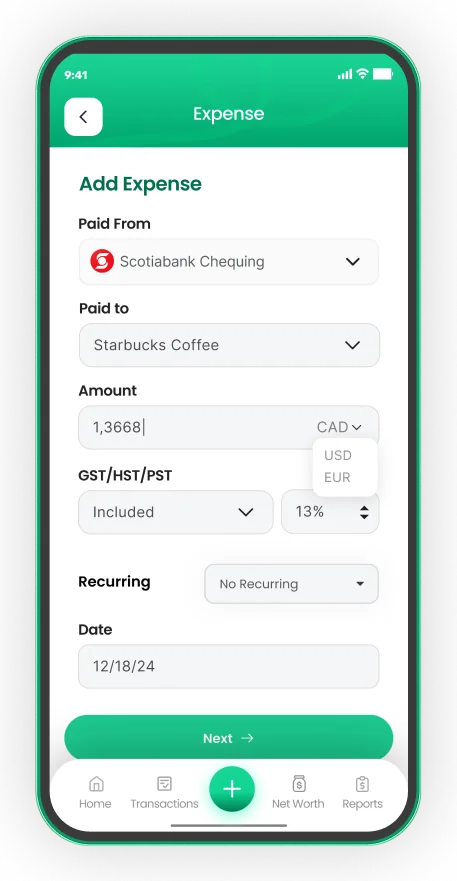
EMOH Pay tracks your spending, budgets and net worth on your phone and in the browser, always in sync. Free to start, made in Canada.
Get started free➜What Is Cash Flow (Personal)?: frequently asked questions
Is personal cash flow the same as income?
No. Income is only the money coming in. Cash flow is income minus spending. Two people with the same salary can have very different cash flow depending on their rent, debt payments and habits.
Should I use gross or net income for cash flow?
Use net income, the amount that actually reaches your account after income tax, CPP, EI and any workplace deductions. Gross income overstates what you have to spend.
Do savings transfers count as money out?
It depends on the question you are asking. For budgeting, many people count savings as an outflow so the goal is a cash flow of zero with every dollar assigned. For measuring financial health, treat savings as the surplus that positive cash flow creates.
What is a good monthly cash flow?
Any consistent positive number is a good start. Many planners suggest aiming to save 10% to 20% of take-home pay, which means positive cash flow of that size before savings transfers.
How often should I review my cash flow?
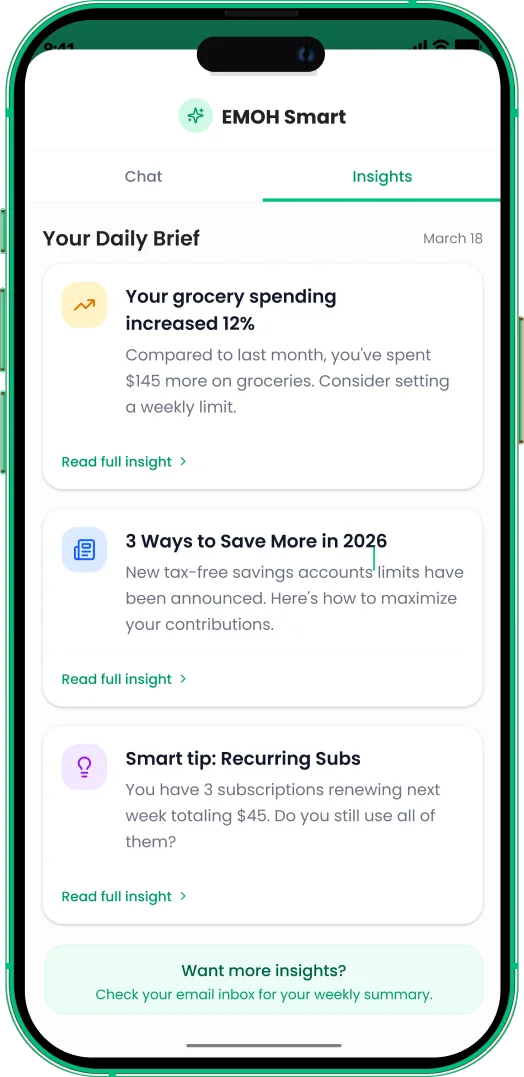
Monthly is enough for most people, with a quick weekly check on variable spending. EMOH Pay's daily money digest summarizes recent transactions so you notice problems early.
Sources and further reading
Related guides and tools
Fixed vs variable expenses explained: what each means, examples, where periodic bills fit and how to budget for each so…
How to Calculate Net WorthNet worth = everything you own minus everything you owe. It's the single best number for tracking long-term financial…
Savings Rate CalculatorUse this free savings rate calculator to see what percent of your take-home pay you save, how it compares with the 20%…
Living Paycheck to Paycheck: How to Break the CycleLiving paycheck to paycheck is stressful but fixable. Learn why it happens, the first steps to take, how to build a small…
Emergency Fund Calculator — Free CalculatorYour emergency fund target is 3–6 months of essential expenses. Enter monthly essentials below for your range. Free…
Money GlossaryA plain-language money glossary: 36 personal finance terms from APR to TFSA, each defined in a sentence or two with links to…
Start free today
Free on iPhone, Android and the web. Upgrade to EMOH Pro anytime for bank sync and advanced AI.
Download for iOS➜ Get it on Android➜