
Debt Consolidation in Canada: Options and Costs
Rolling several debts into one payment can cut your interest, or quietly cost you more. Here is how each debt consolidation option works in Canada, what it costs and how to tell if it will help.
Get started free➜ Download the app➜
How does debt consolidation work in Canada?
Debt consolidation in Canada combines several debts, usually credit cards and other high-interest balances, into one new loan, line of credit or balance transfer with a single payment. It saves money only if the new rate is lower and you do not stretch the term so far that total interest rises, or run the old cards back up.
Debt consolidation in Canada works by using one new form of credit to pay off several existing debts, so you are left with one balance, one rate and one payment. The Financial Consumer Agency of Canada (FCAC) notes it can save money when the new rate is lower, but warns that a longer repayment period can increase the total interest you pay.
It is not debt forgiveness. You still owe the full amount; you have only changed who you owe and on what terms. If you cannot repay in full, a consumer proposal or bankruptcy reduces what you owe, which our guide to consumer proposal vs bankruptcy compares.
What are the debt consolidation options in Canada?
There are five main ways to consolidate debt in Canada: a personal or debt consolidation loan, a personal line of credit, a credit card balance transfer, a home equity loan or HELOC, and a debt management plan through a non-profit credit counsellor. They differ in rate, discipline required and what is at risk if you fall behind.
| Option | How it works | Rate | Main risk |
|---|---|---|---|
| Debt consolidation loan | Lump sum pays off your debts; fixed payments over a set term | Fixed or variable; depends on your credit | A long term can mean more total interest |
| Personal line of credit | Borrow up to a limit; interest only on what you use | Usually variable | Interest-only minimums let principal linger; easy to re-borrow |
| Balance transfer credit card | Move card balances to a card with a low or 0% introductory rate | Promo rate for usually 6 to 18 months, plus a transfer fee | Rate jumps when the promo ends or if you miss a payment |
| Home equity loan or HELOC | Borrow against your home: a HELOC up to 65% of its value, a home equity loan up to 80% | Often lower; HELOCs are usually variable | Your home secures the debt |
| Debt management plan | Non-profit credit counsellor arranges one payment to creditors, often with interest relief | Often reduced or waived interest | Not all creditors must agree; noted on your credit report for 2 years after you finish |
Figures checked October 2026 with the Financial Consumer Agency of Canada and the Office of the Superintendent of Bankruptcy; confirm current terms with your lender.
Debt consolidation loan in Canada: a worked example
A debt consolidation loan in Canada saves money when it replaces high-rate balances at a clearly lower rate over a similar or shorter period. In this example, someone with $20,000 on credit cards compares staying put with a 36-month consolidation loan. The rates are assumptions to show the arithmetic, not offers.
- First month's interest on the cards: $20,000 × 0.2099 ÷ 12 = about $350, so only $295 of a $645 payment reduces the balance.
- First month's interest on the loan: $20,000 × 0.0999 ÷ 12 = about $167, so $478 of the same payment goes to principal.
- Over the full payoff, the 36-month loan costs about $3,230 in interest against about $9,070 on the cards: a saving of about $5,840 and 10 months.
- Stretching the loan to 60 months lowers the payment to about $425 but raises interest to about $5,490, giving back more than a third of the saving.
| Scenario | Rate | Monthly payment | Months to pay off | Total interest |
|---|---|---|---|---|
| Keep paying the cards | 20.99% | $645 | 46 | about $9,070 |
| Consolidation loan, 36 months | 9.99% | $645 | 36 | about $3,230 |
| Consolidation loan, 60 months | 9.99% | $425 | 60 | about $5,490 |
The lesson is to pick the shortest term you can afford and check the total cost of borrowing, not only the monthly payment. Our debt payoff calculator shows the payoff date and interest for your own balances and rates.
How do you consolidate credit card debt with a balance transfer?
To consolidate credit card debt with a balance transfer, you apply for a card with a low or 0% introductory rate and ask it to pay off your other cards. The FCAC says these offers usually last 6 to 18 months and carry a transfer fee, usually a percentage of the amount moved. Pay it off before the promotion ends.
Do the arithmetic before you apply. Suppose you move $5,000 to a card at 0% for 12 months with an assumed 3% fee. The fee is $5,000 × 0.03 = $150, so you owe $5,150. Clearing it within the promotion takes $5,150 ÷ 12 = about $430 a month. If you can only afford $250, part of the balance will roll into the card's regular rate.
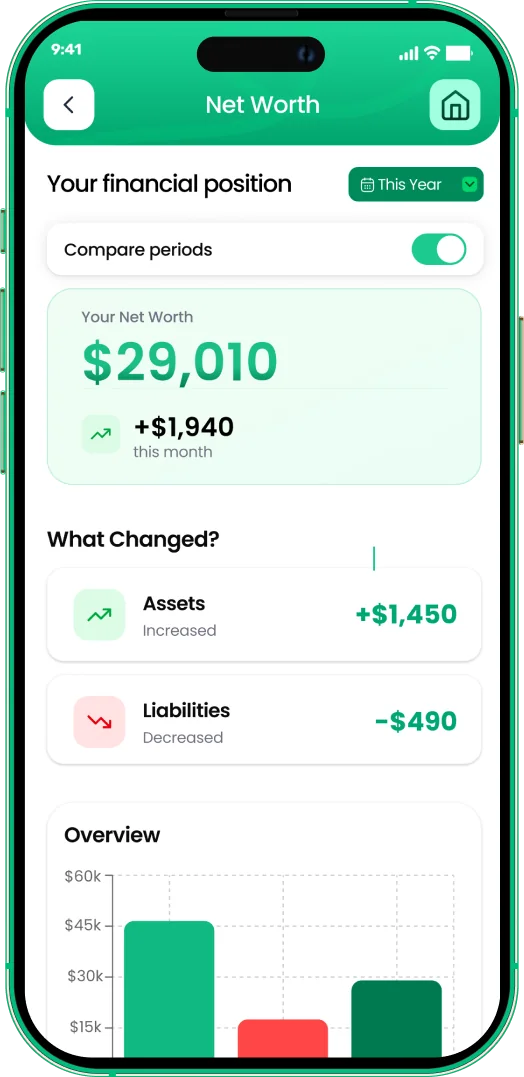
Watch your debt shrink
- Track loans, cards and your mortgage as liabilities
- See what changed each month
- Budget an extra payment into every month


Is using home equity to consolidate debt a good idea?
Using home equity to consolidate debt can lower your rate, but it turns unsecured debt into debt secured by your home. A HELOC can be up to 65% of your home's value, according to the FCAC, and most have variable rates that move with the lender's prime rate. Only consider it if you have a firm plan to repay the principal.
FCAC research has found that many HELOC borrowers do not make regular payments toward principal. If you use a HELOC, ask your lender to move the consolidated amount into a portion with fixed principal and interest payments, so it is paid off on a schedule rather than left open.
Debt consolidation vs consumer proposal: which fits?
Debt consolidation fits if you can repay everything you owe and only need a lower rate or one payment. A consumer proposal fits if you cannot repay in full: a licensed insolvency trustee negotiates a reduced amount, paid over up to five years, and creditors must stop collection. A proposal has a larger effect on your credit report than a consolidation loan.
- Choose consolidation when your income covers the new payment comfortably and your credit is good enough to qualify for a lower rate.
- Consider a debt management plan when lenders will not approve you but you can repay the principal with interest relief.
- Consider a consumer proposal when even the principal is out of reach. See how to pay off debt for the full range of approaches.
What to check before you consolidate
That last step is where most consolidations fail. EMOH Pay can set budgets with overspend alerts on the categories that built the debt, and track the new loan as a bill so the payment is never missed. Our guide to the debt snowball vs avalanche covers what to do if you choose not to consolidate.
- List every debt with its balance, rate and minimum payment, and build a budget you can stick to.
- Get your free credit reports from Equifax and TransUnion; a clean history helps you qualify for a lower rate.
- Compare the total cost of borrowing, including fees, over the full term against what you pay now.
- Avoid applying to many lenders in a short time, which the FCAC notes can lower your credit score.
- Be cautious with companies that promise to pay off debt or repair credit. The Criminal Code caps the interest most lenders can charge at 35% a year, a legal limit that is still far above a typical bank loan rate.
- Decide what you will do with the paid-off cards so the balances do not return.
Pay it down with EMOH Pay
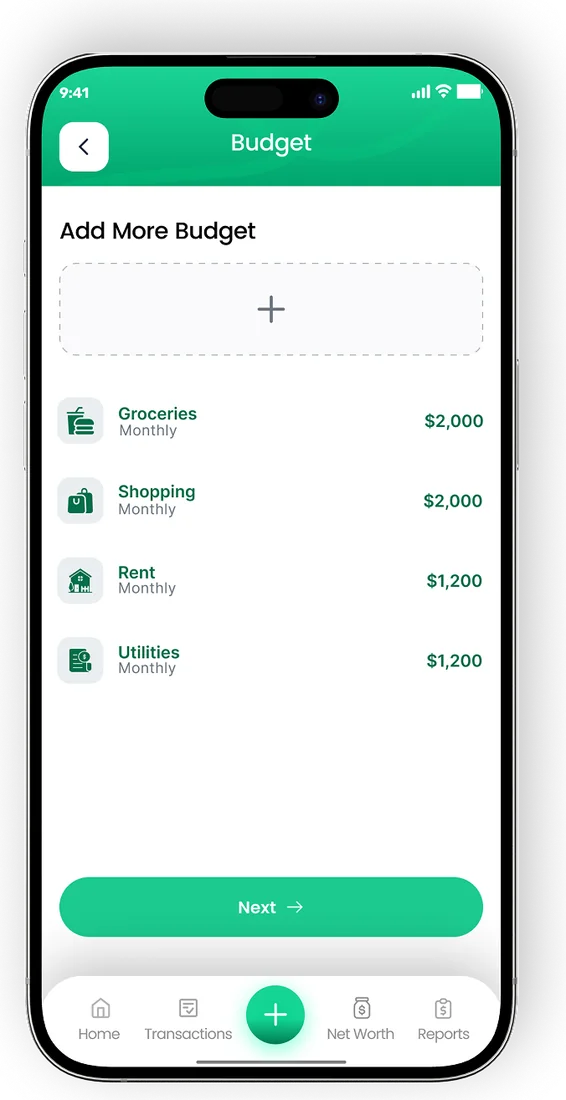

Put the numbers on autopilot
EMOH Pay tracks your spending, budgets and net worth on your phone and in the browser, always in sync. Free to start, made in Canada.
Get started free➜Debt Consolidation in Canada: Options and Costs: frequently asked questions
Does debt consolidation hurt your credit score?
It can dip slightly when a lender checks your credit, and several applications in a short time can lower it more. Over time, on-time payments and lower card balances usually help. A debt management plan is noted on your credit report until 2 years after you finish.
Can I get a debt consolidation loan with bad credit?
Possibly, but the rate offered may be too high to save money. Compare the total interest against your current debts, and be wary of high-cost lenders. A non-profit credit counsellor or a licensed insolvency trustee can explain other options.
Is a line of credit good for consolidating debt?
It can be, because the rate is often lower than a credit card. The risk is that minimum payments often cover only interest and the limit can be reused. Set a fixed monthly payment that clears the principal by a target date.
What is the difference between a debt management plan and a consolidation loan?
A consolidation loan is new credit that pays off your old debts. A debt management plan is not a loan: a credit counsellor arranges one monthly payment to your existing creditors, often with interest reduced, over up to 5 years.
Can I consolidate debt with my mortgage?
Yes, through refinancing, a home equity loan or a HELOC, if you have enough equity. Rates are often lower, but the debt becomes secured by your home and may take longer to repay.
Related guides and tools
Enter your debt balance, interest rate and monthly payment to see your debt-free date, how long payoff takes and the total…
How to Pay Off Debt in Canada: Avalanche or SnowballList each debt's balance, rate and minimum, then pick a method. Avalanche pays the highest rate first to save interest…
Consumer Proposal vs Bankruptcy in CanadaConsumer proposal vs bankruptcy: compare how each works in Canada, the costs, how long each stays on your credit report and…
Debt Snowball vs Debt AvalancheDebt snowball vs avalanche: see how each debt payoff method works, a worked example with real numbers, which saves more…
Credit Card Interest CalculatorFree credit card interest calculator. Enter your balance, APR and monthly payment to see the total interest you will pay and…
How to Improve Your Credit Score in CanadaHow to improve your credit score in Canada: the factors Equifax and TransUnion weigh, which fixes work fastest, what takes…
Start free today
Free on iPhone, Android and the web. Upgrade to EMOH Pro anytime for advanced AI and unlimited family sharing.
Download for iOS➜ Get it on Android➜