
Consumer Proposal vs Bankruptcy in Canada
Both are legal ways out of debt you cannot repay, and both are filed through a licensed insolvency trustee. They differ in what you pay, what you keep and how long the record follows you.
Get started free➜ Download the app➜
Is a consumer proposal better than bankruptcy in Canada?
A consumer proposal is often better than bankruptcy if you have steady income or assets to protect, because you keep your assets and usually leave your credit report sooner. Bankruptcy can suit people with little income and few assets, since it ends faster and usually costs less in total. A licensed insolvency trustee can compare both for you.
Consumer proposal vs bankruptcy: the main differences
The core difference in consumer proposal vs bankruptcy is what you give up. In a consumer proposal you offer creditors part of what you owe, paid over up to five years, and keep your assets. In bankruptcy your non-exempt assets go toward your debts and you may pay a share of your income for 9 to 36 months.
Both are federal processes under the Bankruptcy and Insolvency Act, overseen by the Office of the Superintendent of Bankruptcy (OSB). Both stop most collection action, wage garnishments and lawsuits once filed. This page is general information, not legal or financial advice.
| Item | Consumer proposal | Bankruptcy |
|---|---|---|
| Who administers it | Licensed insolvency trustee | Licensed insolvency trustee |
| Debt limit | $250,000, not counting a mortgage on your principal residence | None |
| How long it lasts | Up to 5 years | 9 to 36 months |
| What you pay | The amount agreed with creditors | Trustee fees, 50% of any surplus income and non-exempt assets |
| Your assets | You keep them, if you keep paying secured debts | Non-exempt assets are sold; provincial and federal exemptions apply |
| Creditor approval | Needed; a vote or deemed acceptance | Not needed |
| Counselling | Two financial counselling sessions | Two financial counselling sessions |
| Credit cards | Cards with a balance are cancelled | All cards surrendered to the trustee |
| Credit report (Equifax and TransUnion) | Removed 3 years after you finish, or 6 years after you sign, whichever comes first | First: 6 years after discharge, or 7 with TransUnion in some provinces. Repeat: 14 years |
Figures checked October 2026 on the Office of the Superintendent of Bankruptcy and Financial Consumer Agency of Canada sites; confirm current rules with a licensed insolvency trustee.
How does a consumer proposal work?
A consumer proposal works as a legally binding deal: a licensed insolvency trustee helps you offer creditors a lower total, a longer timeline or both, then files it. If creditors accept, you make the agreed payments to the trustee for up to five years and are released from the remaining unsecured debt when you finish.
- Meet a licensed insolvency trustee. Trustees may offer a free first consultation, and their fees are set by law.
- The trustee reviews your income, debts and assets and drafts an offer creditors are likely to accept, usually more than they would receive if you went bankrupt.
- Once filed, you stop paying unsecured creditors directly, and garnishments and lawsuits stop.
- Creditors have 45 days to respond. A meeting is held only if creditors owed at least 25% of the proven claims ask for one; otherwise the proposal is deemed accepted.
- At a meeting, the proposal passes with a majority of the dollar value of claims voting.
- You make the payments, attend two counselling sessions and receive a certificate of full performance at the end.
Missing payments has real consequences. A consumer proposal paid monthly is deemed annulled after three missed payments, and creditors can then resume collection. Build your proposal payment into your budget as a fixed bill from the first month; the budget calculator shows what is left for everything else.
How does bankruptcy work in Canada?
Bankruptcy in Canada is a legal process that releases an honest but unfortunate debtor from most debts. You file through a licensed insolvency trustee, surrender non-exempt assets and credit cards, attend two counselling sessions and pay any required surplus income. A first bankruptcy with no surplus income usually ends with an automatic discharge after nine months.
| Situation | Surplus income under $200 a month | Surplus income over $200 a month |
|---|---|---|
| First bankruptcy | 9 months | 21 months |
| Second bankruptcy | 24 months | 36 months |
Surplus income is the part of your household income above a standard the OSB sets each year for your family size. If it is more than $200 a month, you pay 50% of it to the trustee. A discharge can be delayed if a creditor, the trustee or the OSB opposes it.
Some debts survive bankruptcy. They include child and spousal support, court-ordered fines and debts from fraud. Student loans are only released if you stopped being a student at least seven years before filing, or five years in cases of undue hardship approved by a court.
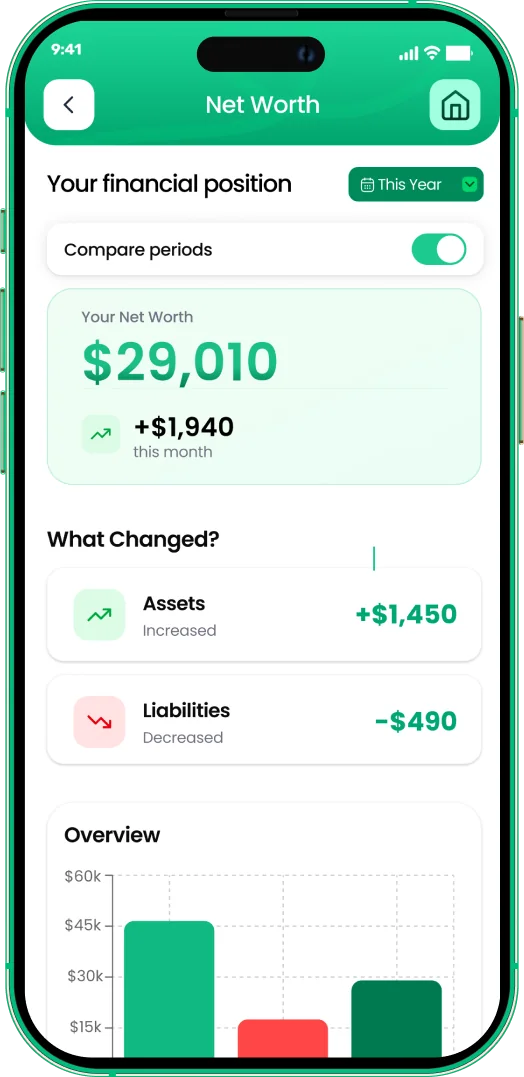
Watch your debt shrink
- Track loans, cards and your mortgage as liabilities
- See what changed each month
- Budget an extra payment into every month


A worked example: $40,000 of unsecured debt
Here is how the two options might compare for a single person with $40,000 of credit card and line of credit debt, a car worth $8,000 and take-home pay that leaves little room after rent. The offer amount and surplus income figure are assumptions; a trustee would calculate the real ones.
| Consumer proposal | Bankruptcy | |
|---|---|---|
| Assumed amount paid | 40% of $40,000 = $16,000 | Surplus income of $500 a month × 50% = $250 a month |
| Length | 60 months | 21 months (surplus income over $200) |
| Monthly payment | $16,000 ÷ 60 = about $267 | $250, plus any non-exempt assets |
| Total paid | $16,000 | $250 × 21 = $5,250, plus trustee-assessed assets |
| Car | Kept | Kept only if within the provincial exemption |
| Leaves credit report | 6 years after signing, because that comes before 3 years after the last payment | 6 or 7 years after discharge, so about 8 to 9 years after filing |
In this example bankruptcy costs less in cash, while the proposal protects the car and leaves the credit report sooner. If the person had a home with equity, the proposal would usually win clearly because bankruptcy could put that equity at risk.
What happens to your credit score after a consumer proposal?
Your credit score drops sharply after a consumer proposal, much as it does after bankruptcy, and the proposal stays on your report until 3 years after you finish paying or 6 years after you sign, whichever comes first. A first bankruptcy stays for 6 years after discharge, or 7 with TransUnion in Newfoundland and Labrador, Ontario, Prince Edward Island and Quebec.
Rebuilding starts the day you file. Pay every bill on time, keep any new credit, such as a secured card, well below its limit, and check both credit reports once the record should have been removed. Our guide on how to improve your credit score in Canada covers the steps.
Which option should you consider first?
Whichever path you choose, a clear monthly budget is what keeps you from returning to debt. EMOH Pay can track the proposal or surplus income payment as a recurring bill and send overspend alerts on the categories that caused trouble before.
- Try ordinary repayment first if your income can cover more than the minimums. The how to pay off debt guide compares the snowball and avalanche methods.
- Consider consolidation or a debt management plan if you can repay in full with a lower rate or interest relief. See debt consolidation in Canada for the options.
- Look at a consumer proposal if you cannot repay in full but have steady income, a home or other assets worth protecting.
- Look at bankruptcy if your income is low, you have few assets and a proposal would not be affordable.
- Check who you are talking to. Only a licensed insolvency trustee can file a consumer proposal or bankruptcy. The OSB has a search tool for licensed trustees.
Pay it down with EMOH Pay
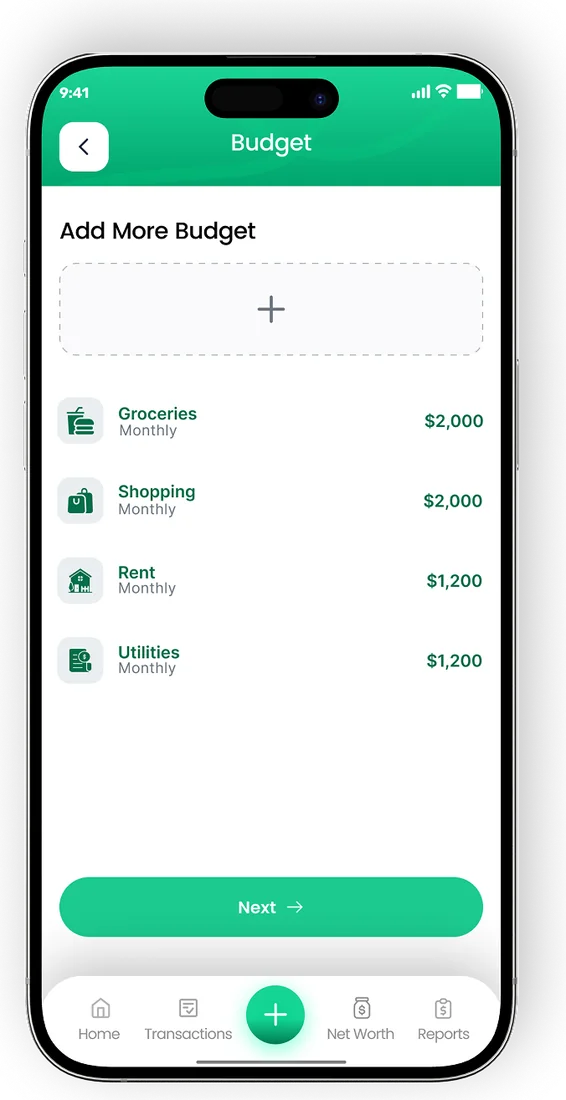

Put the numbers on autopilot
EMOH Pay tracks your spending, budgets and net worth on your phone and in the browser, always in sync. Free to start, made in Canada.
Get started free➜Consumer Proposal vs Bankruptcy in Canada: frequently asked questions
How much does a consumer proposal cost?
You pay the amount creditors accept, usually a fraction of what you owe, and the trustee's fees come out of those payments. Trustee fees for proposals and bankruptcies are set by the Bankruptcy and Insolvency Act, and trustees may offer a free first consultation.
Can I keep my house in a consumer proposal?
Usually yes. You keep your assets in a consumer proposal as long as you keep up your mortgage and other secured payments. In bankruptcy, home equity above your province's exemption can be used to pay creditors.
What happens if my consumer proposal is rejected?
Your creditors can resume collection, and you can revise the offer with your trustee or consider another option. Unlike a Division I proposal, a rejected consumer proposal does not make you bankrupt automatically.
Can I file a consumer proposal if I owe more than $250,000?
Not a consumer proposal. Debts above $250,000, not counting a mortgage on your home, require a Division I proposal, which works differently and can lead to automatic bankruptcy if creditors reject it.
Do I have to take counselling in a consumer proposal or bankruptcy?
Yes. Both require two financial counselling sessions with your trustee or a counsellor they arrange. In bankruptcy, missing them can delay your automatic discharge. The sessions cover budgeting, spending habits and rebuilding credit.
Sources and further reading
Related guides and tools
List each debt's balance, rate and minimum, then pick a method. Avalanche pays the highest rate first to save interest…
Debt Consolidation in Canada: Options and CostsDebt consolidation in Canada explained: loans, lines of credit, balance transfers, HELOCs and credit counselling, and a…
How to Improve Your Credit Score in CanadaHow to improve your credit score in Canada: the factors Equifax and TransUnion weigh, which fixes work fastest, what takes…
Canadian Household Debt StatisticsHousehold debt in Canada explained with Statistics Canada and Bank of Canada data: debt-to-income ratio, what Canadians owe…
Debt Payoff Calculator: Debt-Free Date, Free, No Sign-UpEnter your debt balance, interest rate and monthly payment to see your debt-free date, how long payoff takes and the total…
What Is a Credit Score?What is a credit score? A plain-language definition, how the number is calculated, what a good score looks like in Canada…
Start free today
Free on iPhone, Android and the web. Upgrade to EMOH Pro anytime for advanced AI and unlimited family sharing.
Download for iOS➜ Get it on Android➜