
Saskatchewan Salary Calculator 2026
Enter your salary to see your take-home pay in Saskatchewan after federal tax, provincial tax, CPP and EI. No sign-up, no email.
Use the calculator➜ Try EMOH Pay free➜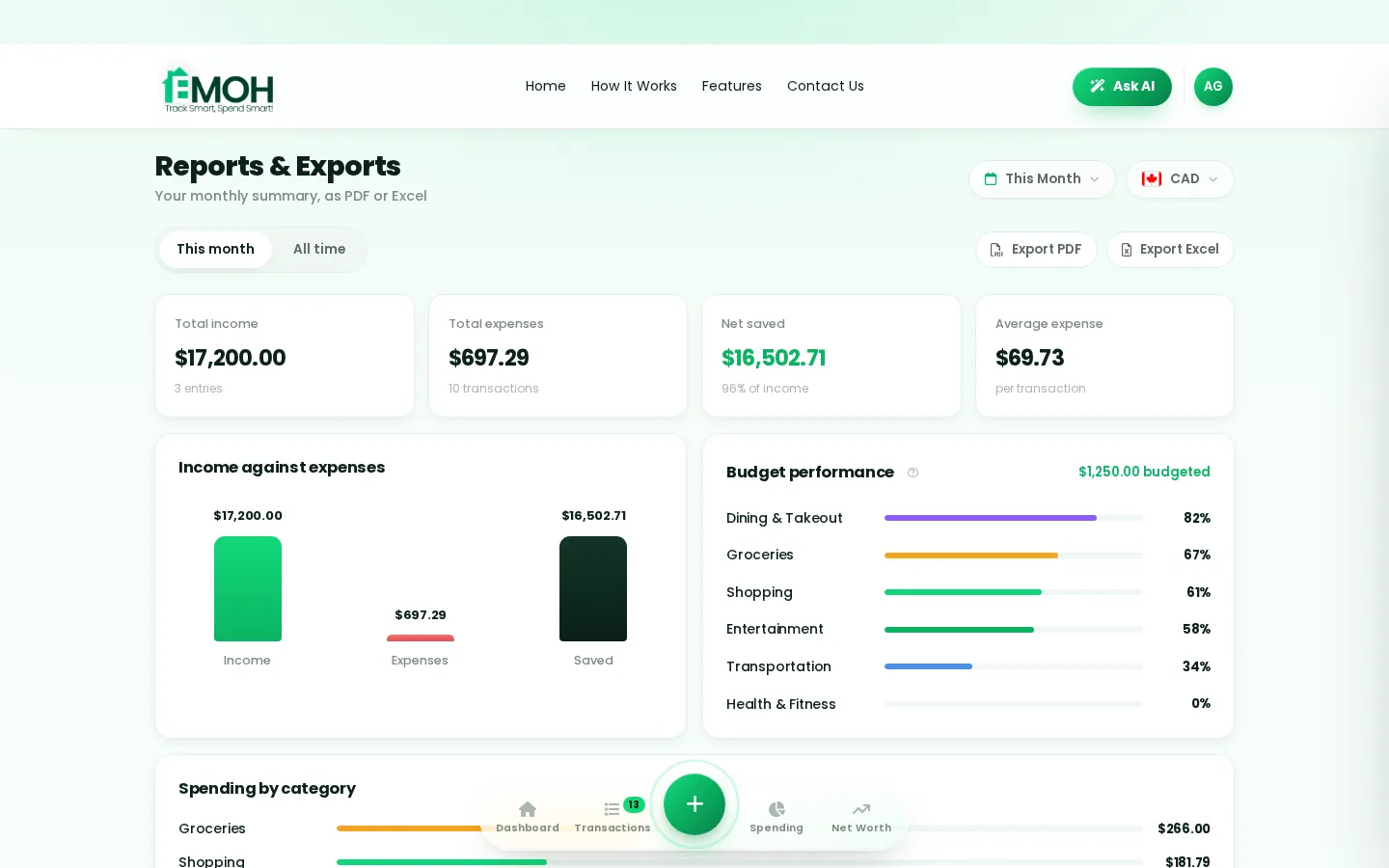
What is my take-home pay in Saskatchewan?
On a $75,000 salary in Saskatchewan, take-home pay in 2026 is about $55,500 a year, or roughly $4,620 a month. About $8,500 goes to federal tax, $5,600 to Saskatchewan tax, $4,250 to CPP and $1,120 to EI, an average deduction rate near 26%. Enter your own salary above to see your figure.
2026 rates for a resident employee with the basic personal amount only. Verify against the CRA and provincial tables each January.
How the Saskatchewan salary calculator works
The Saskatchewan salary calculator estimates take-home pay for a resident employee in 2026. It applies the federal brackets, Saskatchewan's three provincial brackets, Canada Pension Plan contributions and Employment Insurance premiums to your gross salary, then shows what is left.
It uses the same engine as our national income tax calculator for Canada. This page adds the Saskatchewan detail, from bracket thresholds to the credits that make the province one of the lighter tax regimes for low and middle incomes.
- Annual gross salary. Your pay before deductions. For hourly jobs, multiply the hourly rate by weekly hours and by 52.
- RRSP contributions (optional). RRSP deposits reduce taxable income, so the calculator lowers your income tax. CPP and EI are unchanged.
- Show take-home pay per. Pick monthly, semi-monthly, bi-weekly, weekly or annual to match your pay schedule.
The result assumes the basic personal amount plus the CPP and EI credits. Workplace pension contributions, group benefits and union dues are not included, so compare it with your pay stub before building a budget.
Saskatchewan tax brackets for 2026
Saskatchewan has a simple structure with three brackets and a top provincial rate of 14.5%, one of the lowest top rates among the provinces. The thresholds rise with inflation each January. The 2026 figures below are estimates based on indexation of the 2025 thresholds of about $53,463 and $152,750.
| Taxable income | Saskatchewan rate |
|---|---|
| Up to about $54,500 | 10.5% |
| About $54,500 to $155,800 | 12.5% |
| Over about $155,800 | 14.5% |
Saskatchewan also has one of the largest provincial basic personal amounts. Under the province's Affordability Act, that amount and several family credits rise by an extra $500 a year from 2025 through 2028, on top of normal indexation. The result is that more of the first dollars you earn are tax-free each year. Our guide to Canadian tax brackets shows how the federal layer sits on top.
Take-home pay in Saskatchewan at common salaries
Take-home pay in Saskatchewan is higher than in most provinces at incomes above about $55,000, because the second bracket rate of 12.5% applies across a very wide band, up to about $155,800. The chart shows estimated monthly take-home pay for an employee with no RRSP contribution.
On $100,000 a Saskatchewan employee keeps about $71,800 a year, and on $150,000 about $103,500. Your actual figure can be slightly higher once the Canada employment amount and any provincial credits you qualify for are applied at tax time.

Track every paycheque
- Add each income source in seconds
- See income against spending every month
- Plan from your real take-home pay


Saskatchewan versus Alberta and Manitoba
Saskatchewan sits between its neighbours. On $75,000 a Saskatchewan employee keeps about $55,500, compared with about $57,100 in Alberta and about $54,800 in Manitoba. Alberta's lower 8% starting rate on the first $60,000 or so explains most of the gap to the west.
| Province | Annual take-home | Sales tax on most purchases |
|---|---|---|
| Alberta | about $57,100 | 5% GST |
| Saskatchewan | about $55,500 | 11% (6% PST plus 5% GST) |
| Manitoba | about $54,800 | 12% (7% RST plus 5% GST) |
Compare the details in our Alberta salary calculator and Manitoba salary calculator. Remember that rent and car costs often outweigh the tax difference between neighbouring provinces.
How to lower your tax in Saskatchewan
- RRSP contributions. On $75,000 your combined marginal rate is about 33%, so each $1,000 contributed saves roughly $330 in tax.
- FHSA contributions. Up to $8,000 a year toward a first home, deductible like an RRSP and tax-free when used for a qualifying purchase.
- Saskatchewan Low-Income Tax Credit. A refundable credit paid quarterly with the GST/HST credit to lower-income residents who file a return.
- Deductions many people miss. Child-care costs, union dues, moving costs for a new job and eligible medical expenses.
- Sales tax awareness. Saskatchewan's 6% PST plus 5% GST adds about $110 to every $1,000 spent on taxable goods. See GST, HST and PST explained.
Budgeting with your Saskatchewan take-home pay
Your monthly take-home pay is the starting line for a budget. Housing costs in Saskatoon and Regina are well below the national big-city average, so many households can direct more toward savings or debt. Our cost of living in Saskatoon and budgeting in Saskatchewan guides give local figures.
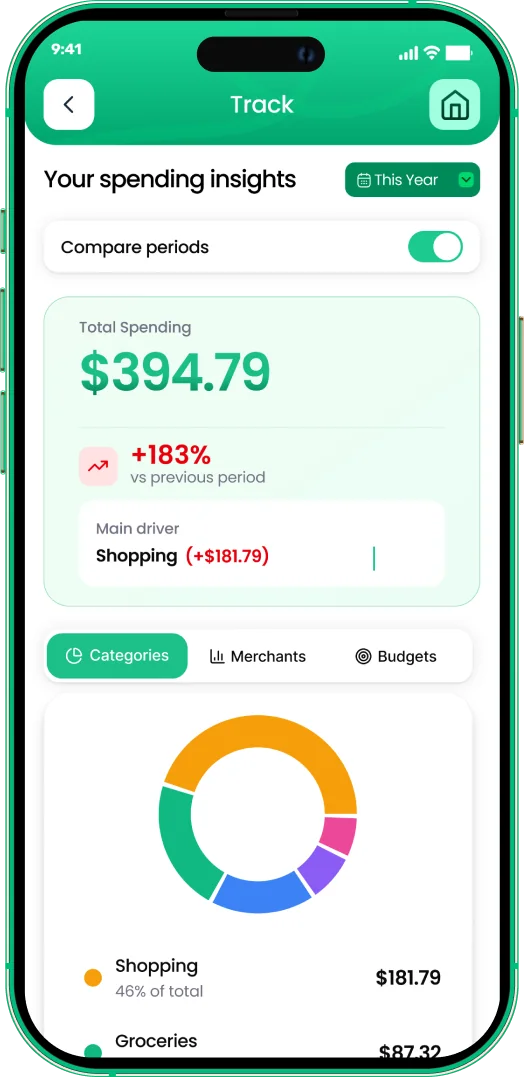
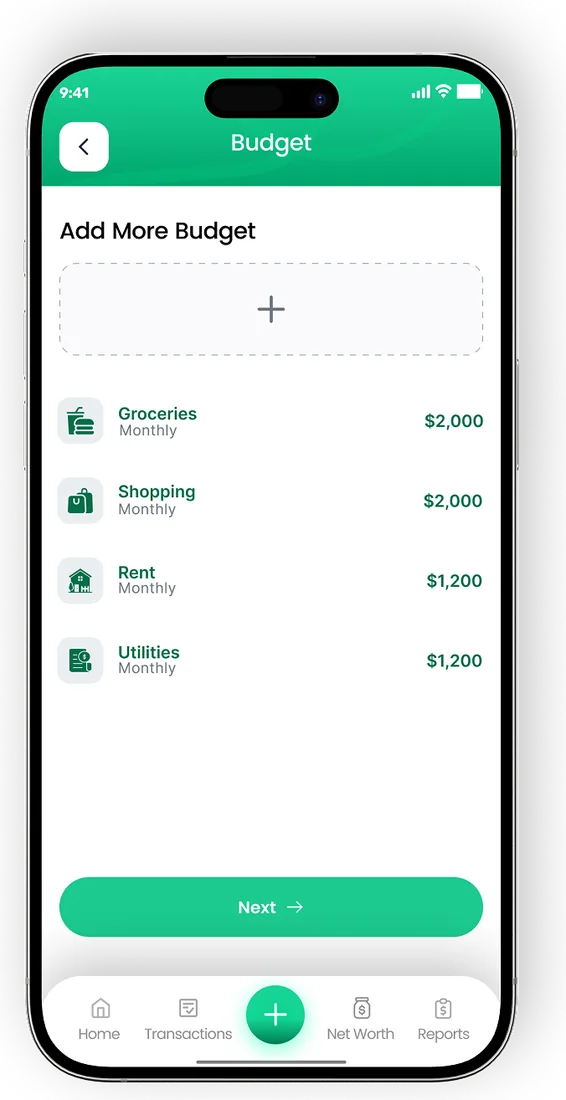
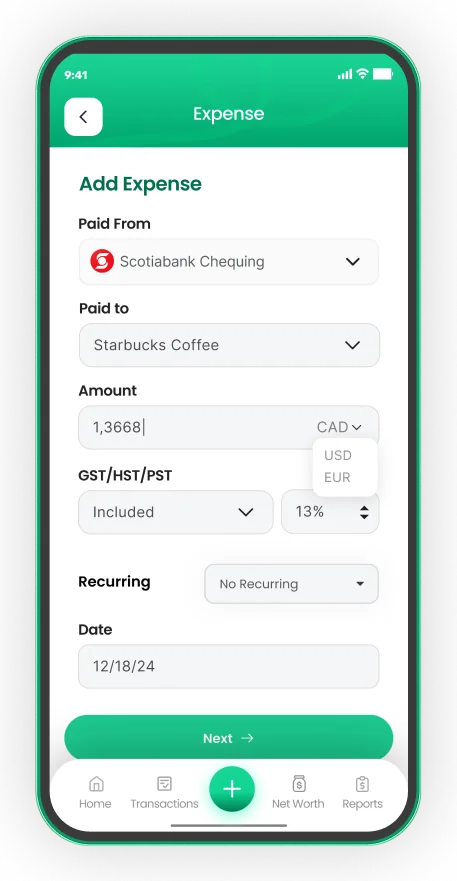
EMOH Pay is free to start on iPhone, Android and the web. Add your net pay as income, set a budget for each category and track spending as it happens, so you can see each month whether the plan is working.
Your income in EMOH Pay

Put the numbers on autopilot
EMOH Pay tracks your spending, budgets and net worth on your phone and in the browser, always in sync. Free to start, made in Canada.
Get started free➜Saskatchewan Salary Calculator 2026: frequently asked questions
How much is $50,000 after tax in Saskatchewan?
About $39,400 a year, or roughly $3,290 a month, in 2026 for an employee with no RRSP contribution, after federal tax, Saskatchewan tax, CPP and EI.
What is the income tax rate in Saskatchewan?
Saskatchewan charges 10.5%, 12.5% and 14.5% across three brackets. Federal tax of 14% to 33% applies on top, so a $75,000 earner has a combined marginal rate of about 33%.
Does Saskatchewan have a provincial sales tax?
Yes. Saskatchewan charges 6% PST on most goods and many services, in addition to the 5% federal GST.
Is the calculator accurate for 2026?
It uses 2026 federal rates, indexed Saskatchewan brackets and 2026 CPP and EI parameters, with the basic personal amount only. Treat it as an estimate and confirm with the CRA when you file.
Why is my paycheque lower than the estimate?
Employers may also deduct a workplace pension, group insurance premiums or union dues. Payroll tax tables can also withhold slightly more than your final tax bill, which comes back as a refund.
Sources and further reading
Related guides and tools
Estimate your 2026 Canadian income tax, CPP, EI and take-home pay in every province and territory, with federal and…
Budgeting in Saskatchewan (2026 Guide)Budgeting in Saskatchewan: sales tax is 5% GST + 6% PST, minimum wage $15.00/hr, typical rent $1,150/month. Low housing…
Cost of Living in Saskatoon (2026)Cost of living in Saskatoon for 2026: average rent, Saskatchewan taxes, $10 a day child care, winter utilities and sample…
Cost of Living in Regina (2026)Cost of living in Regina for 2026: average rent, Saskatchewan taxes, home prices, $10 a day child care and sample monthly…
Alberta Salary CalculatorAlberta salary calculator for 2026: see federal and Alberta tax, CPP and EI on your pay, including the new 8% bracket and a…
Manitoba Salary Calculator 2026Free Manitoba salary calculator for 2026. See your take-home pay after federal tax, Manitoba tax, CPP and EI, per month, pay…
Start free today
Free on iPhone, Android and the web. Upgrade to EMOH Pro anytime for bank sync and advanced AI.
Download for iOS➜ Get it on Android➜