
Monthly Budget Planner India
Enter your monthly take-home income and your rent or home loan EMI in rupees. The planner splits the rest into needs, wants and savings, then the guide below shows how to turn that split into a household budget that works.
Use the calculator➜ Try EMOH Pay free➜
How do I plan a monthly budget in India?
To plan a monthly budget in India, start from your take-home salary after TDS and PF, list fixed costs such as rent or EMI, then aim for about 50% on needs, 30% on wants and 20% on savings and SIPs. Track every expense for a month, including cash and UPI, and adjust the categories that run over.
How to use this monthly budget planner for India
This monthly budget planner for India uses two inputs. Monthly take-home income is the amount that actually reaches your bank account after TDS, your EPF contribution and professional tax. Rent or EMI is your biggest fixed housing cost, whether that is rent to a landlord or the EMI on a home loan.
The planner applies the 50/30/20 rule. Half of your take-home goes to needs, which includes your rent or EMI. Thirty percent goes to wants. Twenty percent goes to savings, SIPs and extra debt repayment. It also flags when rent or EMI is above 30% of take-home, because at that point every other need gets squeezed.
If you are new to the method, our guide to the 50/30/20 rule explains why the split works and when to change it.
What goes into a household budget in India?
A household budget in India covers housing, food, utilities, transport, education, insurance, family support and savings. Most families also carry costs that budget templates from other countries miss, such as domestic help, school transport, festival spending and money sent to parents. Listing all of them first stops the budget from falling apart in month two.
| Category | Examples | Planner group |
|---|---|---|
| Housing | Rent, home loan EMI, society maintenance | Needs |
| Groceries and milk | Monthly ration, vegetables, milk subscription | Needs |
| Utilities | Electricity, LPG cylinder or piped gas, water, broadband, mobile recharge | Needs |
| Transport | Metro or bus pass, fuel, two-wheeler or car EMI, cabs | Needs |
| Education | School fees, tuition, books, school van | Needs |
| Insurance | Health insurance, term life premium | Needs |
| Household help | Maid, cook, driver | Needs or wants |
| Lifestyle | Eating out, food delivery, OTT subscriptions, shopping | Wants |
| Festivals and gifts | Diwali, Eid, weddings, birthdays | Wants (save monthly) |
| Savings and investing | SIPs, PPF, recurring deposit, emergency fund | Savings |
Annual costs such as school fees, insurance premiums and festival spending are easier to handle if you divide them by 12 and set that amount aside every month. Our monthly expenses list is a useful checklist before you start.
Sample monthly budget in India on ₹60,000 take-home
Here is how a ₹60,000 monthly take-home salary might look for a single earner renting in a large city. It is an illustration, not a benchmark. Rent varies hugely between cities and neighbourhoods, so replace each line with your own numbers.
| Line | Amount | Share |
|---|---|---|
| Rent | ₹18,000 | 30% |
| Groceries and milk | ₹6,000 | 10% |
| Utilities, broadband and mobile | ₹3,000 | 5% |
| Transport | ₹3,000 | 5% |
| Needs subtotal | ₹30,000 | 50% |
| Eating out, delivery and OTT | ₹8,000 | 13% |
| Shopping and personal care | ₹5,000 | 8% |
| Travel, festivals and gifts fund | ₹5,000 | 8% |
| Wants subtotal | ₹18,000 | 30% |
| SIPs and investments | ₹7,000 | 12% |
| Emergency fund | ₹5,000 | 8% |
| Savings subtotal | ₹12,000 | 20% |
Families supporting parents often move part of the wants budget into a separate family support line. That is a sensible change. The planner is a starting point, not a rule you must follow exactly. For what rent and daily costs look like in one of India's most expensive cities, see our cost of living in Bangalore guide.
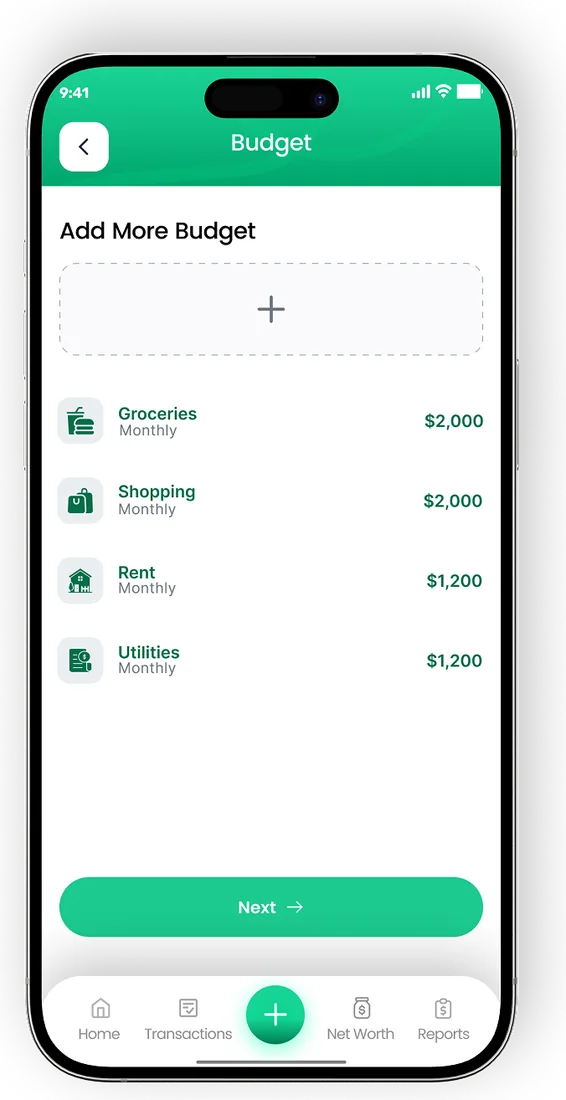
Budgets that update themselves
- Set monthly limits for every category
- See what is left to spend in real time
- Get a nudge before a category runs out


How much should you save each month in India?
Aim to save at least 20% of take-home pay, and more if your income allows. Build an emergency fund of three to six months of expenses first, in a savings account or liquid fund you can reach quickly. After that, long-term savings such as SIPs, PPF and your EPF balance can do the heavy lifting.
Your EPF contribution, usually 12% of basic pay deducted by your employer, already counts as retirement saving, but you cannot easily use it in an emergency. Treat it as a bonus on top of your 20% rather than part of it.
Our how much to save each month guide explains how to set a savings target that fits your age and goals.
How do taxes and EMIs affect your monthly budget?
Always budget from take-home pay, not your CTC. Your CTC includes the employer's PF share, gratuity and sometimes variable pay that you will not see every month. Under the new tax regime for FY 2025-26, income up to ₹12 lakh carries no tax after the rebate, and salaried people also get a ₹75,000 standard deduction. Above that, TDS reduces monthly pay.
Loan EMIs are fixed needs. A home loan, car loan and personal loan together can quietly take more than half of your salary. Before you take on a new loan, run the numbers in our EMI calculator and check the new total against the 30% rent or EMI guideline in this planner.
Tax thresholds come from the Union Budget 2025 and the Income Tax Department. Rules change each budget, so confirm the current year before you plan.
Tracking your household budget in India
- Write down your take-home pay for the month and every fixed cost that leaves on a set date.
- Record every expense for 30 days, including UPI payments, card spends and cash. Small UPI payments add up faster than people expect.
- Compare actual spending with the planner's needs, wants and savings amounts.
- Cut the one or two categories that ran over most, rather than trying to fix everything at once.
- Move your savings amount to a separate account or SIP on salary day, before you spend.
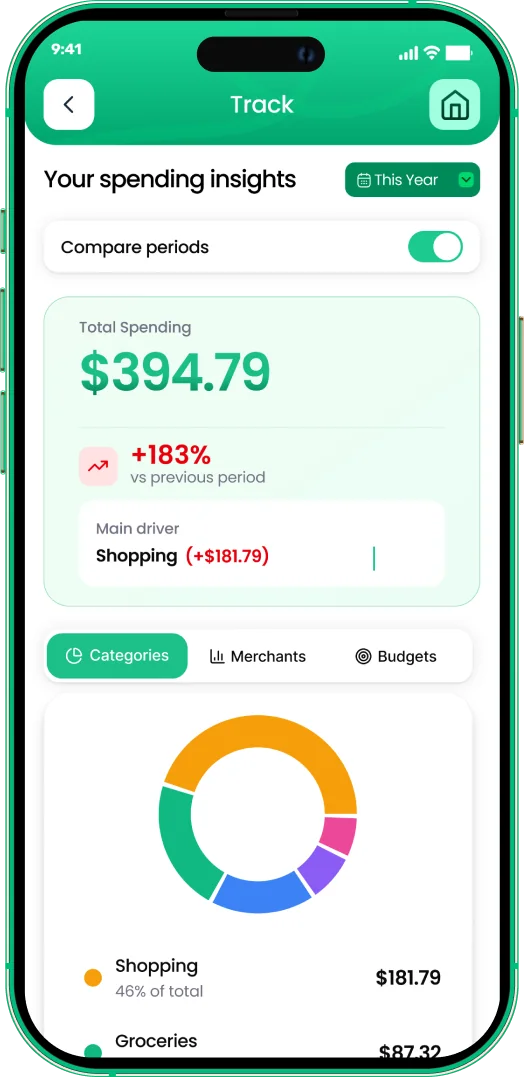
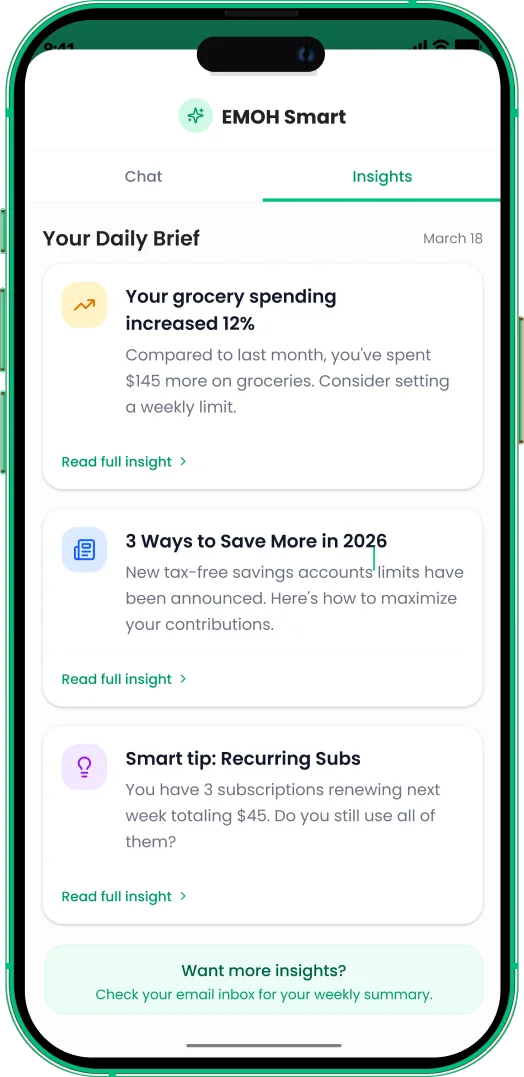
EMOH Pay works in Indian rupees and 147 other currencies. It is free on iPhone, Android and the web. Automatic bank sync is available only for Canadian banks, so in India you add expenses manually or by snapping receipts, which takes a few seconds each. Budgets with overspend alerts then warn you before a category runs out. See our budgeting app for India page and the worldwide guide for more.
Plan your month in EMOH Pay
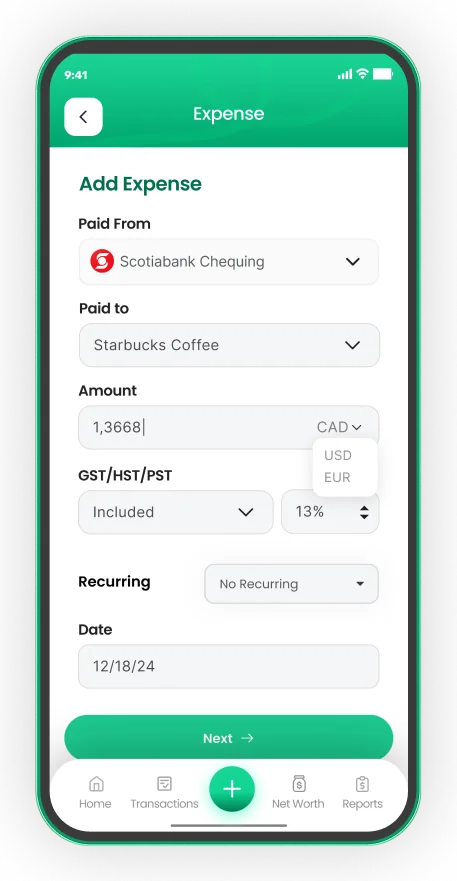

Put the numbers on autopilot
EMOH Pay tracks your spending, budgets and net worth on your phone and in the browser, always in sync. Free to start, made in Canada.
Get started free➜Monthly Budget Planner India: frequently asked questions
What is a good monthly budget for a family in India?
There is no single figure because rent and school fees vary so much by city. A good family budget keeps rent or EMI under about 30% of take-home, covers needs within about half of income, and saves at least 20%. Start with your own take-home pay in the planner above.
Should I budget from CTC or in-hand salary?
Budget from in-hand salary, the amount credited to your account each month. CTC includes employer PF, gratuity and variable pay that you either cannot spend or do not receive monthly.
How do I budget for festivals like Diwali or Eid?
Estimate what you spent last year on gifts, clothes, travel and sweets, divide by 12 and set that amount aside each month in a separate fund. The spending then comes from savings rather than your credit card.
Is the 50/30/20 rule realistic in India?
It works well as a starting point. In expensive cities, rent can push needs above 50%, and many families support parents. Adjust the split, for example 60/20/20, but try to protect the savings share.
Can EMOH Pay connect to Indian bank accounts?
No. Automatic bank sync is only available for Canadian banks. In India you add transactions manually or from receipts, and the app handles budgets, savings goals and reports in rupees.
Sources and further reading
Related guides and tools
EMOH Pay works in India: budget in INR plus 147 other currencies, on your phone and the web. Budget in rupees with full…
Budgeting App Worldwide — 148 CurrenciesEMOH Pay works in every country: 148 currencies, phone + web sync, bank connections in CA/US/UK. Free budgeting app made in…
The 50/30/20 Rule ExplainedThe 50/30/20 rule splits take-home pay into 50% needs, 30% wants and 20% savings. See what counts in each bucket, worked…
EMI CalculatorFree EMI calculator for home, car and personal loans. Enter amount, interest rate and tenure to see your monthly EMI, total…
Cost of Living in Bangalore (2026)Cost of living in Bangalore for 2026: 1BHK and 2BHK rents by area, metro and commuting costs, bills, school fees and sample…
Monthly Expenses Checklist: The Full List of Monthly ExpensesA complete list of monthly expenses to build your budget: housing, bills, food, transport, debt, savings and the irregular…
Start free today
Free on iPhone, Android and the web. Upgrade to EMOH Pro anytime for bank sync and advanced AI.
Download for iOS➜ Get it on Android➜