
How Couples Can Manage Money Together Without Fighting: A Proven System (2026)

Money is the most common source of conflict in relationships — but it doesn’t have to be. In most cases, financial arguments aren’t really about money. They’re about misaligned expectations, a lack of shared visibility, and the absence of a clear system that both partners trust.
This guide gives you that system: a practical, step-by-step framework for managing money as a couple, reducing financial conflict, and building shared goals together — regardless of whether you have joint accounts, separate accounts, or a hybrid of both.
Research consistently shows that couples who discuss finances openly and track shared expenses have significantly better financial outcomes than those who don’t. The key isn’t income — it’s shared visibility and a agreed-upon system.
Why Couples Fight About Money (And How to Fix the Root Cause)
Before building a system, it helps to understand what actually causes money conflict in relationships. After speaking with hundreds of couples, we found four recurring patterns:
1. Different Money Scripts
Everyone enters adulthood with a ‘money script’ — deeply held beliefs about money formed in childhood. One partner may see money as security and hoard it anxiously. The other may see it as something to enjoy and spend freely. Neither approach is wrong, but without acknowledging the difference, every financial decision becomes a values conflict.
2. No Shared Visibility
When one partner doesn’t know what the other earns or spends, budgeting becomes guesswork and resentment builds. Real-time shared visibility — both partners looking at the same financial picture — is the single biggest structural fix.
3. No Agreed System
Most couples try to ‘manage money together’ without ever agreeing on a specific method for tracking expenses, splitting bills, and making saving decisions. Without a system, every financial decision becomes an ad-hoc negotiation.
4. Unequal Contribution Perceptions
Even when income is roughly equal, perceived contribution imbalances create tension. Tracking individual vs shared expenses transparently dissolves most of these tensions.
Related: → The Ultimate Guide to Budgeting in 2026
The 5-Step Couples Money System
Step 1: Have the Money Date (Once a Month)
The first and most important ritual is a monthly ‘money date’ — a calm, judgment-free 30-minute conversation where both partners review the past month’s finances and plan the next one.
Ground rules for the money date:
- No blame, no judgment — this is a numbers review, not a performance review
- Both partners bring equal curiosity and input
- Use EMOH Pay’s shared dashboard so you’re both looking at the same real numbers
- End with agreement on next month’s priorities
The first Sunday of the month works well for most couples — close enough to month-end to have complete data, with time to plan before the new month starts.
Step 2: Choose Your Joint Finance Model
There are three primary models couples use. The right one depends on your income ratio, trust level, and how merged your financial lives are:
The hybrid model works for most couples because it provides shared accountability for joint expenses while preserving each partner’s personal financial autonomy. You each have ‘yours, mine, and ours’ accounts.
Step 3: Set Up Your Shared Budget in EMOH Pay
EMOH Pay is built for household budgeting. Its member-tagging feature lets both partners see a unified household picture while still tracking who spent what. Here’s how to set it up:
- Both partners download EMOH Pay
- Connect all relevant bank accounts — joint accounts, individual accounts, joint credit cards
- Create household expense categories: Rent/Mortgage, Groceries, Utilities, Subscriptions, Dining, Transport
- Create individual spending categories per partner: ‘Partner 1 Personal’, ‘Partner 2 Personal’
- Tag transactions to the right person using EMOH Pay’s member tagging feature
- Set shared savings goals — holiday fund, home deposit, emergency fund — that both partners can see updating in real time
See how member tagging works: → EMOH Pay Features
Step 4: Agree on How to Split Joint Expenses
The fairest split depends on your income ratio. If both partners earn roughly the same, a 50/50 split is cleanest. If incomes differ significantly, a proportional split avoids resentment:
Step 5: Build Shared Financial Goals
Couples who share explicit, visible financial goals argue about money less. When both partners can see the holiday fund growing in EMOH Pay, impulsive spending feels less appealing because you’re both watching the same goal.
Set at minimum three shared goals in EMOH Pay:
- Short-term (0–12 months): Emergency fund (3 months of expenses), holiday fund, car maintenance fund
- Medium-term (1–5 years): House deposit, wedding fund, maternity/paternity leave buffer
- Long-term (5+ years): Retirement contributions, children’s education fund, financial independence target
How to set goals in EMOH Pay: → EMOH Pay Solutions
The ‘No-Surprises’ Rule: Spending Agreements
Most financial arguments start not with big purchases but with small, unexpected ones. The ‘no-surprises rule’ prevents this: agree on a spending threshold above which either partner checks in before purchasing.
Typical thresholds by relationship stage:
- Early relationship / living together: $50–$100
- Established couple with joint finances: $150–$300
- Long-term partners with high trust: $300–$500
The exact number matters less than having one. EMOH Pay’s real-time notifications mean both partners are alerted when large transactions hit any shared account — making surprises rare.
Dealing With Income Inequality
When one partner earns significantly more than the other, the proportional split method (above) handles the bills fairly. But income inequality can still create power dynamics around discretionary spending.
The most effective solution: both partners receive an equal monthly personal allowance from the household pot, regardless of who earns what. Each can spend their allowance on anything without justification. This preserves autonomy and eliminates the guilt or resentment that often follows income-unequal relationships.
Related: → Best Budgeting App for Families in 2026
Frequently Asked Questions
Q: Should couples have joint or separate bank accounts?
Both work — what matters is shared visibility, not a shared account. Many couples find the hybrid model most practical: a joint account for shared expenses (rent, groceries, utilities, holidays) and individual accounts for personal spending. EMOH Pay lets you connect and track all accounts in one dashboard regardless of how they’re structured.
Q: How do you budget when partners have very different incomes?
Use the proportional contribution method: each partner pays the same percentage of their income toward shared expenses. If Partner A earns $60,000 and Partner B earns $40,000, Partner A covers 60% of shared bills and Partner B covers 40%. This feels equitable to both parties.
Q: What is the best budgeting app for couples?
EMOH Pay is the best free budgeting app for couples in 2026. It supports household member tagging so each partner can see their individual spending contribution alongside the shared picture. Monarch Money is the best paid option for couples in the US and Canada.
Q: How do you talk to a partner about budgeting without it turning into a fight?
Frame it as a shared project (‘How do we build our financial future?’) rather than an audit (‘Where did you spend all the money?’). Use a monthly money date with neutral, shared data — EMOH Pay’s reports are excellent for this because both partners are looking at facts, not one partner’s interpretation of facts.
Download EMOH Pay Free — Available on iOS & Android
App Store: apps.apple.com/pk/app/emoh/id6743326641
Google Play: play.google.com/store/apps/details?id=com.buildmeapp.emoh
More Guides for Household Finances
→ The Ultimate Guide to Budgeting in 2026
→ Best Budgeting App for Families in 2026
→ How to Track Expenses Automatically
→ Zero-Based Budgeting: The Complete Beginner Guide
→ EMOH Pay Features — Household Budgeting
See the family budgeting app
Reading is step one — EMOH Pay makes it automatic. Free to start on phone and web.
Open it➜What should you know about everyday budgeting?
Everyday budgeting comes down to three habits: know what comes in, decide where it goes, and check in daily. EMOH Pay makes all three effortless — free expense tracking and budgets on phone and web, a Daily Money Digest each morning, and bank-grade AES-256 security throughout.
Everyday budgeting: the essentials
You can start everyday budgeting today at $0 — no card required, on iPhone, Android or the web.
Auto-categorization, recurring bills and bank sync take the admin out of the habit.
The first win in everyday budgeting is simply seeing where money goes. Tracking alone typically surfaces 10–15% of easy savings.
Five minutes a week with a daily digest beats a perfect spreadsheet you abandon in February.
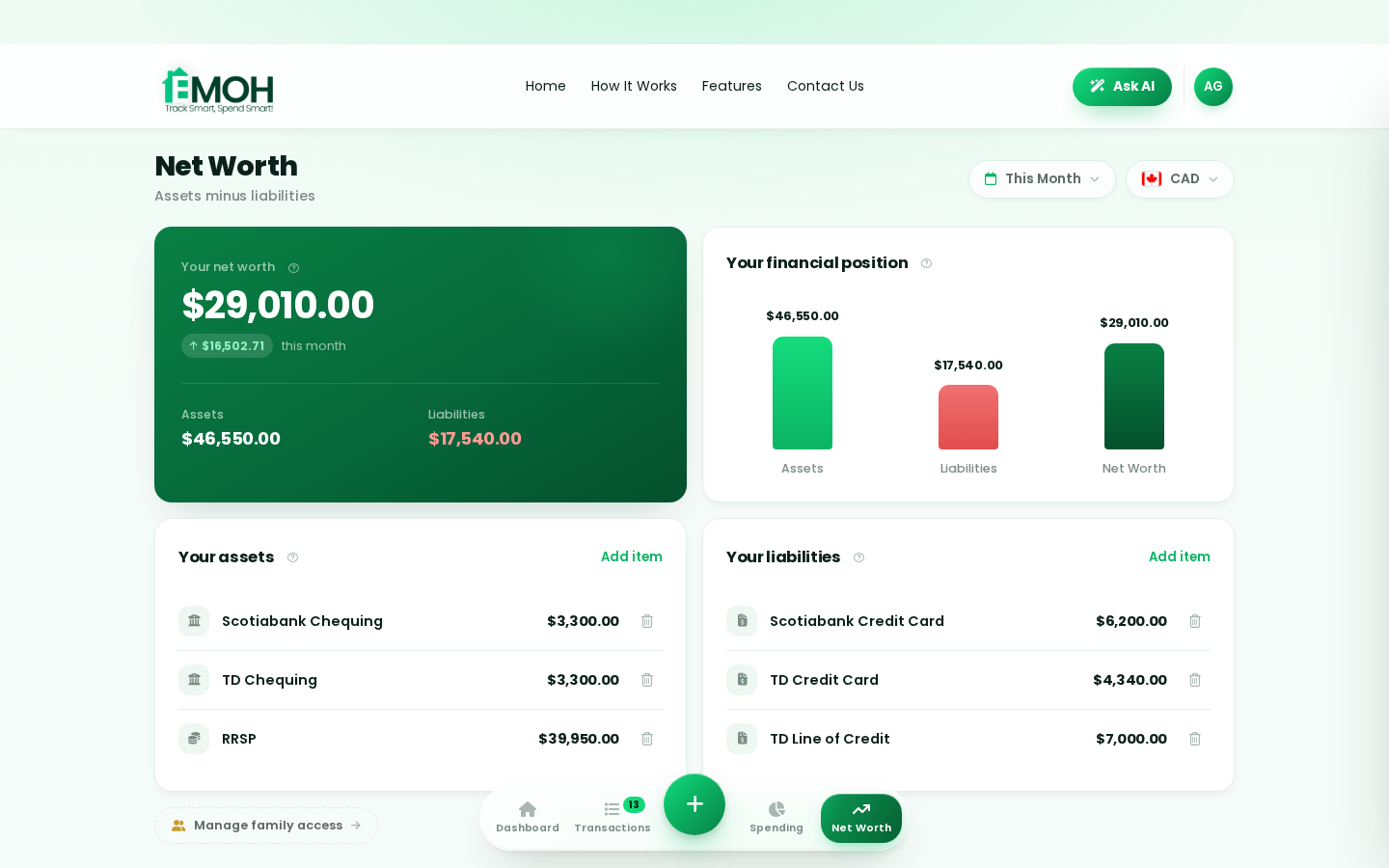
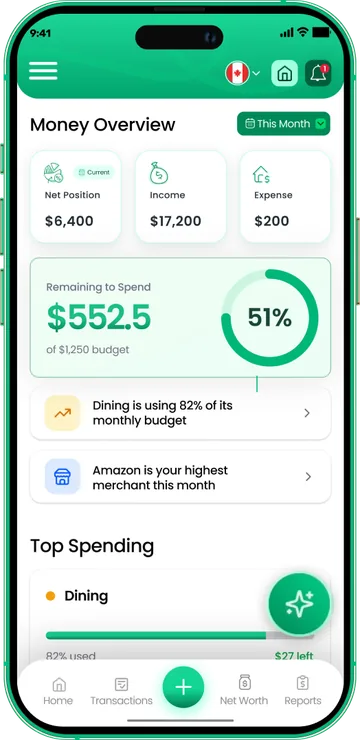
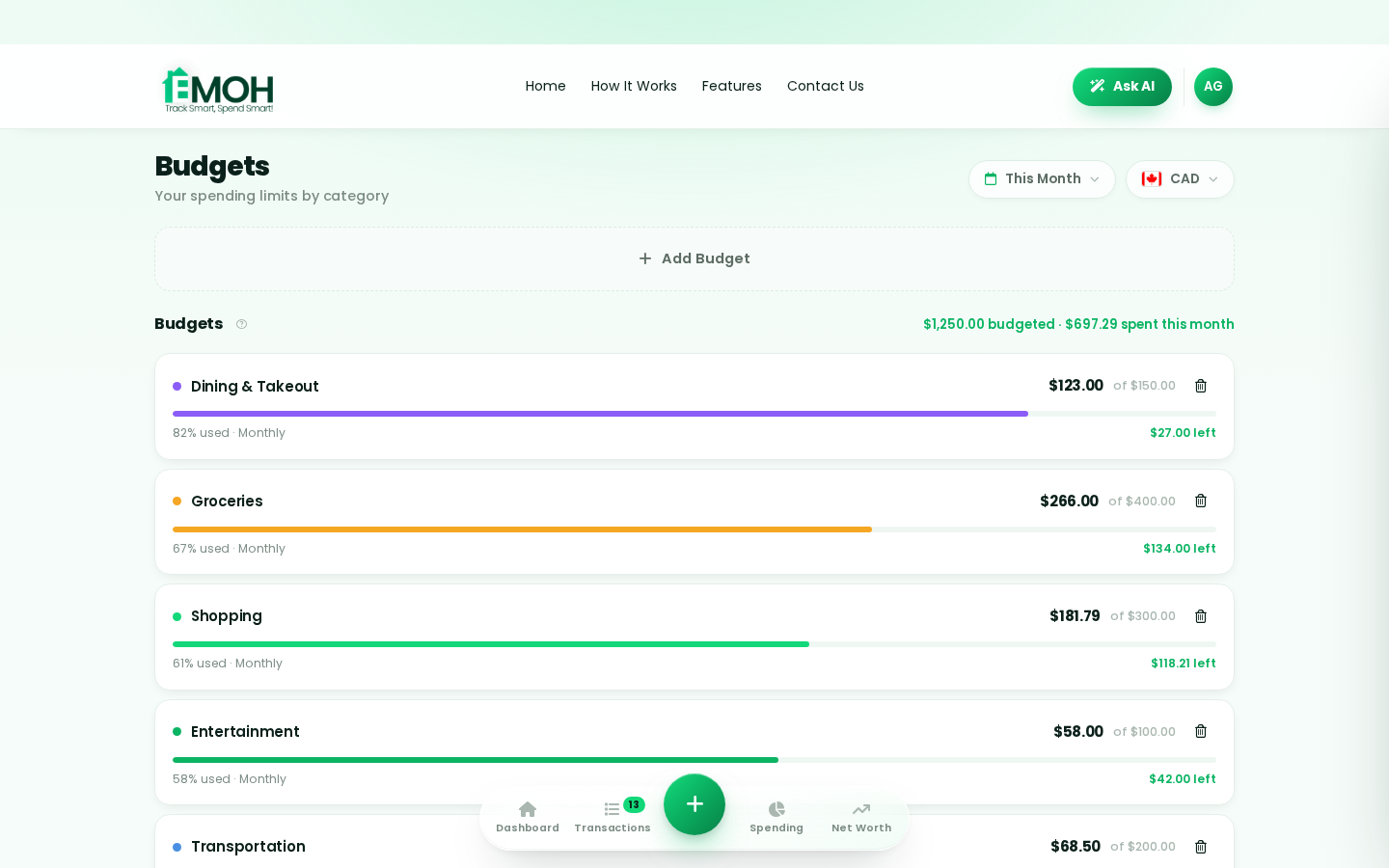
One app for everyday budgeting — on every screen.
Track on your phone in the checkout line, review on the web app at your desk. EMOH Pay keeps everyday budgeting in sync the second anything changes, so the numbers you act on are always current.
Start free on the web➜ Explore all features➜Real spending, really tracked
From the morning coffee to the monthly rent — Canadians log, tag and learn from every expense on EMOH Pay.


Everything you need for everyday budgeting
Track Smart, Spend Smart! The complete toolkit, free to start:
Log any expense in two taps — or let bank sync do it automatically. Every dollar gets a category.
Assets minus debts, always current — watch the number that actually measures progress.
Digital envelopes for groceries, rent and fun, with gentle alerts before you overspend.
Turn any month into a clean report you can share with a partner or accountant.
Automatic conversion for money that lives in more than one country.
The tax portion of every expense, separated automatically for a calmer tax season.
How to start everyday budgeting with EMOH Pay
Four small steps, five minutes total:
EMOH Pay vs. the usual ways to handle everyday budgeting
| EMOH Pay | Spreadsheet | Typical budgeting app | |
|---|---|---|---|
| Free tier | Free forever | Free | Limited trial |
| Paid tier | EMOH Pro — $4.99/mo | — | $10–15/mo |
| Expense tracking | ✔ Two taps or automatic | Manual entry | ✔ |
| Budgets & overspend alerts | ✔ Built in | ✖ None | Varies |
| Net worth tracking | ✔ Live | Formula gymnastics | Often paid add-on |
| Phone + web sync | ✔ Instant | ✖ Manual | Varies |
| Family sharing | ✔ Free | ✖ Shared-file chaos | Often paid add-on |
| GST/HST tracking | ✔ Automatic | ✖ Formula gymnastics | ✖ Rare |
| 148 currencies | ✔ Automatic conversion | ✖ None | Limited |
| Ask AI | ✔ Included | ✖ None | ✖ Rare |
| Daily Money Digest | ✔ Built in | ✖ None | Push spam |
| PDF & Excel exports | ✔ One tap | ✔ Manual | Varies |
| Bank sync (Canada) | ✔ Plaid, read-only (Pro) | ✖ None | US-first, patchy |
Everything above is free to start — and the full EMOH Pro upgrade is just $4.99/month, a third of what typical budgeting apps charge.
Real everyday budgeting problems we actually solve

Everyday budgeting that fits real life
Money habits only stick when they fit the life you already live. EMOH Pay was built for the checkout line, the kitchen-table conversation and the Sunday five-minute review — not for accountants. Two taps to log an expense, one glance to know where you stand.
Get started free➜ See how it works➜Your money data, protected like a bank's
The same encryption standard banks use, protecting your data at rest and in transit.
Bank connections run through Plaid and can only read transactions — never move money.
Built in Canada to Canadian privacy law. Your data is yours — never sold, ever.
Everyday budgeting — frequently asked questions
Can I share my budget with my family?
Yes — Family Account Sharing is included free. Each member gets their own login while budgets and expenses stay shared in real time, which makes everyday budgeting a team effort instead of a solo chore.
Do I need to connect my bank account?
No. Manual tracking is free forever and takes two taps per expense. If you want automatic imports, EMOH Pro connects Canadian banks securely through Plaid with read-only access.
What is the best way to get started with everyday budgeting?
Start simple: create a free EMOH Pay account, enter your income and accounts, then set budgets for your top three spending categories. Most people are fully set up in about five minutes, and the Daily Money Digest keeps the habit going.
Is EMOH Pay free for everyday budgeting?
Yes — EMOH Pay is free to start on iPhone, Android and the web. Budgeting, expense tracking and net worth are all included, which covers everything you need for everyday budgeting. EMOH Pro adds bank sync via Plaid and advanced AI for just $4.99/month.
Does EMOH Pay work on both phone and computer?
Yes. EMOH Pay has full apps for iPhone and Android plus a complete web app, and everything syncs instantly. Phone in your pocket, web app at your desk — the same live numbers everywhere.
Is my financial data safe with EMOH Pay?
Yes. EMOH Pay uses AES-256 encryption, bank connections are read-only through Plaid, and the app is built to Canadian PIPEDA privacy standards. Your data is never sold.
Start free today
Free on iPhone, Android and the web. Upgrade to EMOH Pro anytime for bank sync and advanced AI.
Download for iOS➜ Get it on Android➜