
Zero-Based Budgeting vs Traditional Budgeting: Which Actually Works in 2026?
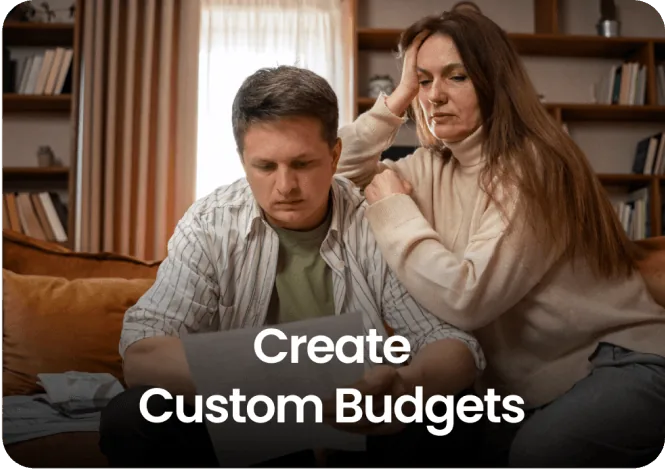
When it comes to managing money, choosing the right budgeting method can make all the difference.
Two of the most popular approaches are:
- Zero-based budgeting
- Traditional budgeting
Both promise better control over your finances—but they work very differently.
The challenge? Most people struggle not because of the method—but because their system is too hard to maintain consistently.
That’s why many are now combining these methods with simpler, automated tools that remove manual effort from budgeting.
Zero-based budgeting requires you to assign every dollar of income a specific purpose, while traditional budgeting focuses on setting spending limits for categories. Zero-based budgeting offers more control and precision, while traditional budgeting is easier to maintain and better for beginners.
What Is Zero-Based Budgeting?
Zero-based budgeting is a method where your income minus expenses equals zero.
That doesn’t mean you spend everything—it means every dollar is assigned a role, including savings.
Where Most People Struggle
While zero-based budgeting is powerful, it often fails in real life because:
- It requires manual tracking
- It demands constant updates
- It can feel overwhelming over time
This is where many people start looking for tools that automate tracking while keeping the structure intact.
How Zero-Based Budgeting Works
- Start with your total monthly income
- Assign every dollar to a category
- Track spending closely
- Adjust categories as needed
In practice, using an app that automatically tracks and categorizes expenses can make this process significantly easier and more sustainable.
What Is Traditional Budgeting?
Traditional budgeting is a simpler method where you:
- Set spending limits for categories
- Track expenses loosely
- Focus on staying within limits
Modern Reality
Traditional budgeting works because it’s simple—but it often lacks visibility.
That’s why many people now prefer tools that:
- Automatically track spending
- Show category breakdowns
- Provide real-time insights
This allows you to keep things simple without losing control.
Zero-Based Budgeting vs Traditional Budgeting (Key Differences)
Which Budgeting Method Works Better?
Zero-Based Budgeting Works Best If You:
- Want full control over your money
- Have specific financial goals
- Are comfortable tracking regularly
Traditional Budgeting Works Best If You:
- Prefer simplicity
- Don’t want to track every dollar
- Are just starting out
The Real Answer: It’s Not Either/Or
In reality, the most effective approach in 2026 is a hybrid system :
- Use zero-based thinking for planning
- Use simple tracking systems for execution
How EMOH Pay Simplifies Zero-Based and Traditional Budgeting
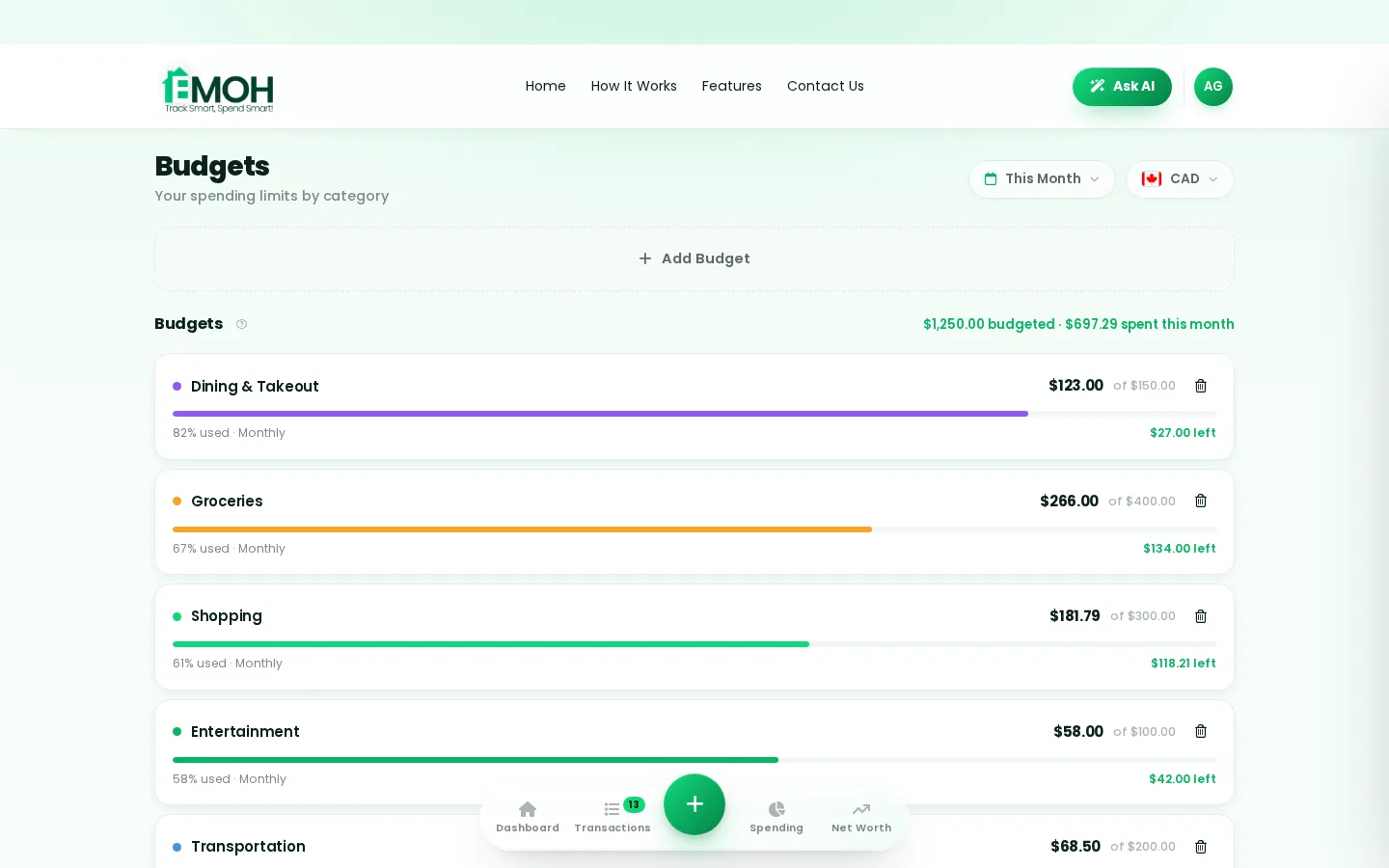
Instead of manually managing everything, tools like EMOH Pay help by:
- Automatically tracking your expenses
- Organizing spending into categories
- Giving you a clear, real-time view of your finances
- Supporting both structured and flexible budgeting styles
This means you can follow zero-based principles without the manual effort, or keep a traditional budget while gaining better visibility.
If you want to apply zero-based or traditional budgeting without the complexity, you can try EMOH Pay on Google Play or the App Store and see how automatic tracking simplifies the process.
If you want to apply zero-based or traditional budgeting without the complexity, you can try EMOH Pay on Google Play or the App Store and see how automatic tracking simplifies the process.
Pros and Cons of Zero-Based Budgeting vs Traditional Budgeting
Zero-Based Budgeting
Pros:
- Maximum control
- Helps eliminate waste
- Great for saving aggressively
Cons:
- Time-consuming
- Requires consistency
- Hard to maintain manually
Traditional Budgeting
Pros:
- Easy to follow
- Flexible
- Less time-intensive
Cons:
- Less precise
- Easier to overspend
- Limited financial visibility
Which Budgeting Method Is Better for Families?
For families, sustainability matters more than perfection.
- Strict systems often fail over time
- Simple systems are easier to maintain
That’s why many households now rely on automated budgeting tools that provide shared visibility and reduce manual effort, making it easier to stay consistent as a family.
Frequently Asked Questions (FAQs)
What is zero-based budgeting in simple terms?
Zero-based budgeting is a method where every dollar of your income is assigned a specific purpose, so your total income minus expenses equals zero.
Is zero-based budgeting better than traditional budgeting?
Zero-based budgeting offers more control and precision, but traditional budgeting is easier to maintain. The best choice depends on your lifestyle and consistency.
Is zero-based budgeting hard to maintain?
Yes, it can be challenging because it requires consistent tracking. Using tools that automate expense tracking can make it much easier to sustain.
What is the easiest budgeting method for beginners?
Traditional budgeting is usually easier for beginners because it focuses on simple spending limits instead of detailed tracking.
Can I combine zero-based and traditional budgeting?
Yes, many people use a hybrid approach—planning in detail but using simpler systems for daily tracking.
How do I start zero-based budgeting?
Start by listing your income, assigning every dollar a purpose, and tracking your expenses regularly—preferably with tools that simplify the process.
Which budgeting method helps save more money?
Zero-based budgeting can help save more because it forces intentional spending, but only if you can maintain it consistently.
Do budgeting apps support zero-based budgeting?
Yes, many modern apps support structured budgeting while simplifying tracking, making it easier to follow zero-based principles.
Conclusion
Both zero-based budgeting and traditional budgeting can work—but only if they fit your lifestyle.
- If you want control → choose zero-based budgeting
- If you want simplicity → choose traditional budgeting
But the real advantage comes from using a system that:
- Reduces manual effort
- Keeps you consistent
- Gives you clear financial visibility
That’s where modern budgeting tools make the biggest difference.
Try the free budget calculator
Reading is step one — EMOH Pay makes it automatic. Free to start on phone and web.
Open it➜What should you know about everyday budgeting?
Everyday budgeting comes down to three habits: know what comes in, decide where it goes, and check in daily. EMOH Pay makes all three effortless — free expense tracking and budgets on phone and web, a Daily Money Digest each morning, and bank-grade AES-256 security throughout.
Everyday budgeting: the essentials
You can start everyday budgeting today at $0 — no card required, on iPhone, Android or the web.
Auto-categorization, recurring bills and bank sync take the admin out of the habit.
The first win in everyday budgeting is simply seeing where money goes. Tracking alone typically surfaces 10–15% of easy savings.
Money works better as a team sport — shared live numbers end the guesswork and the arguments.
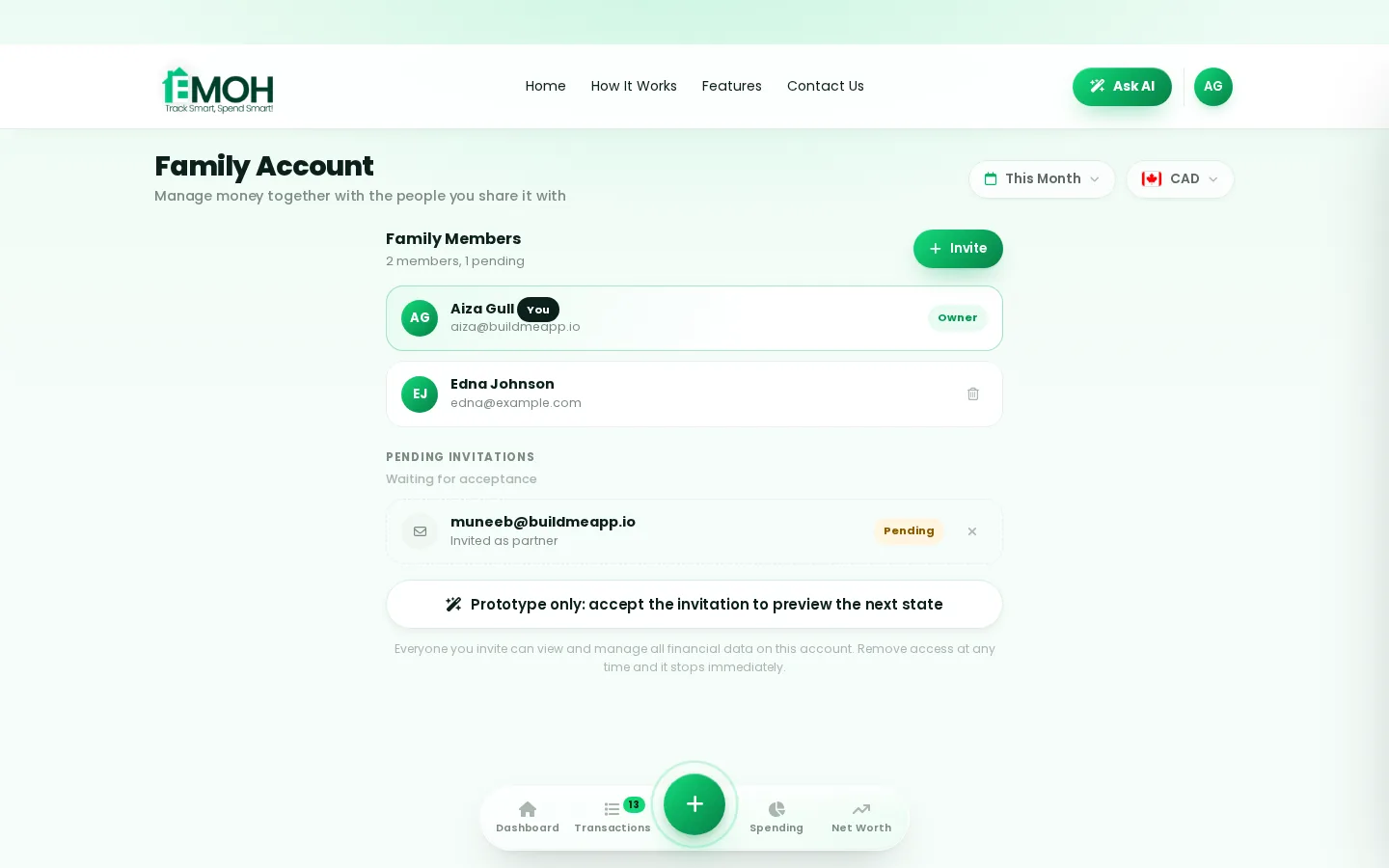
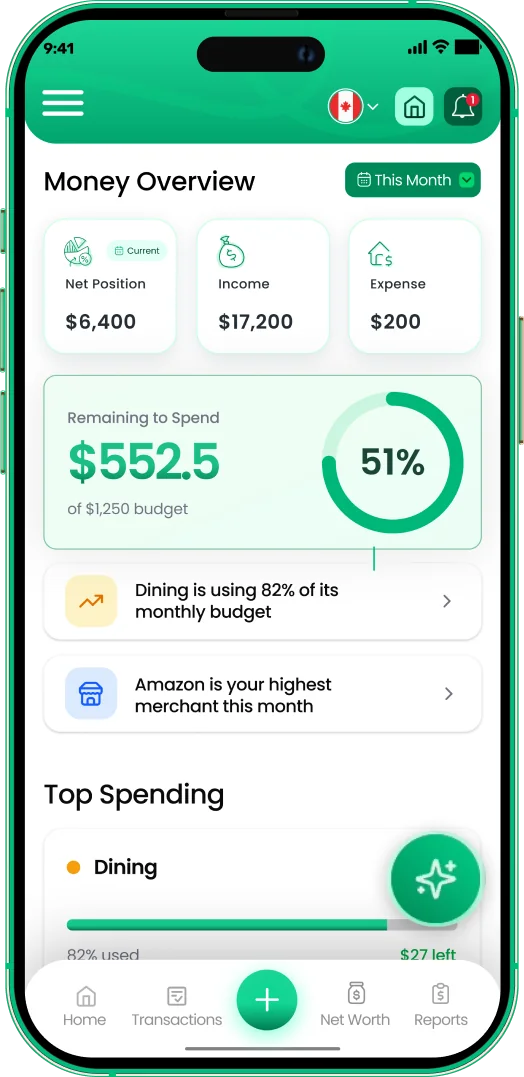
One app for everyday budgeting — on every screen.
Track on your phone in the checkout line, review on the web app at your desk. EMOH Pay keeps everyday budgeting in sync the second anything changes, so the numbers you act on are always current.
Start free on the web➜ Explore all features➜Real spending, really tracked
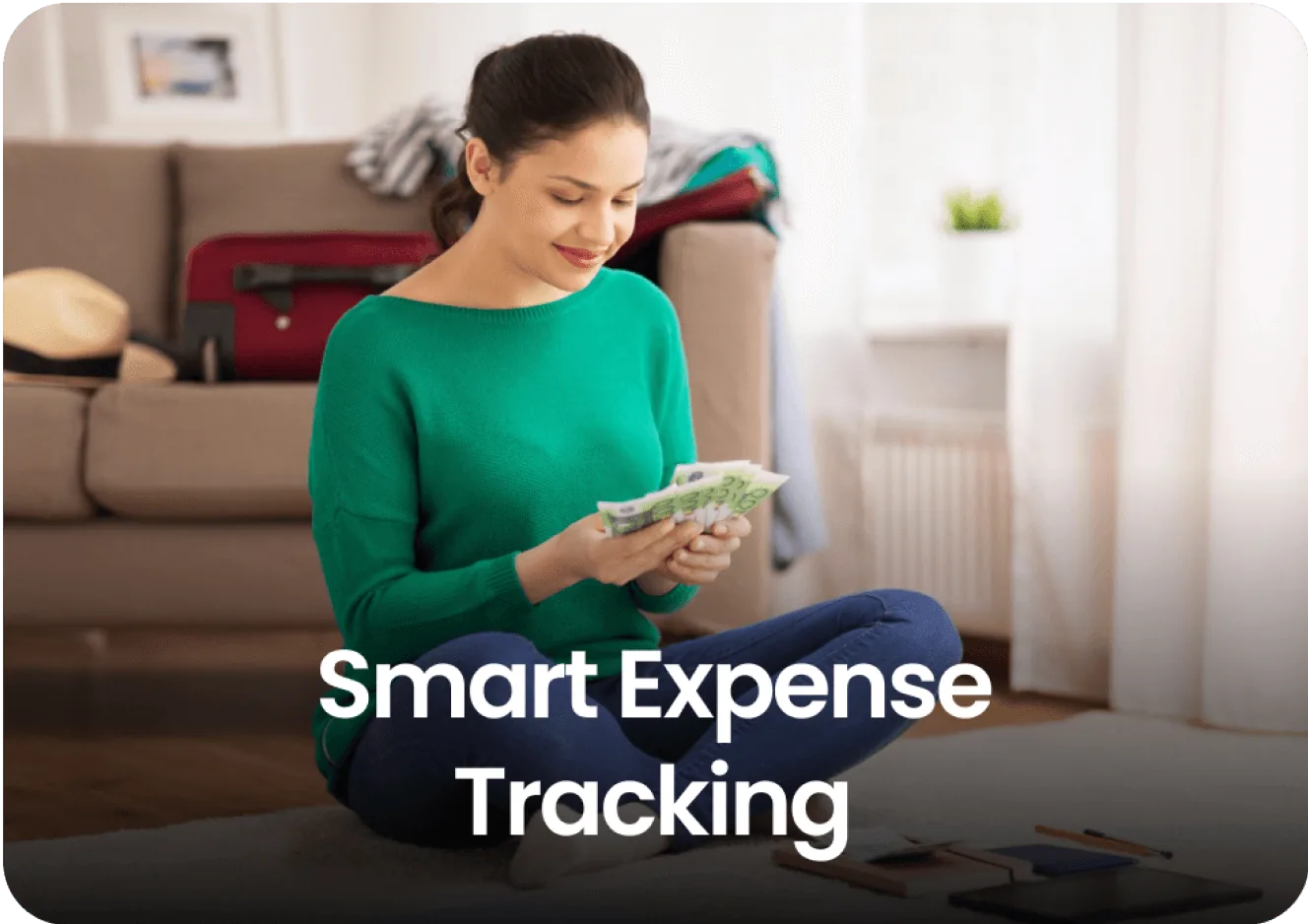
From the morning coffee to the monthly rent — Canadians log, tag and learn from every expense on EMOH Pay.

Everything you need for everyday budgeting
Track Smart, Spend Smart! The complete toolkit, free to start:
Assets minus debts, always current — watch the number that actually measures progress.
Digital envelopes for groceries, rent and fun, with gentle alerts before you overspend.
Log any expense in two taps — or let bank sync do it automatically. Every dollar gets a category.
One calm summary every morning: what you spent, what's left, what needs attention.
Turn any month into a clean report you can share with a partner or accountant.
Everyone sees the same live numbers, each with their own login. Free forever.
How to start everyday budgeting with EMOH Pay
Four small steps, five minutes total:
- 1Make your account — free, on phone or web
- 2Enter your income & accounts
- 3Set budgets — your digital envelopes
- 4Track smart, spend smart — EMOH digests daily
EMOH Pay vs. the usual ways to handle everyday budgeting
| EMOH Pay | Spreadsheet | Typical budgeting app | |
|---|---|---|---|
| Free tier | Free forever | Free | Limited trial |
| Paid tier | EMOH Pro — $4.99/mo | — | $10–15/mo |
| Expense tracking | ✔ Two taps or automatic | Manual entry | ✔ |
| Budgets & overspend alerts | ✔ Built in | ✖ None | Varies |
| Net worth tracking | ✔ Live | Formula gymnastics | Often paid add-on |
| Phone + web sync | ✔ Instant | ✖ Manual | Varies |
| Family sharing | ✔ Free | ✖ Shared-file chaos | Often paid add-on |
| GST/HST tracking | ✔ Automatic | ✖ Formula gymnastics | ✖ Rare |
| 148 currencies | ✔ Automatic conversion | ✖ None | Limited |
| Ask AI | ✔ Included | ✖ None | ✖ Rare |
| Daily Money Digest | ✔ Built in | ✖ None | Push spam |
| PDF & Excel exports | ✔ One tap | ✔ Manual | Varies |
| Bank sync (Canada) | ✔ Plaid, read-only — free up to 3 banks | ✖ None | US-first, patchy |
Everything above is free to start — and the full EMOH Pro upgrade is just $4.99/month, a third of what typical budgeting apps charge.
Real everyday budgeting problems we actually solve

Everyday budgeting that fits real life
Money habits only stick when they fit the life you already live. EMOH Pay was built for the checkout line, the kitchen-table conversation and the Sunday five-minute review — not for accountants. Two taps to log an expense, one glance to know where you stand.
Get started free➜ See how it works➜Your money data, protected like a bank's
The same encryption standard banks use, protecting your data at rest and in transit.
Bank connections run through Plaid and can only read transactions — never move money.
Built in Canada to Canadian privacy law. Your data is yours — never sold, ever.
Everyday budgeting — frequently asked questions
How is EMOH Pay different from a spreadsheet?
Spreadsheets are flexible but manual: no reminders, no sync, no automatic categorization. EMOH Pay gives you the same control with live sync across devices, daily digests, gentle overspend alerts and one-tap reports.
Can I share my budget with my family?
Yes — Family Account Sharing is included free. Each member gets their own login while budgets and expenses stay shared in real time, which makes everyday budgeting a team effort instead of a solo chore.
What is the best way to get started with everyday budgeting?
Start simple: create a free EMOH Pay account, enter your income and accounts, then set budgets for your top three spending categories. Most people are fully set up in about five minutes, and the Daily Money Digest keeps the habit going.
Is EMOH Pay free for everyday budgeting?
Yes — EMOH Pay is free to start on iPhone, Android and the web. Budgeting, expense tracking and net worth are all included, which covers everything you need for everyday budgeting. EMOH Pro lifts the limits for just $4.99/month — unlimited bank connections, family members and EMOH Smart, plus full report history and exports.
Is my financial data safe with EMOH Pay?
Yes. EMOH Pay uses AES-256 encryption, bank connections are read-only through Plaid, and the app is built to Canadian PIPEDA privacy standards. Your data is never sold.
Does EMOH Pay work on both phone and computer?
Yes. EMOH Pay has full apps for iPhone and Android plus a complete web app, and everything syncs instantly. Phone in your pocket, web app at your desk — the same live numbers everywhere.
More from EMOH Pay
What if every dollar you earned had a specific destination — before you spent a single penny of it? That’s the premise…
A Beginner's Guide to Zero Based Budgeting Personal FinanceTaking control of your money can feel like a monumental task. You work hard for your income, but at the end of the month, do…
Top Ad-Free Budgeting App of 2025 | Try EMOH Pay FreeIn 2025, managing personal finances shouldn’t come at the cost of privacy or focus. Yet, many budgeting apps still bombard…
Free Budget CalculatorThe 50/30/20 rule splits after-tax income: 50% to needs, 30% to wants, 20% to savings. Enter your monthly take-home pay to…
Expense Tracker AppEMOH Pay is a free expense tracker app built in Canada. Add expenses in two taps on your phone or laptop, snap receipts, and…
Net Worth TrackerEMOH Pay's net worth tracker adds up everything you own, subtracts everything you owe, and shows the trend over time — free…
Start free today
Free on iPhone, Android and the web. Upgrade to EMOH Pro anytime for bank sync and advanced AI.
Download for iOS➜ Get it on Android➜