
How to Budget for a Baby
The gear is the easy part. The real budget shift is income during parental leave. Here is what the first year costs, what support is available and how to plan month by month.
Get started free➜ Download the app➜
How much does a baby cost in the first year?
Excluding child care and lost income, a baby's first year in Canada typically costs roughly $2,000 to $9,000 for gear, diapers, formula and clothing, depending on whether you buy new or second-hand and whether you use formula. For most families the bigger cost is reduced income on parental leave, because EI replaces only part of your pay.
How much should you budget for a baby's first year?
To budget for a baby, plan for three kinds of cost: one-off set-up items such as a crib and car seat, ongoing monthly costs such as diapers and formula, and the change in household income while a parent is on leave. The first two usually add up to a few thousand dollars. The third can change your monthly budget by far more.
The table below gives estimated ranges based on typical Canadian retail prices in 2026. They are illustrative, not official figures. Your total depends on hand-me-downs, whether you breastfeed or formula-feed, and how much you buy new. For the longer view beyond year one, see the cost of raising a child in Canada.
| Item | Low estimate | High estimate | Tip |
|---|---|---|---|
| Crib, mattress and bedding | $300 | $1,000 | A second-hand crib is fine if it meets current safety rules; buy the mattress new |
| Infant car seat | $200 | $500 | Buy new so you know its history and expiry date |
| Stroller | $150 | $1,000 | Travel systems that pair with the car seat can save money |
| Clothing | $300 | $1,000 | Babies outgrow sizes fast; hand-me-downs help most here |
| Diapers and wipes | $900 | $1,400 | Buying in bulk or trying cloth can lower the cost |
| Formula | $0 | $3,000 | Zero if breastfeeding; varies by brand and type |
| Bottles, pump and high chair | $200 | $600 | Some workplace benefit plans cover pumps |
| Toiletries, health items and extras | $200 | $600 | Thermometer, nail clippers, baby bath, monitor |
| Total | about $2,250 | about $9,100 |
Estimates checked September 2026. Prices vary by region and retailer.
How parental leave changes your budget
For most families, the largest first-year cost is not gear but income. Outside Quebec, EI maternity benefits pay 55% of your average weekly insurable earnings for up to 15 weeks, to a 2026 maximum of about $729 a week. Standard parental benefits then pay 55% for up to 35 weeks, or you can choose extended parental benefits at 33% for up to 61 weeks. EI benefits are taxable.
Quebec parents use the Quebec Parental Insurance Plan instead, which has its own rates and durations. Some employers top up EI for a period, so check your employment contract or benefits booklet. Estimate your own payments with the maternity leave calculator before you plan your monthly budget.
Sample monthly budget for a baby: before and during leave
Here is an example for a two-parent household where one partner's take-home pay drops from $3,000 to about $1,900 a month on EI. Total take-home falls from $7,000 to $5,900. The budget adjusts by trimming flexible spending and savings, not by cutting essentials.
| Category | Before baby | During leave |
|---|---|---|
| Take-home income | $7,000 | $5,900 |
| Rent or mortgage | $2,400 | $2,400 |
| Groceries | $800 | $850 |
| Transport | $600 | $450 |
| Utilities, phone and insurance | $450 | $450 |
| Diapers and wipes | $0 | $100 |
| Formula | $0 | $150 |
| Baby clothes and extras | $0 | $100 |
| Eating out and entertainment | $600 | $250 |
| Other spending | $650 | $550 |
| Savings | $1,500 | $600 |
The Canada Child Benefit is not included above. It is tax-free, paid monthly and depends on family net income, so it can add a meaningful amount to the during-leave column. Estimate yours with the Canada Child Benefit calculator.
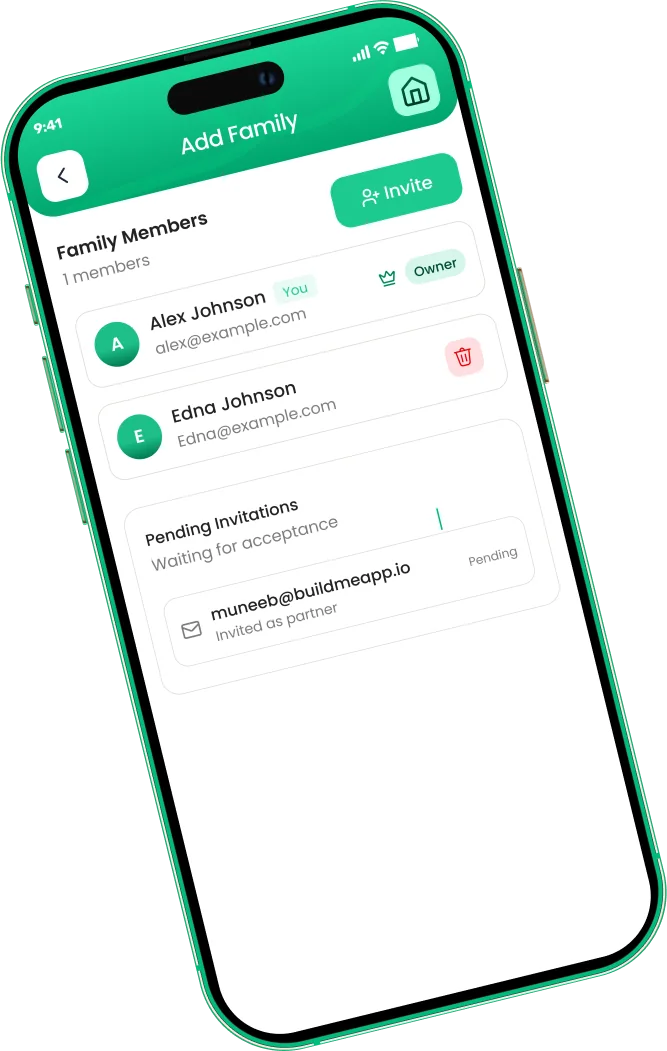
Budget together, with separate logins
- Invite a partner or family by email
- Everyone sees the same live budget
- Tag who spent what, free on every plan


How to budget for a baby, step by step
- Estimate leave income for each parent, including any employer top-up, and build a monthly budget on that lower figure.
- Do a trial run. Live on the leave budget for two or three months before the birth and save the difference.
- Open a baby sinking fund. Save monthly for set-up gear so it does not go on a credit card. See how sinking funds work.
- Top up your emergency fund. Aim for a cushion that covers any gap between leave income and expenses. Our emergency fund guide explains how much.
- Apply for benefits. Register the birth in your province and apply for the Canada Child Benefit; many provinces let you do both at once.
- Plan for child care. If you will return to work, check regulated fees in your province early, since spaces can have waiting lists.
- Start an RESP when ready. The Canada Education Savings Grant adds 20% on the first $2,500 you contribute each year. Read what an RESP is.
Ways to lower first-year baby costs
- Borrow or buy second-hand for clothes, bassinets, baby carriers and toys. Always buy car seats new and check recalls on second-hand gear.
- Make a registry of what you actually need rather than accepting every gift, and ask for diapers in several sizes.
- Delay the extras. Many gadgets are optional. Wait until you know what your baby needs.
- Review insurance. Workplace benefits may cover items such as breast pumps, and adding a child to a plan can be time-sensitive.
- Track baby spending as its own category so you can see what the first year really costs and adjust quickly.
Planning together as new parents
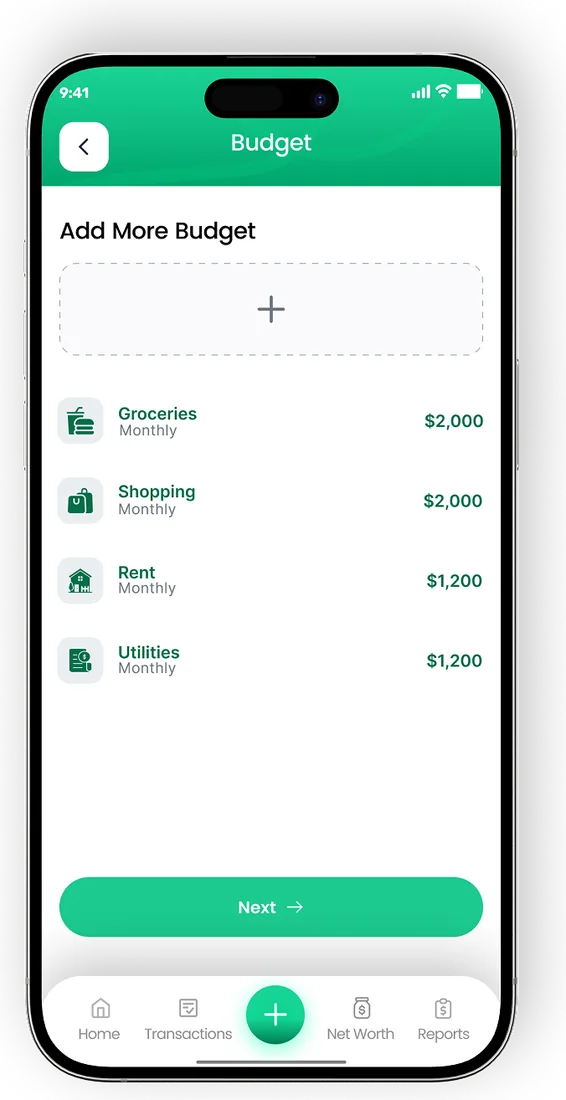
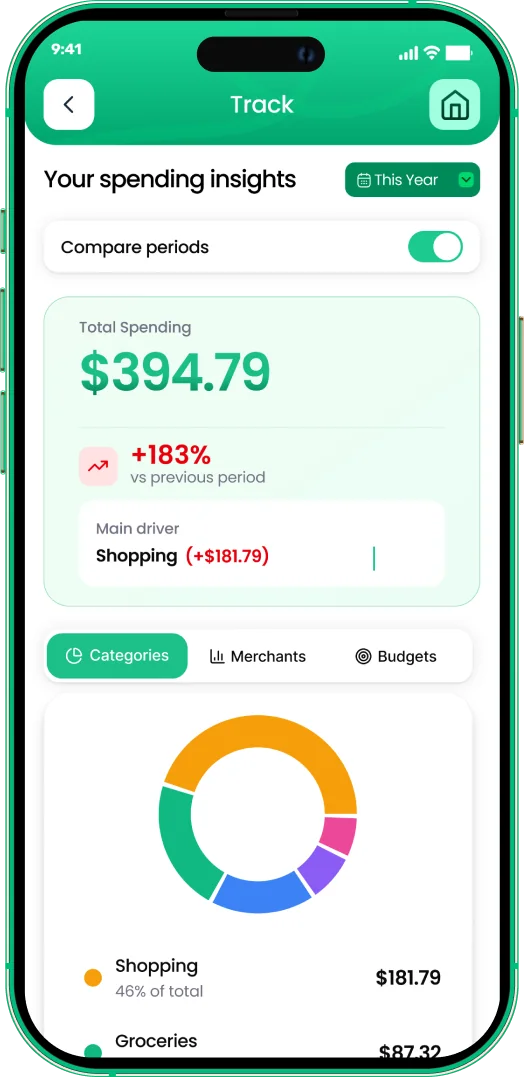
A new baby changes who earns, who spends and when. It helps if both parents can see the same numbers. EMOH Pay's family sharing gives each partner a separate login to one shared budget, so a baby category, a sinking fund for gear and the leave-income budget are visible to both of you. Receipts for larger items can be stored with each transaction for returns and warranties.
For a broader household plan, see our family budget guide, or compare approaches in the budgeting methods guide.
Budget together
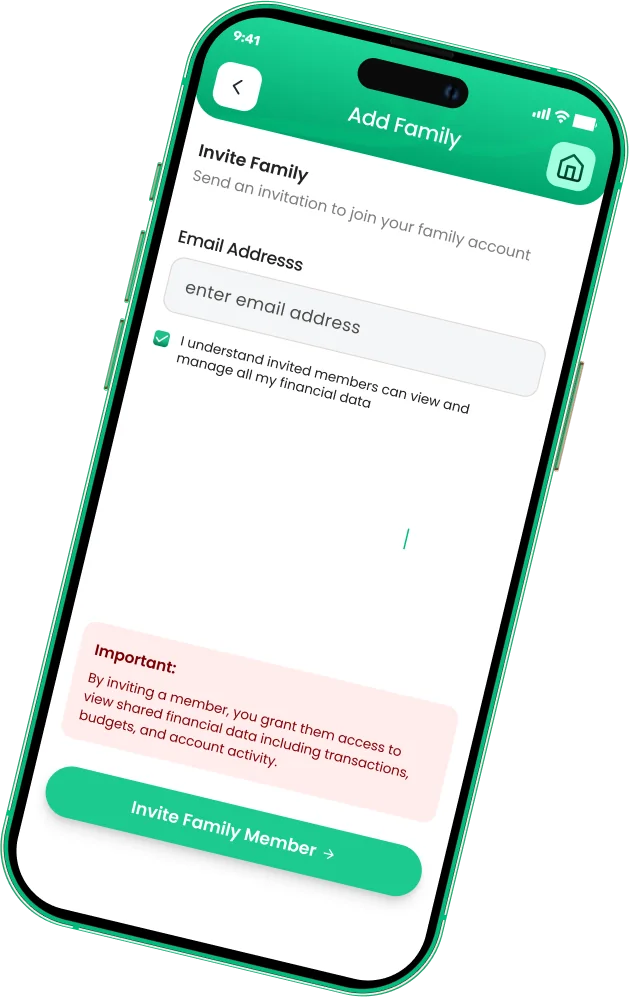

Put the numbers on autopilot
EMOH Pay tracks your spending, budgets and net worth on your phone and in the browser, always in sync. Free to start, made in Canada.
Get started free➜How to Budget for a Baby: frequently asked questions
When should I start budgeting for a baby?
As early as you can, ideally during pregnancy. That gives you time to estimate leave income, test a smaller budget and save for set-up costs before the birth.
What is the biggest cost of a baby in the first year?
For most families it is reduced income during parental leave. Outside of lost income and child care, formula and diapers are usually the largest ongoing costs.
How much should I save before having a baby?
Enough to buy set-up gear without debt, plus a cushion for any gap between leave income and expenses. Many families aim for several months of that gap on top of their usual emergency fund.
Can both parents take EI parental benefits?
Yes. Outside Quebec, parents can share up to 40 weeks of standard parental benefits or 69 weeks of extended benefits, though one parent cannot take more than 35 or 61 weeks. Confirm details with Service Canada.
Is the Canada Child Benefit taxable?
No. The CCB is a tax-free monthly payment from the Canada Revenue Agency, based on your family's net income and the number and age of your children.
Related guides and tools
The cost of raising a child in Canada by age and category, from child care to food and activities, plus the benefits and tax…
Maternity Leave Calculator Canada (2026)Free maternity leave calculator for Canada. Estimate weekly EI maternity and parental pay for 2026 and compare the standard…
Canada Child Benefit CalculatorCanada Child Benefit calculator: enter your family net income and your children's ages to estimate your monthly and yearly…
What Is an RESP?What is an RESP? A clear guide to Registered Education Savings Plans, how the Canada Education Savings Grant adds 20%, the…
Sinking Funds: What They Are and How to Use ThemSinking funds turn big irregular costs into small monthly savings. Learn how they work, common sinking fund categories, a…
Budgeting Methods Compared50/30/20, zero-based, envelopes or pay-yourself-first — the best budgeting method is the one you'll still be using in March.…
Start free today
Free on iPhone, Android and the web. Upgrade to EMOH Pro anytime for bank sync and advanced AI.
Download for iOS➜ Get it on Android➜